
Continuing a series that celebrates the fifty-fifth anniversary of Night of the Living Dead with a look at the classic zombie film and its many follow-ups.
The great zombie springtime of the 2000s saw the Night of the Living Dead family tree grow back branch by branch. Romero’s series was revived; Return of the Living Dead returned; and even the Book of the Dead series had its long-delayed third volume. One branch that few would have expected to see, however, was that which gave us the bizarre Italian pseudo-sequels Zombi 2 (1979) and Zombi 3 (1988). After all, Lucio Fulci had passed on in 1996, and Italy’s film industry had been reshaped beyond recognition.
Yet when we come to 2008, we find a small American direct-to-video film that does a remarkable job of recapturing the gonzo energy of Fulci’s efforts.
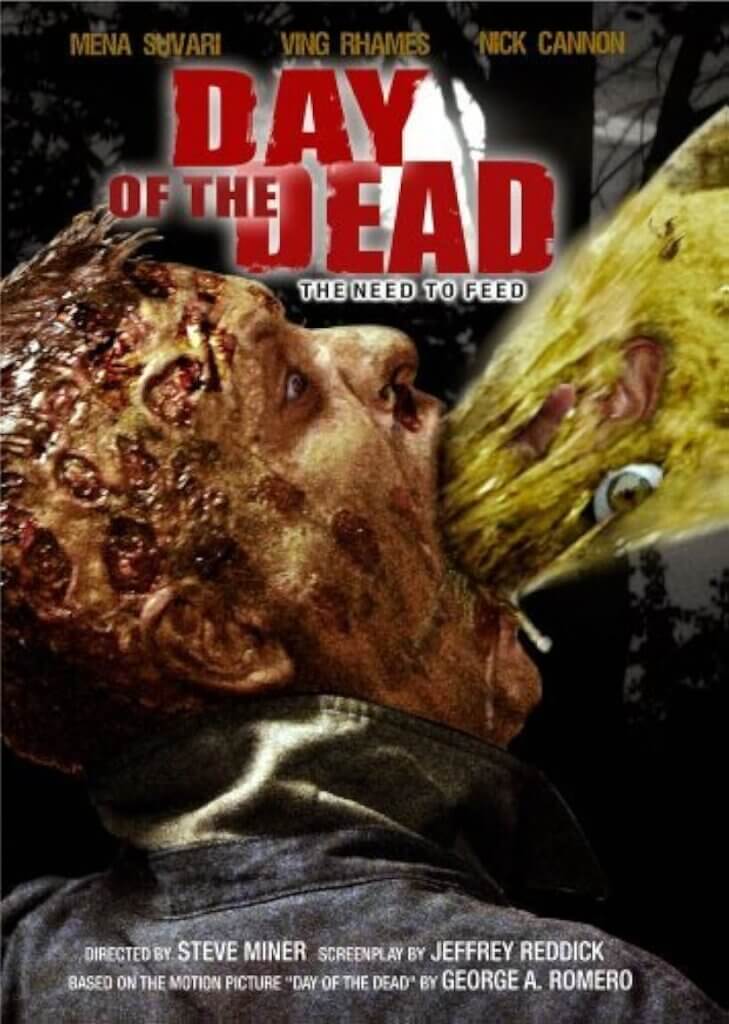
As with the terrible 2005 Day of the Dead 2: Contagium, 2008’s Day of the Dead was the result of Taurus Entertainment owning the rights to Romero’s 1985 film of that name and being able to put out sequels and remakes without his involvement. And at first, the film looks as though it will be just as bad as Contagium.
Early scenes cut awkwardly between two sets of characters. On the one hand, we have the young soldier, Sarah and her fellow squaddies, who are tasked with containing the early and still-mysterious outbreak; then we have young funster Trevor who just wants to hang out with his friends. Sarah and Trevor turn out to be siblings, meaning that they could surely have been introduced together in a single, more streamlined sequence. Given the experienced hands involved (screenwriter Jeffrey Reddick penned 2000’s Final Destination, while director Steve Miner has credits going back to the second and third Friday the 13th films in the 1980s) the sheer clunkiness of this opening sequence comes as a surprise.
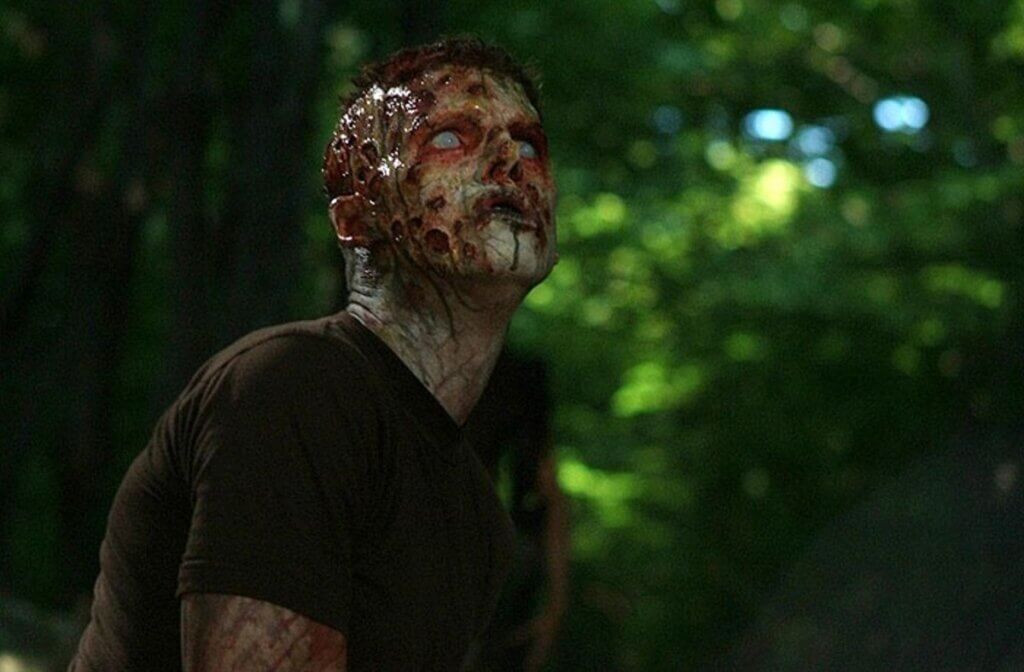
But then we see the first gore scene and the first glimmer of the oddball piece of work that the film will soon become. A woman with a conspicuous midriff tattoo gets dragged offscreen to be eaten by a zombie, which then spits out a scrap of her skin – the precise piece of skin showing that tattoo. This would appear to be an attempt to ape the memorably wince-inducing moment in Land of the Dead where a woman has her navel piercing ripped out by a zombie; as with a lot of Fulci’s work, the imitation is carried out with a weird cluelessness that somehow makes it feel inventive rather than derivative.
Such oddball touches dot the film. In this vision of the zombie apocalypse, the contagious strain is strong enough to turn a living, breathing human into a badly-decomposed revenant within the span of seconds; it also bestows the ability to crawl about on the ceiling à la The Exorcism of Emily Rose. Ghouls are still afraid of open flame, and with good reason: when a zombie catches fire, its head explodes. And at a time when Hollywood’s palette was fast being consumed by orange and teal, the film makes the charming decision to bathe the majority of its nighttime scenes in chartreuse. All of this flare for the nonsensical is what prompted Lucio Fulci to have a levitating zombie head fly out of a refrigerator in Zombi 3.
Just to drive home the (presumably unintentional) Fulci overlap, we even see a familiar face from British TV sci-fi. In Zombi 2, this was Survivors’ Ian McCulloch. In the Day of the Dead remake, by far the best performance is put in by Ian McNeice, who had a role in the BBC’s Edge of Darkness back in 1985 and would later turn up in Doctor Who as Winston Churchill.
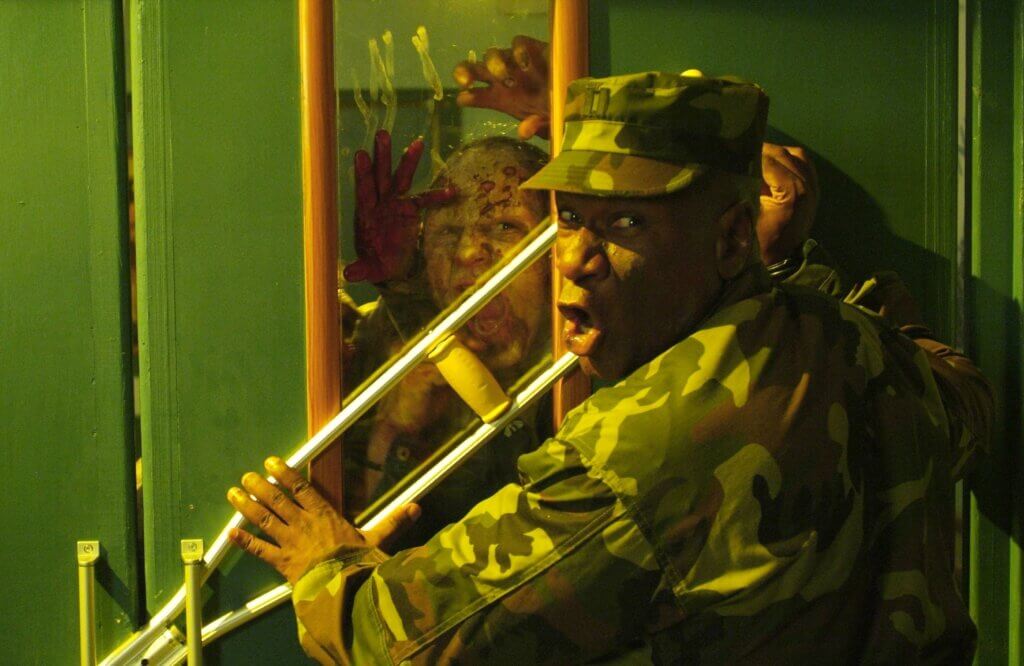
What this has to do with Romero’s threequel is unclear, as the ostensible remake has little in common with its source. That said, the characters in the two films at least bear vague resemblances to one another and share a few names: Captain Rhodes, Private Salazar, Dr. Logan, and protagonist Sarah Bowman (in the last case, the pseudo-remake botches things by using her original name in the credits, but identifying her as Sarah Cross in the actual dialogue).
Given that the climax takes place in an underground compound similar to the one in which the Romero film took place, the 2008 Day could be mistaken for a prequel to the 1985 Day; but this connection is severed in the final conflict which kills off some major characters and burns down the compound. We do, however, get an inspired origin story for Bub, Dr. Logan’s pet zombie: it turns out that he kept his sapience because, after he was bitten, Sarah poured bleach on his wound. Shaun of the Dead could have done no better.
By and large, the film seems less interested in following Romero and more in mimicking the more recent era of zombie films. The ghouls’ ability to sprint towards their victims (aided by sped-up footage) obviously owes something to the fast zombies of 2002’s 28 Days Later. The climax in the white-walled corridors of an abandoned laboratory, with vital clues hidden on convenient computers, evokes the Resident Evil game franchise – and even has a “final boss” in the form of a zombified scientist. These are the sorts of influences that the magpie-like Fulci would likely have been taking on board had his career lasted into the new century.
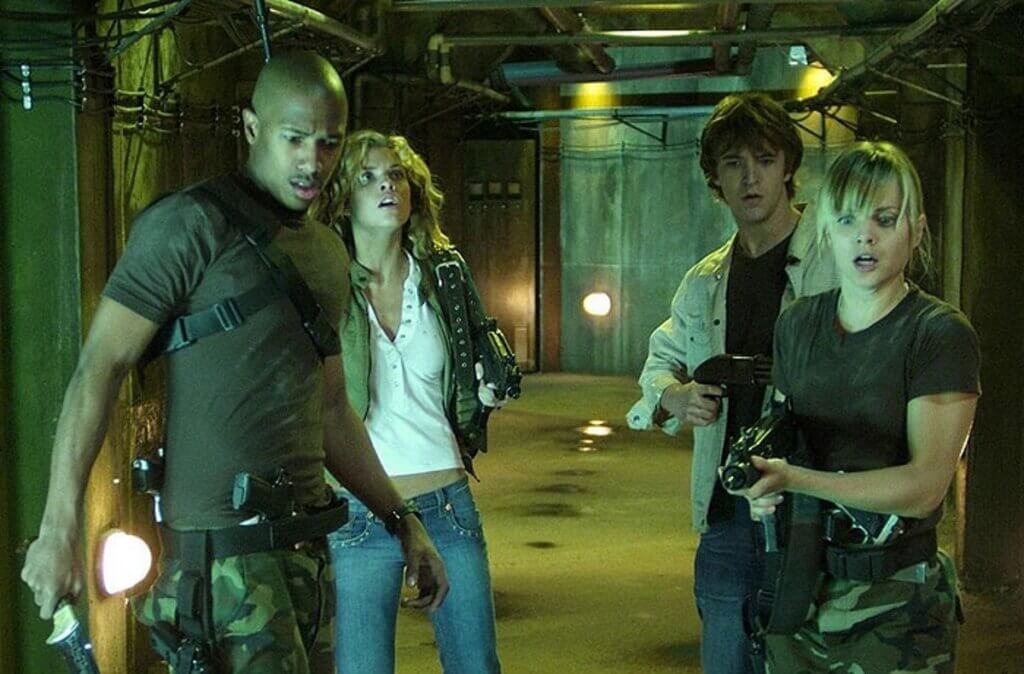
Some horror aficionados may find it sacrilegious to draw so many parallels between 1988’s Zombi 2 and the 2008 Day of the Dead. After all, while Fulci’s pseudo-sequel remains a cult favourite, Steve Miner’s pseudo-remake was completely trashed upon its direct-to-DVD release. But with the best will in the world, it would be hard to come up with an objective argument that Zombi 2 is significantly better. It simply had the privilege of being released at an early stage of the zombie apocalypse genre and so had comparatively little competition.
But 2008 was a different matter entirely. Audiences had access to two 28 Days films, three Resident Evil films, five Return of the Living Dead films, and five true-blue Romero zombie films, to name only a few of the more prominent examples. Indeed, if we count the unofficial Night of the Living Dead 3D, then the 2008 Day of the Dead managed to be the fourth remake derived from Romero’s original trilogy.
And so it fell into oblivion, destined to be noticed only for sharing its name with an earlier (and much better) film and to be praised only for being less awful than Day of the Dead 2: Contagium. It has to be said, though, that anyone who holds up Zombi 2 as a classic has little grounds to be snooty about this effort, even if 1970s Italy was a little more glamorous than the world of 2000s American direct-to-DVD filmmaking.
Next: One last trip to the comic shop…

