
Continuing a series that celebrates the fifty-fifth anniversary of Night of the Living Dead with a look at the classic zombie film and its many follow-ups.
The twenty-first-century zombie film renaissance began in 2002 with the twin commercial successes of Resident Evil and 28 Days Later, although each of these was a step removed from Night of the Living Dead and its sequels.
Resident Evil was adapted from the popular video game franchise of the same name, while 28 Days Later (the better received of the two among critics by some distance) made a deliberate effort to shake off the stench of George Romero’s ghouls. Its zombies were not resurrected corpses, but people suffering a rabies-like infection. They were also capable of speed and cunning; these traits, while not entirely new (the first zombie seen in Night of the Living Dead behaved in a similar way), helped to set them apart from the slow-witted, shambling hordes audiences expected. Brian Keene’s 2003 novel The Rising, part of the wider zeitgeist, likewise offered a twist by making its zombies the result of demonic possession.
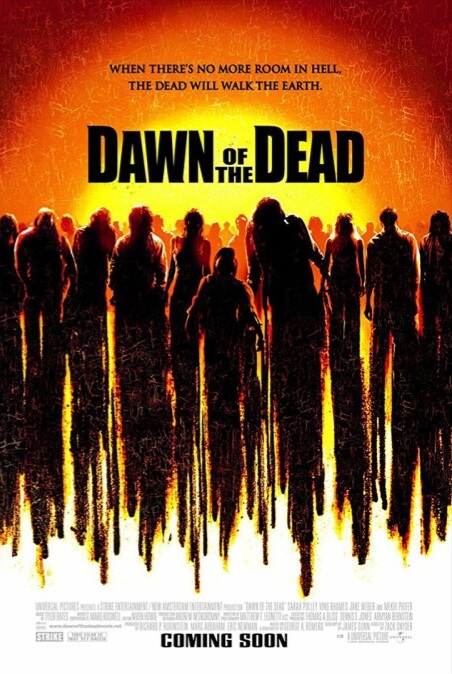
Zombies were popular, but there was a sense that perhaps they could only be popular by distancing themselves from the previous wave. Any such misconception was soon quashed when, in 2004, a remake of Dawn of the Dead became a hit with audiences and received a general thumbs-up from critics. Zombies were well and truly back, and the Romero school shambled its way to the top once again.
So why, exactly, did zombie films catch on in the twenty-first century after that dry period of the 1990s?
Those who favour grand-scale geopolitical narratives on the shaping of popular entertainment will point to 9/11. The tone of the period following that atrocity, with talk of the attack potentially leading to World War III, may well have fed a desire to escape into an apocalypse of a more fanciful sort. If nothing else, the event likely took out one of the zombie genre’s biggest rivals by damaging interest in serial killers: Hannibal Lecter looks like a petty underachiever compared to Osama Bin Laden.
A rather more mundane but no less credible explanation lies in the world of video games. While zombie films were lying fallow through the 1990s, zombie games were blossoming, with both Sega’s The House of the Dead and the aforementioned Resident Evil, from Capcom, debuting in 1996. A generation of fresh talent entering the film industry would have had such titles as cultural influences. Shaun of the Dead, also out in 2004, made the association clear by giving its protagonists a valuable background in gaming. Even Roger Ebert, a man with little interest in video games as a medium, noticed the connection:
I am by now more or less exhausted by the cinematic possibilities of killing [zombies]. I’ve seen thousands of zombies die, and they’re awfully easy to kill, unless you get a critical mass that piles on all at once. George Romeo, who invented the modern genre with “The Night of the Living Dead” and “Dawn of the Dead,” (1979) was essentially devising video game targets before there were video games: They pop up, one after another, and you shoot them, or bang them on the head with a cricket bat. It’s more fun sitting in the dark eating peanuts.
Relatedly, the main twist made by Brian Keene in his book The Rising is in reversing this set-up: with the zombies controlled by sadistic demons that hunt humans for sport, it is us who become video game targets.
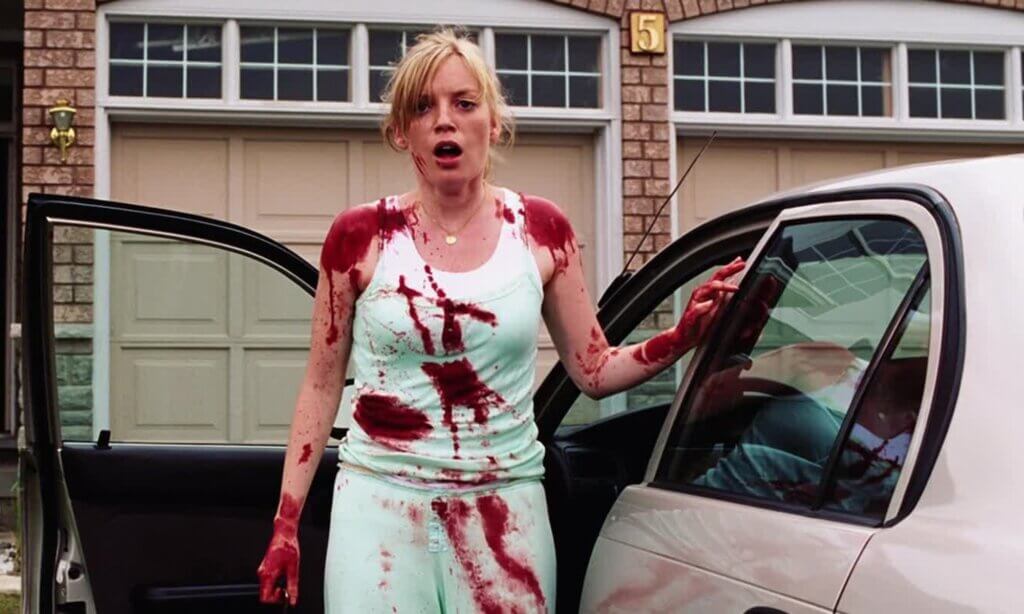
So, the America in which Dawn of the Dead was remade was a society with apocalyptic dread in the news and survival horror games as entertainment. Director Zack Snyder and screenwriter James Gunn (years before they became rival faces of DC superhero films) had to make it clear that Romero’s zombies were still relevant, something that the crew behind the 1990 Night of the Living Dead remake never quite pulled off. To start with, the job required some shifts in tone, with the humorous aspects of the original Dawn reduced. There would be much less cheesy shopping mall muzak, and certainly no pies in faces: horror had already laughed itself to bits with Scream and Buffy the Vampire Slayer. It was time for the genre to be reassembled.
The film begins with protagonist Ana returning home from work to her husband and the kid next door, even though Fran – her counterpart in the original film – had no such home life. A cynical viewer will jump to the conclusion that Gunn and Snyder are following the most tedious impulses of film remakes: needlessly elaborating upon mundane details that were justifiably skipped over by the original. This impression would be unfair, however, as the domestic prologue soon turns out to be a tightly paced and cleverly constructed piece of work.
First, it introduces the zombie outbreak by having Ana conspicuously ignore news reports and hearsay occurring in the background: a wry detail that would later be used to more broadly comic effect in Shaun of the Dead. Then, it brings the horror to her home in an abrupt manner by having the bloody-mouthed neighbour girl – who has been zombified off-screen – walk into Ana’s bedroom and bite her husband. This prompts Ana to go on the run through a suburbia rapidly falling into chaos, the milieu of green lawns and white fences scarred by spilt blood and exploding vehicles. And so, the essential rules of Romero’s zombies are reestablished both stylishly and succinctly.
The plot slides into more familiar territory by having Ana team up with some other survivors and head to a shopping mall for shelter. Soon, though, we see the biggest narrative alteration carried out by the remake: the enlarged cast.
Romero’s film focused on four people hiding out in the mall, with some antagonistic bikers arriving for the climax. The remake follows five people to the mall, where they meet three security guards who have already claimed the building as their own and take unkindly to newcomers. The hostility gives way to an uneasy semi-alliance, after which a truckload of more survivors turn up, representing age groups from twenties to senior (and, in a first for the series, a gay character). Finally, an adjacent building is home to a survivor of its own; he communicates with the mall-dwellers via hand-written placards. In this respect, the remake captures some of the original Night, in which a succession of characters emerged from the basement of the seemingly empty farmhouse.
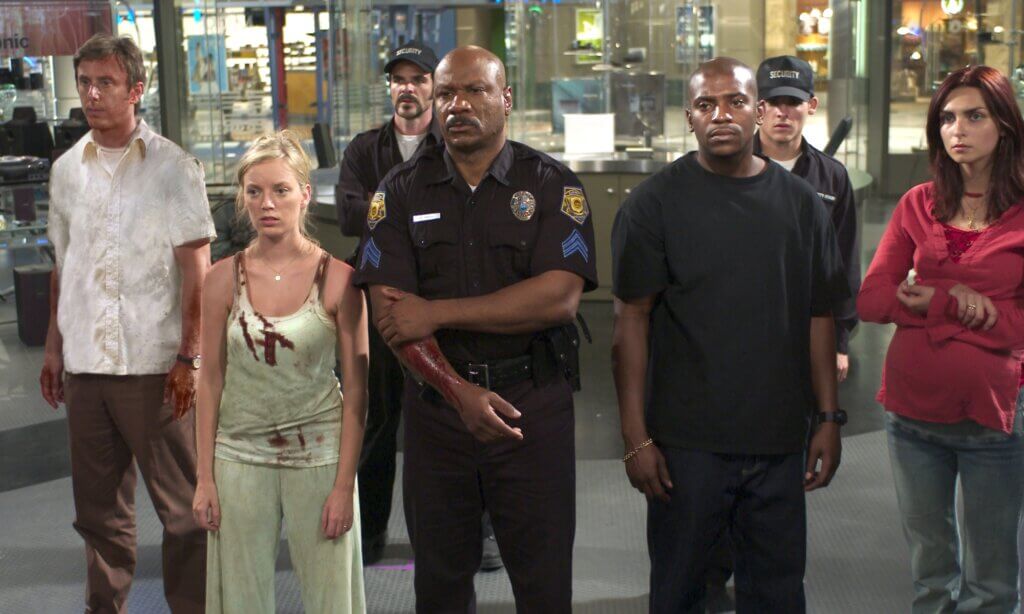
The diverse backgrounds of the survivors give the film plenty to explore in terms of interactions, with discussion topics ranging from the frivolous consumerism of the surrounding mall to deeper matters such as religion. One character is a Catholic cop, who has a memorable scene in which he gives advice to another survivor, a former burglar who wants a new life. Meanwhile, the original film’s famous line, “When there’s no more room in hell, the dead will walk the earth,” is put into the mouth of a televangelist (played by the original Dawn’s lead Ken Foree in a cameo):
Hell is overflowing, and Satan is sending his dead to us. Why? Because you have sex out of wedlock. You kill unborn children. You have man-on man-relations, same-sex marriage. How do you think your God will judge you? Well, friends, now we know. When there’s no more room in hell, the dead will walk the earth.
These lines are an unmistakable echo of some notorious comments made by real-world televangelist Jerry Falwell in the days after the attack on the World Trade Centre:
What we saw on Tuesday [September 11], as terrible as it is, could be minuscule if, in fact, God continues to lift the curtain and allow the enemies of America to give us probably what we deserve. […] The abortionists have got to bear some burden for this because God will not be mocked. And when we destroy 40 million little innocent babies, we make God mad. I really believe that the pagans, and the abortionists, and the feminists, and the gays and the lesbians who are actively trying to make that an alternative lifestyle, the ACLU, People for the American Way, all of them who have tried to secularise America, I point the finger in their face and say, ‘You helped this happen.’
Despite the meaty subject matter at its disposal, the film sags a little in its midsection. It offers lots of conversations and relaxation on the part of the characters and only the occasional moment of tension. The general ambiance is inescapably similar to Big Brother, another contemporary phenomenon that did so much to shape the media landscape. We watch a set of mismatched individuals lounging around a room and steadily get picked off one by one – although their fates are meted out by the zombie infection, rather than the viewing public.
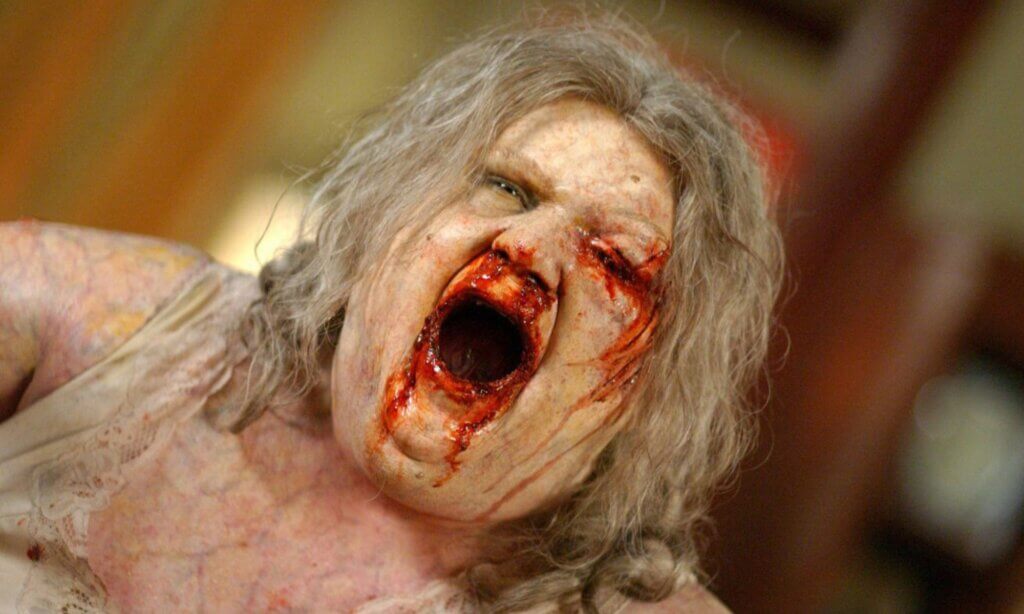
The pace picks up for the climax, which ditches Romero’s conflict with the biker gang. Instead, the focus is on the survivors mounting an escape, their elaborate plan hitting a number of mishaps in the process. The film successfully balances moments of hope with a decidedly hip cynicism, all conveyed through Zack Snyder’s characteristic bombast (slow-motion close-ups of firearms being a particular favourite). All of this ends in the only way that it ever could: with Disturbed belting out Down with the Sickness over the credits. Splatterpunk? No, this is the era of splatternumetal.
As mentioned, the Dawn of the Dead remake had a warm reception upon release. The general response from critics was summed up when Roger Ebert (who had apparently not yet grown weary of video game targets) concluded that the new film was inferior to the original, but still a solid piece of work in its own right. Even if 28 Days Later remained the more respectable zombie film, Dawn showed that Romero’s zombies still had appeal.
This was good news for Romero. After a long wait, the time was finally right for the fourth installment of his Living Dead series……
Next: Back to the comic shop…
