

The Atlanta convention Dragon Con handed out its eighth set of Dragon Awards on Sunday. Voted for by the public via an online poll, the awards have been a fixture of the annual convention since 2016 and celebrate science fiction and fantasy storytelling across a variety of media.
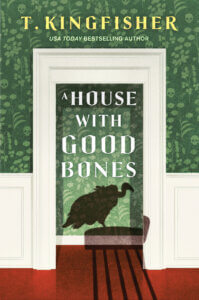
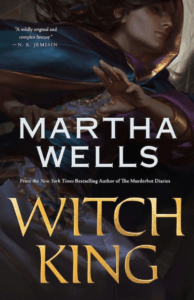
The Best Science Fiction Novel category was won by Timothy Zahn’s The Icarus Plot, a sequel to his 1999 novel The Icarus Hunt. The victory marks the fifth novel written or co-written by Zahn to win a Dragon Award. The title of Best Horror Novel went to T. Kingfisher’s A House With Good Bones: this was Kingfisher’s third win in the horror category, and her fourth Dragon Award overall. Meanwhile, Witch King by Martha Wells was named Best Fantasy Novel. Although Wells has won multiple Hugo, Locus and Nebula awards for her Murderbot Diaries series, this is her first Dragon Award.

Naomi Novik claimed her second Dragon when her novel The Golden Enclaves won in the category for young adult and middle-grade fiction. A. G. Riddle, a new face on the SF/F awards circuit, won the Dragon Award for Best Alternate History Novel with his book Lost in Time.
The first season of Netflix’s The Sandman won in the television category, while Dungeons & Dragons: Honour Among Thieves took the crown for Best Science Fiction or Fantasy Movie.
Category changes
The seven categories covered above have been around since the inception of the Dragon Awards back in 2016. The rest of the ballot, however, was shaken up by a set of categorisation changes announced in November.
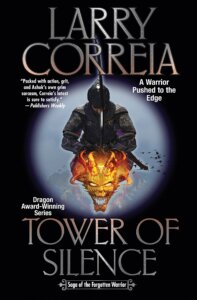
To start with, this year’s Dragons feature an all-new award: Best Illustrative Cover. The inaugural winner was Kurt Miller’s cover art for Tower of Silence, a novel by Larry Correia. This beat out contenders from Kieran Yanner, Sam Shearon, Cedar Sanderson, Jackson Tjota and Jeff Brown.
Another change concerns the comic awards. While the Dragons previously had one category for graphic novels and another for ongoing comic series, these are now folded into a single award for Best Comic Book or Graphic Novel. The winner this year was Dune: House Harkonnen, from writers Brian Herbert and Kevin J. Anderson and artist Michael Shelfer. This was the second comic based upon Frank Herbert’s Dune saga to win a Dragon Award, with Dune: House Atreides Volume 2 having won Best Graphic Novel last year.
Similarly, the Dragon Awards’ four gaming categories have been consolidated into two awards: one for digital games, the other for tabletop games. The former prize went to Nintendo’s The Legend of Zelda: Tears of the Kingdom, while the latter was claimed by the Magic: The Gathering line The Lord of the Rings: Tales of Middle-earth. The Magic franchise previously scored four victories in the Best Science Fiction or Fantasy Miniatures/Collectible Card/Role Playing Game category, and its popularity has evidently survived the removal of that particular award.
Finally, the Dragon Awards have removed two novel categories outright: Best Media Tie-In and Best Military Science Fiction or Fantasy Novel. In all, the changes bring the total number of categories from fifteen to eleven.
Controversies and calls to arms
Content warning: strong language
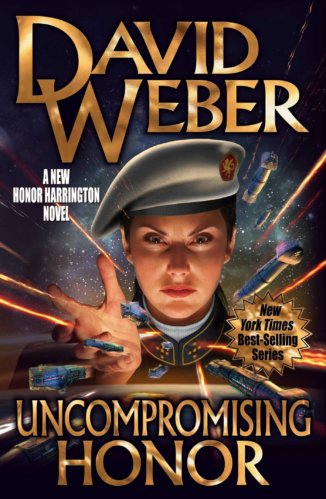
The removal of the military fiction category prompted a backlash from fans of the genre. In turn, the criticism prompted David Weber, a four-time winner in the category, to give his thoughts in a Facebook post back in November.
“Like a lot of you, I intend to advocate to get it changed, to get our category restored to the awards,” said Weber. However, he also acknowledged that the move to remove the category was a pragmatic one, based upon limited interest from voters: “the decision to eliminate the award for military science-fiction/fantasy was made, according to DragonCon, because this was the ‘least-nominated, least-voted” category, so if something was going to be pruned, it made sense to prune the award which had had the least support.”
Weber concluded his post by putting pressure on fans to contact the convention and ask for the category to be reinstated. If the military award were to be lost permanently, he said, “then it will be a self inflicted wound.”
The following day, Larry Correia — another four-time Dragon Award winner, and previously notorious as the founder of the Sad Puppies campaign at the Hugo Awards — made his own Facebook post with a similar argument phrased in rather more caustic terms. Correia dismissed claims that Dragon Con had “gone woke” and called such assertions “doomer black pill posts.” Like Weber, Correia ended his post with a call to action. His preferred solution to the supposed problem was to get an independently-published work of military SF nominated in the Best Science Fiction Novel category:
What you indy Mil-SF guys should do, rather than being butt hurt, is pick a fucking champion, and crush the regular Sci-fi big tent genre award. There you go. I keep hearing all the indy guys talk about how huge their sales are, awesome. Then get your shit together and crush your enemies.
As the final line-up for Best Science Fiction Novel of 2023 is distinctly lacking in military SF, independent or otherwise, these enemies presumably remain uncrushed.
In July, another round of Dragon Award discontent manifested on the social media site previously known as Twitter (but which, we are obliged to report, is now called X.) This began with a post by a user named Aristophanes, whose resentment was aimed not at the category changes but at some of the contenders for the Dragons and other SF/F awards in recent years.
“THIS IS AN IMPORTANT THREAD,” began Aristophanes. “There are media & literary awards that can convey prestige upon a work, such as Nebula, Hugo, Dragon, and Locus awards. The problem is that cabals of woke nerds collectively do much of the nomination and voting. Time for some mischief.” This post was accompanied by a Nicolas Cage meme captioned “I’m Gonna steal The Dragon Awards.”
Aristophanes continued the thread by complaining that “there are large groups of lefties nominating their crappy tumblr [sic] tier fanfiction. Most notably the authors over at Tor Books, among others. These ‘people’ synergistically support each other in nominating their garbage for these various awards.” And so, Aristophanes provided a voting slate with picks for all eleven categories:
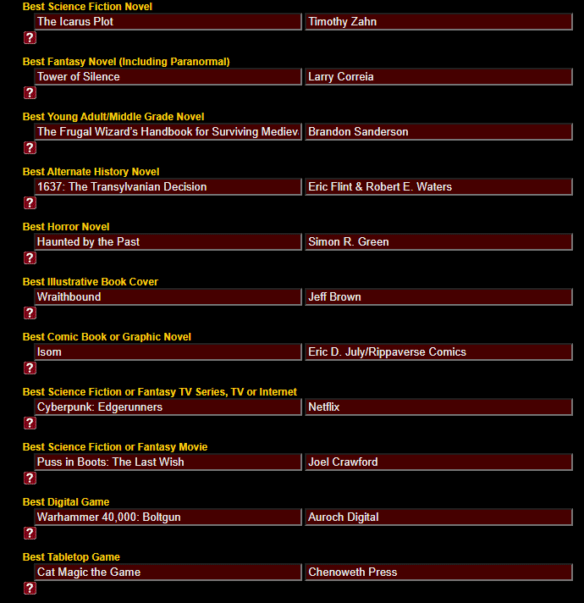
The slate was endorsed by Brian Niemeier, a far-right author who won a Dragon Award in 2016, and the activities of Aristophanes (who has upwards of 90,000 followers on X) were deemed notable enough to be covered at the prominent SF/F blog File 770.
The effect that the slate had upon the final ballot is hard to gauge exactly. It seems to have been small, however, as only four of Aristophanes’ eleven picks made the final cut: Timothy Zahn’s The Icarus Plot in Science Fiction Novel; Larry Correia’s Tower of Silence in Fantasy Novel; the illustration by Jeff Brown for Tim Akers’ Wraithbound in Book Cover; and Puss in Boots: The Last Wish in Best Movie. Of these, only The Icarus Plot won an award in its respective category.
The Zahn and Correia books were each written by prominent authors who have long been successful at the Dragons and so would have had a good chance of being nominated without help from Aristophanes’ slate. Likewise, a film as commercially successful as Puss in Boots is unlikely to owe its nomination to a social media campaign. Wraithbound was published by Baen Books, a company noted for its eye-catching (if sometimes divisive) cover art, and may similarly have had an above-average chance of making the ballot.
In addition, any effort to prevent Tor Books from winning the Dragon Awards would appear to have failed, as the publisher put out two of the novels honoured this year: Martha Wells’ Witch King and T. Kingfisher’s The House With Good Bones.
Back in 2017, Dragon Con president Pat Henry stated that those in charge of the awards “go through a number of steps to avoid ballot stuffing or other vote rigging behaviors.” Perhaps the lack of discernable effect from either Aristophanes’ slate-voting efforts or the campaign to save the military category shows that these measures are working. Then again, it could be simply that neither campaign gathered significant support to start with.

