


By Solène Mallet Gauthier and Stephanie Halmhofer
This text contains spoilers
Spriggan made a comeback in 2022 with the release of a deluxe edition of the complete original 1989-1996 manga series from Seven Seas Entertainment and a 6-episode Netflix animated series. In both the original manga and recent Netflix adaptation, Spriggan follows the adventures of the special secret agent Yu Ominae, a teenager charged with protecting, or destroying, powerful artifacts associated with a mysterious ancient civilization from political and military forces looking to use these objects for their own interests. In Part One of this three-part series, we’ll explore how Spriggan presents pseudoarchaology!
The new deluxe edition of Spriggan from Seven Seas Entertainment contains four deluxe omnibus volumes. At the time of writing, the first and second volumes were available, released in August and November 2022, respectively. The first volume contains five story arcs divided into 21 chapters while the second volume contains 16 chapters split into six story arcs. The new 2022-2023 release must not be confused with Viz Media’s previous partial release of Spriggan in North America in the late 1990s, under the title Striker. The Netflix animated series, released in June 2022, follows the manga closely; three of the six episodes are adaptations of four of the story arcs of the first deluxe volume, whereas two episodes present two of the story arcs contained in the second volume, each episode following an individual story. The manga also previously inspired an animated adaptation, a movie which notably involved Katsuhiro Ôtomo as supervising director, was released in 1998 and focused on a single story arc.
As two archaeologists, we noticed that references from pseudoarchaeology and conspiracy theories are central in Spriggan. Through these, themes such as militarization, foreign politics, and climate change are explored throughout the different chapters and episodes. While it can be argued that these themes are found in other Japanese media of the 1980s and 90s and express post-war anxieties (see Tsutsui, 2010), they remain popular and relevant today. Here, we discuss a selection of topics present in both the Spriggan manga and Netflix series by exploring their relation to pseudoarchaeology, conspiracy theories, and contemporary problems. We then briefly compare their treatment in the two first volumes of the re-released manga and the 2022 animated adaptation and relate them to present-day issues.
Pseudoarchaeological Themes in Spriggan
Aliens, Atlantis, and Other (Mis)uses of Archaeology
The main thread of Spriggan is that remains of an ancient extinct civilization, which possessed very advanced and potentially dangerous technology sometimes referred in the series as “OOPArts” (out-of-place artifacts), are found all over the world. In the story, various paramilitaries, national armies, and private forces who are aware of the existence of these ancient technologies use archaeology to uncover and steal them to can use the technologies for their own often nefarious purposes. Spriggans are special agents working for ARCAM, an organization whose purpose is to protect the OOPArts and prevent them from being taken into the wrong hands.
These ideas are not only found in works of fiction such as Spriggan. In fact, the belief that powerful, technologically-advanced ancient civilisation(s) once existed throughout the world is a central theme in archaeological conspiracy theories referred to as pseudoarchaeology – theories that use (or invent) archaeology to propose alternative narratives about human history. Pseudoarchaeological theories have been around for a long time, and the concept of OOPArts became a popular addition after the publication of Charles Fort’s Book of the Damned (1919), in which Fort stated that: 1) unusual objects had been found at archaeological sites, and 2) common types of artifacts had been found in unusual locations. Specifically referencing extraterrestrials, Fort concluded that strange artifacts or artifacts found in strange locations, which later became popularly referred to as out-of-place artifacts, were “not a product of any old civilization indigenous to this earth” (Fort, 1919, pp. 129).
Pseudoarchaeological arguments intentionally downplay or ignore contradictory archaeological knowledge while also claiming that archaeologists are trying to hide the truth of these claims. Who this ‘advanced civilization’ was varies, with the most popular beliefs being that they were either extraterrestrials/aliens or Atlanteans from the mythological continent of Atlantis. Some theories have even suggested that Atlanteans were extraterrestrials. Regardless of who, the story is always generally the same – that [extraterrestrials, Atlanteans, etc.] traveled around the world sharing knowledge, technology, architecture, sometimes even genetically modifying humans because humans could not do anything themselves.
While stories about alien or Atlantean interference in our human past may sound silly and easy to brush off as something worth paying attention to, pseudoarchaeological claims are inherently racist. Even when not overtly written as so. Pseudoarchaeological claims rely on a superiority versus inferiority argument, in which one group of people is deemed to have been too inferior to have accomplished anything without intervention from the more superior group of people. The overwhelming majority of pseudoarchaeological claims seek to cast doubt on the achievements of Black, Indigenous, and many additional communities of colour around the world, in which their histories are intellectually and physically stolen and given to a more ‘superior’ or ‘advanced’ civilization, be it alien or Atlantean. An additional concern for pseudoarchaeology is how it also connects to a broader web of dangerous disinformation, including everything from anti-vaxx movements, to QAnon, to far more violent far-right extremists.
In the second story arc of the first re-released volume of Spriggan, “Legend of the Mask” there are allusions to aliens being at the origin of an advanced civilization, and to the famous city of Atlantis. Here, the funerary jade mask of the Mayan ruler Pakal is presented as being a living computer holding the memories of Quetzalcoatl, who was revered as a god but in fact descended from alien ancestors. In Spriggan, these extraterrestrials are the creators of the technology needed to establish the various civilizations of Mexico and South America.
On the other hand, Quetzalcoatl’s archnemesis Tezcatlipoca is described in Spriggan as the sole survivor of a foreign naval expedition who was attempting to escape war. Adopted by the Mayans, he became skilled in occultism, weather control, in the transformation of humans into animals (in this case, were-jaguars), and was also eventually revered as a god. Tezcatlipoca’s almost Greek-style clothing, general physical resemblance to Greek philosopher Plato, and backstory placing him as the sole survivor of a naval expedition escaping war, all imply that Tezcatlipoca may have traveled to Mexico from Atlantis. He appears to be modeled after ancient Greek philosopher Plato, from whom the Atlantis story originated over 2000 years ago and who wrote of Atlanteans engaging in numerous wars.
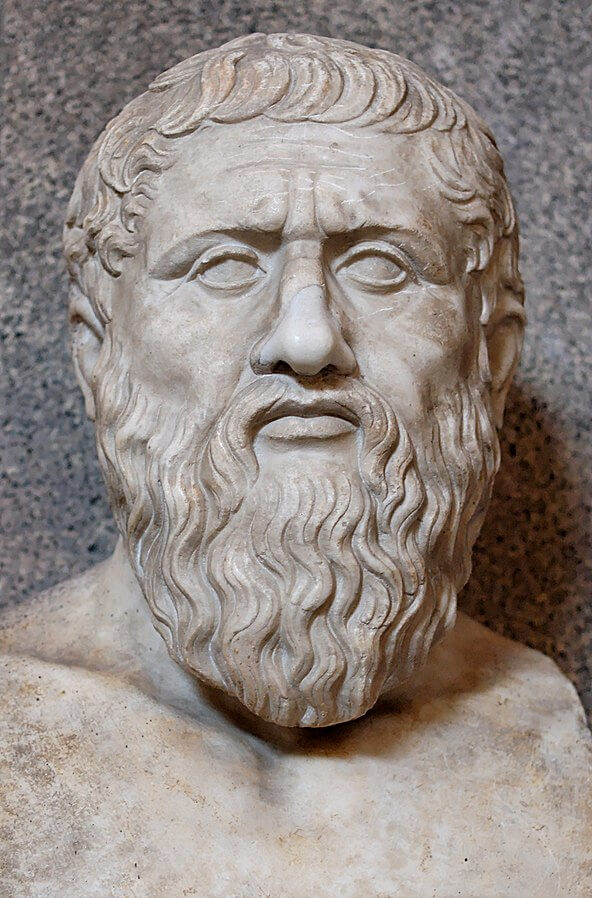
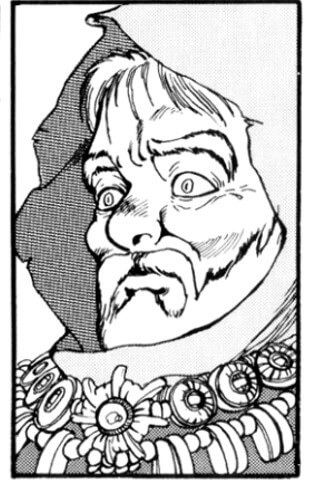
The connection between Mexico and the fabled lost city of Atlantis is not original to Spriggan. In fact, there is a long history of attempts at connecting Atlantis to the Americas, which goes as far back as the 16th century. In the mid-19th century, historians and archaeologists like Charles-Étienne Brasseur de Bourbourg and Augustus Le Plongeon claimed to have deciphered Maya writing that revealed the Atlantean history of the Americas. Brasseur de Bourbourg (mis)translated the Madrid Codex into a story about the sinking of Atlantis, which he called Mu in his translations. In his book Quatre lettres sur le Mexique (1868), Brasseur de Bourbourg detailed connections he perceived between Egypt and Mexico and argued they shared common intellectual ancestry from Atlantis. In the mid-1880s, Le Plongeon and his wife Alice took Brasseur de Bourbourg’s ideas one step further and argued that ancient Egyptian knowledge and wisdom had been brought to them by Atlanteans, who themselves had learned it from the ancient Maya. At around the same time, American politician Ignatius Donnelly published Atlantis: The Antediluvian World (1882), which also built on Brasseur de Bourbourg’s claims of a Mexico-Atlantis connection but differed from Le Plongeon in that he believed Egypt was the oldest Atlantean colony and that Atlanteans took knowledge to the ancient Maya, not from the ancient Maya. Atlantis: The Antediluvian World gained huge popularity very quickly and became foundational to contemporary versions of the Atlantis legend.
The “Legend of the Mask” story arc illustrates a broader pseudoarchaeological trend where attempts have been made to connect archaeological sites from various parts of the Americas with a hypothetical extraterrestrial presence. Indeed, Mexican, Central American, and South American histories have also often been claimed as evidence for pseudoarchaeological theories involving alien presence in human history, and some of those, such as theories proposed by French author Robert Charroux, have even drawn Atlantis into the mix.
Mexican, Central American, and South American histories have also often been claimed as evidence for pseudoarchaeological theories involving alien presence in human history.
Tiahuanco, in Bolivia, is one of the most popular targets for both Atlantis theorists and ancient aliens theorists, due in large part to its incredible architecture, which pseudoarchaeological theorists claim was too complex for humans to have constructed. In his 1963 book One Hundred Thousand Years of Man’s Unknown History, Charroux argued that Tiahuanaco was the oldest city in the world, and he mused about two dramatic claims. The first was that Tiahuanaco had been constructed and inhabited by Atlanteans. And the second was that those Atlanteans were actually aliens from the planet Venus. Similar to Le Plongeon’s theories, Charroux believed that Atlanteans brought their knowledge to Egypt via “the Man from Tiahuanaco,” who he suggested was the same man the ancient Greeks later called Prometheus (Charroux, 1970, pp. 53).
Atlantis is also regularly referenced throughout the manga and the Netflix series Spriggan by mentions of orichalcum, which recent studies have shown is a copper-zinc alloy better known as ‘brass.’ In Spriggan, orichalcum was used to build Ominae’s super-suit as well as ultra-resistant weapons used by other agents. ARCAM was the first to develop orichalcum suits, but eventually Trident, who are some of the bad guys trying to turn OOPArts into weapons, made their own orichalcum suits. In reality, orichalcum was used in the distant past not for making fighting suits, but rather for making things like coins. It became part of the Atlantis story through Atlantis’s creator Plato, who wrote that in Atlantis the orichalcum was used for many things (e.g. on walls, on statues) and that only gold was more valuable.
God’s Dinosaurs and Portals to Hell
Like many other manga and anime series, such as Trigun, Spriggan often draws inspiration from religious myths, borrowing elements from stories found in primarily Christian (but also Jewish, Islamic, Hindu, etc.) texts to craft its OOPArts. However, it goes beyond simply adapting well-known religious stories to suit its purposes and often adds a pseudoarchaeological or conspiracy theory-related twist to the original sources. This isn’t actually much different from a common real-world use of pseudoarchaeology.
Archaeology has long been seen as an authoritative science that can be used to legitimize religious, idealized, and/or mythologized narratives (Lewis, 2012). However, when pasts have been idealized or mythologized, there usually isn’t straightforward archaeological evidence that can back them up. Instead, pseudoarchaeological theories, which give the appearance of legitimate-but-stigmatized archaeology, may instead be used or created as support.
When pasts have been idealized or mythologized, there usually isn’t straightforward archaeological evidence that can back them up. Instead, pseudoarchaeological theories, which give the appearance of legitimate-but-stigmatized archaeology, may instead be used or created as support.
The Church of Latter Day Saints (also known as the Mormon church) is perhaps one of the better known examples of the use of archaeology and pseudoarchaeology to prove religious narratives. For example, the LDS church has employed archaeologists to find proof that the events in the Book of Mormon took place in Mesoamerica (Lewis, 2012). More recently, one of the authors of this article has been observing a fringe Mormon group engaging in archaeological excavations in the United States and reinterpreting Indigenous archaeological sites and belongings into pseudoarchaeological narratives to argue that the events of the Book of Mormon took place in the United States.
Another example more directly related to Spriggan is the archaeological search for Noah’s Ark. Spriggan has several chapters and an entire Netflix episode related to the biblical story of Noah’s Ark, in which the Ark in fact consists of a powerful and dangerous ancient terraforming device. One of the most well-known stories from the Bible’s Book of Genesis, God instructs Noah to build a ship large enough to hold himself, his family, and at least two of every single animal on Earth because God is about to flood the Earth and destroy the wicked. After the flood recedes, the Ark is said to have come to rest on the Mountains of Ararat in Turkey.
Like the search for the fabled Atlantis, there have been a number of real attempts made to locate the remains of the Ark. Some have even been government-led, as will be discussed later. The searches, which are usually connected to evangelical groups and individuals, have naturally been focused primarily in Turkey. One of the most recent and most ambitious searches was conducted by the Noah’s Ark Project, who have been investigating what they described as a boat-shaped formation originally identified in Turkey in 1959. With media interest from the History Channel, a group of Turkish scientists have been conducting extensive geophysical tests, using technology like ground-penetrating radar, LiDAR, and magnetometry, at the location and even have plans for archaeological excavations, though nothing they have uncovered so far has indicated the ship formation is anything but a natural geological formation.
In Spriggan’s Noah’s Ark episode and chapters, the Ark is also shown to contain dinosaurs, and other large, unknown (possible pre-dinosaur) creatures preserved within the Ark, referencing a creationist belief that dinosaurs existed alongside humans. While as archaeologists we’re always quick to say archaeologists don’t have anything to do with dinosaurs, the truth is that sometimes we do have to talk about dinosaurs. The Acámbaro figures are one of those times. The figures, which appeared in Mexico in the 1940s, pop up from time to time in creationist theories and have been used as archaeological evidence to support those theories. The small clay figures, of which there are thousands, resemble a variety of creatures, including dinosaurs and even humans riding dinosaurs. As early as the 1950s the figures were determined to be a hoax, and in the 1970s specialized dating methods helped determine that the figures had been created shortly before their “discovery” and they weren’t ancient. Despite that, from time to time the figures are still presented as being authentic.
While as archaeologists we’re always quick to say that archaeologists don’t have anything to do with dinosaurs, the truth is that sometimes we do have to talk about dinosaurs.
The Tower of Babel, another popular biblical story, is about a rebellion against God and also seen as an explanation for the variety of languages in the world, even though the Bible doesn’t use the phrase “Tower of Babel” or even attribute it to the leadership of Nimrod’s, the great-grandson of Noah. Despite this, the general story found in the Book of Genesis is that survivors of the great Flood all spoke a singular language. They came and built a city called Babel, which is generally thought to refer to Babylon, in a place called Shinar (Mesopotamia). In an act of defiance against God, and as part of a desire for fame, the builders decided to construct a grand tower tall enough to reach into Heaven, under Nimrod’s leadership. God didn’t like that people were working together and was concerned: if the people could unify to build a tower, what else could they accomplish? So in an attempt to stop them, God confused their language so that no one could understand each other, and then scattered everyone around the world.
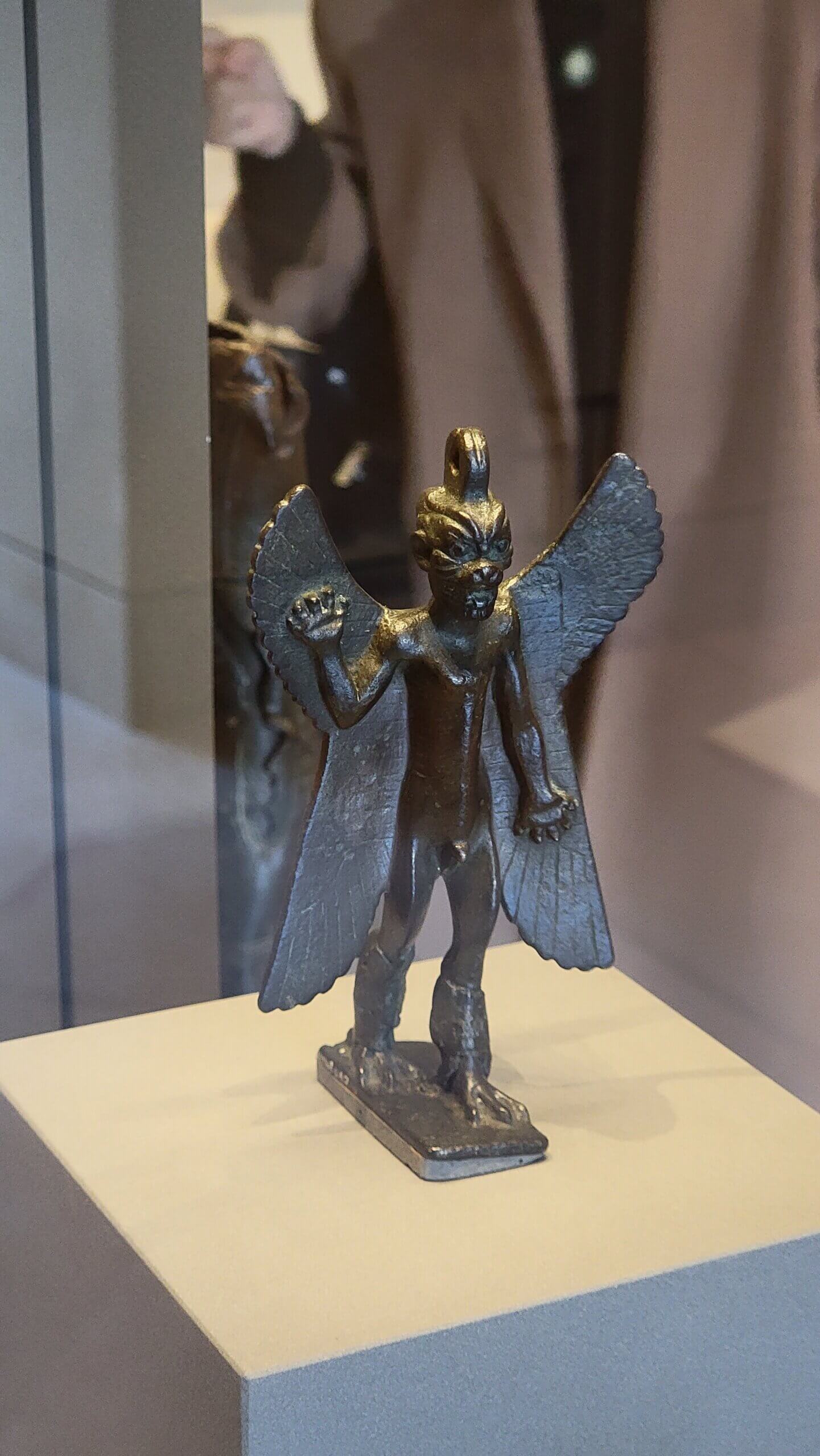
The Tower of Babel story is adapted in the second volume of the Spriggan manga. Here, it is stated that two towers were initially built, one to converse with the heavens and the other, an “inverted” Babel, to call forth the demon Pazuzu. This demon, invoked through a large human sacrifice over a magic hexagram, is said to correspond to the notion of chaos, which would then erase the individual thoughts, values, and memories of all living beings on earth. This depiction of the Tower of Babel does share some similarities with current popular conspiracy theories.
Like Atlantis, like Noah’s Ark, people have searched for the tower’s archaeological traces and come up empty, though many believe that the Etemenanki ziggurat in Babylon, which is a real place located in what is now Iraq, may have been an inspiration for the Bible’s description of the Tower of Babel. Because the Tower of Babel was written as having been constructed to essentially create an opening into Heaven, sometimes the tower is invoked in conspiracy theories regarding spiritual portals, stargates, and wormholes. For example, CERN’s Large Hadron Collider has been described in several conspiracy theories as a scientific device created to open a doorway into spiritual realms, including into Hell, and has been called a “modern day Tower of Babel.” Other conspiracists have said that the original Tower of Babel was a stargate, and that CERN scientists are acting like Nimrod and attempting to recreate their own Tower of Babel. Other conspiracists have connected the tower to the popular New World Order conspiracy theories, focusing on the tale of rebellion and what they view as Nimrod trying to take control of the world away from God, describing the Tower of Babel as the first attempt at establishing a totalitarian world government, or a New World Order.
In Part Two of this three-part series we’ll explore how Spriggan presents politics and conspiracy theories through pseudoarchaeology!
References cited (but not linked)
Brasseur de Bourbourg, Charles-Étienne. 1868 Quatre lettres sur le Mexique: Exposition absolue du système hiéroglyphique mexicain, La fin de l’âge de pierre, Époque glaciaire temporaire, Commencement de l’âge de bronze, Origines de la civilisation et des religions de l’Antiquité. Auguste Durant et Pedone, Paris (France).
Charroux, Robert. 1963 Histoire inconnue des hommes depuis cent mille ans. Robert Laffont, Paris (France).
Donnelly, Ignatius L. 1882 Atlantis: The Antediluvian World. Harpers & Brothers, New York (New York).
Fort, Charles. 1919 The Book of the Damned. Boni and Liveright, New York (New York).
Leslie, Desmond and George Adamski. 1953 Flying Saucers Have Landed. Werner Laurie, London (UK)
Lewis, James R. 2012 Excavating Tradition: Alternative Archaeologies as Legitimation Strategies. Numen 59(2012): 202-221.
Pauwels, Louis and Jacques Bergier. 1960 Le Matin des magiciens, introduction au réalisme fantastique. Gallimard, Paris (France)
Tsuitsui, William M. 2010 Japanese Popular Culture and Globalization. Key Issues in Asian Studies No.6, Lucien Ellington (series editor). Association for Asian Studies, Ann Arbor (Michigan).
von Daniken, Erich. 1968 Erinnerungen an die Zukunft: Ungelöste Rätsel der Vergangenheit. Econ-Verlag, Berlin (Germany).


