


Editors Note: This review is part of a series of reviews from the Hot Docs Festival that took place from April 27th to May 7th 2023 in Toronto, Canada.
In Still: A Michael J Fox Movie, film and TV actor Michael J. Fox takes audiences through his life, from a Canadian youngster to a household name, and how his 30-year-long journey with Parkinson’s disease has impacted his life, his family, and the way he moves through the world.
Still: A Michael J. Fox Movie
Michael J. Fox (writer), Davis Guggenheim (director), Michael Harte (editor), Julia Liu (cinematographer), Clair Popkin (cinematographer)
Michael J Fox, Tracy Pollan (cast)
May 1, 2023 (Hot Docs)
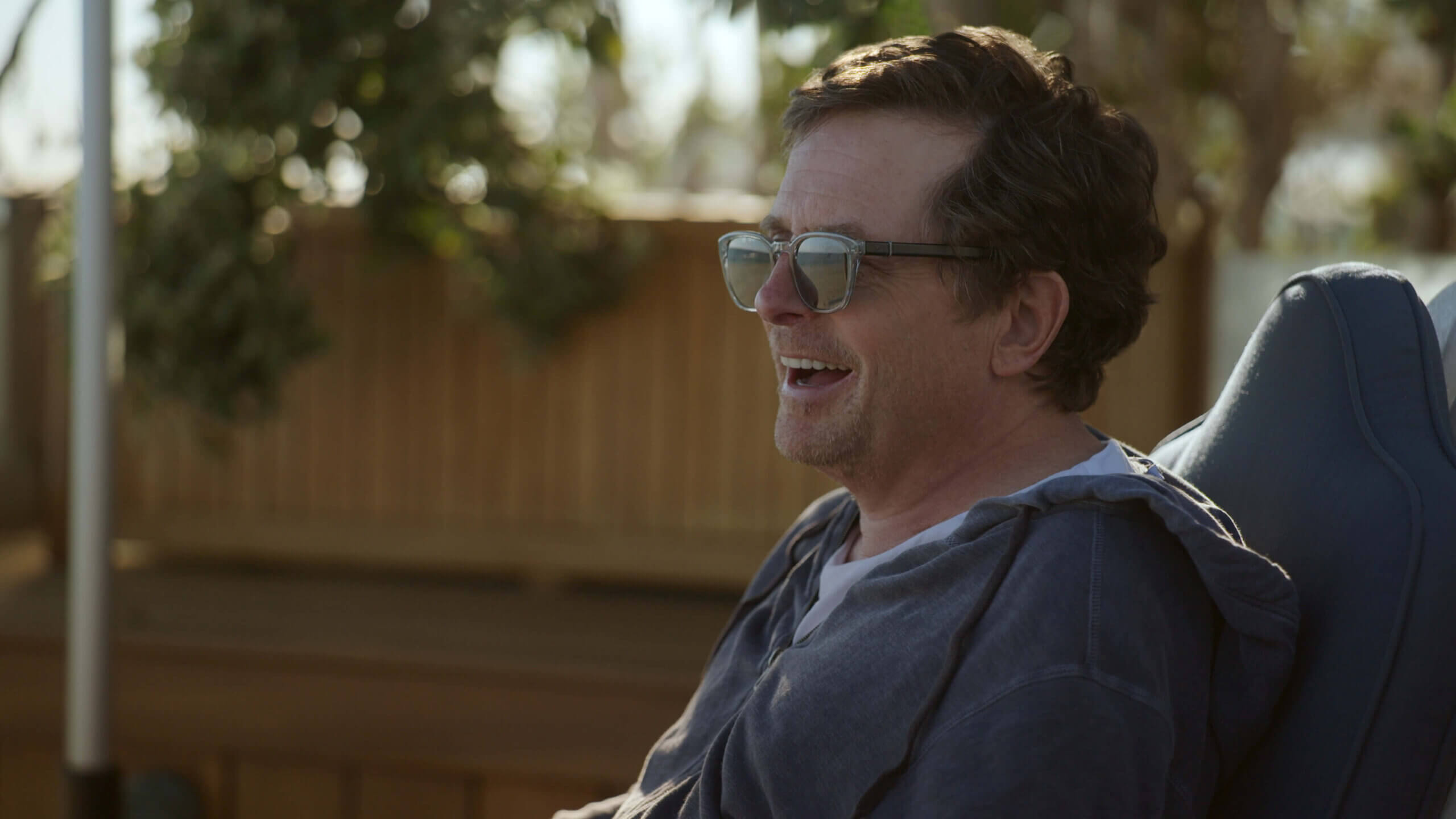
I enjoy documentaries, but don’t often watch the ones about celebrities. Never meet your idols, they say. Well, a documentary is as close as many of us will get to a movie star, and usually, I come away learning something about them that I don’t like. However, I had to watch Still: A Michael J. Fox Movie at Hot Docs 2023. Why? Because I’ve been watching Michael J. Fox for 20 years. For a long time, I knew of a film called Back to the Future—my dad would tell us about it. Then in 2002, we finally saw it and promptly fell in love. Fox’s Marty McFly was just the kind of hilarious dork we saw ourselves in. We’d never encountered Fox before Back to the Future, but following the trilogy’s arrival on our TV screens, Fox was suddenly everywhere. We caught a few reruns of Family Ties, and we saw a whole bunch of his films, The Hard Way, For Love or Money (our introduction to the term ‘concierge’), Greedy, The Frighteners, and the not-at-all humorous The American President.
We also learned that Fox had early-onset Parkinson’s and today advocates for better resources to research the incurable disease.
Over the years, I’ve watched many interviews with Fox, including his congressional hearing, and I’ve heard his 2020 audiobook, No Time Like the Future: An Optimist Considers Mortality. I expected Still: A Michael J. Fox Movie to examine Fox’s struggles with Parkinson’s, and I admit I was concerned going in. I’d seen Angel Applicant at Hot Docs the week before, and it was a distressing medical onslaught. I didn’t know if I could handle a similar experience so soon after.
But Still: A Michael J. Fox Movie doesn’t dwell on the medical toll of Parkinson’s. Fox understands most viewers will not want to spend two hours listening to him talk about the difficulties of living with this disease. Instead, what we get is a chronology of his life and work. Through narration and a talking head interview with director Davis Guggenheim, Fox talks about being a child on the move, constantly having to run because he was always the smallest at his school. The film punctuates Fox’s descriptions of his height with illustrative group photos where Fox would have to be pointed out because he was so small—much to the amusement of the audience.
Fox then takes the viewer through his career, meeting his wife, fellow actor Tracy Pollan, and how having children affected him. But he doesn’t hold back when discussing the darkness that comes with sudden fame or the depression his diagnosis sent him into. I’ve always been under the impression that actors have a wealth of confidence, but in Still, Fox posits otherwise—that actors spend most of their day pretending to be someone else because of their deep insecurities. It seems that was the case with him, though watching the many interviews and seeing all the magazine covers with his face plastered on them would say the opposite. I found Fox’s assertion weirdly uplifting—if someone that funny, good-looking, and popular could feel insecure, us normies should get a pass.
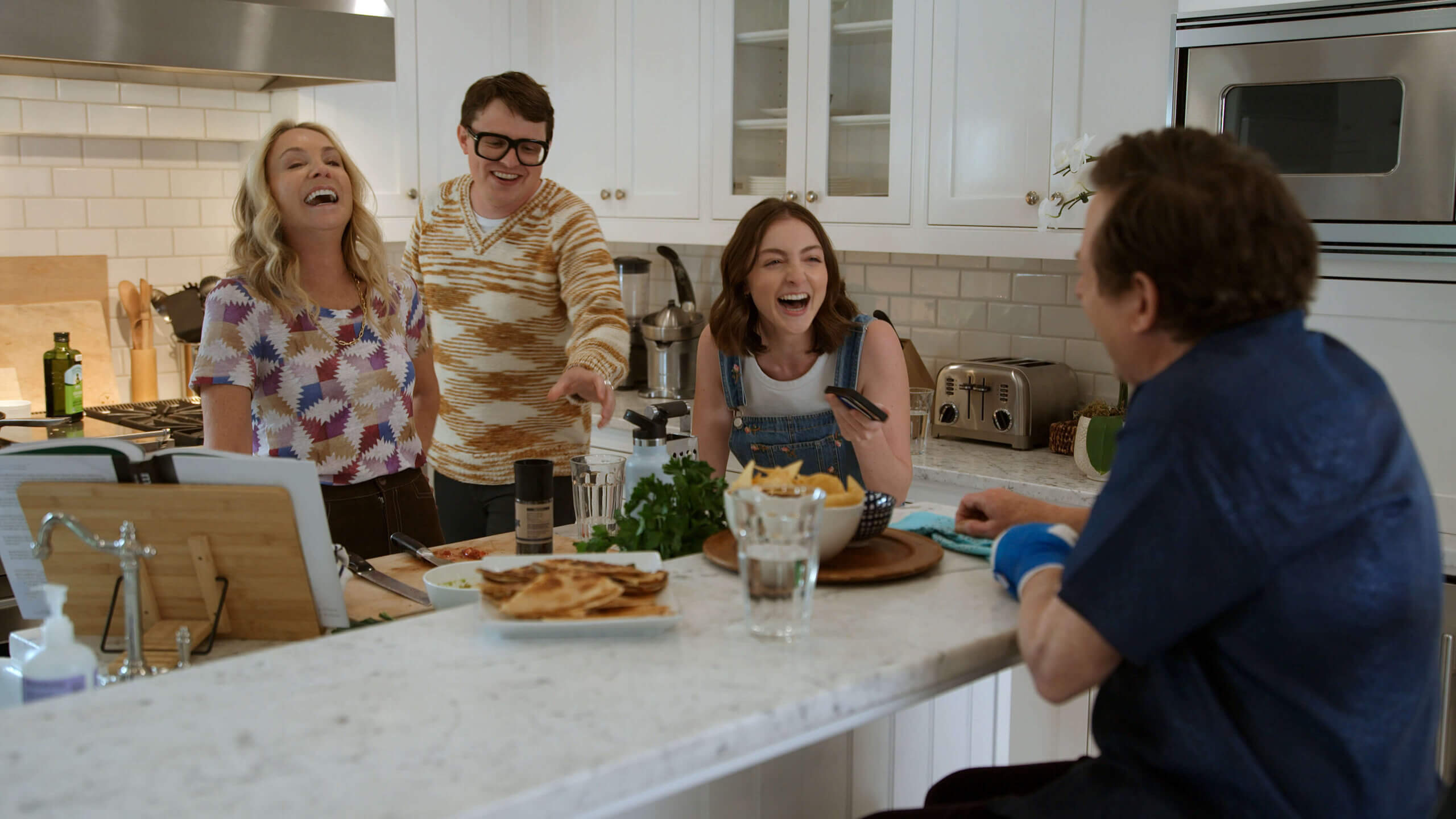
It may be strange to say this about a documentary but Still is positively cinematic. Using a mix of on-camera interviews with Fox, archive footage from his childhood, dramatic re-enactments of key moments from his life, and cleverly spliced scenes from his films and TV shows, Still: A Michael J. Fox Movie brings to the big screen so many incidents that I’d only ever heard Fox talk about in interviews.
For example, the opening scene takes the audience to the first time Fox got an inkling about his Parkinson’s. It’s a remarkable scene whether one knows the story or not, and I got chills watching it. There’s a sequence that recreates the three and a half months Fox worked on both Family Ties and Back to the Future that blew me away. Not gonna lie, when I heard the bars of Back to the Future’s theme, I teared up. It’s a remarkable sequence that captures how frantic and exhausting that time was for Fox and how his insecurity convinced him that neither product would be good. Only for Back to the Future to propel Fox to overnight fame.
Then there were times when the film felt like a fan video I was watching on YouTube, particularly when Fox and Pollan’s relationship was depicted through their on-screen appearances together. I found this surprisingly adorable, and it warmed my cold romantic heart.
Interestingly, the enormous success of Back to the Future and Family Ties brought Fox little solace. He tells Guggenheim that none of it was real and that he barely even knew who he was until he met Pollan. And then the diagnosis, which he chalks up to the universe balancing out his success. I wish Guggenheim had questioned Fox on this belief because it felt unfair to me. Why should an abundance of good things immediately be replaced with equal amounts, if not more, of bad?
Guggenheim is familiar with creating intimate portraits in his documentaries; his previous films include He Named Me Malala, following the events that led to Afghan student and now-activist Malala Yousafzai being shot. He’s also handled difficult subject matter like the American education system in Waiting for Superman and global warming in An Inconvenient Truth. Guggenheim expectedly asks Fox about his reaction to fame and the hard times he put his family through, but sometimes I felt the director wasn’t probing enough.
However, Guggenheim did manage to capture the good humour Fox continues to exude. Throughout Still: A Michael J. Fox Movie, Fox is incredibly funny but also self-deprecating. He’s so hard on himself, which I noticed in his book, as well. However, he does know when to put his foot down. Following a series of injuries that required surgeries, his family keeps telling him to be careful. But Fox can only be so careful—Parkinson’s has impacted his ability to walk and he does tend to trip and fall. Fox also struggles to slow down, despite repeated pleas from his physiotherapist. As Fox explains, his brain is racing ahead, but his body just can’t catch up.
I found it distressing that Fox spent seven years hiding his illness from the world, even as he took more and more medication to mask his ever-increasing tremors. There’s a long sequence that demonstrates the various techniques Fox used while filming Spin City to keep his tremulous left hand out of sight of the camera. It made me think of Chadwick Boseman, who also felt he had to keep his cancer diagnosis a secret from Hollywood. The extent of Boseman’s illness was only revealed after he passed away from the disease. So little has changed in 30 years in the entertainment industry—illness must still be hidden for actors to have a career.
The hardest part of Still: A Michael J. Fox Movie was unsurprisingly when Fox described dealing with the news of his diagnosis. With uncertainty ahead, Fox turned to substance and alcohol abuse to numb the pain, almost estranging him from his young family and causing outbursts of rage.
I would have liked to hear from Pollan, particularly about this period in their lives. While Pollan does make appearances in Still: A Michael J. Fox Movie, and there’s the aforementioned section dedicated to Fox and Pollan’s love story, it would have been great to get her perspective. As Fox says, Pollan pretty much became a single mother shortly after marrying him because he was at work so much. What was that like for Pollan? How did she feel when learning about Fox’s diagnosis? What was the impact on her career? I had the same question while watching Angel Applicant—why aren’t wives and caregivers given a voice?
But what I took away from Still was just how surprisingly funny it was. Fox continues to have the sense of humour that made him a superstar in the 80s and 90s. I wish the director could have asked Fox whether he feels he needs to make people laugh—is that what Michael J. Fox is meant to be to people? Someone who must make others smile and laugh even when he’s in pain? Guggenheim engages a little with Fox’s reluctance to talk about his pain—Fox insists it’s because Guggenheim didn’t ask him about it. To me, it felt like Fox didn’t want to inconvenience the director with the truth of his pain. But does he feel this way often? Does he still feel the need to hide his symptoms in front of others?
I wonder if this documentary could have also examined some of Fox’s privileges. Despite his condition, he has resources that other people with Parkinson’s don’t, such as a compassionate physiotherapist and of course, money. But the film is focused exclusively on Fox, not Parkinson’s, so I guess from that angle, it does make sense.
I was worried going into Still: A Michael J. Fox Movie, but it was a startlingly enjoyable and uplifting film. Fox’s charm and humour are undeniable, and Guggenheim’s techniques for bringing the past to life are remarkable. Aptly, I feel like I’ve travelled back in time with this film.
