

Beginning a series that celebrates the fifty-fifth anniversary of Night of the Living Dead with a look at the classic zombie film and its many follow-ups.
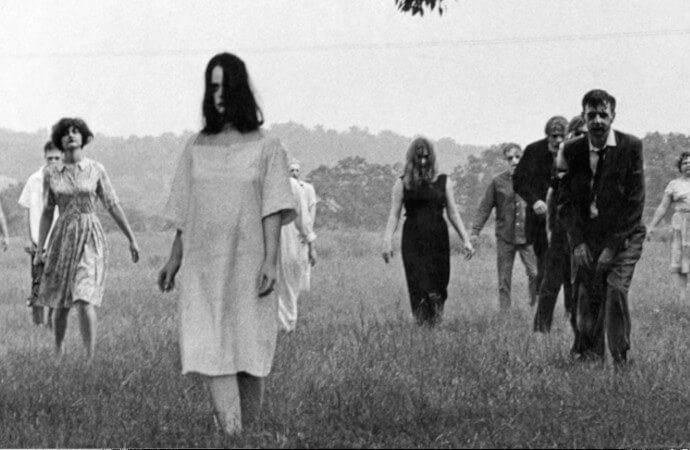
Back in 1968, the zombie apocalypse was only beginning. We can see this in just how fresh-faced and clean-cut the living dead were at the time.
Today, if you run an image search on “zombie,” you will be confronted with a gallery of hideous faces in various states of decomposition, many bordering on skeletal. In Night of the Living Dead, however, the zombies look, by and large, like people off the street. They are also capable of using tools – trowels for stabbing, rocks for smashing windows – thereby showing a degree of cunning absent from later zombies. The first zombie we see in the film is, for a brief period at least, even able to walk and run without shambling.
Were these 1968-model zombies transferred to real life, it seems likely that observers would assume them to be violent drunks, or perhaps doped up on PCP. Yet the main characters in Night of the Living Dead – the would-be survivors who end up gathered together in a farmhouse – clearly see something otherworldly about their assailants, identifying the ghouls variously as “things,” “creatures,” and “monsters.” Perhaps they had seen Invasion of the Body Snatchers, which was released twelve years previously and tapped into a similar strain of paranoia: what if the people behind you lost all individuality, all humanity, and became soulless monsters?

Indeed, at the time writer-director George A. Romero and his co-writer John Russo conceived Night of the Living Dead, the alien Body-Snatchers would have been the most obvious cinematic precursors to their ghouls. Before 1968, zombie films were sparse and scarcely formed a coherent genre. White Zombie (1932), I Walked With a Zombie (1943) and The Plague of the Zombies (1966) are about the best-regarded in the narrow category, unless we stretch definitions enough to include the various Mummy and Frankenstein films (and we would have some justification for doing so: given how they shamble, groan and recoil from fire, Night of the Living Dead’s zombie extras seem to be enacting a folk-memory of Boris Karloff).
These early zombie films have little in common with the genre as it would develop in the wake of Romero and Russo. Influenced by exoticised accounts of Afro-Caribbean folklore, their zombies are the products of black magic or hypnosis; do not necessarily gather in hordes; and can be interpreted as living people in trances, rather than the resurrected dead. The main exception on this last point is Hammer’s Plague of the Zombies, where the monsters are as unambiguous as walking corpses. Indeed, with their rotting faces and the memorable clawing-from-the-grave scene, the zombies in this film actually look closer to later interpretations of the zombie – as spoofed in Michael Jackson’s 1983 Thriller video, for example – than to any of the smooth-skinned revenants in Night of the Living Dead.
Yet Plague of the Zombies still lacks an essential ingredient that Russo and Romero brought to the table: the element of the apocalyptic. Hammer gave its zombie film a period setting, so the audience knew full well that the world will survive this small-scale outbreak of shambling corpses. The zombies also turned out to be the creations of a single evil magician – with the straightforwardly materialistic motive of raising the dead for cheap mining labour – so when he was thwarted, all was solved. Night of the Living Dead affords no such easy answers.
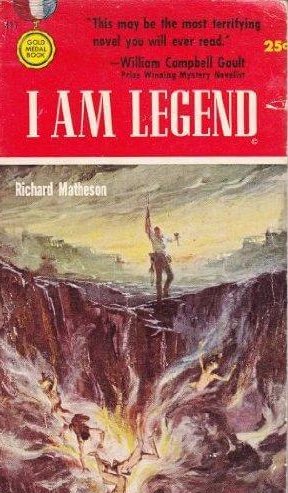
The most direct influence on the apocalyptic tone of Night of the Living Dead is Richard Matheson’s 1954 novel I Am Legend, which had already been filmed as The Last Man on Earth (1964). This novel is based on the premise that the vampires of legend actually exist, but are the products of an infection rather than supernatural beings. In the futuristic setting of the story, the infection has become a pandemic, allowing vampires to take over the world. The protagonist is a man fighting for his survival against the hordes of vampires that threaten to breach his stronghold.
Night of the Living Dead depicts a broadly similar scenario, but one seen from the very beginning of the end, lending it a less fantastical and more grounded tone. The directness and immediacy of the film are enhanced by its use of black-and-white cinematography, originally a budget-dictated decision but one which had a considerable effect on its impact. In 1968, mainstream cinema had long been dominated by colour. To cineasts, black-and-white filmmaking suggested the Italian Neo-Realist movement or the French New Wave; among mass audiences it was associated with television, including TV newscasts. Either way, Night of the Living Dead benefits from a ground-level realism that remains even today.
Another way in which the film differs from I Am Legend is in its choice of monster. Matheson used vampires, albeit vampires given a science-fictional update. There are a few conceptual tendons connecting Romero and Russo’s flesh-eating revenants to vampires (enough for David Pirie to include both Night of the Living Dead and its early European imitator Non si deve profanare il sonno dei morti in his 1977 book The Vampire Cinema, in any case) and it is significant that, like Matheson’s novel, the film comes up with a pseudo-scientific explanation for its apocalypse. But the fact remains, Romero and Russo hit upon a distinct strain of monster.

The living corpses are never actually referred to as “zombies” in Night of the Living Dead. The term settled upon by the film’s newsreader – the voice of officialdom – is “ghoul”. A demonic creature said to devour humans, the ghoul is, like the vampire, a concept that came to the English-speaking world of the early nineteenth century as an exotic import. While vampires hailed from Eastern Europe, the ghoul arrived via European translations of the Arabian Nights. The distinction was not enough to prevent romantic poets like Lord Byron and Robert Southey from bracketing the blood-drinking vampire and the flesh-eating ghoul together as denizens of the same eastern fantasyland.
But while vampires went on to blossom in literature, forming an entire genre, the Anglophone ghoul lost its status as a specific class of supernatural entity. The term was instead applied to grave-robbers and necrophiles, the flesh-eaters of dark romance replaced with real-life criminals from François Bertrand to Ed Gein. Night of the Living Dead rectified this turn of events by reviving the flesh-eating ghoul. It is doubtful that Romero and Russo discussed the motifs of Byronic poetry while making the film, but nonetheless, their decision to substitute Matheson’s science-vampires with science-ghouls – creating the modern zombie in the process – restored a long-dormant monster to the nightmare pantheon.
The ghouls were not part of the project from the beginning. In his foreword to Undead (a 2011 omnibus of two novels derived from the film) Russo outlines the early history of Night of the Living Dead. He mentions that the small studio at which he and Romero worked had been casting around for a workable horror premise and rejected a couple of early ideas, one of which involved flesh-eating aliens. Romero then produced a document based on a partial story outline derived from fears that would be universal among audiences – the narrative began in a graveyard, simply because graveyards are creepy, and later moved to a house threatened by attackers. The next stage, as Russo tells, was to decide exactly who these attackers were:
I said to George that I really liked his story. It had the right pace and feel to it, and I was hooked by the action and suspense and the twists and turns. But I was also puzzled because “You have these people being attacked, but you never say who the attackers are, so who are they?” George said he didn’t know. I said, “seems to me they could be dead people.”
He said, “That’s good.” And then I said, “But you never say what they’re after. They attack, but they don’t bite, so why are they attacking?” He said he didn’t know, and I suggested, “Why don’t we use my flesh-eating idea?”
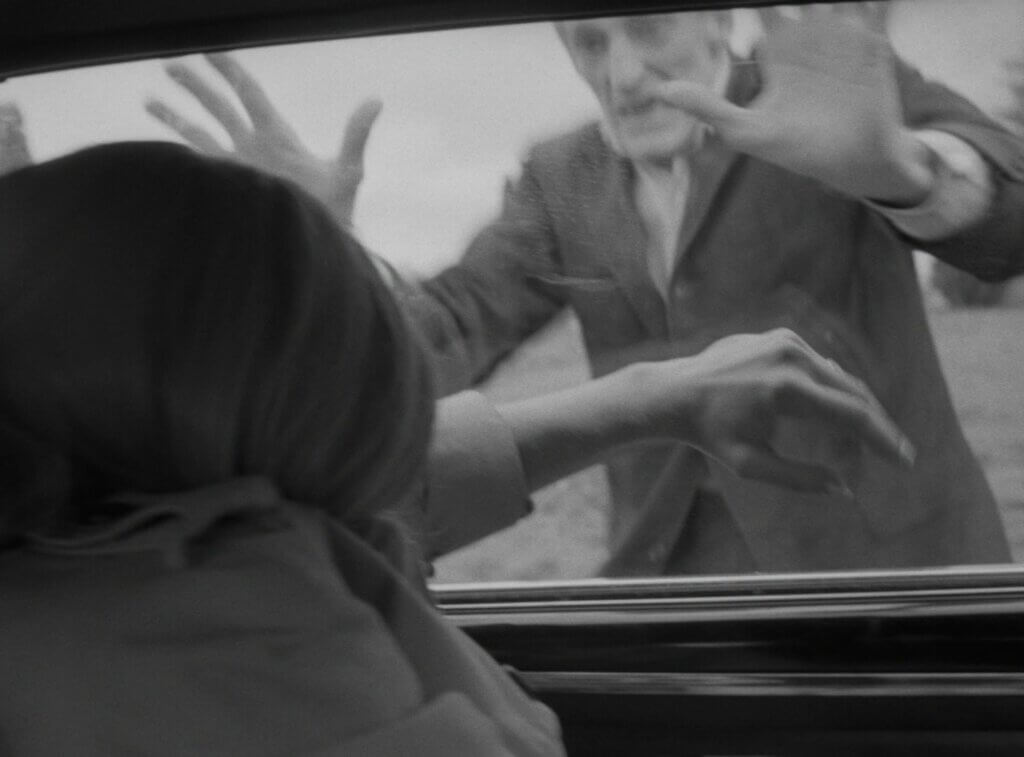
So, Night of the Living Dead started out with generic “attackers” in place of the now-familiar zombies. Had the film been a historical drama about Anglo-Saxons, these attackers might have been marauding Vikings. In a Western, they would doubtless have been Native Americans on their racially-stereotyped warpath. A fantasy narrative might have used orcs, ogres, or trolls. In a war film, the attackers would have been members of the opposing army (the 1942 film Went the Day Well?, about Nazis infiltrating a cosy English village, is not so far removed from the zombie genre in its home-invasion themes). Indeed, the original idea of using aliens could still have worked. On British television around this time, Doctor Who had already hit on its “base under siege” formula, the Doctor’s adventures typically taking place at a human settlement being encroached upon by Martians, robot yetis, Cybermen, or some other extraterrestrial menace.
The zombies in Night of the Living Dead do more than tap into this archetype of the merciless, brutal attacker: they pare the archetype down to its bare essentials. The film avoids any supernatural elements, which inevitably come with some sort of theological baggage, and instead attributes the zombie outbreak to radiation from a space probe. In this period, of course, radiation was the magician’s hat from which giant insects, superheroes, and countless other fantastical beings could be pulled. A monster created by radiation cannot be warded off with a crucifix or prayers: it will keep on coming. And in this case, it can swell its ranks with its own former victims, allowing this potentially unstoppable threat to spread like a contagious disease.
One detail about Night of the Living Dead that stands in contrast to later zombie films is the small-scale nature of its apocalypse. The zombie activity is confined to the eastern USA and the final scenes, showing militiamen gunning down and burning the living dead, give the general indication that the problem is now under control. In this respect, Night of the Living Dead fits the generally accepted pattern of monster movies in that the threat – even a large-scale threat, like an alien invasion or Godzilla – will always be quashed by the story’s end.

But while the scenario may not necessarily be an apocalypse for the whole world, it is definitely the end times for the seven mismatched characters at the centre of the story. The film makes a point out of offering rays of hope only to shut them off one by one. The plot point of rescue stations, accessible by car, is introduced and then promptly written off with a vehicle explosion that kills young couple Tom and Judy. The dim possibility that Barbara’s brother Johnny survived the opening attack is eliminated when he arrives at the house as a ghoul, part of the mob that drags Barbara to her death.
When the little girl Karen turns out to have perished off-camera and rises as another zombie, the moment plays out with a sense of resigned inevitability. She then stabs her mother to death with a trowel as agonised, distorted screams penetrate the audience’s ears, one of the most striking and disturbing moments in the film. Countless movies have tried to emulate the shower murder in Psycho (1960), but Night of the Living Dead is one of the few to even approach the impact of its model. This is in part because, at such a late stage, the audience knows there is no longer space for the film to introduce new protagonists prepared to set things right, as Psycho did.
Finally, we have Ben. Much has been written about the film’s ending, in which Ben is mistaken for a zombie by a passing posse and shot dead. On paper, this is the sort of sick joke that often concluded the horror stories of EC Comics in the 1950s. But the fact that Ben is African-American, and his killers gun-toting white officials, adds a bleak layer of social context, one that would have had resonance in 1968 (the year in which Martin Luther King Jr. was assassinated) and, alas, remains relevant today.
Yet the racial connotations were entirely accidental, as Romero describes in his foreword to the film’s 1974 novelisation by John Russo:
We cast the players from among friends, both vocational and avocational actors, entirely in Pittsburgh. From the beginning, the kismet-factors which were to ultimately pull the film on to a spectacular success as a classic in its genre began to accumulate. The casting of Duane Jones as the character of Ben was one of the first such factors. In the script, Ben was ill-defined. He had to be young, fit, powerful, and cunning. We cast a black man not because he was black, but because we liked Duane’s audition better than others we had seen.
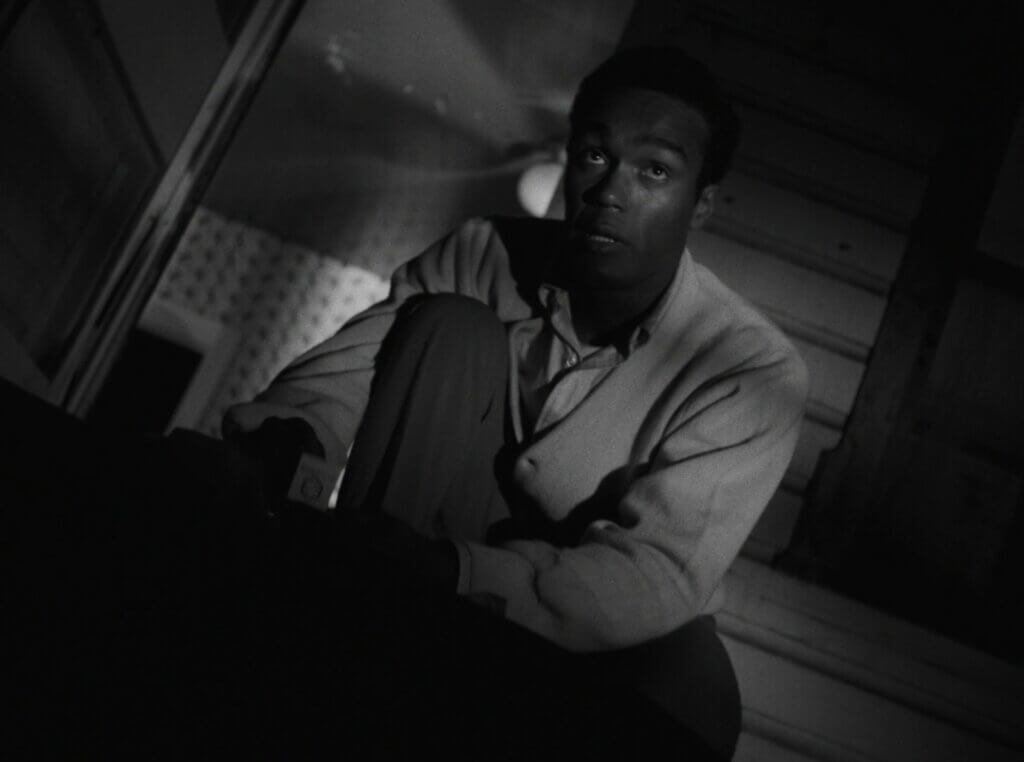
“Perhaps Night of the Living Dead is the first film to have a black man playing the lead role regardless of, rather than because of, his color,” concludes Romero, even if the casting resulted from the crew’s “own relaxed, honest, uninhibited, naive attitudes.” It is debatable as to whether the film was the first to star an African-American lead whose race was not important to the plot: as Joe Kane points out in his 2010 behind-the-scenes book on Night of the Living Dead, it was preceded by The Bedford Incident (1965) and Duel at Diablo (1965), both starring Sidney Poitier. In each case, however, Poitier was given second billing to a white co-star. Duane Jones, meanwhile, is unmistakably the hero of Night of the Living Dead – just another one of the many details that make the film memorable.
Partly through design, and partly through sheer chance, Night of the Living Dead gave its audience something new. A significant portion of that audience soon wanted more. Romero and Russo’s zombie apocalypse – bleak, macabre, somehow topical and yet distinct from the warfare, diseases, or ecological devastation endangering the human species in real life – turned out to be just the place for return visits. Night of the Living Dead did more than spawn a franchise of profitable sequels: it became ground zero for an entire genre.
Next: The first sequel to Night of the Living Dead… which was not what most people might think.
