

Every year brings with it a new World Science Fiction Convention, or Worldcon. And every year brings a new set of Hugo Awards, voted for by the convention’s paying members.
And, so it seems, every year brings a fresh controversy connected to the convention, or the awards, or both. This year, we have already seen a Hugo-related controversy that, depending on how we look at it, arrived either early or late: it actually concerns last year’s Worldcon, which was held in Chengdu.
Typically, within days of the Hugo Awards being handed out, a PDF document with a detailed breakdown of nomination statistics will be published on the Hugos’ official website. This will provide clear insights into how many votes each contender received; in some cases, it will also reveal candidates that were voted for but barred from the final ballot, with an explanation as to why.
With the 2023 Hugo Awards, things were very different. A delay meant that the nomination stats were not posted until 20 January 2024, months after the awards had been presented on 21 October.
And when the document went out to the public, it raised far more questions than it answered.
From Babel‘s Fall to Weimer’s Collapse
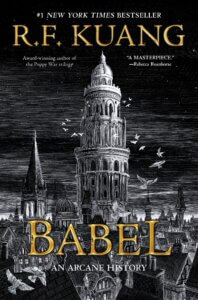
To start with, the statistics PDF reveals that R. F. Kuang’s Babel received enough votes to make the ballot, but was declared ineligible. There is no explanation behind this decision beyond a footnote reading, simply, “Not eligible.” Given that Babel is a fantasy novel that came out within the awards’ eligibility period (indeed, it won Nebula and Locus awards in the same year that it was disqualified from the Hugos), the precise logic here is hard to grasp.
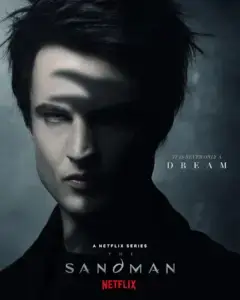
Likewise, the document reveals that “The Sound of Her Wings,” the sixth episode of Netflix’s The Sandman, received enough votes to be a finalist for Best Dramatic Presentation (Short Form). Once again, the series in question both fits within the eligibility window and is clearly a work of fantasy; yet it was deemed ineligable.
In the short fiction categories, Hai Ya’s short story “Pagoda of Fogong Temple” and Mu Ming’s novelette “Color the World” are also listed as ineligible. Writing for File 770, commentator Ersatz Culture pointed out that Mu Ming’s story was published outside of the eligibility window and so was legitimately disqualified, but he was unable to explain the issue with the story by Hai Ya (who had incidentally, won the Best Novelette category with “The Space-Time Painter”).
And on it goes. Iron Widow author Xiran Jay Zhao was declared ineligible for the Astounding Award for Best New Writer. On X, Zhao responded by changing their profile to read “#1 NYT-Bestselling & Hugo-Award-Disqualified Author.” Even Best Fan Writer, one of the most flexible Hugo categories, had an inexplicable disqualification: blogger Paul Weimer was barred despite having been a finalist in the previous three years. He expressed bewilderment about the state of affairs in a public Patreon article.
Throwing all of this into relief are the instances where the document actually gives an explanation for a nominee’s ineligibility. History of Chinese Science Fiction in the 20th Century, a candidate for Best Related Work, was disqualified for the legitimate reason that one of its authors served on the Hugo subcommittee. The first season of Andor was barred from Best Dramatic Presentation (Long Form) on the grounds that it was also represented in the Short Form division; and per rule 3.8.3 of the World Science Fiction Society constitution, was consigned to the category in which it received the most votes (the same rule was nonsensically cited to disqualify the first season of The Sandman from Long Form, despite the series also having been barred from Short Form).
The Hugo Awards use a system of vote tallying introduced in an attempt to limit the effects of bloc voting, of the sort seen during the years of the “Rabid Puppies” campaigns. Under this system, voters can list up to five candidates per category when nominating; however, the votes are weighted so that the fewer nominees that voter chooses in a category, the more their vote will be worth.
So, for example, if a Worldcon member chose Babel and only Babel for their Best Novel nominee, this would count as a more valuable vote in Babel‘s favour than that of a member who picked Babel along with four other novels.
With this in mind, it should not be surprising that the Hugo nomination statistics may appear confusing or impenetrable to a casual observer. However, even commentators who are closely familiar with the system have found eyebrow-raising oddities in the 2023 stats.
Heather Rose Jones, writing on her Alpennia blog, compared the statistics to those of other years, including years that were affected by slate-voting. Backing her findings up with graphs, Jones found that while a typical year will show each category’s nominees on a relatively smooth curve from most popular to least popular, the 2023 stats show “distribution cliffs” for certain categories: that is, the nominees either received a lot of votes or very few votes, with few or any getting votes in the middle-range. She was unable to provide a clear explanation for this anomaly.
Also casting a close eye over the statistics was blogger Camestros Felapton, who provided a category-by-category analysis. The nomination stats for one category in particular, Best Fanzine, struck him as so bizarre that he speculated as to whether two sites — Rachel Cordasco’s Speculative Fiction in Translation and Alisdair Stuart’s The Full Lid — had their votes swapped. (Full disclosure: WWAC is one of the outlets on the Best Fanzine longlist, although there is no indication of it having been affected by the statistical anomalies).
Clearly, something had gone seriously wrong with the 2023 Hugo Awards. The statistics document spawned theories ranging from general incompetence to political pressure: after all, as far back as July 2023, there had been concerns over an official statement from the 2023 Worldcon that mentioned the selection of “Hugo Award works and individuals that comply with local laws and regulations.” Writing on Instagram, Babel author R. F. Kuang declared that until a clear explanation for her novel’s disqualification was given, then she would “assume this was a matter of undesirability rather than ineligibility.”
McCarty Hearings
Many who had their eyes on the affair turned to one man in particular for answers: Dave McCarty, Chengdu Worldcon Vice-Chair and Hugo Award administrator. His January 20 Facebook post announcing the release of the nomination stats received over 400 comments, some from curious onlookers, others from writers directly impacted by the unexplained ineligibilities.
Between them, they had plenty of questions. Yet McCarty showed immense reluctance to provide answers. Typical of the comments section is an exchange between McCarty and Sandman creator Neil Gaiman, which was archived by Camestros Felapton.
“Is there anyone who could actually explain WHY Sandman episode 6 was ineligible?” asked Gaiman. “I don’t recall any politics in the episode. It was ‘SF or Fantasy’ and had not been previously released.”
“The only statement from the administration team that I can share”, replied McCarty, “is the one that I already have, after we reviewed the constitution and the rules we must follow, we determined the work was not eligible.” In other words, the Sandman episode was declared ineligible because it was determined to be ineligible: a meaningless reply.
Understandably, Gaiman responded by restating his earlier question:
[C]an you explain why? It is a work of fantasy or sf or related. It’s neither political (should this be a problem) nor pornographic (ditto). Is it the black actor playing Death? The reference to Judaism? The life after Death? Stating that it was ineligible for reasons that you cannot tell us simply adds a level of mystery to the process that makes the entire Hugo voting process appear illegitimate, and does the winners no favours either.
McCarty’s response was again elusive: “I understand this may be unsatisfying for some, but it is what I can share.”
WWAC reached out to McCarty on 25 January, offering him the opportunity to discuss the topic in a private conversation, but he did not reply.
News of the Hugo Award weirdness, and of McCarty’s evasive defence of the situation, spread across the web. Hugo-winning blogger Cora Buhlert has provided a comprehensive round-up of outlets, large and small, that covered the story. Following this colossal pressure, McCarty eventually apologised.
“The responses put me in old habits and I got defensive,” he said in a 28 January Facebook post. “Most of my responses there were inappropriate, unprofessional, condescending, and a number were clearly insulting. I made things worse. I apologize to the Finalists. I apologize to the Worldcon community. I apologize to the Hugo Awards community.”
Notably, however, this apology contains no explanation of either the statistical anomalies or the contentious disqualifications.
Nor does it address allegations of corruption. The day before McCarty’s apology, File 770 ran a guest post by Chinese science fiction fan Zimozi Natsuco, who wrote of “some bugbears… making their way through the organizing committee”:
They were never science fiction fans in the first place; they were not a part of fandom. [A] couple of media company executives had somehow gotten involved in the convention, taken over everything, including the Hugo Awards, used their few contacts in the media world to make a big splash in the press and in government hospitality receptions. Then they passed the job of external surrender to McCarty, who would bend over backward with small favors, and the job of internal repression to the Chinese workers who had to be forced into surrender through the use of intimidation.
The full extent of what occurred behind closed doors at the 2023 Worldcon may never be publicly known, but the impact is plain to see. On January 30, Worldcon Intellectual Property (the non-profit organisation that holds the service marks related to the World Science Fiction Society and the Hugo Awards) issued a press release detailing the measures that it had taken in response to the furore.
The statement announced the censure of Ben Yalow and Chen Shi, co-chairs of the Chengdu Worldcon Organizing Committee, “for actions of the Hugo Administration Committee of the Chengdu Worldcon that [they] presided over.” The release also announced the resignation of Kevin Standlee as chair of the W.I.P. Board of Directors, and the election of his replacement Donald Eastlake (see Standlee’s LiveJournal for his personal comments). Standlee, who was not involved with the administration of the 2023 Hugo Awards, remains a member of the board of W.I.P.
And Dave McCarty? Well, he received the longest coverage in the press release, which declared him “censured for his public comments that have led to harm of the goodwill and value of our marks and for actions of the Hugo Administration Committee of the Chengdu Worldcon that he presided over.”
The Future of the Hugo Awards
So what, exactly, does this curious mixture of revelation and obfuscation mean for future Worldcons and future Hugos?
Cheryl Morgan, a four-time Hugo winner for her writing and magazine editing, was among those who weighed in. She worked with Kevin Standlee, before the latter’s resignation, on a proposal to decouple the administration of the Hugo Awards from the host Worldcon; she argued that this would prevent the laws of the relevant country from interfering with the voting process. Just two days after her post on the matter, however, Morgan announced that between potential legal entanglements, and hostility to change in certain parts of fandom, she no longer believed that her proposal would work:
At this point I think WSFS [the unincorporated society that sanctions the Hugos and Worldcons] is dead in the water. It can’t enforce its own constitution, and the social contract by which Worldcons agreed to adhere to the Constitution anyway has been broken. The only possible remedy is anathema to too many people in fandom. I’m not sure we can get out of this.
Some Hugo-related controversies are soon forgotten. Today, even if you looked among the most dedicated enthusiasts of SFF awards, you would find few people who care about the furore that followed Harry Potter and the Goblet of Fire winning Best Novel in 2001. Others leave a lasting mark — and it is hard to see how this latest controversy, which cuts to the deepest workings of the awards, could fail to do so.
The 2024 Worldcon is due to be held in Glasgow this August. The nomination period for the Hugo Awards has already opened, although at the time of writing, it has been stalled by a technical issue. How the awards will be greeted when the time comes, we can only guess.
Note: This article was edited on February 6 to clarify details regarding Kevin Standlee’s resignation as chair of W.I.P.

