

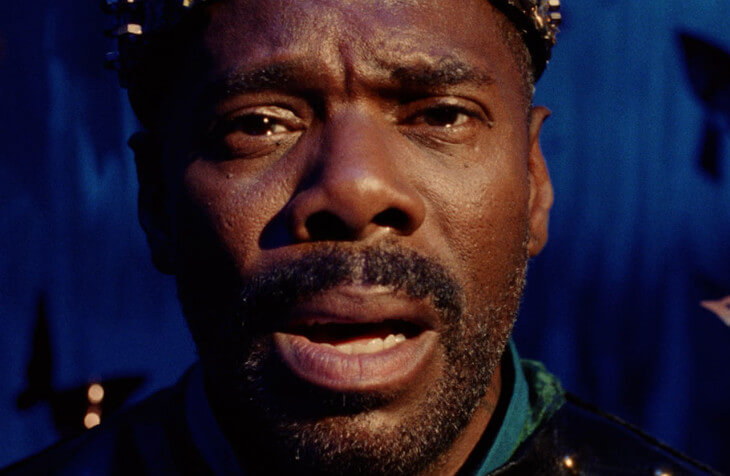
In this drama, a group of incarcerated people in New York state’s Sing Sing Correctional Facility come together for a shared love of theatre. Doubts, fears, and the unjust prison system they’re in threaten to tear the theatre troupe apart as they prepare to put on their most audacious stage play.
Sing Sing
Greg Kwedar (director and writer), Clint Bentley (writer), Pat Scola (cinematography), Parker Laramie (editing)
Colman Domingo, Clarence Maclin, Paul Raci, Sean San José (cast)
September 10, 2023 (TIFF)
Sing Sing is a marvellous triumph of a film. I’m not usually prone to superlatives but it was such an extraordinary story and so thoughtfully told, I can’t help myself. And I’m not alone—at the world premiere of Sing Sing at TIFF 2023, the film got a four-minute standing ovation.
Though not a documentary, it is based on the true story of how John “Divine G” Whitfield started the Rehabilitation Through the Arts (RTA) program at Sing Sing, the film follows the theatre group as they work on their boldest play yet. The play within the film, and in real life, was written by RTA’s volunteer director Brent Buell (Paul Raci), and combined time travel, ancient Egypt, the Wild West, and even Freddie Krueger, because, why not? When the troupe decide to expand their numbers, in walks Divine Eye (Clarence Maclin), a man with talent and inclination but no patience for the acting process. Under the mentorship of Divine G (Colman Domingo) and Mike Mike (Sean San José), and the friendships Divine Eye makes within the group, Divine Eye finds a part of himself the prison system had long buried.
The first thing one notices when watching Sing Sing is how much the creators love theatre. This is obvious from the opening scene to the loving way the camera stands amidst the actors as they’re doing their acting exercises. If you loved being in theatre, you’ll see much of your own theatrical experiences in the scenes of this film. The way the RTA cast riff off each other, give each other notes, help each other grow as performers and as people put a smile on my face. This is a film made by and for people who love art.
And art is such a precious commodity for incarcerated people, especially in a brutal place like Sing Sing prison. While the film fortunately avoids showing any of the physical violence of incarceration, it doesn’t avoid the everyday moments that show just how dehumanized these people are.
What I loved about Sing Sing is that it never participates in that dehumanization. For instance, we’re not told why the prisoners are incarcerated because it doesn’t matter. As Raci said after the screening, we all make mistakes and this film shows that everyone can rise above their worst day if only the system would let them.
Cinematographer Pat Scola makes some interesting choices with the prison setting. According to press notes, while the crew was able to film the exterior of the real Sing Sing prison, they weren’t given access to the interiors because it is sadly still a functioning prison. The team used a decommissioned prison complex for the interiors. They made a good choice—the stage rehearsal spaces are so large, giving the troupe so much area to rehearse and move. The juxtaposition against their cramped cells is visually stark and acts as a reminder why the RTA is so important to the troupe.
The scenes with the most tension, and thus, the most growth, are when Divine Eye is trying to participate in the RTA—he finds the acting exercises silly, and he’s quick to anger. But that’s what has been drummed into him for years—he can’t see himself as anything more than a gangster. There are members of the troupe who grow impatient with him, but most see themselves in him—he’s at the start of a journey towards empathy that G and the troupe will help him reach. The challenge for Divine Eye is wanting to believe in that journey and himself, and those are the scenes when Sing Sing transcends expectations. This isn’t a “prison movie,” it’s a story about people finding a means to express themselves.
Colman Domingo puts in a performance of a lifetime. He’s an excellent choice for John “Divine G” Whitfield—able to straddle the sincerity and positivity of the first half of the film with the despondency G faces in the final act. I would put Domingo down for a best actor nomination at next year’s Academy Awards but we’ll have to wait and see.
When the screening ended, director Kwedar stepped onto the stage with screenwriter Clint Bentley, producer Monique Walton, the real Brent Buell and John Whitfield. Kwedar then introduced the cast, the veteran actors Domingo, Raci, and José, and the newest additions to the acting community, members of the real RTA who played versions of themselves in the film: Clarence Maclin, David Giraudy, Sean ‘Dino’ Johnson, and Jon-Adrian Velazquez. Unfortunately, the entire cast wasn’t able to attend as the visa processing system took too long. But seeing the real people and knowing we’d watched their stories resulted in thunderous applause from the TIFF audience.
Sing Sing is a film about rediscovering the humanity in oneself in a world that refuses to see you as human. It does so through effective storytelling and strong, believable relationships. As Maclin said after the film, Sing Sing is meant to send a message to the world that incarcerated people are capable of so much and that they still have so much to contribute. Whitfield spoke about the “power and beauty of arts and theatre”. Others spoke about owing their life to the RTA, with Buell talking about how the “incarceration process is built to break down people, while theatre puts them back together again.” Art helps people build empathy after years of suffering brutalization as part of the prison system. “67% of long term inmates in the US return to the prison system. RTA prisoners have had only 3% returning,” ended Buell. Those numbers speak for themselves, and hopefully this film will launch this idea to a wider audience who can make a difference to the system.
