
The Dragon Awards are presented annually at the Dragon Con convention in Atlanta, and the ninth iteration of the awards ceremony was held on Sunday. Eleven works of science fiction, fantasy and horror, as decided by a public online poll, were awarded with trophies.
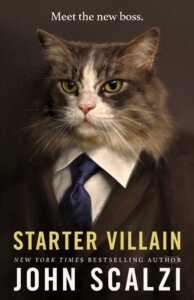

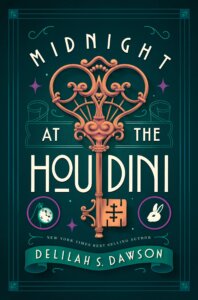
The ceremony saw some repeat winners. John Scalzi’s Bond-riffing Starter Villain earned the Dragon Award for Best Science Fiction Novel, the second time Scalzi won in this category, while Chuck Wendig took his second Dragon Award for Best Horror Novel with Black River Orchard, a story of dark magic in a small town. Other big-name writers won their first Dragon Awards this year: Iron Flame, Rebecca Yarros’s second novel set in a college for dragon-riders, was named Best Fantasy Novel, while Delilah S. Dawson won in the Best Young Adult/Middle Grade Novel category with Midnight at the Houdini, the story of a magic hotel.
Charlaine Harris won the Best Alternate History award with All the Dead Shall Weep, the fifth book in her series about young mercenary Gunnie Rose. This was despite one of the other category finalists, Tom Kratman, lobbying his social media following to vote for his novel Dirty Water in retaliation for it receiving a negative review in Publishers Weekly; Kratman expressed a desire to “hammer the award up their collective ass,” a desire that must now remain unfulfilled.
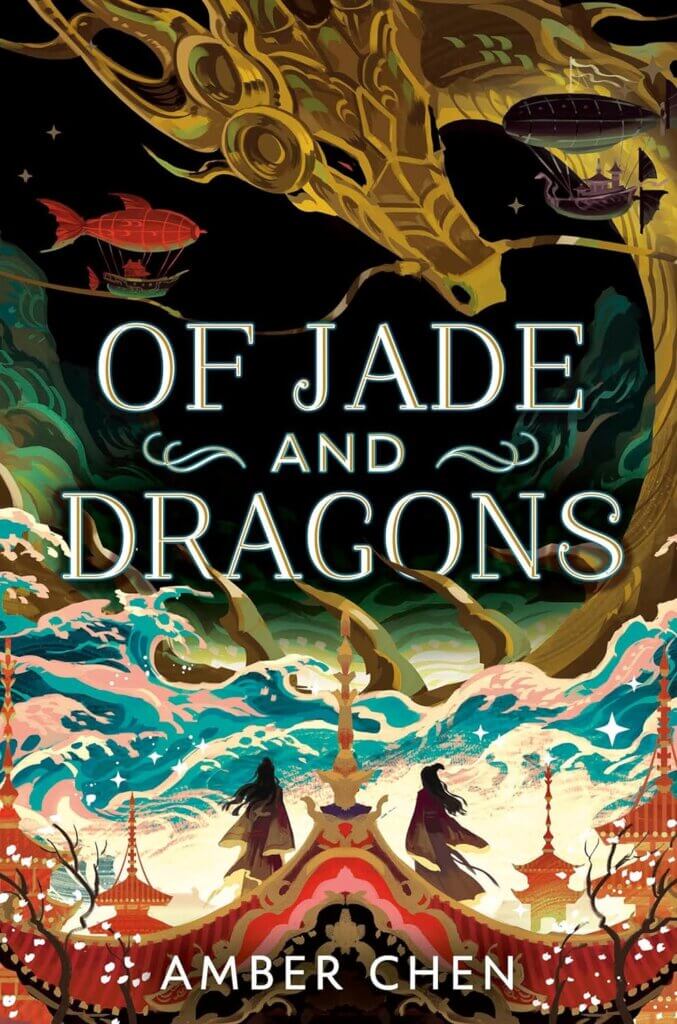
The Dragon Award for Best Illustrative Book Cover, a category introduced last year, went to Kelly Chong’s cover art for the novel Of Jade and Dragons by Amber Chen. Dune: Part 2 won in the film category, marking the fourth time that a Dune adaptation has claimed a Dragon Award (the previous film in the series, along with two comic adaptations, being among the past winners). Marjorie Liu and Sana Takeda’s highly-regarded comic series Monstress won in the Comic Book/Graphic Novel category; while the series has been a Dragon Award finalist six times previously, it was not until this year that it actually won the prize.
Amazon Prime Video’s Fallout, based on the video game franchise, won the TV Series award. It had some stiff competition, as the category included a total of nine finalists: most of the other categories had only six contenders, the only exceptions being Science Fiction Novel (with seven) and Illustrative Book Cover (with five; a sixth finalist was disqualified, as discussed below). The discrepancy in category size indicates that the Dragon Awards are still facing significant ties in the nomination phase.
Both of the gaming categories were claimed by the Dungeons & Dragons franchise. Baldur’s Gate 3 was named Best Digital Game, while Dungeons & Dragons: The Deck of Many Things won the Best Tabletop Game category.
In addition to the eleven Dragon Awards presented on Sunday, this year also saw a special Dragon Award handed out back in April. Dragon Con co-founder Pat Henry marked the 40th anniversary of L. Ron Hubbard’s Writers of the Future Contest by presenting an honorary award; this was accepted by Emily Goodwin, Vice President of Public Affairs for Author Services, Inc., a literary agency devoted to Hubbard’s creative works. Both the Writers and the Future contest and Author Services, Inc. have histories of controversy regarding alleged connections to the Church of Scientology, which was founded by the late Hubbard.
“The Dragon Award, emblematic of individuality, greatness, and excellence across the spectrum of science fiction and fantasy, is a tribute to those who elevate the genre,” said Pat Henry during the presentation. “On the 40th anniversary of Writers and Artists of the Future, I proudly present this Honorary Dragon Award to L. Ron Hubbard’s Writers of the Future Contest.”
The Disqualification of Cedar Sanderson
However, the big controversy to hit the Dragon Awards this year concerned not the Church of Scientology, but the disqualification of a finalist.
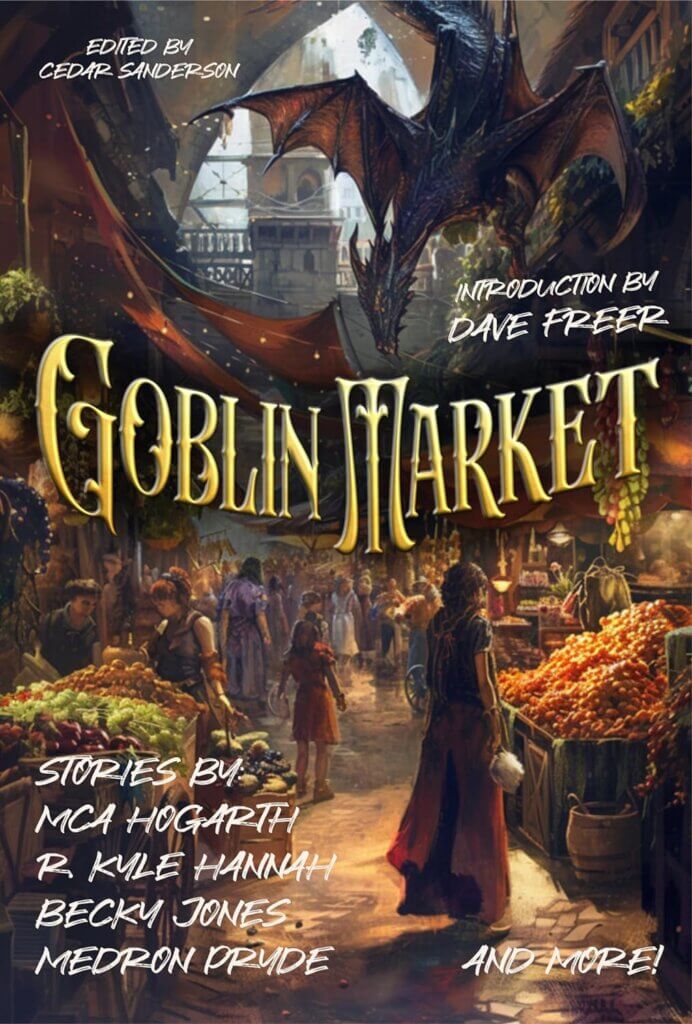
When the ballot was first released, one of the finalists for Best Illustrative Cover was Cedar Sanderson’s artwork for Goblin Market, a short story anthology from Raconteur Press which Sanderson also edited. Just hours later, however, Goblin Market was removed from the ballot without explanation.
On August 6, Raconteur Press contacted the Dragon Award administration asking for an explanation. The publisher received a response from convention co-chair Dave Cody clarifying that the cover was disqualified for containing AI art:
After posting the nominee list for the 2024 Dragon Awards on the Dragon Awards website, we were alerted to the fact that Cedar Sanderson’s entry in the Best Illustrative Cover category had been created in part using Artificial Intelligence tools. As a consequence, we removed her cover for The Goblin Market [sic] from consideration because we don’t allow AI in our Art Show, Comic and Pop Artist Alley, Vendor Halls or the Awards. Though Sanderson’s nomination was included on the website for a short time, none of the ballots emailed to prospective voters included it.
Cody’s email concluded by apologising for the disruption and stressing that the awards team “will be implementing process changes so that this does not happen again in the future.”
Raconteur Press expressed dissatisfaction with this explanation, stressing that the Dragon Award rules did not explicitly forbid AI art:
If there was to be no AI tool use allowed, that should have been stated on the Awards page from the beginning of the nomination process. Sudden removal of a finalist, with no explanation and no direct contact, for a standard not listed as a disqualifying factor from the beginning of the nomination period, reduces the trust in the process substantially.
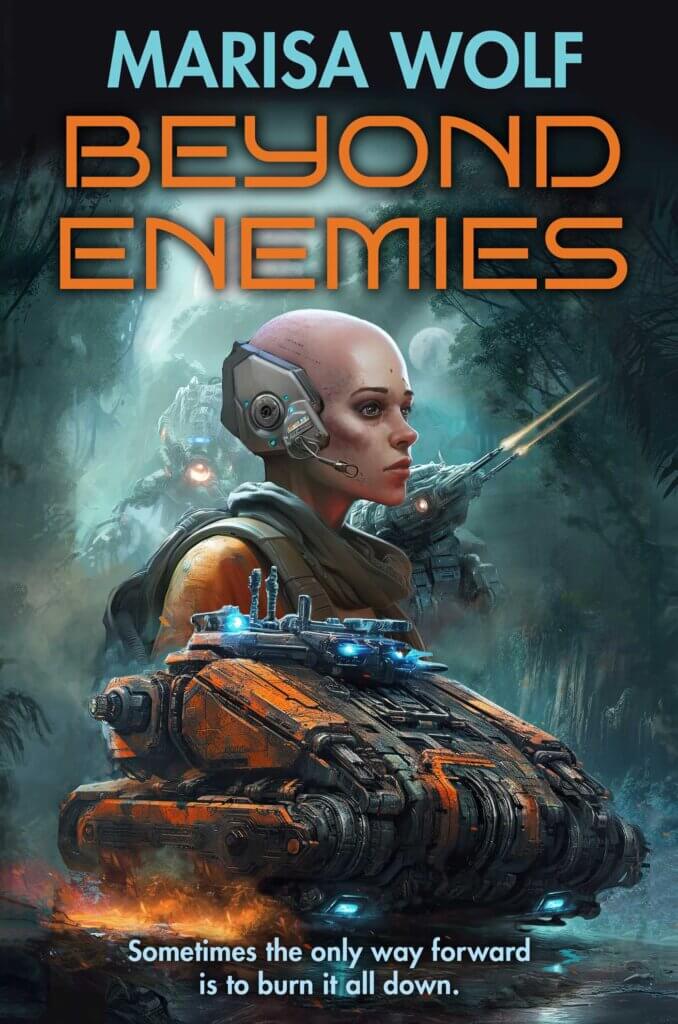
Adding to the murkiness of the situation, it appears that the Goblin Market cover was not the only finalist to have been produced using AI. Blogger Camestros Felapton examined all of the Best Illustrative Cover finalists and concluded that one — Sam R. Kennedy’s cover for Beyond Enemies, a novel by Marisa Wolf — shows telltale signs of containing AI-generated elements. Yet, the Beyond Enemies cover was allowed to remain on the ballot.
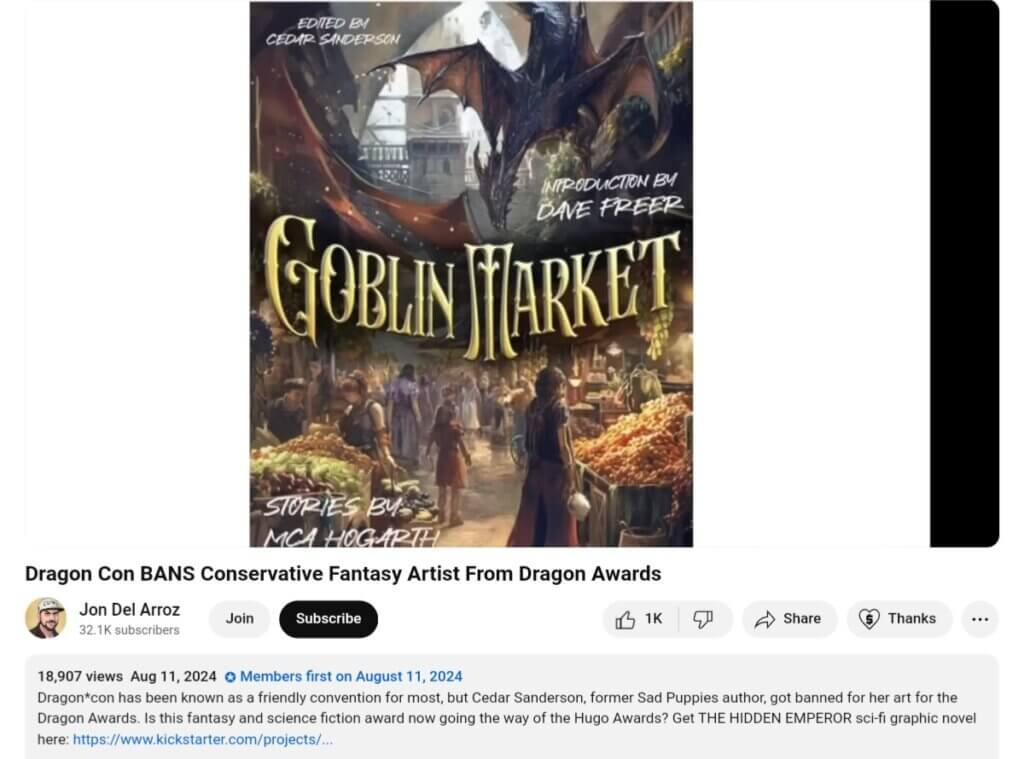
During the backlash over the disqualification, a number of commentators opted to politicise the controversy on the grounds that Cedar Sanderson is part of Mad Genius Club, a blog associated with the conservative end of SF/F (its contributors include Sarah Hoyt, Amanda Green and Brad Torgersen, all of whom were closely involved in the Sad Puppies campaigns of the previous decade). Sarah Hoyt, in a sarcastic comment in Sanderson’s defence at Mad Genius Club, asked “Surely no one could be so petty as to blacklist her just because she posts at MGC, right?”
There is a major flaw in this conspiracy theory: even with Cedar Sanderson removed, the Dragon Awards ballot includes multiple finalists from the right wing of SF/F, namely John Ringo, Tom Kratman and Devon Eriksen. Had the Dragon Award administration been willing to invent arbitrary rules as excuses to disqualify creators for holding conservative political views, then logically, these writers would have also been stricken off the ballot — if not after the finalists were announced, as with Sanderson, then at some point earlier on.
After all, the Dragon Awards are thoroughly opaque in their workings, particularly in comparison to the transparency of the Hugo Awards. The corruption that blighted the 2023 Hugos was exposed precisely because of this openness: the detailed statistics released by the Hugo administration contained too many anomalies for the cover-up to be sustained. The Dragons have no such transparency: a press release that accompanied the announcement of the finalists informs us that “The ballot was selected in an open nomination process, in which more than 5,000 fans participated” (and that “More than 7,000 fans cast ballots for Dragon Award winners in 2023”) but this is the extent of public knowledge regarding the nomination process. There would be little to prevent the administration from disqualifying finalists for political reasons if it so chose; yet there is no indication that conservative authors have been the victims of such skulduggery.
Even if there was no politically-motivated conspiracy, however, it seems hard to deny that the Dragon Award administration mishandled Cedar Sanderson’s disqualification. Between the failure to explicitly forbid AI art in the public-facing guidelines, to the failure to remove Cedar Sanderson from the ballot before the finalists were announced, to the failure to clarify why the Beyond Enemies cover was allowed to stay, the whole saga really is a catalogue of slip-ups on the part of the Dragon Awards.

