

Well, it’s hot and humid here in the U.S. Northeast, a perfect time to lounge with a book in the shade. This month, WWAC contributors have read the latest by speculative fiction Grand Master Connie Willis, gained a close-up look at Mutual Aid maven Miss Major, and gained a new appreciation for older speculative fiction on re-read.
Emily Lauer: I just read The Road to Roswell, the latest novel by Connie Willis! It came out June 27th from Ballantine. It’s a well-paced, fun, and cozy road trip novel — with aliens. While it features a loveable space alien and a madcap group trip across the American southwest, I think the publisher is right to list it primarily as a romance since that’s where the focus seems to be. We are first introduced to Francie, a young career woman from Connecticut on her way to Roswell for her college roommate’s wedding.
Theoretically, Francie’s supposed to be the Maid of Honor, but she’s hoping to help her roommate realize she shouldn’t marry an inconsiderate (though hot) alien conspiracy theorist. Francie’s plans are derailed, however, when she gets roped (almost literally) into being the chauffeur for a space alien who needs a ride. As they pick up more passengers and learn to communicate, a rollicking and engaging romance develops … between two humans. Even with the references to cell phones and climate change, this feels like a retro love letter to the 1940s madcap films Willis loves to evoke.

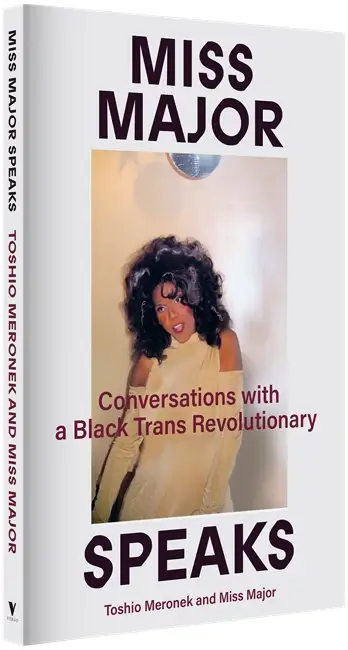
Alenka Figa: I just finished Miss Major Speaks: Conversations With a Black Trans Revolutionary, a sort-of memoir told through a collection of interviews. The interviewer throughout the book is Toshio Meronek, who has been Miss Major’s assistant for almost ten years. Their connection makes these interviews unique. Major isn’t the type of person to sugarcoat anything for anyone; she’s taken care of people—particularly other Black trans women, sex workers, and HIV-positive people, so generally queers at various points of marginalization—for most of her life. She’s created dozens of systems of casual and formal mutual aid focused on providing resources toward survival because survival has never been afforded to black trans women like herself.
Basically, she’s not fucking around.
However, Meronek knows Major, and these interviews read like the kind of interview conducted with a parent or family member. Major is happy to speak her truth and tell all the incredible stories of her life and work, and Meronek knows how to best piece them together under broader messages or themes that a reader can take away, long term, from this very slim paperback.
Reading this book feels like you’re sitting down and talking with Miss Major. It’s very digestible, but there is so much that she has to share. It’s about mutual aid, but reducing these interviews to such a simple conclusion feels reductive. If you are interested in thinking critically about modern queer and trans movements, and if you’re just interested in learning about the wild and complex life of a woman in her late seventies who’s still taking care of everyone around her, I recommend picking it up.
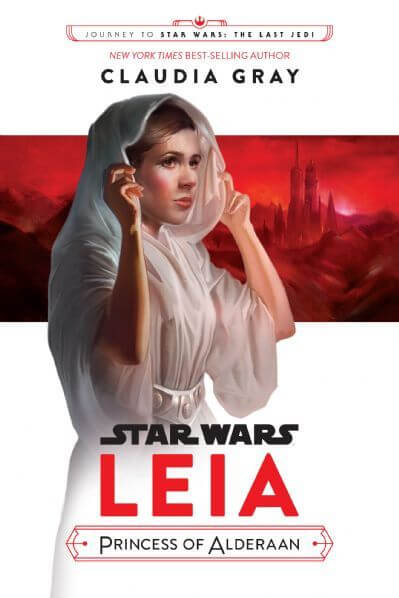
Paige Lyman: I recently re-read Star Wars: Leia: Princess of Alderaan by Claudia Gray. When I first read it right after its release in 2018, I knew I enjoyed it. But I have a newfound appreciation for it following a second read. The novel kicks off with Leia Organa, a few years before she’d find herself amidst the chaos of A New Hope. We get a cool glimpse into her life on Alderaan—from survival courses she is taking, to the lead she takes on relief missions throughout the galaxy as she gets ready to formally declare her claim on the crown.
But while Leia is getting her feet wet as a galactic leader-to-be with plenty of politics mixed in, the undercurrents of the blossoming Rebel Alliance are seeping into her life more and more. Breha and Bail Organa, her parents, are acting off and hosting their Senatorial allies more often. With all that in mind, I really, really enjoy this take on Leia and the peek into her life. I love when a story has a hard focus on the characters themselves, and Gray offers a fantastic focus on Leia at 16 here. There’s a lot of exploration done by Leia, both on a larger scale as she steps into politics and concerns herself with galactic happenings and on the smaller, as Leia’s relationships develop — particularly with her parents and her friends.
Kathryn Hemmann: I found some time this summer to catch up with the HBO adaptation of The Last of Us. While basking in the gritty vibes of post-apocalyptic America, I kept thinking of Emily St. John Mandel’s novel Station Eleven, published in 2014 before being adapted into its own HBO miniseries in 2021. Although I never watched the adaptation, I remember enjoying the original novel about the survivors of a global pandemic gradually converging at an airport in Michigan. A good portion of Station Eleven consists of a series of flashbacks to the week when the pandemic first began to spread, and I wondered how this depiction would read on the other side of Covid-19.
I found that Station Eleven feels even more real to me now than nine years ago. Rejecting the narrative of mass panic and violent social upheaval recounted in classic pandemic disaster stories like The Stand and 12 Monkeys, Mandel depicts the onset of the pandemic as a time of confusion when everything suddenly got very quiet very quickly. Another aspect of the novel that feels uncannily prescient is the gradual emergence of a reactionary cult of personality that traps young men with nowhere else to go. The loss of basic infrastructure is scary, but the loss of the basic morality grounded in cultural traditions is even worse. No hero emerges to save the day, but small and nondramatic human connections help people survive while retaining their sense of joy in life. Mandel’s characters are fighters, but their kindness makes Station Eleven worth reading and returning to, especially in our own post-pandemic world.

I want to add that there’s a thriving microgenre of book recommendation lists for people who enjoyed The Last of Us. Two of my favorites are “9 Must-Reads for Lovers (and Haters) of The Last of Us,” which focuses on nonfiction science and survivalism, and “10 Books to Chase Those The Last of Us Vibes,” which takes a broader approach to the speculative genre of post-apocalyptic fiction as narrated by diverse voices.
