
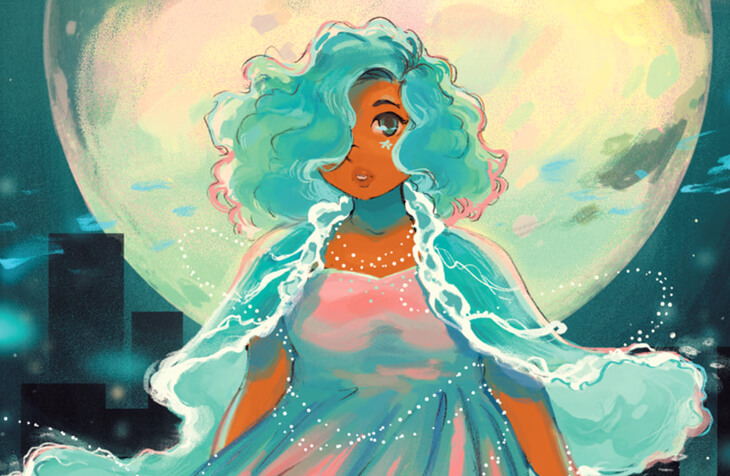
In the first American release of Power Rangers in 1993, the producers took the original Japanese footage and inserted it between scenes of American actors, claiming the action was set in Los Angeles. Even as a child, this mixture felt slightly strange to me, yet I still couldn’t help but wonder what one of my other favorite shows on television, Sailor Moon, would look like if it were set in America. Now, thanks to Geneva Bowers’s gorgeous comic storytelling, I finally have an answer. HoverGirls is a magical girl urban fantasy set in contemporary Los Angeles, and it’s exactly the sort of sparkling character drama I always wanted.
HoverGirls
Geneva Bowers (writing and art)
Bloomsbury
August 6, 2024
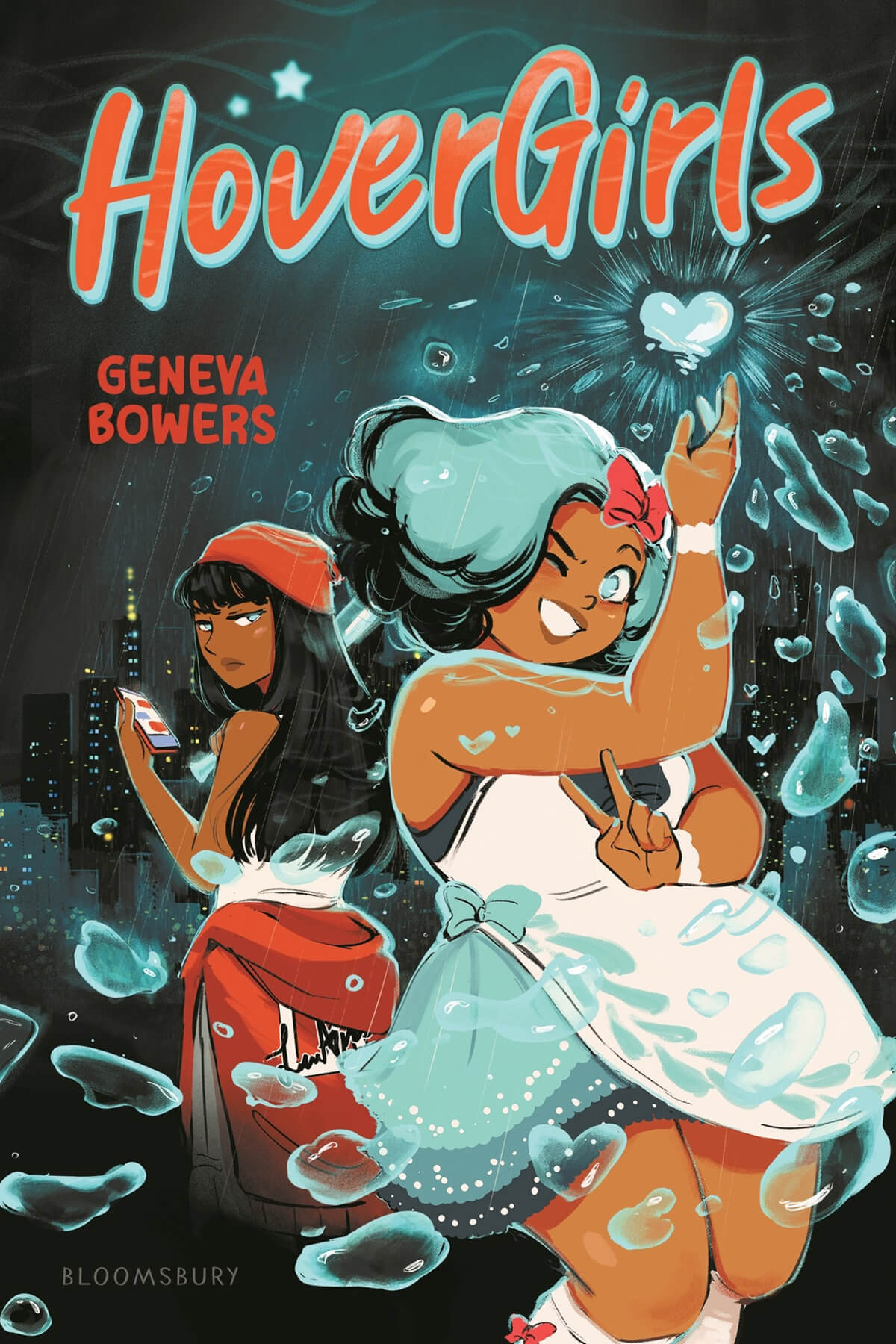
HoverGirls (featured on our September recommendations post) follows the adventures of two cousins, Kim and Jalissa Vasquez, who couldn’t be more different. Kim is bright and bubbly and aspires to make it big as a fashion designer, while Jalissa is stoic and pragmatic and just wants to hold down a stable job.
Jalissa’s family is wealthy but neglectful, so she accepts Kim’s proposal to move to the city of Los Aguaceros in order to make a life on her own, even if that life mostly involves working shifts at a coffee shop and watching soap operas. Meanwhile, Kim already has a schedule of queued posts and social media meetups. Her only follower is Jalissa, but everyone needs to start somewhere, right?
Kim and Jalissa’s troubles begin during a sudden rainstorm at the beach when Kim’s awkward flirtation with a freeloader named Seong-Min is interrupted by a strange meteorological phenomenon that imbues both cousins with magical powers. Jalissa is ambivalent, but Kim sees her new abilities as an opportunity to stand out in the competitive world of fashion influencers. She now has the perfect excuse to dress like a magical princess – and she can fly!
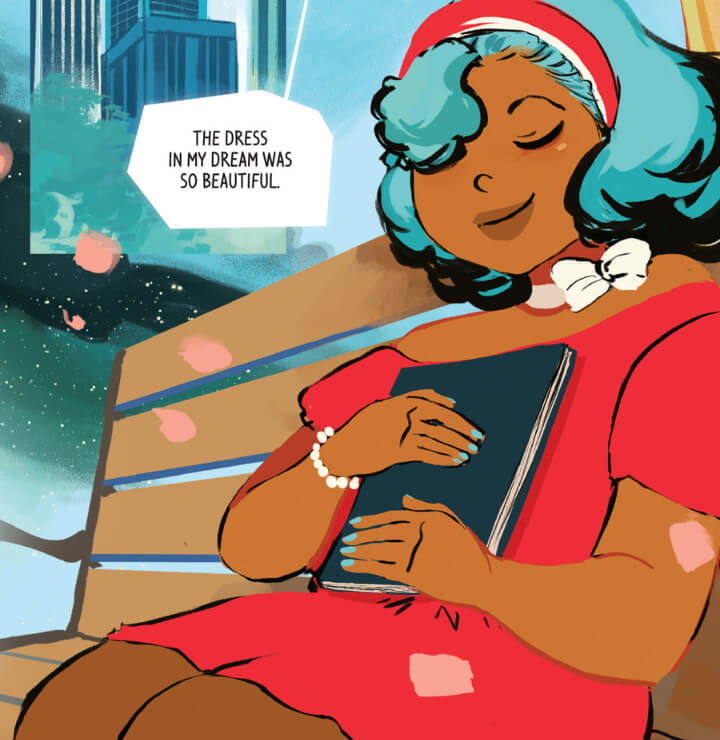
What I love about HoverGirls is how its story stays grounded despite its fantastic premise. Although hostile aquatic creatures appear in the sky when it rains, the plot doesn’t revolve around fighting, nor does Kim have to duke it out with any rivals on the battlefield of social media. Instead, the reader gradually gets to know Kim and Jalissa through the conversations they share over the course of their daily lives. Both women are far more complicated than they seem, and both have compelling and relatable backstories that unfold at an expertly managed pace.
Two additional characters are introduced in the last third of the story, two starfish-shaped aliens sent to aquaform the earth and set up house in Kim and Jalissa’s bodies. Kim’s alien is young and brash and filled with ambition, while Jalissa’s alien (who communicates with her through Seong-Min) is older and jaded. Despite their devious plan to destroy our planet’s environment, the aliens are comedic characters who develop an entertaining rapport with their human hosts. I was completely enamored with the alien villains, even when I most wanted to throw them into a volcano.
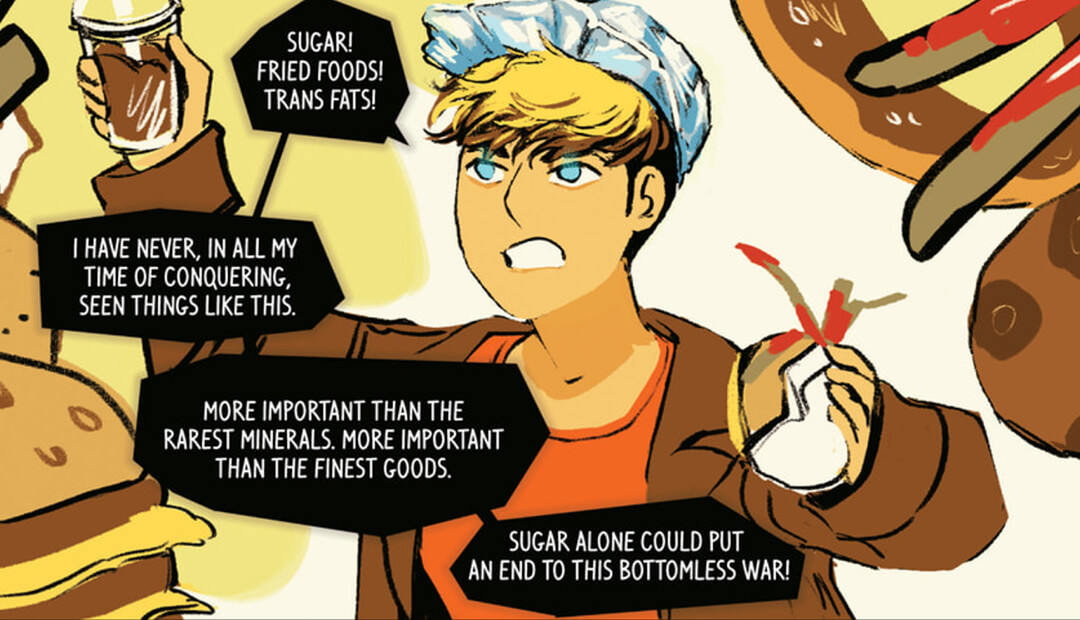
HoverGirls includes a few battle scenes, but most of the story’s action takes place across the dialogue between characters. This type of interpersonal character drama is the element of action-oriented magical girl manga I always loved. As in Sailor Moon, the fighting is all well and good, but it mostly serves as a backdrop to what’s really important – character development. It’s possible that a reader who expects HoverGirls to follow the narrative patterns of American superhero comics might be disappointed by all the talking, but the writing is excellent. Each character has a distinct voice and motivations, and their conversations are augmented by humor and just the right amount of tension.
Geneva Bowers has attracted a large and well-deserved fanbase through the gorgeous illustrations of cute magical girls she posts on social media (such as Instagram and Tumblr), and it’s a testament to the high quality of her writing that it’s not overshadowed by the colorful and dynamic art that illuminates every page of HoverGirls. The warm golden tones of the sun-drenched day scenes and the cool blues of the mysteriously radiant night scenes complement each other perfectly while endowing Los Aguaceros with an intriguing specificity of place. In addition, the characters’ faces feature an incredible range of expressions. Even when people are simply talking, the art never feels static as Bowers deftly guides the reader through the twists and turns of the story.
HoverGirls ties all its loose threads into a satisfying ending, but I would gladly welcome a sequel just to see more of these characters having conversations in between bouts of magical girl fantasy action. Even though Kim and Jalissa’s particular circumstances lie in the realm of fantasy, the problems they confront concerning trauma, ambition, and self-expression still spoke to me in a meaningful way. HoverGirls sparkles with charm and wit, and Bowers’s work is a refreshing reminder that even magical girls have to hustle to make their dreams come true.
