

The previous post in this series examined stories by Edgar Allan Poe, Washington Irving, and Ambrose Bierce that explored the themes of macabre resurrection and twisted sexuality, thereby helping to pave the way for later generations of American vampire literature. However, none of these stories directly addressed vampire folklore.
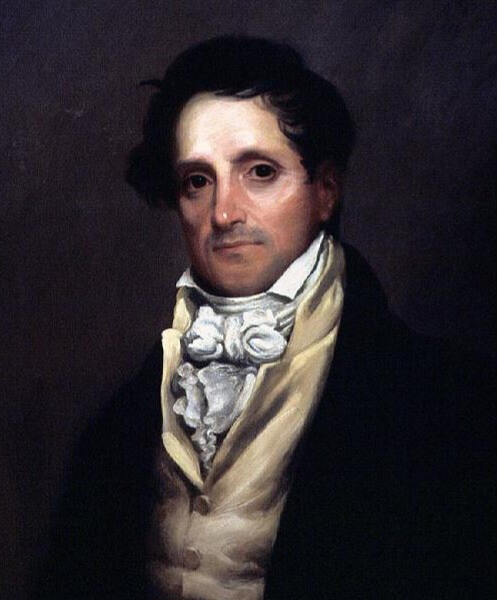
James Kirke Paulding’s 1846 story “The Vroucolacas,” which ran in Graham’s American Monthly Magazine of Literature and Art, is a different matter. Paulding plunged headlong into a macabre pool of folklore and came up with a tale which, in many ways, reflects the vampire genre as we know it today – yet in other respects stands in stark contrast.
The story is set in the Cretan city of Candia (Heraklion) shortly after the city was taken from its Viennese rulers by the Ottoman Empire, a period in which many of Crete’s residents converted to Islam. In the middle of the culture-clash is Crispo Sanudo, a comically pompous man fond of boasting about his noble ancestry.
When Crispo learns that his daughter Florentia is involved with a young man named Miquelachi, he is outraged. His devotion to a specific branch of the Greek aristocracy has made him a man who “despised, from the bottom of his soul, the Constantachi, Ianachi, Miquelachi, and all the other achis” while his anti-intellectualism gives him a particular dislike of the boy’s father, a university-educated physician. On top of all this, there is a religious split. Crispo’s family is Roman Catholic, but that of Miquelachi belongs to the Greek church, which Crispo despises as being “tainted with the heresies of Eutychius.” All of this is described in deeply sardonic terms by the story’s narrator:
Those who have so often seen, in the records of the past, that religion which is all charity and love, made a pretext for the indulgence of all the malignant passions of the human mind, will not be surprised at being told that this difference, of the grounds and principles of which the signor was profoundly ignorant, except that one acknowledged the Pope of Rome, the other the Patriarch of Constantinople, should add greatly to the bitterness of his spleen and hatred.
As well as making digs at conflicts between Christians, Paulding portrays the Islamic presence in Crete as brutal and oppressive. The local official, the Bashaw, is nicknamed Djezzar, meaning butcher, “in complement to his taste for cutting off heads, and the inimitable skill as well as grace with which he performed that operation.” We are told that “Bashaws are appointed only for a brief period, and the chances are they will lose their heads before that expires” and so consequently they “never do any thing for those who come after them.” Crispo goes to Djezzar in the hopes of having Miquelachi executed, only to find him unwilling to work with a “Christian dog.”
Elsewhere, a man named Policarpo succumbs to fever. He lived a criminal life of theft, robbery, and possibly worse, and died too poor for any payments to be made to the relevant religious authorities; according to local superstition, these factors contribute to his possible revival as an evil being called a Vroucolacas:
Of course he was a fair subject for the Vroucolacas; and, accordingly, scarcely was he cold in the grave, when the citizens of Candia began to be disturbed at nights with various and unaccountable annoyances; appalling noises and unseemly visitations clearly indicating that the spectre demon was abroad. At first he merely amused himself by entering certain houses, tumbling about their goods and chattels, putting out the lights, and then pinching the inmates behind, black and blue, or raining such a shower of dry blows on their shoulders as was evidently supernatural.
Crispo is one of the many to fall victim to this weird menace. Around his house, lights go out, furniture is turned upside-down, crockery breaks, wine is drunk, Crispo’s own body is pinched, and eeriest of all, he hears a disembodied voice: “I will never cease until thou givest thy daughter Florentia to my particular friend Miquelachi, son to the great physician Constantachi.”
Standing firm, Crispo keeps Florentia locked up at home. Word spreads about the central role of Crispo’s family in the menacing phenomena, and Djezzar implores him (under threat of execution) to end the Vroucolac’s reign of terror by allowing Miquelachi and Florentia to wed. The situation is complicated when Djezzar sees Florentia for the first time and declares her “a houri… too beautiful for the arms of a Christian dog,” getting second thoughts about allowing the young lovers to marry after all. Then Miquelachi’s father intervenes, and eventually both Crispo and Djezzar – the latter being “not a bad man for a Turk” – allow the marriage to go ahead, thereby halting the attacks of the Vroucolac.
Of course, the reader should be a few steps ahead of the characters by this point and will suspect that the supposed Vroucolac (with its curious devotion to Miquelachi, a man already established to be in the habit of snooping around Crispo’s property) may have been flesh and blood after all. The end of the story evokes the conclusion to “The Legend of Sleepy Hollow” by Paulding’s contemporary Washington Irving, which hinted at the true identity of the Headless Horseman:
Whether Miquelachi had any agency in the exploits of the Vroucolacas was never perfectly known. Florentia often bantered him on the subject, but he was too discreet a man to trust his wife with a secret of such consequence.
J. K. Paulding never achieved Irving’s immortality in American letters. His reputation today is decidedly mixed – his fiction is in some ways ahead of its time for its sympathetic portrayal of Native Americans, yet he was also an outspoken defender of slavery – and much of his work has drifted into cultural oblivion. “The Vroucolacas,” while amusing in places, is notable largely for the rich aura of folklore with which Paulding surrounds his fake devil. From where, exactly, did he draw his inspiration when conjuring this phantasmagoria of walking corpses and nocturnal knocking?
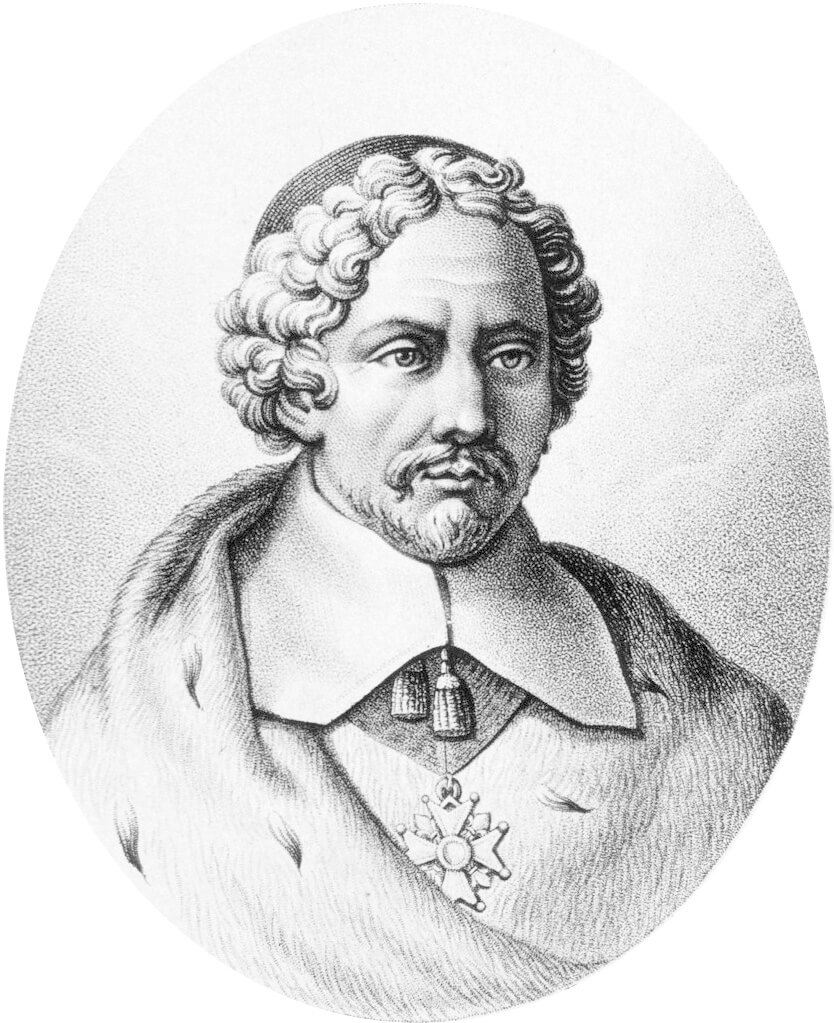
We find the answer to this question in the work of the French scholar Joseph Pitton de Tournefort. Travelling the Levant at the start of the eighteenth century, Tournefort documented his journey in a text entitled Relation d’un votage du Levant. An English edition, A Voyage into the Levant, was published in 1718, ten years after the author’s death. Although he is best remembered for his contributions to botany, Tournefort’s interests were broad in scope, and he did much to document the societies and cultures of the lands that he visited – including their folklore.
In one chapter, having provided a lengthy description of the funeral rites observed by the Greek church, Tournefort moves onto an account of a suspected vampire on Mykonos:
We were present at a very different Scene, and one very barbarous, in the same Island, which happen’d upon occasion of one of those Corpses, which they fancy come to life again after their Interment.
The central character in this narrative is an “ill-natur’d and quarrelsome” peasant who was murdered by an unidentified killer. After his burial, rumours spread that he had returned from the grave:
Two days after his being bury’d in a Chappel in the Town, it was nois’d about that he was seen to walk in the night with great haste, that he tumbled about Peoples Goods, put out their Lamps, griped them behind, and a thousand other monky Tricks. At first the Story was receiv’d with Laughter; but the thing was look’d upon to be serious, when the better sort of People began to complain of it…
The conclusion reached by “divers Meetings of the chief People of the City, of Priests and Monks” was that something had to be done to end these nocturnal activities, although the islanders had to wait until nine days after the burial, “in consequence of some musty Ceremonial.” The process used to put the revenant to eternal rest, as described by Tournefort, bears some resemblance to the method later popularised by vampire fiction – although, instead of the heart being impaled with a stake, it is removed from the body altogether. In this case, the procedure appears to have been somewhat botched:
On the tenth day they said one Mass in the Chappel where the Body was laid, in order to drive out the Demon which they imagin’d was got into it. After Mass, they took up the Body, and got every thing ready for pulling out its Heart. The Butcher of the Town, an old clumsy Fellow, first opens the Belly instead of the Breast: he groped a long while among the Entrails, but could not find what he look’d for; at last somebody told him he should cut up the Diaphragm. The Heart was pull’d out, to the admiration of all the Spectators.
In the mean time, the Corpse stunk so abominably, that they were obliged to burn Frankincense; but the Smoke mixing with the Exhalations from the Carcass, increas’d the Stink, and began to muddle the poor Peoples Pericranies. Their Imagination, struck with the Spectacle before them, grew full of Visions. It came into their noddles, that a thick Smoke, arose out of the Body; we durst not say ’twas the Smoke of the Incense.
It should be noted that the author never uses the word “vampire” – and, indeed, he has so far avoided any other term for this supernatural being. That changes when he reports that the islanders called the revenant a Vrocalacas:
They were incessantly bawling out Vroucolacas, in the Chappel and Place before it: this is the name they give to these pretended Redivivi. The Noise bellow’d through the streets, and it seem’d to be a Name invented on purpose to rend the Roof of the Chappel. Several there present averr’d, that the Wretch’s Blood was extremely red: the Butcher swore the Body was still warm; whence they concluded, that the Deceas’d was a very ill Man for not being thorowly dead, or in plain terms for suffering himself to be re-animated by Old Nick; which is the Notion they have of a Vroucolacas. They then roar’d out that Name in a stupendious manner.
Tournefort himself is skeptical, expressing his belief that the victim was “very thorowly dead” and that the supposed signs of a Vroucolacas – the warmth, the fumes, the redness of the blood, the lack of stiffness in the body – could be explained away by a combination of misperception and natural posthumous processes. The locals decide to go ahead with destroying the heart of the Vroucolacas; but despite these precautions, people continue to report invisible beatings, knockings, and other forms of attack.
This “Epidemical Disease of the Brain, as dangerous and infectious as the Madness of Dogs” apparently grips the whole community, with people leaving their houses to set up camp in the presumed safety of the town centre. Tournefort and his comrades decide against passing judgment: if they criticised the superstition, then they would have “not only been accounted ridicuous Blockheads, but Atheists and Infidels.”
Even so, some of the locals apparently felt the need to persuade the visitors of the existence of the Vroucolacas by pointing to citations from The Buckler of Faith, a work by a Jesuit missionary named Father Richard (tantalisingly, the text in question now appears to be lost). All of this was “good as comedy,” concludes Tournefort, who outlines some of the explanations offered for the survival of the Vroucolacas – for example, that the locals made the mistake of performing a mass before, rather than during, the extraction of the body’s heart.
An additional precaution, one closer in spirit to the now-familiar vampire-staking, includes sticking swords over the corpse’s grave. But this process ignites yet another controversy, this time concerning whether the swords of Christians or Muslims should be used:
One day, as they were hard at this work, after having stuck I know not how many naked Swords over the Grave of this Corpse, which they took up three or four times a day, for any Man’s Whim; an Albaneze that happen’d to be at Mycone, took upon him to say with a Voice of Authority, that it was to the last degree ridiculous to make use of the Swords of Christians in a case like this. Can you not conceive, blind as ye are, says he, that the Handle of these Swords being made like a Cross, hinders the Devil from coming out of the Body? Why do you not rather take the Turkish Sabres?
Eventually, the members of the haunted community decide to simply burn the man’s corpse in its entirety. This action coincides with the disappearance of all activity blamed on the Vroucolacas (although Tournefort, always the skeptic, appears to have attributed the latter occurrence to the arrest of “a few Vagabonds, who undoubtedly had a hand in these Disorders”). Either way, the threat is vanquished:
…’twas on the first of January 1701. We saw the Flame as we return’d from Delos: it might juftly be call’d a Bonfire of Joy, since after this no more Complaints were heard against the Vroucolacas; they said that the Devil had now met with his match, and some Ballads were made to turn him into Ridicule.
James Kirke Paulding must surely have been aware of this account when writing his story, as the similarities between the two texts are too close to be coincidental. Consider this excerpt from Tournefort:
After all our Reasons, they were of opinion it would be their wisest course to burn the dead Man’s Heart on the Sea-shore: but this Execution did not make him a bit more tractable; he went on with his racket more furiously than ever: he was accus’d of beating Folks in the night, breaking down Doors, and even Roofs of Houses; clattering Windows; tearing Clothes; emptying Bottles and Vessels. ‘Twas the most thirsty Devil!
The above clearly informed two separate passages from Paulding’s story. The first concerns the proper method of putting a Vroucolacas to rest:
It was the opinion of some of the papas that they had committed a great oversight in not burning the heart of Policarpo on the seashore, where there would have been plenty of room for the Vroucolacas to escape; but as there was no possibility of repeating the experiment, the truth or falsehood of this theory could not be fairly tested.
The second describes the activities of the supposed Vroucolacas; note that Paulding even copies Tournefort’s sardonic comment about the demon’s fondness for beverages:
[The Vroucolacas] took to ordering people to do this, that and the other thing, according to his own will and pleasure, and punished their neglect or disobedience by pinching or beating them soundly the very next night; he was accused of breaking down doors; ripping up the roofs of houses; knocking and chattering at windows in an unknown gibberish; tearing clothes, and emptying all the jars, bottles and wine tubs, for he was a most thirsty demon.
Paulding makes some alterations to the folklore presented by Tournefant, beyond inventing the romantic comedy of Crispo, Florentia, and Miquelachi. He moves the entire event from Mykonos to Crete, presumably to take advantage of the latter island’s unique religious make-up. He establishes the belief that a dead person may rise as a Vroucolacas if insufficient payment is given to religious authorities; this has no basis in Tournefort’s account, although the earlier author mentions the possibility of religious officials charging a fine for the improper destruction of a corpse after the Vroucolacas is put to rest. Paulding also throws in the possibility that the disturbances are caused by the clergy “not knowing the precise name of the evil spirit who had thus got possession of the body of Policarpo,” which is possibly based on a misinterpretation of a passage in Tournefort describing the islanders calling out the name “Vroucolacas” in fright. Meanwhile, part of Paulding’s story concerns people from across Crete fleeing the island for fear of the Vroucolacas; this seems to be an exaggeration of the passage in Tournefort concerning people from the outskirts of the city moving to the urban centre for safety.
By and large, though, the details tally up. Paulding carries over the telltale signs of the Vrocolacas, such as the redness of the blood and the warmth and flexibility of the corpse (although he distorts the last of these details into the body being “at first perfectly flexible, and afterward [becoming] as hard and stiff as a mummy”). He also retains various methods of keeping the Vroucolacas at bay, including dousing doors with holy water, pouring the same substance down the throat of the corpse, sticking cross-shaped swords over the grave, and – as demonstrated above – burning the heart of the accused on the seashore.
In both Tournefort’s account and Paulding’s fiction, the Vroucolacas seems more interested in drinking wine than in sucking blood. Indeed, the purportedly supernatural events described in the two texts would today be described as poltergeist activity, rather than anything that we might expect a vampire to get up to. Nonetheless, the surrounding folklore that concerns corpses being possessed, disinterred, and destroyed clearly overlaps with the more familiar vampires of both legend and literature. John Polidori, in the introduction to his influential 1819 story “The Vampyre,” specifically mentions the events that occurred in Mykonos over a century earlier: “The veracious Tournefort gives a long account in his travels of several astonishing cases of vampyrism, to which he pretends to have been an eyewitness.”
Where Polidori was fascinated by the image of a real vampire abroad in the world, Paulding saw in Tournefort’s account the potential for a comedy about a false spook. Even so, the richness of the folklore described in the story may well have left its mark on the readers of the day. Dracula and Carmilla would not be written for decades to come; yet here was an author importing the gruesome trappings of the vampire straight into American letters. Fraud or not, it is no stretch to see an early ancestor of Lestat and company in this revenant from history.
