


There’s a piece of Ghostbusters media that often gets lost in the shuffle. No, I’m not talking about that one, I’m talking about Extreme Ghostbusters! If you’re unfamiliar, Extreme Ghostbusters [also known as XGB] was a short-lived animated series designed as a sequel series to The Real Ghostbusters. The show took place a few years after the end of The Real Ghostbusters; paranormal activity in New York has subsided, and as a result, Venkman, Stanz, and Zeddemore have changed careers. Egon Spengler now teaches an under-attended college class on the paranormal.
When a powerful ghost attacks New York, Spengler enlists his students as a new team of Ghostbusters. Years before the 2016 film, Extreme Ghostbusters introduced a more diverse crew to the series. Roland was a black engineering genius and nerd. Eduardo was a snarky Latin American. Garrett was a wheelchair user and a confident “adrenaline junkie,” and Kylie was a cool goth girl scientist. Rounding out the core cast was Janine, the returning secretary, and, unfortunately, Slimer. We’ll get back to Slimer.
If you search online you’ll find comments comparing XGB to a college brochure or the Burger King Kids Club, which is the kind of classy behavior I’ve come to expect from Ghostbusters fandom. Extreme Ghostbusters has always been an underappreciated show. Some people couldn’t get past a Ghostbusters series that didn’t center the original team, and throughout the various reboots and revivals, the only other piece of Ghostbusters media to ever acknowledge the show’s continuity was the IDW comic series.
Which is unfortunate, because not only was Extreme Ghostbusters a great show, it’s probably the best revival the series has ever had, even if it’s also the most forgotten.
Revivals
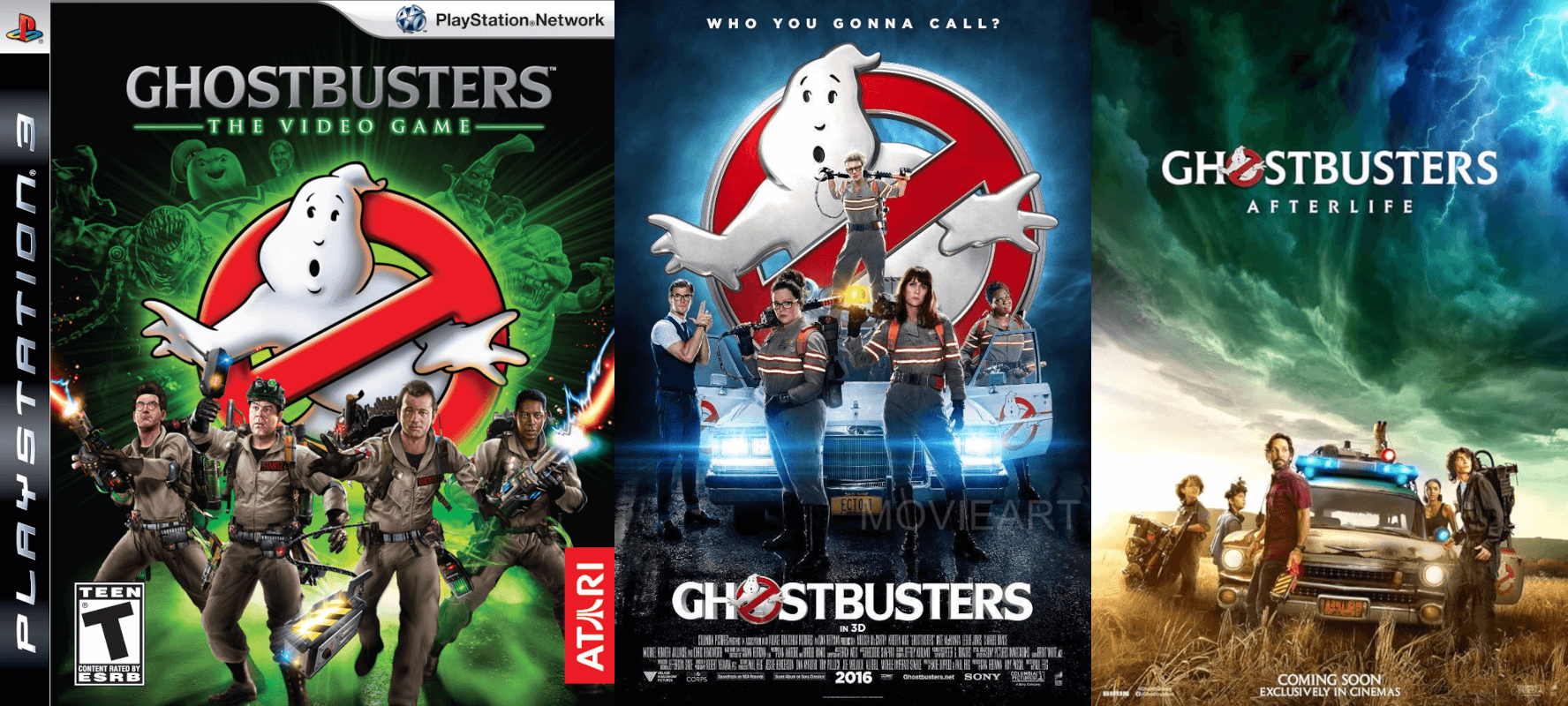
Because Ghostbusters is one of Sony’s most lucrative nostalgia franchises, it will probably never die. It has been rebooted multiple times, and because of these different reboots, there are multiple alternate Ghostbusters continuities.
In the 80s Ghostbusters had an extremely influential TTRPG, which I’ve written about extensively at Cannibal Halfling. The RPG instructed the Ghost Master and players to create a new franchise for their Ghostbusters to use. This always seemed like a safe and logical place for a Ghostbusters “soft reboot” to take things. Maybe it’s a little less exciting from a storytelling perspective if the main characters in a movie didn’t invent their equipment or found their own business. But, much like Star Wars, Ghostbusters now has an issue where its world feels incredibly small because they keep returning to the same well of material [Using Palpatine Gozer again? Seriously?].
The 2016 film made a pretty fundamental mistake, which was that it completely cut off continuity with the older films. I’m not trying to imply the manchildren who lost their shit over the 2016 film because it starred women would’ve liked it just fine had it taken place after the events of Ghostbusters II, but nerds love continuity. I hate how the convoluted continuity of superhero comics makes them impenetrable to newcomers, and even I have to acknowledge that I still love continuity anyways; it’s a sickness.
Ghostbusters Afterlife, on the other hand, is a mess of a movie that logically should fail as fanservice. The small-town 1950s Americana of the film’s setting has nothing to do with Ghostbusters, and on a tonal level, its portentous vibe is just as much of a miss as the 2016 film’s broader and wackier approach. But it still ended up landing for a lot of hardcore Ghostbuster fans; it’s overly serious and achingly nostalgic in a way that is emotionally validating for 40-somethings that don’t want to feel embarrassed for still liking Ghostbusters.
It’s worth mentioning that both of those movies ignored the events of the 2009 video game that was meant to be a sequel to Ghostbusters II . . . because of course they did. The 2009 game is incredible, but obviously people can’t be expected to know what happened in a videogame.
Extreme Ghostbusters took the best approach out of all the revivals. The Real Ghostbusters always existed outside of the continuity of the films; in Real Ghostbusters, the 1984 film was an adaptation of events that happened in the cartoon. But XGB did continue the continuity of the animated series, and it was able to do that without being overly reverential and without being dismissive of it. It’s a Goldilocks zone that, to me at least, feels very obvious, and I’m surprised the big film reboots haven’t been able to pull off something similar.
The specific approach used by XGB, with Egon returning as a mentor, was maybe something that only could’ve worked in animation. There undoubtedly would’ve been ego problems if someone had tried to make a Ghostbusters film utilizing only one member of the old team. But there’s still the franchise approach I mentioned earlier, which could’ve had the original team members only appear in small cameos.
History
The Ghostbusters franchise reached massive heights in the 80s. The original 1984 film was a huge box-office success – one of the highest-grossing comedies ever. After producer Joe Medjuck noticed kids really liked the film, a cartoon adaptation was made, The Real Ghostbusters. The cartoon was itself successful, starting in 1986 and ending in 1991 after airing a respectable 140 episodes. After the conclusion of The Real Ghostbusters the franchise entered a period of dormancy.
At some point in 1996, Sony decided to make a new Ghostbusters show to keep the franchise warm, and so Extreme Ghostbusters began development. The show was produced by Adelaide Productions, Sony’s TV animation division. Extreme Ghostbusters developers Jeff Kline and Richard Raynis also developed Men in Black: The Series, and Godzilla: The Series. Duane Capizzi co-developed Men in Black and produced nine episodes of XGB. Extreme Ghostbusters went directly into syndication while the latter two shows aired on the popular Kids’ WB and Fox Kids, respectively. But these shows all shared a certain offbeat 90s vibe due to their grungy, angular, and gloomy art styles, and so even people who aren’t credit-reading nerds fondly group these shows together.
Audu Paden and Rafael Rosado rounded out the core Extreme Ghostbusters crew as producers/directors/storyboarders. They’re both industry lifers who’ve done a lot of work you’ve probably seen. Paden and Rosado worked on Animaniacs before working on XGB, with the former later working on Spider-Man: The New Animated Series, and the latter working on the 2003 TMNT show, The Venture Bros, and a bunch of those straight-to-DVD Scooby-Doo films.
Fil Barlow, an Australian cartoonist, was hired to work on Extreme Ghostbusters as a character designer. If Barlow had had his way Kylie wouldn’t have been the only female Ghostbuster on the team. He said the following while sharing XGB concept art on his DeviantArt: “Executive Producer Richard Raynis was still in the process of figuring out who he wanted in the team. I intended to throw as many female characters in the mix as early as possible.” Ultimately, the possibility that the 90s team could’ve had more than one female member is just an interesting “what if,” which was probably never a possibility for target demographics reasons.
Syndicated cartoons had done well in the 80s. However, the 1990s saw new regulations related to children’s programming that required networks to air a certain amount of educational programming and put limits on the amount of advertising allowed to be aimed towards children. These regulations, further bolstered by additional legislation in 1996, made syndicated packages built around “toy commercial” cartoons less lucrative than they once were. Further decreasing the prominence of syndicated cartoon programming was the introduction of dedicated cartoon channels, as well as cable becoming more affordable.
Nickelodeon began airing original programming in 1991, and Cartoon Network went live in 1992. There were also the non-cable Fox Kids and Kids’ WB programming blocks. By the time Extreme Ghostbusters aired in 1997, it was difficult for a syndicated show to “break in.” It didn’t help that the show usually aired at 7:00 AM, when kids were at school and older cartoon appreciators were asleep, or at work.
Because Extreme Ghostbusters was put directly into syndication, its first season was 40 episodes long; it began airing in September 1997 and was finished on December 8th, never receiving an additional order. XGB, unfortunately, was a show doomed to fail.
I wasn’t able to find Extreme Ghostbusters’ ratings, but if you’d like an idea of how popular the show was, here’s a short list of other shows that aired in the same syndicated package that I can guarantee you’ve never heard of: Skysurfer Strike Force, Captain Simian & the Space Monkeys, Extreme Dinosaurs, and Pocket Dragon Adventures. What an embarrassing sea of trash for an upstanding show like Extreme Ghostbusters to be associated with. If XGB was meant to bring all these other shows up to its level through association, I think the opposite ended up happening in practice.
Selling toys was probably more important to Extreme Ghostbusters than having good ratings, but unfortunately, it didn’t sell toys. It didn’t help that Garrett never received a toy, because the manufacturers couldn’t figure out how to make his wheelchair work. If the show had lasted a little longer, I’m sure it would’ve been cancelled by the other classic chestnut – having an audience older than the advertisers’ target demographic.
If it’s any consolation, because Extreme Ghostbusters was put directly into syndication, it was only 13 episodes shorter than the longer-lived Men in Black. It’s possible that, if Extreme Ghostbusters had been given a 13-episode first season order, it never would’ve made it to a second season.
My History / Opinions
Because Extreme Ghostbusters was attached to the Ghostbusters franchise, it’s had far more longevity than the other shows in its syndicated package. After rewatching the first film when I was around 12 years old, I began looking at unofficial uploads of the old Ghostbusters cartoons on YouTube.
I didn’t enjoy The Real Ghostbusters; it felt too childish for me as a kid trying to grow up. Its aggressively 80s goofy vibe felt silly and off-putting. The low FPS animation was something I couldn’t really look past at the time. I now appreciate that goofy vibe, the J. Michael Straczynski writing, and the brilliant keyframing. The early episodes of The Real Ghostbusters were mostly animated overseas in Japan, and the series has an oddly anime look and feel because of it.
Extreme Ghostbusters, on the other hand, was more immediately palatable to me. As someone who grew up watching reruns of the 90s Spider-Man cartoon, the comic book-derived style of animation in Extreme Ghsotbusters felt very familiar. It’s not Batman TAS, but it certainly looks better in motion than the later seasons of the aforementioned Spider-Man show did. There are people who find Fil Barlow’s designs offputting, but the grungy look of everything in the show really spoke to me. The show’s more grounded and occasionally serious atmosphere wasn’t as grating as the aggressively cartoonish vibe of Real Ghostbusters.
I didn’t watch all 40 episodes of Extreme Ghostbusters at the time; watching episodes split into three parts in 240p quality has a way of obscuring quality and diminishing enjoyment, but I did become a nominal fan of the show.
I started watching XGB again more recently because I decided to start running games of Spooktacular, a retroclone of the 80s Ghostbusters TTRPG I mentioned earlier. As I was watching the show, I decided to watch episodes through the lens of “What would be a good episode to show someone before a game of Spooktacular to familiarize them with how ghostbusting stuff works if they’ve never seen the movie?”
I was surprised by how “poorly” the show performs by this metric, because in almost every episode, ghosts are defeated in a unique way that would provide someone with a poor baseline. Which obviously is a good thing; it’s pretty rare for the primary antagonist of an episode to be captured in a routine way, like Slimer being caught in the Sedgewick Hotel.
The show is enjoyable to watch for a variety of reasons, one of which is that there are always unique complications in the series. The most formulaic episodes are the ones where a ghost cannot be defeated at first, and later the team slightly modifies the settings on their proton guns and is then able to capture the ghost with almost no issues. There are very few episodes like this; more creative solutions are almost always written into episodes.
Extreme Ghostbusters also did a great job giving each of its crew members a personality. Instead of stereotyping Roland as the most “street” member of the team, he was the least hip. Garrett not only had a pretty distinct personality that had nothing to do with using a wheelchair, but the show also found a good balance between portraying him as capable and disadvantaged. Garrett had immense upper body strength and was easily the most athletic member of the team, but there were times when he couldn’t enter water, go up stairs, or move over uneven outdoors terrain, which made his inclusion feel grounded and realistic.
Eduardo was a lazy coward, but he was also always portrayed as an individual rather than a character representing a group of people. It didn’t help that he was voiced by a white Canadian, but unfortunately, that was standard practice for animation in the 90s.
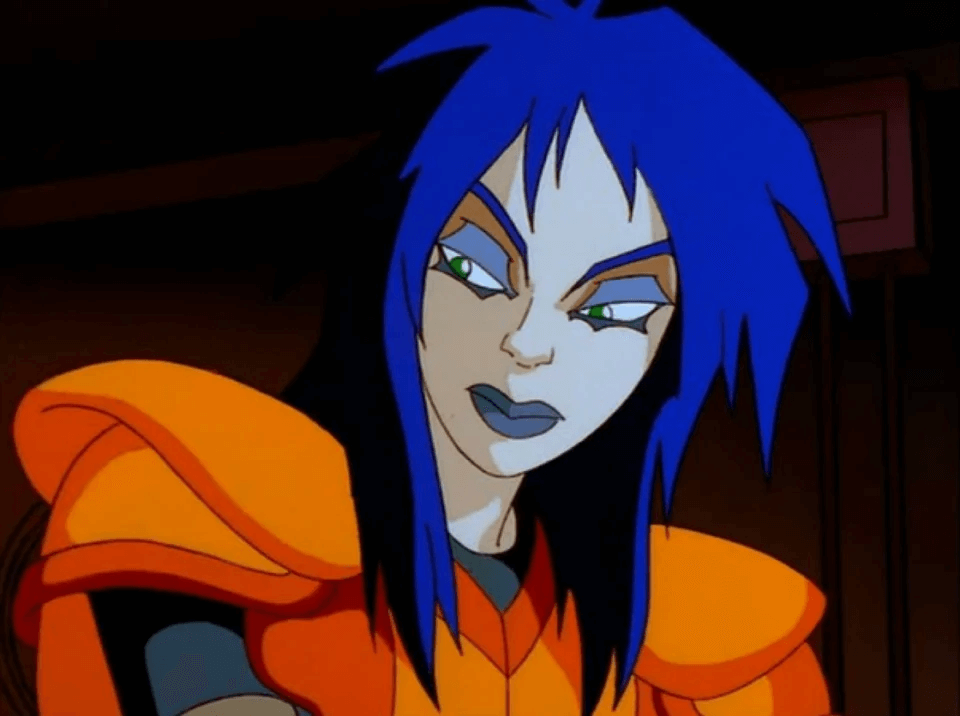
My favorite part of Extreme Ghostbusters is easily Kylie. I think for most people Kylie is the highlight of Extreme Ghostbusters; for a long time, she was the only member of the XGB crew to appear in the IDW comics. Kylie’s one of those classic cartoon goths that people my age seem to be lamenting the absence of in newer cartoons, like The Hex Girls. Except, instead of being a minor recurring character or someone who showed up in a single episode, Kylie was a core cast member of her show.
Kylie had a really strong hook; a goth girl who’s into ghosts. It was a great premise for a character after exploring “academics who are exterminators now.” But the thing that made Kylie even more interesting is that instead of making her into some kind of spiritualist, the show presented her as being an actual scientist.
In an episode where the team is being tracked by the FBI, Kylie is profiled as being “a brainiac with a scientific interest in the paranormal.” It feels like a very deliberate choice to position Kylie as a scientist. Obviously, things can get a little confused in a world where the ghosts are real, but on the whole, it feels like the creative team made an effort to make Kylie as “actually scientist”-coded as possible instead of saying “crystal healing is science now.”

It would’ve been so easy for the Extreme Ghostbusters team to make Kylie the girl with an alternative spiritualist viewpoint on everything, which not only would’ve been a goth stereotype but also a feminine-coded way to differentiate her from the more “logical” male characters. But instead, they did something more interesting and aligned her with Egon. Goth characters in fiction are very frequently into woo-woo stuff, so it’s refreshing to see something that isn’t that, even if I don’t always hate it [see: The Craft].
I feel like I should address something; Kylie Griffin’s voice actress, Tara Strong, has terrible anti-Palestinian politics. I’m glad I only heard about this after watching Extreme Ghostbusters, so that it didn’t put a blemish on the show as I was enjoying it. Here are my three choices for replacement voice actresses if Kylie ever appears as a voiced character again:
- Nika Futterman: The only Futterman role that I’m familiar with is her performance as Silhouette in Destroy All Humans, but she’d be perfect.
- Grey DeLisle-Griffin: Grey DeLisle-Griffin has probably voiced something like 40% of all English-speaking animated female characters, and voicing a character like Kylie is obviously well within her abilities. They even share a last name; could it be a sign?
- Joan Jett: Joan Jett hadn’t started voice acting in the 90s when Extreme Ghostbusters originally aired, but in the last few years she’s done a few small voice roles. To me, this is a full-circle thing, since Kylie’s hair evokes Joan Jett’s hair so heavily. Hey, a girl can dream, can’t she?
If Kylie is the best part of Extreme Ghostbusters, the worst part is obviously Slimer. I wouldn’t be surprised if Slimer was just about everyone’s least favorite part of Ghostbusters; he’s not a Poochie, but he’s certainly a character executives seemed to assume kids liked a lot more than they actually did. The Real Ghostbusters being retooled into Slimer! and the Real Ghostbusters seems to have been a pretty universally disliked change.
Imagine if Batman TAS featured Bat-Mite as a comedy relief character in every episode, except instead of making fourth-wall breaking jokes, he made baby noises. That’s what Slimer is like in Extreme Ghostbusters. Slimer’s the kind of presence that makes you hesitant to watch a TV without wearing headphones. I realize this is just the kind of thing that happens sometimes while watching cartoons fundamentally made for children, but just about every time I’m forced to acknowledge the fact I watch a TV show with such a stupid comedy relief character I lose a little more of my dignity.
The Best of XGB: An Episode Guide
I don’t know who you are, but you’re probably a busy person. And so I’m going to conveniently provide you with a list of the best episodes of Extreme Ghostbusters, so you can give yourself a nice abridged viewing of the series. This list is arranged in chronological order.
1: Darkness at Noon parts 1 and 2
The opening two-parter is a good place to start. The real focus here is establishing the main cast and premise; the actual ghost of this story is defeated very easily after some equipment is upgraded. But it’s fun to see a team come together.
2: Fear Itself
Characters would be given new wrinkles throughout the series, but the early Fear Itself, in particular, feels like the second most important character-establishing episode, even if the specific fears highlighted in this episode are only mentioned again a handful of times later; it’s really more of a demeanor showcase.
3: Grease
Grease is firmly in the “least formulaic” tier; the XGB team has to hunt a gremlin, and in the process, they cross paths with the FBI and start being watched. Episodes with human antagonists tend to be interesting, and Grease is one of the best of them.
4: The Jersey Devil Made Me Do It
This episode frequently shows up on lists of the best XGB episodes because of its memorable premise; the team comes across a ghost, but they don’t have any ghost-hunting equipment with them. This could’ve merely been an interesting premise, but everything plays out in an interesting and satisfying way on top of that.
5: Dry Spell
Remember how I talked about trying to find a good episode to show Spooktacular players? This is the one I ended up choosing; the opening minutes depict a fairly routine ghostbusting job, and the rest of the episode details a conflict between the XGB team and a human opponent [and also the ghost from earlier, again]. It also helps that Slimer is barely in this episode.
6: Seeds of Destruction
This is a solid episode in itself, but I love the part towards the beginning where Kylie talks about the environmental impact of the meat industry. The people need to know!
7: Grundelesque
This episode is both a literal follow-up to a Real Ghostbusters episode called The Grundel, and a spiritual follow-up to The Boogieman Cometh. Like Cometh it has the conceit of revealing a member of the team was haunted by a ghost as a child. It also feels like it’s metaphorically about victims of pedophilia, which is surprising territory for a show made for children to explore.
8: Till Death Do We Start
This episode is mostly here because it’s strange; it’s very light on action relative to other episodes and has multiple scenes where characters just banter. There’s also a weird element where Kylie is the only member of the team who doesn’t make fun of their middle-aged customer, and at one point she makes out with him to make a ghost jealous. This is an entertaining episode, but I can’t help but wonder if the writer of this episode was working through something.
9: Rage
Rage is easily the best Eduardo-centered episode of the show; we discover his older brother is a cop, who also happens to hate Ghostbusters. Also, Egon moves in with Eduardo temporarily.
10: Witchy Woman
Witchy Woman is a very overt homage to The Craft. It sometimes feels a little rushed, and I wish Kylie had done more stuff with the antagonists instead of Eduardo. But it’s funny that it exists, and what’s surprising is that the episode aired roughly a year after the release of The Craft, which is extremely fast turnaround for animation. This is the final episode of the show chronologically, but it gives no indication of this.
Honorable Mention: Be Careful What You Wish For
This episode is pretty mid-tier, but it has a joke so good in it that it inspired WWAC contributor Claire Napier to write an article about it.
Conclusion
Aside from the Extreme Ghostbusters team appearing in a handful of comics, the show and its concepts have basically been dead since 1997. Which is pretty normal for a cancelled TV show; most shows don’t even get to be acknowledged in comic form. It’s easy to imagine XGB receiving an X-Men ‘97-style continuation because of how much Sony seems to want to make Ghostbusters into a massive franchise, but realistically that will never happen. Because Extreme Ghostbusters was never super popular with the current target demographic of 40~ year old men who grew up with the original movies and Real Ghostbusters show, it will probably always exist as a curiosity.
Something vaguely exciting did happen to Extreme Ghostbusters recently; for the first time ever, the entire series has been released on DVD, to coincide with the release of Frozen Empire. As one might expect, it’s a bare-bones set with no commentaries or behind-the-scenes docs. The lack of care is unfortunate, but not unprecedented. Extreme Ghostbusters is not “valuable,” and it’s entirely because of how Sony has handled it, starting with their unwise decision to try and make the show anchor a terrible syndicated cartoon block.
If you didn’t grow up watching 90s action cartoons, and you haven’t been a fan of Ghostbusters since you were young, I can’t guarantee you’ll find much enjoyment in Extreme Ghostbusters. But if you did grow up with those cartoons, are a longtime Ghostbusters fan, and are looking for a nostalgia fix, I recommend giving Extreme Ghostbusters a look. Excluding the 2009 video game and some of the comics, it may’ve been the last good thing to come out of the franchise.

