

This year is moving at a pace that feels very bizarre to me. It feels fast when I look at what actual day it is, but so many milestones and landmarks feel like they’re coming up at a reasonable time while other things are happening too slowly. Maybe this is how spring always feels. Does anyone remember? The strange passage of time is certainly affecting my reading, but I’m still excited to share our recommendations for the month. We’ve got a lot of manga for you, but Emily’s here to share Bianca Xunise’s debut graphic novel! Xunise is a Chicago artist, so I’ve been lucky to see them do comic readings here and there, and I cannot wait to swoop up my library’s copy. I hope you’re ready for punk rock and lots of manga.

Alenka Figa: I have been reading Frieren: Beyond Journey’s End, written by Kanehito Yamada and illustrated by Tsukasa Abe. The manga follows the titular character, Frieren, an elf mage and member of the party of heroes that defeated The Demon King. (Details about The Demon King do emerge over the story, but ultimately they’re not important — as readers, we know what a Big Bad is like, and the story of his defeat has already ended.) For Frieren, her 10-year-long journey with the party was a small part of her life. As an elf, she can live for thousands of years, but her companions are human (plus one dwarf), thus her experience and perception of life vastly differ from theirs. When one of her close companions dies of old age, it pushes Frieren to reconsider her view of life — what does it mean to treasure and understand those close to you, when their lives will pass within what feels like a blink?
I’m seven volumes deep into this series and am loving it. Yamada and Abe balance the sweet, slow, slice-of-life pace with exciting magical battles. Because the stakes are so clearly different for Frieren there isn’t a lot of fear for the lives of the protagonists, but they still face dangers. Yamada and Abe maintain focus on what Frieren loves and values about everyday life: silly, small, and practical spells, joyful moments with her companions, and the worthwhile efforts she makes to empathize with others’ points of view. Abe expertly handles shifts in tone from action to humor to emotional confrontations; the battles are thrilling and easy to follow, the magic is depicted in fun and exciting visuals, the characters are both impassive and expressive when needed. And they are so often just funny! Fern’s (Frieren’s apprentice’s) pouty face especially. This is a lovely series, and I look forward to continuing it, and maybe even checking out the anime.

Emily Lauer: Punk Rock Karaoke by Ignatz-winner Bianca Xunise came out on April 23, and it is adorable! I teared up one (1) time. Punk Rock Karaoke is being marketed as a young adult graphic novel, but the characters are firmly in “new adult” territory. Three friends, big into the contemporary local punk rock scene, navigate their band’s potential, along with their jobs, families, and life plans right after graduating high school. The tensions build up to a satisfying climax in which a community comes together to right a wrong. I’ve been a fan of Xunise’s work for a long time and it was cool to see their distinctive expressive rounded character design play out in a larger format story. I … am not the target audience for any of the music stuff, and there is a lot of it. Xunise’s captions state what song is playing for each scene, and while I didn’t know most of them, I do like the idea of a graphic novel with a soundtrack. And the band is called Baby Hares! That’s just great.

Carrie McClain: Alenka, I’m so excited to hear that you’re reading the Frieren manga! I started the manga eons ago and was ecstatic to hear about the anime adaptation that I’m on the way to finishing now. Emily, is this Bianca’s debut graphic novel?! [Editor’s Note: It is!] I am sooo looking forward to experiencing their debut graphic novel with a soundtrack!
I am two thousand and late and finally got around to reading Little Miss P published by Yen Press and created by mangaka Ken Koyama. How to explain the premise of a comic that evolved from a webcomic to a manga that gained a live-action film adaptation? For menstruating folks in the chat, we’ve had decades of “Aunt Flo” jokes, for better or worse. Through this male mangaka we are presented with “Little Miss P: a pink, anthropomorphized period’s not so lean, kinda mean, and a gut-punching, butt-kicking machine”.
So while I did have my doubts, because this manga (and sequels like Little Miss P: The Second Day, which I’m reading now) were created by a male manga creator who doesn’t seem to have any connection to having a period (trust me, I’ve been looking for translated interviews) I still picked it up to read. Little Miss P works best as an anthology of short stories about different women, young and old, that are hilariously funny with humor and artwork that runs the gauntlet as gag manga. (Here’s an in-depth review of one of my favorite manga reviewers of yesteryear.) This manga took me by surprise with the endearing and sweet side of storytelling that emphasizes empathy for those who endure periods while also knocking down period stigma. I think I best love how the manifestation of a period, Little Miss P, realistically causes chaos but also goes out of her way to gut punch and harass husbands who don’t have a clue, and consoles young women in bad situations. Overall, this manga is a wholesome slice of life read with lots of humor and heart, surprisingly.
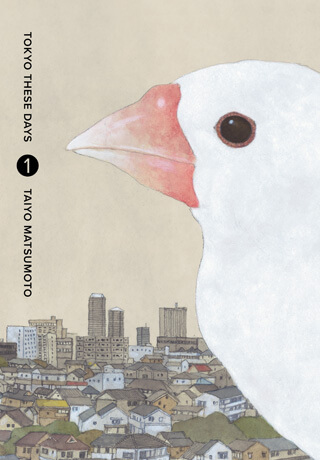
Kathryn Hemmann: I love everyone’s manga recommendations! With that in mind, I’d like to boost Taiyo Matsumoto’s newest series, Tokyo These Days, which follows a senior manga editor named Shiozawa who suddenly quits his job at a publishing company. After an initial period of wanting nothing more to do with manga, Shiozawa visits various artists he’s worked with over the past thirty years, hoping to commission “the perfect manga.” Like Matsumoto’s Eisner-winning graphic novel Cats of the Louvre, Tokyo These Days is a sensitive yet realistic story about artists and the industry professionals who support their work. Although Matsumoto is honest about the pain caused by frustrated ambitions in a market that doesn’t value the well-being of artists, small moments of kindness prevent the tone from becoming too bleak.
Given that Tokyo These Days is a book about books, it is worth mentioning that Viz’s hardcover edition is a beautiful publication, with a glossy canvas cover and high-quality paper that allows Matsumoto’s artwork to shine. If you’re familiar with the kinetic urban fantasy Tekkonkinkreet, you’ll know just how much love Matsumoto puts into the details of his environments. It’s a pleasure to take your time studying each page to appreciate the ink textures and image framing. I’m looking forward to seeing how the story of Tokyo These Days develops, but the first volume stands on its own as an episodic commentary on the difficult but still worthwhile business of being an artist and storyteller during the slow decline of the traditional publishing industry.
