

Here at WWAC we are starting off our 2024 right, and really committing to reading in the Year of the Dragon with a wide variety of terrific books. Christa digs into A Woman is No Man, I read a couple upcoming speculative fiction titles by Ann Leckie and Adrian Tchaikovsky, Alenka enjoys some YA horror with The Narrow, and Kathryn and Carrie both get immersed in Japanese novellas: Kitchen and The Forest Brims Over.
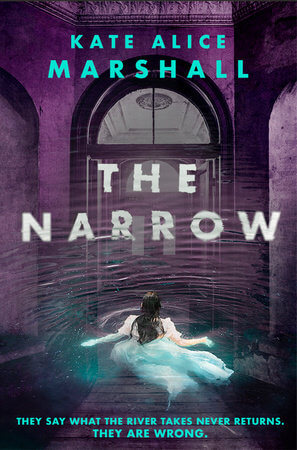
Emily: Lake of Souls: The Collected Short Fiction by Ann Leckie is coming out from Orbit in April! I’ve been waiting a decade for this collection and am really pleased to see it coming out now. Lake of Souls is divided into three sections: First are some stand-alone stories starting with “Lake of Souls,” a new story that gives the collection its name. Then a section for stories from the Imperial Radch Universe, and finally, a group of stories that take place in the world of The Raven Tower. Each section has a wide range of stories, with some short and light and some long and intense. The great majority of these were already well known to me, from avidly following Leckie’s work for a decade and visiting the Free Speculative Fiction Online page frequently.
It’s lovely having so many of her short stories together in one collection, and the new story, “Lake of Souls” is a fun and thought-provoking addition to her body of work. The premise of “Lake of Souls” has a lot in common with “The Long Game,” Leckie’s recent Amazon exclusive that conveys her current interest in alien races that are just a lil guy. In both of these stories, readers are presented with the point of view of a small, non-humanoid person, whose worldview is disrupted by humans who have landed on their planet.
All of Leckie’s stories are enjoyable, and this collection feels like an hors d’oeuvres sampler platter. Each bite is delicious, and sustaining enough to tide us over until the main course, Leckie’s next novel, arrives on our plates.
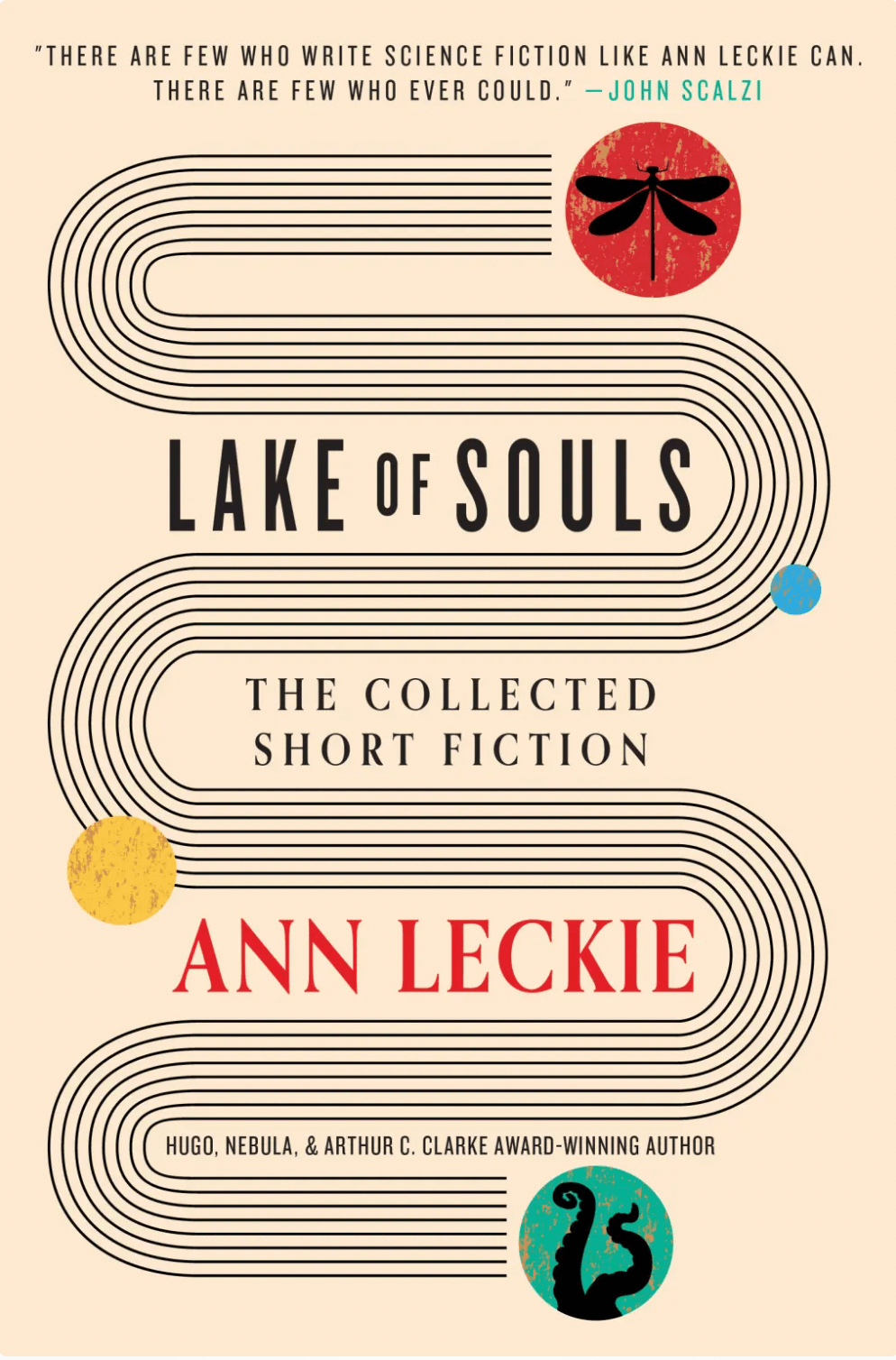
Alenka: My 2023 StoryGraph review told me I mostly read stories that are “light hearted,” and as a horror lover, I was offended by this and have immediately set out to change the app’s understanding of my reading! One of my first horror reads of the year was The Narrow by Kate Alice Marshall, which features a favorite setting of mine: haunted boarding school! Behind Atwood Boarding Achool is a river known as the Narrow. Students jump across it as a test of courage, but it’s said that falling into the Narrow means certain death. Eden White, now a senior at Atwood, knows that isn’t true—she saw Delphine Fournier fall into the Narrow when they first arrived as middle schoolers, but Delphine is still alive. A mix-up with Eden’s tuition lands her at a secluded house on the edge of campus where Delphine lives alone, due to her strange, rare allergy to unpurified water. Eden swiftly learns that Delphine’s “allergy” is far from normal, and something seems to lurk outside the house, desperate to get inside. As Eden and Delphine are drawn to each other, they have to confront what happened six years ago as well as the nature of the Narrow itself.
This is my first Kate Alice Marshall book and I cannot wait to read more. YA horror, with its amped-up teen emotions, can feel really unique and Marshall’s writing employs that impulsive, reckless teen desire to great effect. There’s a lot of domestic violence in The Narrow—not depicted graphically or gratuitously, but Marshall dives deep into how past trauma affects the choices survivors make, and that exploration is really the heart of the novel. Marshall proves to be a writer I trust with these themes, and The Narrow is very much worth the discomfort.
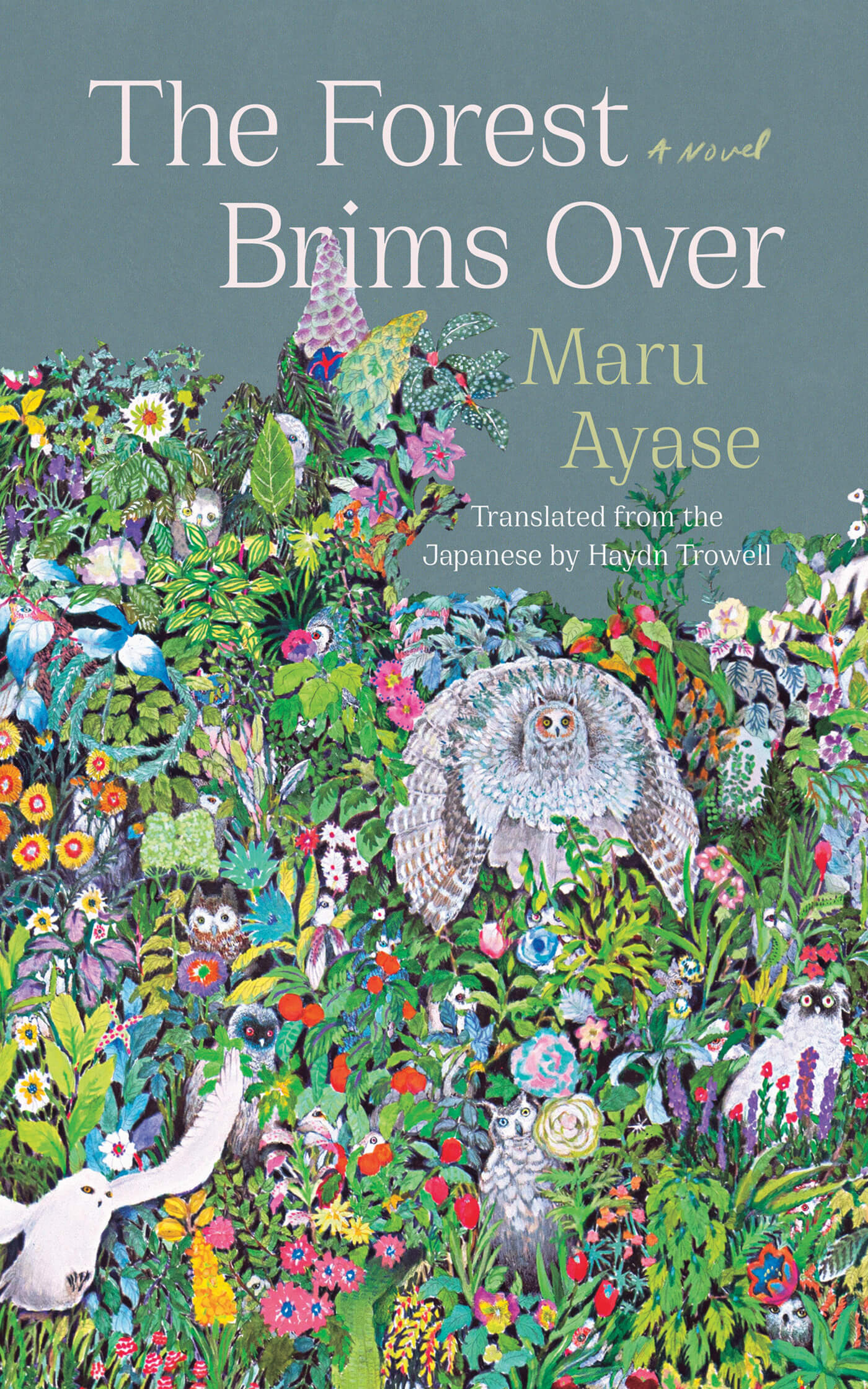
Kathryn: Maru Ayase’s short novel The Forest Brims Over is about a young woman named Rui who is married to a famous writer. Fed up with the words her husband puts in her mouth in his fiction, Rui swallows a handful of seeds that then sprout from her body, gradually turning her into a forest. Despite its fantastic premise, the story is firmly grounded in the psychological realism of the authors and editors who treat women as nothing more than literary symbols to be exploited for sales and awards. In the first four chapters, Rui’s transformation inspires significant shifts in the lives of the people in her husband’s literary circle. In the fifth and final chapter, we finally get to see Rui’s own perspective, and it’s brilliant.
I hardcore sympathize with Rui, whose words are stolen from her by the literary professionals who conspire to confine her existence to a page of pulped paper. If Rui can’t speak in the language of the cultural elite, she’ll find another way of expressing herself, and the vast and mysterious array of life she produces is infinitely more vibrant than her husband’s formulaic literary fiction. Rui’s husband may have the privilege of publishing award-winning books made of dead wood, but she is the roots and the leaves and the flowers and the wind. The Forest Brims Over is subtler and more nuanced than perhaps I’m making it seem, but it was liberating to be reminded that there’s much more room to grow outside of the walls of gatekeepers.
Carrie: Alenka, happy to see another StoryGraph user! I was happy to abandon my Goodreads accounts and found myself tinkering with this newer app a few years ago. I’m also amused by how I’m categorized as a reader: more on the adventurous, lighthearted and emotional in fiction. Thank you for this wonderful intro to Kate Alice Marshall! Kathryn, I recently entered the wonderful Japanese literary world via female writers, first through Sayaka Murata’s Convenience Store Woman. I was wondering who else to read and then I saw your words on Maru Ayase’s work and pulled up my ever-faithful Libby app, ready to feast on this book you just beautifully wrote on!
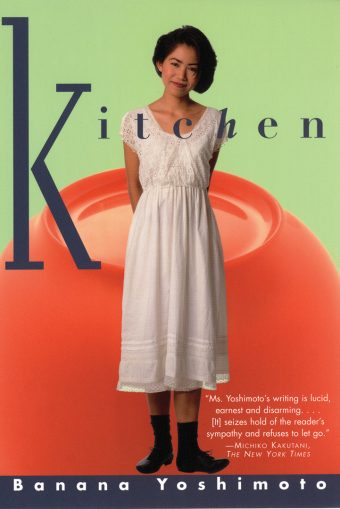
As for me, my recommendation this time is Kitchen by Banana Yoshimoto. This is a novel written by Japanese author Banana Yoshimoto in 1988 and translated into English in 1993 by Megan Backus. This is also a book I picked up thanks to a book review of a friend where she did her best to explain the emotional devastation and fulfillment she felt after reading. This friend exclaimed “Kitchen by Banana Yoshimoto is so beautiful but if you’re not willing to be on such a f-cking journey in such a short amount of time, don’t read it!!!!” So of course, I was intrigued and just bought the damn book as my library’s waitlist was too long for my curiosity to wait for a dozen folks waiting.
Mikage is a young woman, raised by her beloved grandmother, who is adrift, lost after her sole remaining family member’s death. She is invited to live with a friend of the family, Yuichi and his mother. In just barely over one hundred pages, Kitchen stunned me, as it is a short novel on loss exploring how grief can grow into overwhelming waves. Kitchen is also a moving and heartbreaking tale on finding mothers, the tragedy of how short life can be and the miraculous heart of a home: the kitchen. Yoshimoto’s writing style wastes no words yet also adds a dreamy air to the prose on page. I felt myself often rereading a page just to marvel at how quickly I fell into the world of the story: how at home I felt in the Tanabe family’s living room alongside Mikage or when she cooked for them in their kitchen.
The companion story is titled “Moonlight Shadow” with entirely different characters from the first story. This second story shares similar themes from the first, like loss, and adds a heartfelt consolation to people of different ages mourning. It features an intriguing turn of events that left me guessing until the final page with a hard-earned emotional payoff. Both shorts relish in centering grieving young women and Yoshimoto shines in following them move through the fog and trying to pick up the pieces of their lives—the good and the bad. There’s joy to be found amongst the sorrows of life for both of these women.
Lastly, I deeply, deeply appreciate Yoshimoto’s care to note that food is often the reviving phoenix, needed to bring to the table for families for comforting and healing each other in times of need.
Emily again: I’m another StoryGraph convert! I’ve been there since June of 2020 and it’s lovely. According to StoryGraph, most of the books I read are “adventurous,” which I can certainly see. I love a fictional adventure.
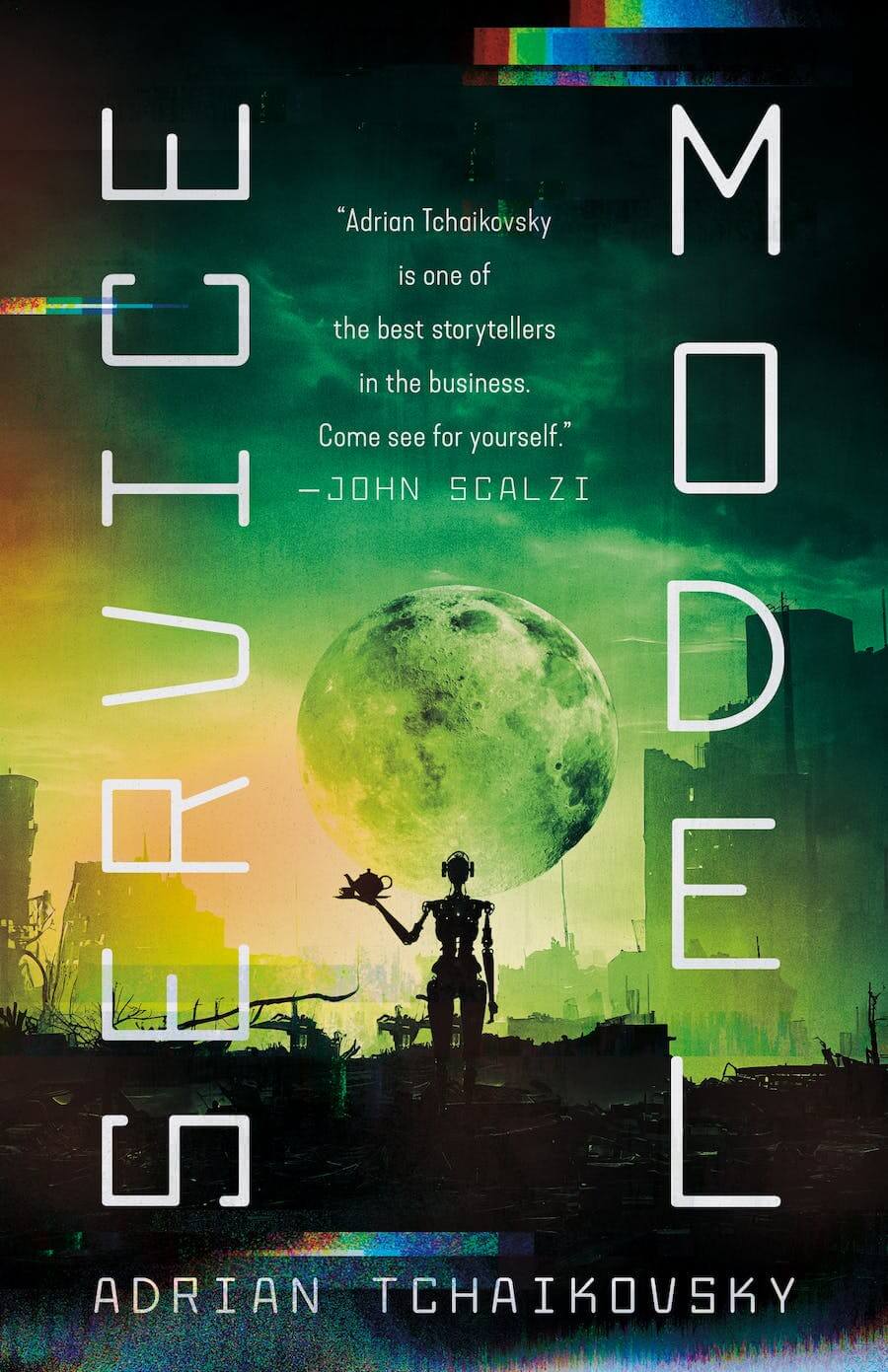
If you do, too, Service Model by Adrian Tchaikovsky will be coming out from Tor in June, and it’s appropriate to start getting excited about it now. Tchaikovsky is so prolific and explores such a range of science fiction subgenres, and it’s delightful to see “post-apocalyptic robot picaresque novel” get added to his roster. Who knew this was a thing I was missing in my life? I haven’t read all of Adrian Tchaikovsky’s work yet, but Service Model is now my favorite of his things I’ve read.
Service Model starts with Charles, a valet robot, beginning a typical day with his somewhat redundant and foolish task list, only to find that he is getting unfortunate stains on everything he touches. A bit of research reveals to him that this is because he is covered in blood, having slit his master’s throat during the morning shave. Oh, no, Charles! With no idea how or why this happened, Charles is no longer employed as a valet, and begins a journey throughout the wasteland surrounding his rapidly deteriorating manor.
At first, I thought this was going to be a robot country house murder mystery and was settling in for some cozy clue detection, but I was delighted by the way the plot turned out, with funny and poignant situations as the valet robot explores and influences its messed up world.
Christa: I’m so excited to see all the StoryGraph love here! I switched over from Goodreads at the end of last year and am loving the user interface and as a data nerd, I am obsessed with all the stats about my reading habits.
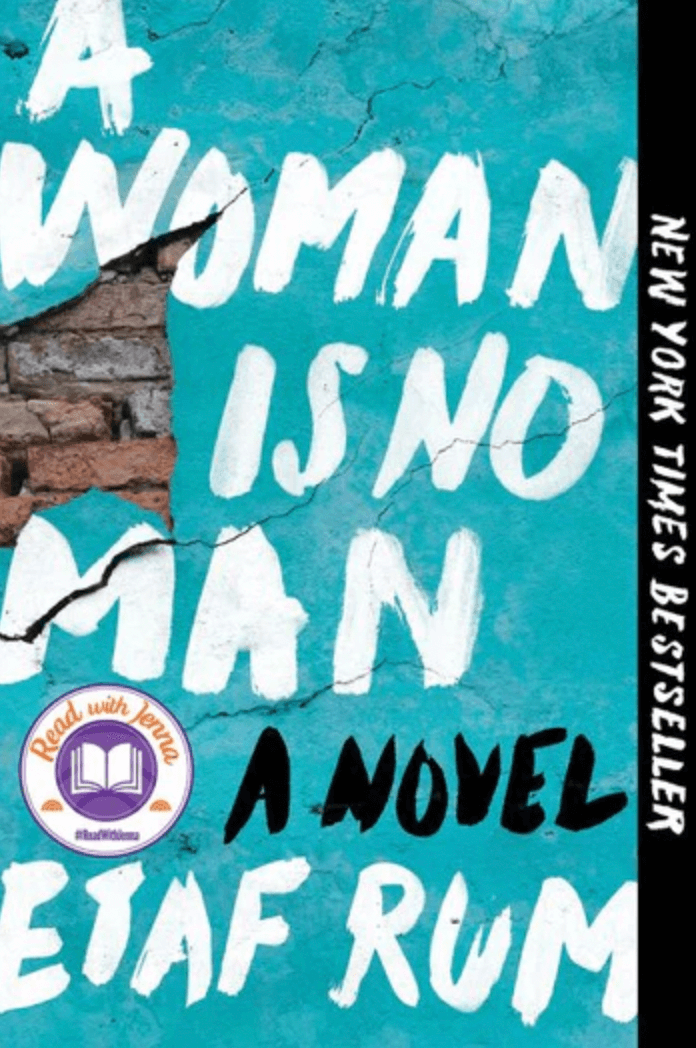
This past month I read A Woman Is No Man by Etaf Rum for book club and I was so engrossed in the lives of the three women it revolves around. It changes perspectives between Isra, who has come to America from Palestine via an arranged marriage, her daughter Daya, who was born in America, and her mother-in-law, Fareeda, who immigrated to America with her husband and children from the refugee camps. The story is expertly crafted, and it builds a complex picture of each woman piece by piece. It’s not an easy read, as all three women suffer some sort of trauma or abuse, but it’s a hard book to put down once you start.