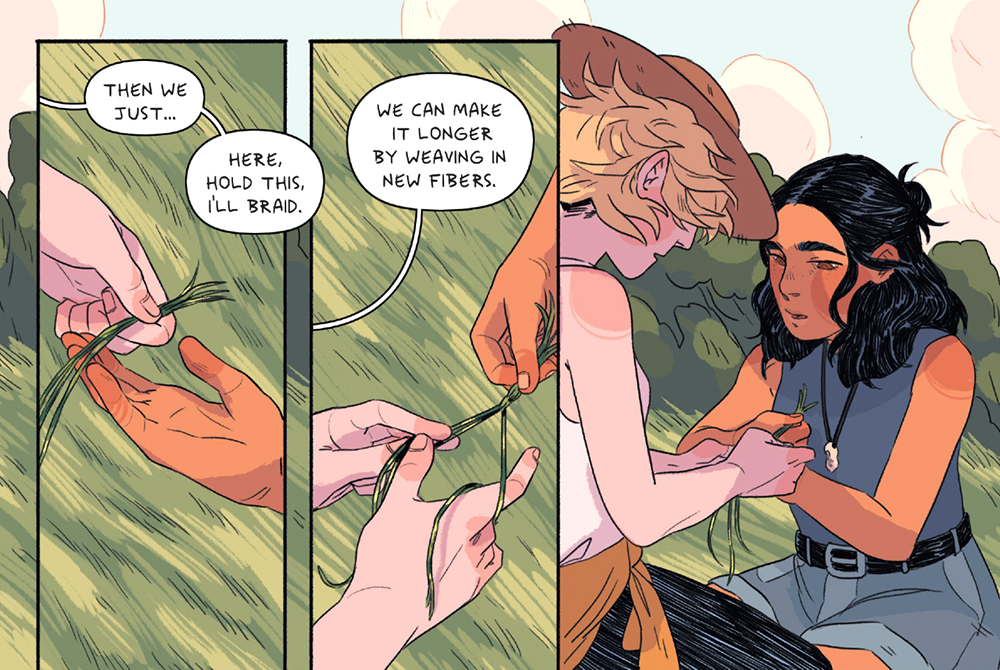


Sas Milledge’s graphic novel Mamo embraces the cottagecore aesthetic. Its pages are filled with lush rural landscapes, small magical adventures, and quaint witchcraft traditions. At the same time, Milledge directs a challenge toward the concept of “tradition” by showing how a conservative mindset can hurt people who don’t fit neatly into models established in the past. By following two young women through a complicated friendship that blooms into a queer romance, Mamo tells a bittersweet story about family and belonging that acknowledges how difficult it can be to come home.
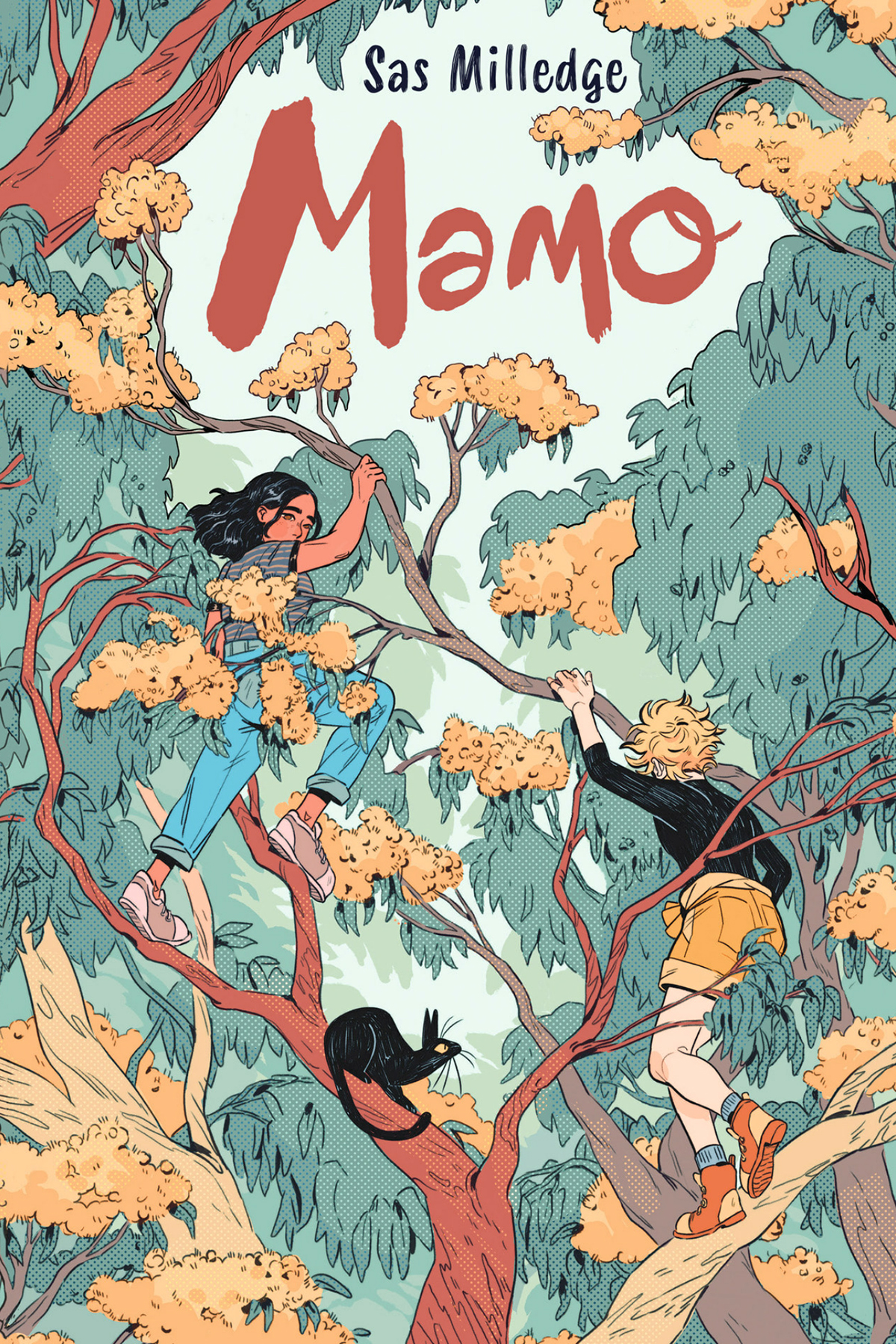
Mamo
Sas Milledge
BOOM! Box
April 19, 2022
Cottagecore is a modern-day fairytale aesthetic that embraces the fantasy of living alone in a cozy cottage nestled in the woods. In many ways, cottagecore is about escaping a consumerist hellscape of disposable goods by disappearing into a fantasy of the old, the traditional, and the well-used. The aesthetic has been criticized for being little more than a social media-driven imperative to define yourself and your values through purchasing clothing and accessories. Other critics have problematized cottagecore as an ahistorical valorization of European “tradition.” Regardless, there’s an undeniable appeal in the idea of living closer to nature while having the freedom to devote your attention to pursuits such as growing your own vegetables and baking your own bread.
Mamo is set in the beautiful seaside town of Haresden, which is blessed by bountiful harvests, windswept fields, and healthy forests inhabited by small nature spirits. Unfortunately, Haresden has recently been beset by small but persistent problems, not the least of which is that Jo Manalo’s mother has been cursed. She hasn’t risen from her bed in a month, and Jo’s younger sister claims that the attic of their house is haunted by the ghost of an old lady.
Thankfully, Orla O’Reilly, the granddaughter of the former town witch, has returned home. Whether Orla wants to be home is another story. Orla had a strained relationship with her grandmother Mamo, a possessive and manipulative woman who isolated Orla and attempted to bind her to Haresden against her will. Despite her desire to have nothing to do with the town, Orla accepts Jo’s request to check on her mother, who is indeed cursed by the ghost in the attic. This ghost is Mamo, who still seeks to control Orla, even beyond death.
To lay the vengeful spirit to rest, Jo and Orla go around town righting wrongs as they find and bury Mamo’s bones. They enlist the aid of the leader of the forest crows, Caractus, a sinister but striking character with an incredible design. All the while, Orla explains magic to the interested but levelheaded Jo, and the bond between them develops into something deeper than a casual friendship. Unfortunately, this bond ties Orla even more tightly to Haresden, and Caractus’ motives are not entirely altruistic.

Although Mamo ends on a hopeful note, there are no easy answers or solutions for Orla, whose magic will be forever connected to Haresden. As Orla explains to Jo, a witch’s magic is their identity, and to lose your past is to lose your magic. Mamo tells a complicated story that resists the simplification of allegory, but I read the “magic” practiced by Orla as akin to the generative energy that animates artists, writers, and other people whose creative work springs from a desire for self-expression.
For many people, heritage and family are major components of selfhood. For young queer people who don’t feel comfortable with their families or at home in their homelands, however, navigating the currents of tradition in their creative work can be a challenge. Mamo is a beautiful and sensitive expression of this tension, and its story benefits from its refusal to append a “happily ever after” to its fairytale of curses and witches and roadside nature spirits.
As a renegotiation of tradition, the cottagecore visual aesthetic of Mamo is liberating. Milledge’s bold and expressive art celebrates green spaces that exist on their own terms regardless of human relationships. The literary trope of seeking freedom from oppressive social constraints by venturing into the wilderness is as old as human storytelling, and Milledge’s colorful and immersive art invites the reader into the forest along with Jo and Orla as they attempt to find a new path between untethered freedom and rigid tradition.
In a digital world, the tactile pleasures of refreshing oneself in a natural environment while reconnecting with family heritage can seem like magic. Mamo borrows from the witchy charms of cottagecore but ultimately transcends simple aesthetics as it weaves a spell that shines light on the problems and potential of a closer connection to one’s homeland and culture.