

[[Editors Note: This review is part of a series of reviews from the Hot Docs Festival that took place from April 27th to May 7th 2023 in Toronto, Canada.]]
All You See asks the question what happens when a person is stared at but never actually seen? Director Niki Padidar attempts to answer this question by interviewing three immigrants in her adopted home of the Netherlands.
All You See
Jean Charles Counet (cinematographer), Niki Padidar (director, writer, and editor), Jefrim Rothuizen (cinematographer)
Khadija Sabriye, Sofia Bonito Ferreira, Hanna Khomyk, Dewi Bus (cast)
April 30, 2023 (Hot Docs)
What a powerful, resonant film All You See is; I’m glad I got to watch a digital screener. This documentary premiered at Hot Docs 2023, and loved being able to sit quietly at home with the film’s protagonists, and enjoy the gorgeous visuals and audio. More importantly, I appreciated being able to pause and rewind because there’s a lot said in this powerful meta-narrative that I needed to experience over and over again.
And it is a meta documentary, which I didn’t really expect it to be. Writer, director and editor Niki Padidar conducts the interviews in All You See to explore her own sense of newness and what being an immigrant in the Netherlands means through the stories and experiences of her protagonists. She interviews young Sofia, all of six, an immigrant from England; Khadija, who left Somalia after her family was killed and has lived in Holland for over two decades; and Ukrainian-born teenager, Hanna. Padidar’s voice is on par with the rest of the protagonists in the film, and she shares her life and stories with mainly Khadija, as they converse about their experiences as immigrants of colour in Holland.
A lot of what is said in All You See is about the feeling of newness in a country that wasn’t always your home, fitting in with people who don’t speak the same language, or have the same skin colour, trying to make friends. Any immigrant will find themselves heard in this film.
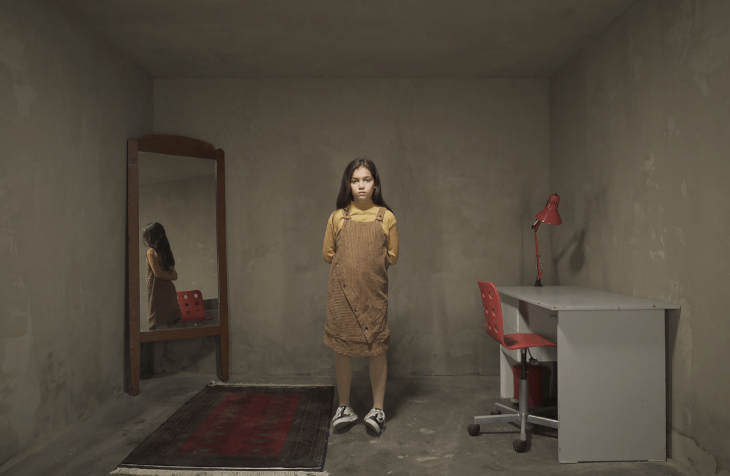
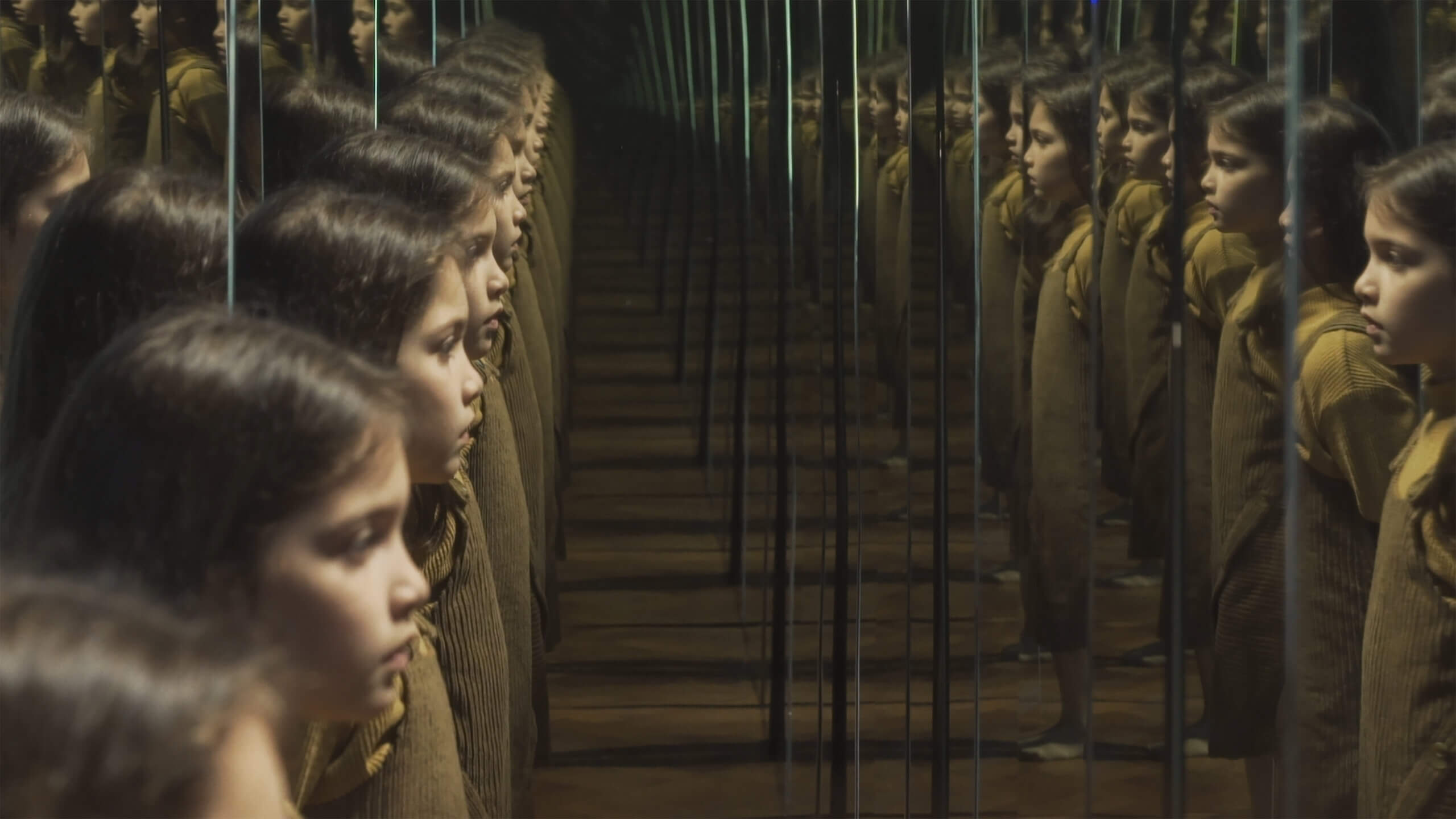
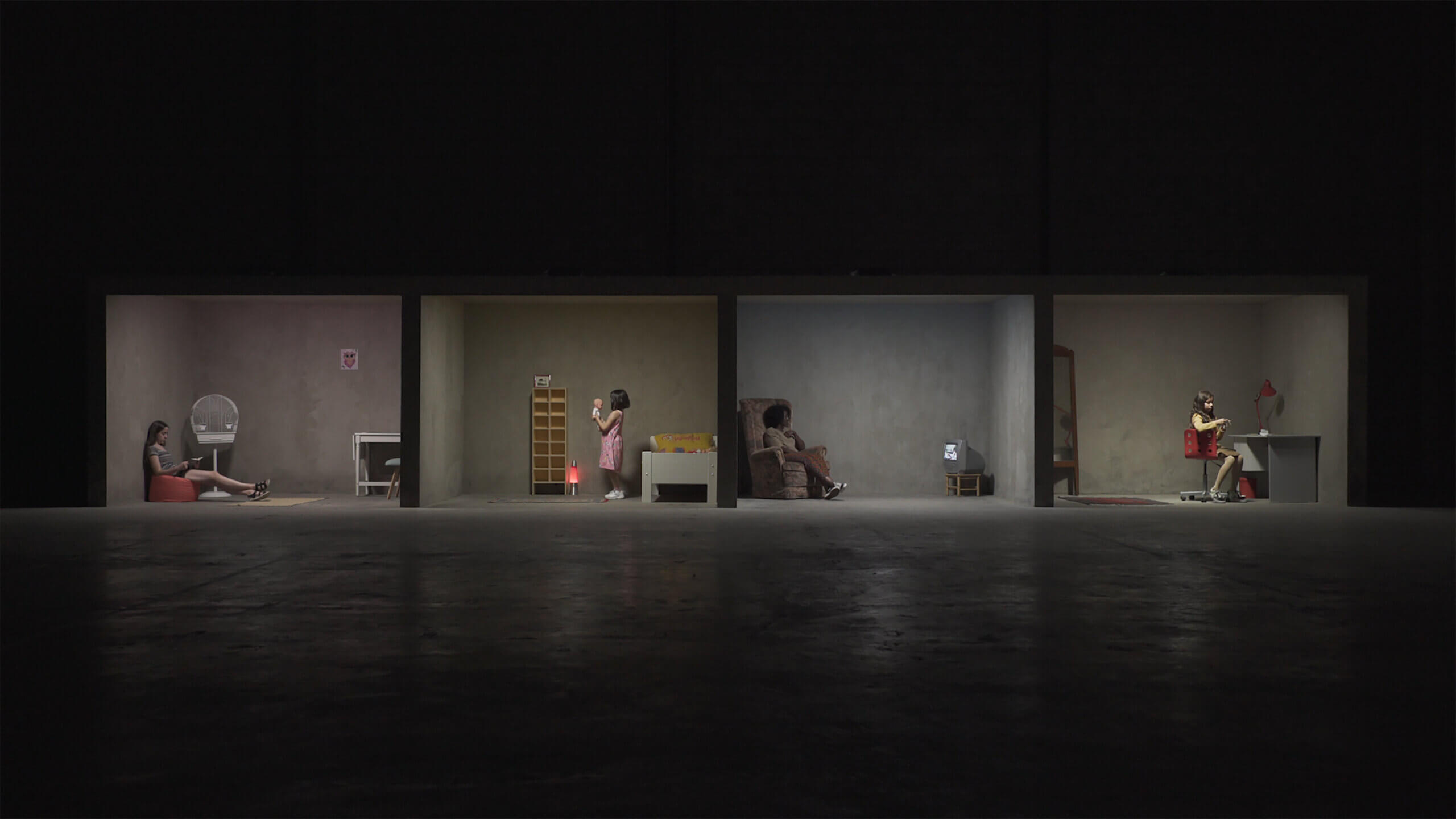
The conversations are primarily conducted in concrete rooms—often times the audio of the chats is played over visuals of the protagonists simply sitting in front of the camera. It’s an interesting choice by the director and it took me a while to understand the purpose. For instance, as Khadija talks about not wanting to be stared at because of the colour of her skin, the audience is made to observe her because she’s sitting right in front of the camera. I found that visual of the protagonists looking back at the camera as they spoke in voiceover about their experiences surprisingly effective—even more so than when we got to see them speaking. It felt like I could really understand the meaning of their words. How odd that I should be impacted by those scenes more than when I was watching them talking? But that’s exactly the point Padidar is trying to make—people around them meet immigrants regularly but are they listening to them?
As the film explains, immigrants are asked the same thing by so many different people, and sometimes by the same people repeatedly. How can they still be asked if they get sunburnt, where they’re really from, whether they had electricity back home, when they’ve been in the country for a year, 10 years, 20 years? When do they get to feel Dutch, wonder the cast, if they’re always asked these questions and made to feel like outsiders?
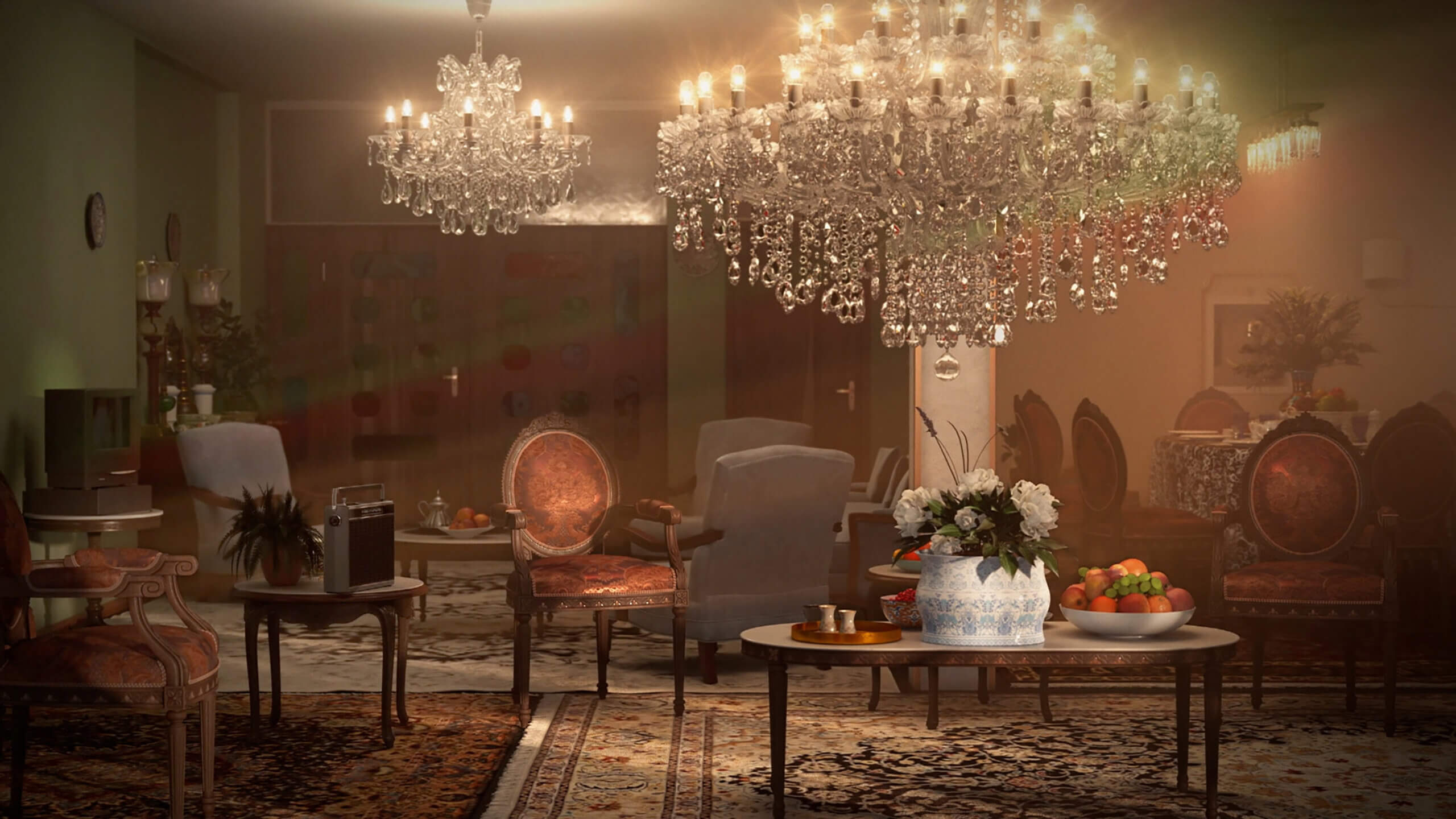
Padidar delves into these questions by asking Sofia, Khadija, and Hanna about their current lives in Holland. She also examines her own experience of leaving Iran as a child and moving to the Netherlands. She intersperses the interviews with home videos from her childhood and recreations of her grandfather’s home. The personal angle in All You See wasn’t obvious to me initially. Padidar has actor Dewi Bus standing in for her younger self as she talks about being an outsider. But I wasn’t sure if these events were Padidar’s or whether she was sharing someone else’s story. I wonder if Padidar could have been more explicit about it being her story? Or perhaps I’m just not familiar enough with this particular type of artistic documentary. Either way, once I understood that Padidar was indeed sharing her own life story, I felt more settled in the narrative and became more engaged.
Padidar has explored themes of being an outsider before—her short film Ninnoc followed a young girl trying not to fit in but afraid of being excluded. Ninnoc went on to win seven international awards. Her surreal short film Baggage was about a child who inhabits two worlds and received nominations for best film and best cinematography. Padidar has also made short films about bullying and sex education, as well as video portraits of children. I wouldn’t be surprised to find All You See on award lists this year.
All You See is a visually arresting film. Whether it’s the protagonists in the stark concrete rooms, projections of their former lives, shots of Holland from above, everything in this film is gorgeous to look at, and relevant to the stories being shared. I wasn’t always initially sure what the visuals meant or whether they were expected to have any meaning, though. Were the dancing Maasai warriors behind Khadija meaningful? Why the close-up of the inside of a chandelier? But all the visuals have a purpose and eventually there’s an explanation for them.
Padidar’s background in photography clearly plays a huge part in the visual language of All You See. There are so many moments of this film worth putting up in a gallery. Cinematographers Jean Charles Counet and Jefrim Rothuizen encapsulate the stillness of watching someone, while also being able to capture the hubbub of daily life. There’s a scene when Sofia is trying to talk to others and is so completely ignored that physically hurt to watch.
But it’s not just the visuals—the audio is just as important. We never actually see Padidar, only her stand-in. We hear her clearly when she’s talking to Khadija though. There’s a point fairly late in All You See when Padidar is sharing a story with the audience and she breaks down. I was overcome with emotion listening to her—not because I’ve encountered the same thing, but because of that feeling of helplessness. Someone asks you something so ludicrous, so inherently, yet not overtly, racist, and you just don’t know what to say. You’re living your life as a person and suddenly you’re reduced to just one tiny thing. Ughhhhh.
Here’s the odd thing though—before Padidar breaks down, Khadija shares a truly horrifying incident from her life. And she does so completely calmly, because as she says, it’s just too shocking for people to hear—she would damage them by sharing it. But it made me wonder: how far does empathy stretch? Only for events that people have experienced? For something small and relatable? Why not for something so terrifyingly out of the realm of our consciousness? I’m still thinking about what Khadija said and it’s making me examine my reactions to the world—we all should do that.
I’m so glad I watched All You See—it was first on my list when I saw the Hot Docs 2023 schedule. It’s funny how the first three films I’ve seen at the festival have all been about immigrants. There are a lot of stories to tell but the fact that I’m an immigrant seems to colour a lot of my choices. I’m fascinated by what All You See has to say about the immigrant experience—it’s not the same for everyone and it can be a trying experience. There’s an urge at times to give up; the feeling of not belonging anywhere is hard to deal with. All You See doesn’t always find the positives in the experience, but it does reflect the more universal aspects of it. It did make me appreciate where I am and the multicultural nature of Canada that has made it a little bit easier to be considered Canadian. The film is such a visual feast that you’ll want to go back to it but it’s those powerful messages that will stay with you well after its gallery of visual delights closes down.
