


One of the big focuses of this year’s Emerald City Comic Con is what’s called the Pro Track of panels; that is, panels about the industry around comics, about the business of making, promoting, or writing about them. One such panel is Building Your Own Themyscira, moderated by Jordan Dené Ellis, owner of Jordandené, a geek fashion staple for the last several years. Building Your Own Themyscira is a regular con feature where creators and independent business owners talk about how they’ve built their brands, and how they keep those brands fresh. This year’s lineup featured Steenz, Robyn Warren, Emilee Shields, Mallory Shoemaker, and Erin Lefler.
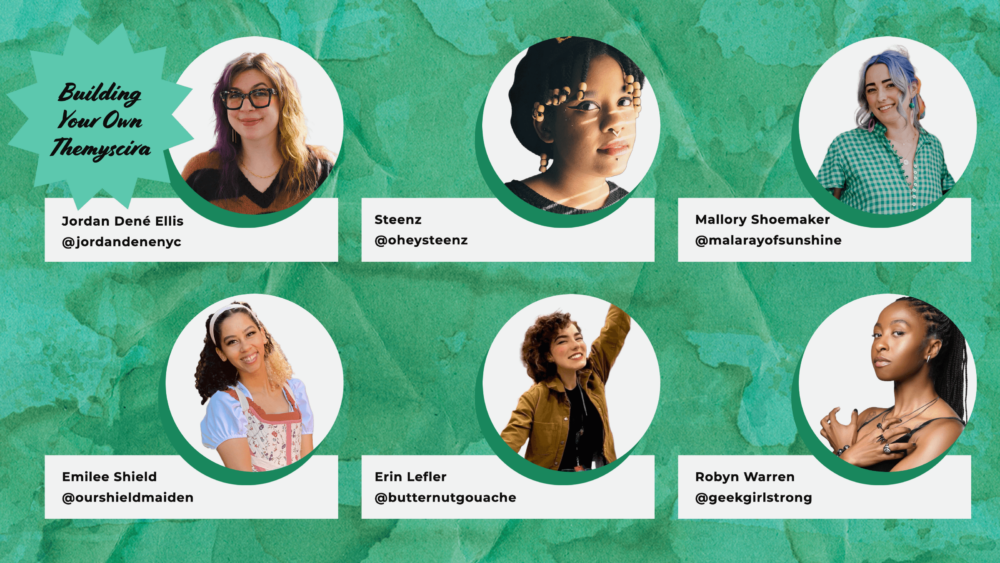 After introductions, Ellis opened the panel by asking how community has been important to the panelists’ brands and businesses. Warren was the first to answer, and described how the geek community has been hugely important to her. With her teaching background, she felt like she was being pigeonholed, and community was a big part of how she was able to escape that. Steenz chimed in to say they prefer community-building to networking because it’s important to understand that in comics you’re working with peers who sometimes turn into friends, and networking is a little cold for that. They also joked about hating LinkedIn, something that proved more controversial than expected as Shields actually had a lot to say about getting her start with LinkedIn.
Shields talked about how outside of the community she’s built around her cosplay with Our Shieldmaiden, she writes content for Wizards of the Coast. She worked her way into that position by messaging folks on LinkedIn and offering to buy them lunch. That helped her form connections, which were a hugely important key in getting her where she wanted to be — and it was LinkedIn that enabled her to make it happen! Outside of that, though, Shields spoke about being ostracized from cosplay communities early on, and how building her own community was the genesis of Our Shieldmaiden. She now hosts her own free events over Discord.
Shoemaker’s day job is a content strategist with Adobe, but prior to that made her name as a YouTuber and podcaster. She says the two were related, in that she made friends in the YouTube community which led to those friends joining her on her podcast. Connecting and growing together is how folks succeed.
Lefler ended the first round of answers speaking about her experience as an illustrator. She worked in animation without a degree, despite most jobs demanding one. Instead, she joined social media and just plugged away at her work, building a reputation and making friends with folks like Ellis, through whom she then met others. For Lefler, that community was important, making what would’ve otherwise been a very lonely and isolating career start worthwhile and rewarding.
Next, Ellis asked the group if they had any tips for building community in person. Lefler led off this time, cautioning that you have to be very careful about who’s reaching out to you. People have different prerogatives, and you have to ask yourself, “Are folks trying to use you or will they help you grow together?”
Steenz and Lefler agreed on breaking bread as a means of community building — Steenz says inviting folks to dinner with you is a great way to build relationships. Both cautioned against going up to people in person and doing that first thing, however, because it’s creepy. Warren cosigned, and added to not to comment on folks’ bodies when you first meet them! She says she gets a lot of comments about her height, that she’s shorter than people expect, and that puts her off.
Warren also spoke about finding people who get you. She mentions her friend Jazzlyn Stone (Freelance Comics Marketer and also Name Who Will Appear In Many Panel Write-Ups), saying Jazzlyn is much more social and extroverted. Warren, however, struggles with small talk, but likes to get excited about big, deep subjects (same, girl). She noted it’s good to have people who will complement your communication styles in public settings, because you can support each other or provide help when it’s needed.
Shields followed up by mentioning conventions. She said they’re a great way to connect because they do the work for you of bringing like-minded people together. She recalled going up to Shoemaker after a panel and asking if she wanted to have lunch. The panel had a little fun with that, circling back to Steenz and Lefler’s comments and making jokes with creepy voices. Shields made the point though to feel empowered to talk to panelists after a panel — don’t monopolize their time, but feel free to introduce yourself and share a few words. Shoemaker agreed, saying you need to be able to advocate for yourself and to know what you need.
Ellis’s next question was for tips for social media, since the etiquette is different there. Warren led off, saying to just send an email to introduce yourself! She told a funny anecdote about the awkward email she first sent Ellis, and how on a vacation recently Ellis had her read it aloud for fun. Both had a good laugh about it.
Lefler said that for her, emails are kind of difficult—they’re a lot to deal with because of her anxiety. Ellis chimed in to say she struggles with that too, and one way around it for her is to type the email and have a friend press send. She says it does wonders, having a community you can count on that way.
Shields cautioned that what you don’t want to do is send flowery, multi-paragraph complimentary emails—she doesn’t even respond to those (Lefler nodded her head in agreement here). She advocated commenting on social media posts, sending related messages, and then building up to emails so you have a relationship with the person before you start talking in more depth. Lefler added her agreement, and both indicated they’ve had histories with stalkers, so cold emails can often feel like a danger, saying having a bad experience changes the way you think about those things. Warren confirmed, saying most femme-presenting folks have had bad experiences, which is something to keep in mind.
Steenz talked about the value of a little bit at a time, and letting things go so they can build organically. Their example was a local punk band to their area who they saw on TikTok. They went to a sparsely attended show, talked to the band after to say how much they’d needed the experience, and then let it go until the next show came around. After that, the band remembered and befriended them, which led to a deal designing merch, which Steenz was wearing at to the panel. “Timing is paramount,” they said.
Shoemaker chimed in, building on Steenz’ anecdote by saying you can’t just show up and expect folks to be interested, you have to bring something to the table when building relationships. It’s also about what you can offer. Steenz agreed, saying to also talk about the things you want, the things you’re interested in! People have to know. Shields added you should get used to hearing “no,” but agreed that in order to get that far you still have to talk about things. Warren mentioned that she had panels turned down for years before being accepted at conventions. “No one sees the rejection letters,” she added.
For the last question, Ellis asked what communities each panelist was grateful for. Steenz led off, saying they run a Discord server for comic creators of color and marginalized genders. Heading off any potential requests to join, Steenz clarified that it’s for fellow professionals and not hopefuls, because it focused on people who were there to work alongside peers. They capped off saying they’re also grateful for their skating community, because it’s something that’s fun and not work, which is important for balance.
Warren mentioned she did a workshop with Steenz’s server once and has another client now because of it, something she’s very grateful for. She also has her own Discord for GGS, and added those filtered communities are great for safety. Shields hosts a community called Sew Long for cosplay creators, and said it brings different age groups together in a really great way, sharing generational knowledge. She also agreed with Steenz that it’s important to have communities which inspire you outside of work.
Lefler said she’s terrible at initiating and joining groups, but she was grateful for folks taking her under their wings. While she’s very introverted she was thankful for folks who reached out and checked on her and that community helped her become a better person because she’s exposed to other viewpoints. She also mentioned Ellis reaching out to her again, and said it brought her out of her shell some.
For Shoemaker, making communities is very good. She said like Steenz, she’s a connector, which had paid off in friends she’s made on YouTube. She started dancing again in December and loves that. She also loves cons because of the way they bring folks together, and said those shared spaces are important for building relationships. She finished with an anecdote about meeting friends at Disneyland, how she just struck up a conversation once and now has regular friends there.
From there, the panel was opened up to audience questions, but only had time for one: How do you restart connections/friendships if you’ve fallen off?
Steenz said just reach out! They did that with Gale Galligan, now they have virtual coffee once a month. They also said to understand that often folks are just waiting for others to take the first step, so being the person who does is a big thing. Warren admitted we have ALL fallen off with the pandemic and now is the perfect time to reach out, because everyone feels the same kind of vague guilt. Lefler agreed that others are also hesitant to reach out.
Ellis said it was hard, she has a day job now and much less time for output. She got existential for a moment, questioning whether she deserved to be there (this panel indicates yes, imo). Finally she opened it up for panelists to plug where they can be found, and the panel ends.
