
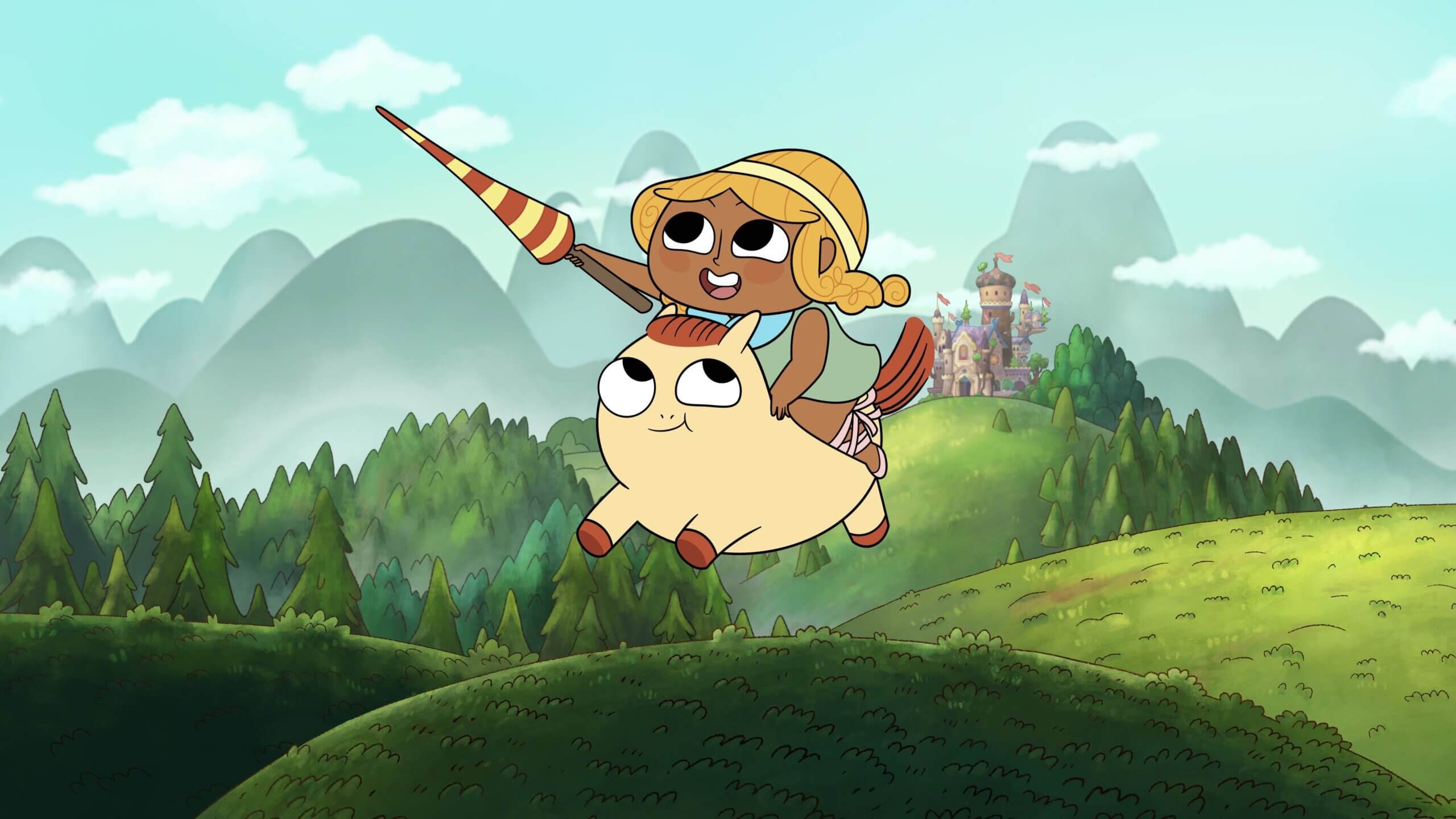
Taneka Stotts made a name for herself in the comic book community as a vibrant and brilliant writer, editor, and comic book publisher. But a few years ago she began to carve out a new career in animation. Since then, credits on Steven Universe, Craig of the Creek, and My Little Pony have made her one of the most in-demand creators in the field. Her latest project is the Apple TV+ series Pinecone & Pony, adapted from the kids book Princess & the Pony by comics icon Kate Beaton. The delightfully charming show is all about the importance of being yourself, which feels even more important in 2022. To celebrate the release, we sat down with Stotts over Zoom to talk about the journey of creating Pinecone & Pony, building truly inclusive teams, and how aspiring animation writers can get into the industry!
What were the origins of Pinecone & Pony?
I was contacted by DreamWorks, who originally approached me to ask if I wanted to be a story editor, which is actually the first time I’ve taken on that role. It was really wild because I wasn’t going to be working for DreamWorks proper. I was actually working for First Generation Films, who are the licensors of Princess & The Pony. I then wound up also working with Apple. But they were all splendid because they all came with just the heart and personality that the show is trying to put out into the world. So it was just a blast. Those are the weird circumstances of how this came to be. Not only that, but I was the first story editor listed in Canada! It’s not a position that they really have. So it was something that I got to introduce them to.
What was it like to go on this journey from comics to stepping into TV to adapting the iconic Kate Beaton. How did it feel to have those two worlds collide?
Wild!! Also a little bit of full circle. I was at the first Stumptown [Comics Festival] that Kate Beaton appeared at. I have also been a very avid follower since the LiveJournal days. I told Kate all this while she was driving in a storm, that was our first phone call ever and it was pretty, pretty hectic. But what it came down to was, I got to work with somebody that I’ve felt nothing but respect and love for over the last 15+ years of my life. So being able to take what was their creation and find that the world for that creation was unfinished and was ready to have more added to, it was just a dream come true. So it wasn’t just, “Here’s the bible, kid. Everything’s been figured out. Go from here.” It was, “Here’s the bible, these are our principal building blocks. Do you have more to add to this?” That just was a completely different conversation that we don’t get to have in most creative processes.
Then just like comics, you brought together an incredible team of collaborators. What was it like putting your crew for this together?
Building the team was awesome. I got a lot of help. Because it was a Canadian/American production, we had to have more Canadian writers than American. I didn’t even really have to advocate hard because most people had already been advocating before me. We wanted to make sure that Indigenous writers were included, non-binary writers, trans writers, pretty much writers of marginalized genders and backgrounds were given a space and a platform.
I was told to read a very large list of scripts to go ahead and find who would be our fortunate writers joining us. I found Pilot Viruet! They actually submitted through a screen competition. And they were added to a packet and I took on the work of reading the entire packet. As far as all of the amazing writers that were submitted, Pilot really stuck out to me as someone who was very, very special, very knowledgeable, and would fit really well into this world, even if cartoons weren’t something they had done before. It felt like it was something I could teach them, just as I was being taught by my showrunner, Stephanie Kaliner, how to be a story editor.
So it was this level of growth and taking advantage of how you can create more spaces for other voices, but adding onto them so that they get to the professional level faster, so that they can continue to grow and excel within the environment they want to be in.
I also got to bring in a bit of the comics world. I approached the artist and writer GGDG who does Cucumber Quest. I’ve loved their writing forever. I finally got to meet them in person at Emerald City Comic Con. Then I emailed them and asked if they would send me some script samples. I then presented those to DreamWorks, Apple, and First Generation and was like, “Please just read the scripts. They are comic scripts, but they are very much like animation scripts. If you just give me a little chance I can prove this to you so deeply that this person not only understands these characters intrinsically but can gravitate towards a character’s voice so quickly.” They did and they had their socks blown off. We actually gave GG the season finale, and GG crushed it.
So building the team wasn’t just about needing everyone to hit really hard right out the gate. It was about being able to pull people in and remind them that, much like Pinecone is always taking a chance, we also have to take a chance. We have to understand that it’s our responsibility to steer the ship correctly. And not only that, but we can do it with very basic minimums that haven’t really been adhered to by other animation studios, creations, and also shows. So it was just presenting a very smooth, balanced, and just very lovable platform for people to join onto. And when you have happy people on a platform, good things come out!
The story of building the team sounds a lot like the story of Pinecone & Pony. It’s this really empowering, sweet, inclusive tale. So could you talk a little bit about that—which is really key to all your work—but what was it like to build that in here with this incredibly inclusive team that was pushing those boundaries behind the scenes as well?
It was wild in the best ways. I was not really prepared for how accepting and easy this would be. I’ve been on a few productions–that’s not to say that they were difficult in any ways, but there were difficult conversations that may or may not have happened on those shows. So coming to a place where there were no difficult conversations because it was such a free-flowing form of conversation where everybody wanted to hear everyone’s side and get their side of the story was amazing.
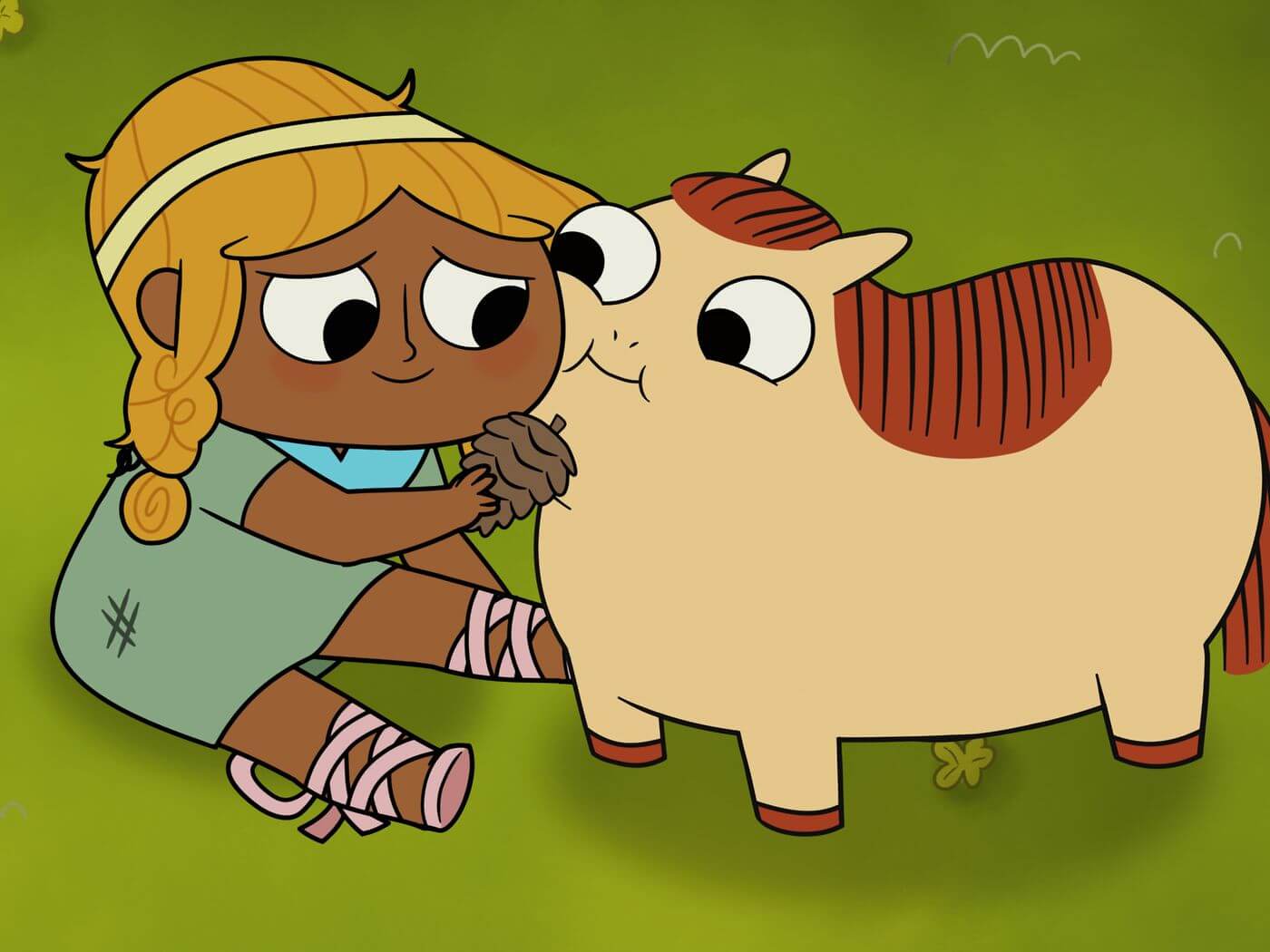
Then, for me, I really identify with Pinecone, like hardcore. This child is literally me. I cannot tell you how much I relate. I always tell people I never really saw myself in comics or in cartoons when I was a kid. But when Pinecone & Pony got put in my field of vision I was like, “Oh my goodness, this is like me, complete with the same mistakes that I would make, complete with the same amount of adventure I want to have, the skin knees the badges of honor everything that comes it.” Another thing that I love about Pinecone is she’s not a wild child. She’s just a beautiful child who just enjoys adventure, has a zest for love and life, can get loud and very proud, can go quiet and soft, and gets to experience her emotions in every beautiful range.
Inclusivity comes from more than just what you see on a screen. It’s about whose voice is being presented. And I was just really excited because everybody was all in on inclusivity and diversity and making sure our voices were heard. And Kate [Beaton] was at the very top just as much as Stephanie [Kaliner] was.
That aspect of really being ourselves and the importance of it is so key to the core of the show, and it feels even more important and relevant with the current anti-trans legislation attacking young trans kids and LGBTQIA+ folks. Could you talk a little about that?
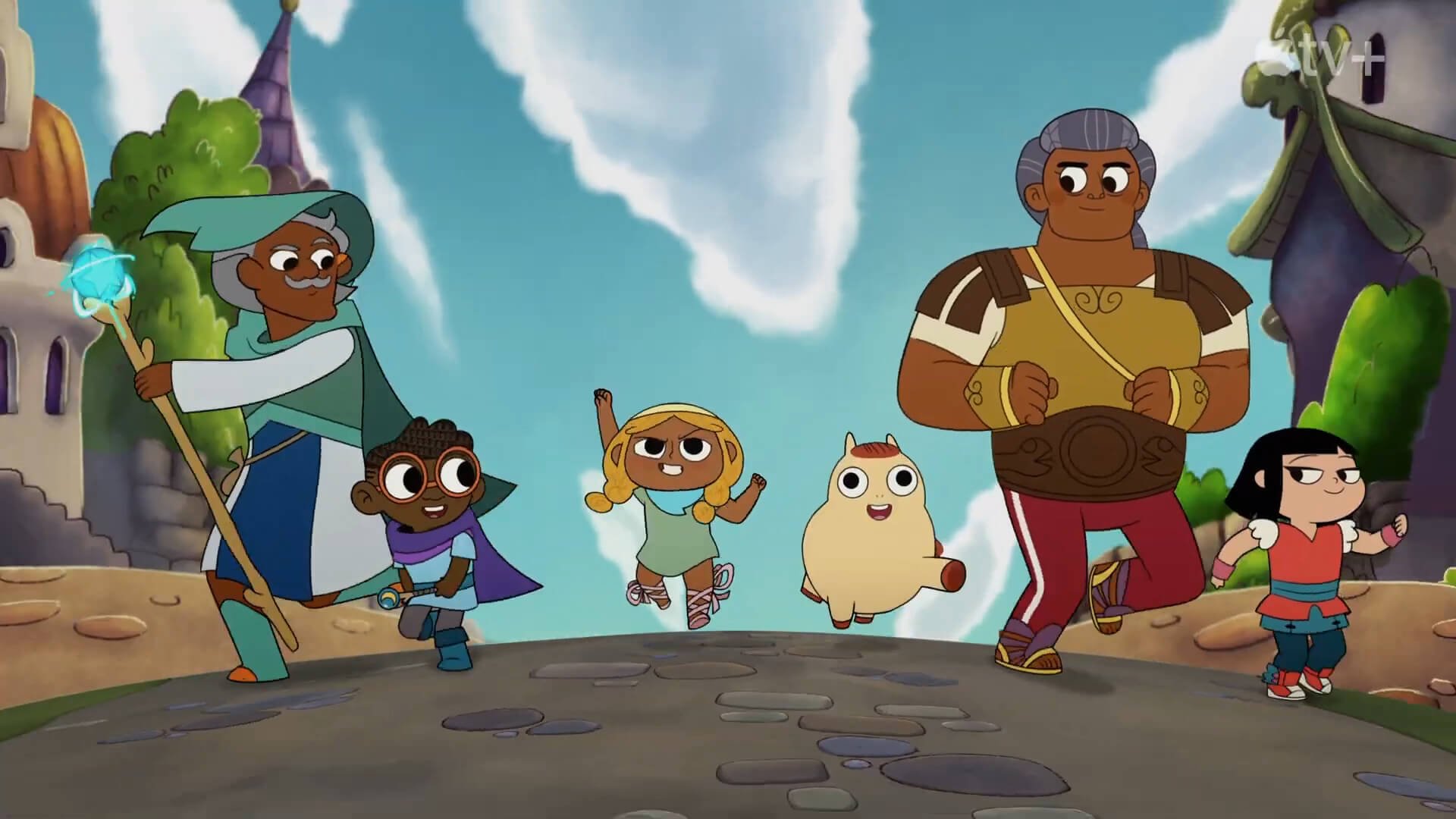
I thought it was probably the most important aspect as a person who wasn’t allowed to be themselves for a very long time. I felt that the message was very powerful. It’s presented in a very clear and very basic way. Be yourself! And it’s resounding in the way that you can be a warrior, you can be a wizard, you can just sell ice cream. You can do anything in Sturdy Stone and that was the very special part about this town we were making.
However, the conversation grew when we started talking about incidentals: the background characters. I thought we should continue on with the diversity in our main characters with those background characters. So we started writing small side stories. They all started developing more and more but they have a lot of personality even when they’re just walking in the background, which is something we wanted to have because that’s our lived experiences. It doesn’t matter if you’re in the remote Midwest or if you’re in a metropolis. You see a lot of people come and go who are not the same, different people who come from all walks of life, and there’s a point where you have to start realizing that’s a great thing.
Pinecone & Pony is now on Apple TV+.
