

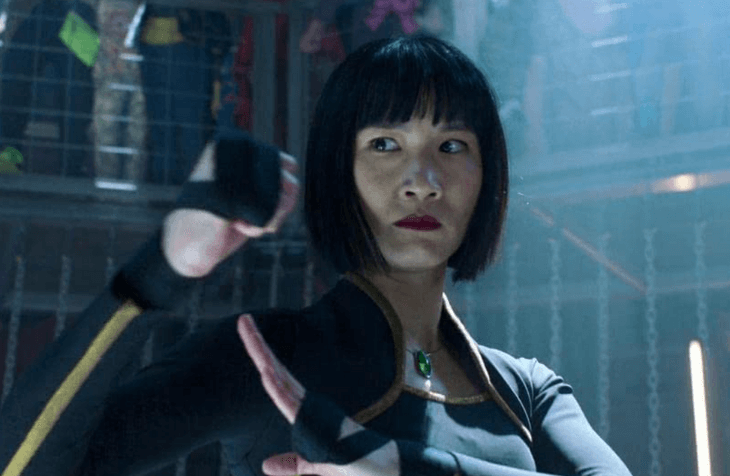
As the MCU’s first film with an Asian protagonist, Shang-Chi and the Legend of the Ten Rings still relies on some age-old tropes and stereotypes. However, I also found some solace, empowerment, and escapism in how it spoke to being part of a Chinese diaspora. In particular, the film’s representation of women was noteworthy because there was a cast of Chinese women, who each had their own personalities and perspectives that reflected their experiences. Therefore, the experiences of women were not reduced to the shoulders of just one person, a fact I found heartening.
I identify as Chinese-Canadian to Hong Kong immigrant parents. I was born and raised in Toronto, Canada, and have visited my family overseas twice (airfare is pricey!). As a kid, my parents made a lot of effort to have me exposed to Hong Kong culture and the Cantonese language through film and television. For me, representation in media means more than just visual representation on screen or on the page. Representation also means the nuances of language, accents, and the complications of family, heritage, and immigration be included, because that indicates a recognition and respect of history and community. And selfishly, representation also means I do not need to perform as many mental gymnastics of cross-identification and hold my guard as tightly whenever someone who looks like me appears on screen. With Hollywood’s history of racist stereotypes and tropes, I’m often wary and sceptical, especially when there’s a lot of buzz and hype around representation.
The last time I’d gone to the movies was in December 2019, and so I was excited at the prospect of seeing Shang-Chi in theatres. Not only is it a superhero film, which I’m a fan of since my graduate studies are in comics and pop culture, but it also starred Simu Liu and Tony Leung. It felt like my two geographies of Toronto and Hong Kong intersected. But in the background, I was very conscious of the fact that there is the COVID-19 pandemic raging on. Not everyone can risk their health and safety to go to the movies. On top of that, I am very aware of how the pandemic was a catalyst in the rise and resurgence of anti-Asian racism. I remember the unsettling feeling when Toronto went into its first lockdown in March 2020, and feared how the city could turn its back on its Asian community, or become a repeat of the 2003’s SARs epidemic. I share this to illustrate the context and mental headspace I was in when my dad and I decided to venture off for the movies, which was our first big outing that did not involve groceries, in eighteen months.These were the concerns and internal conflicts I experienced, and the film’s release was a brief moment of solace, empowerment and escapism.
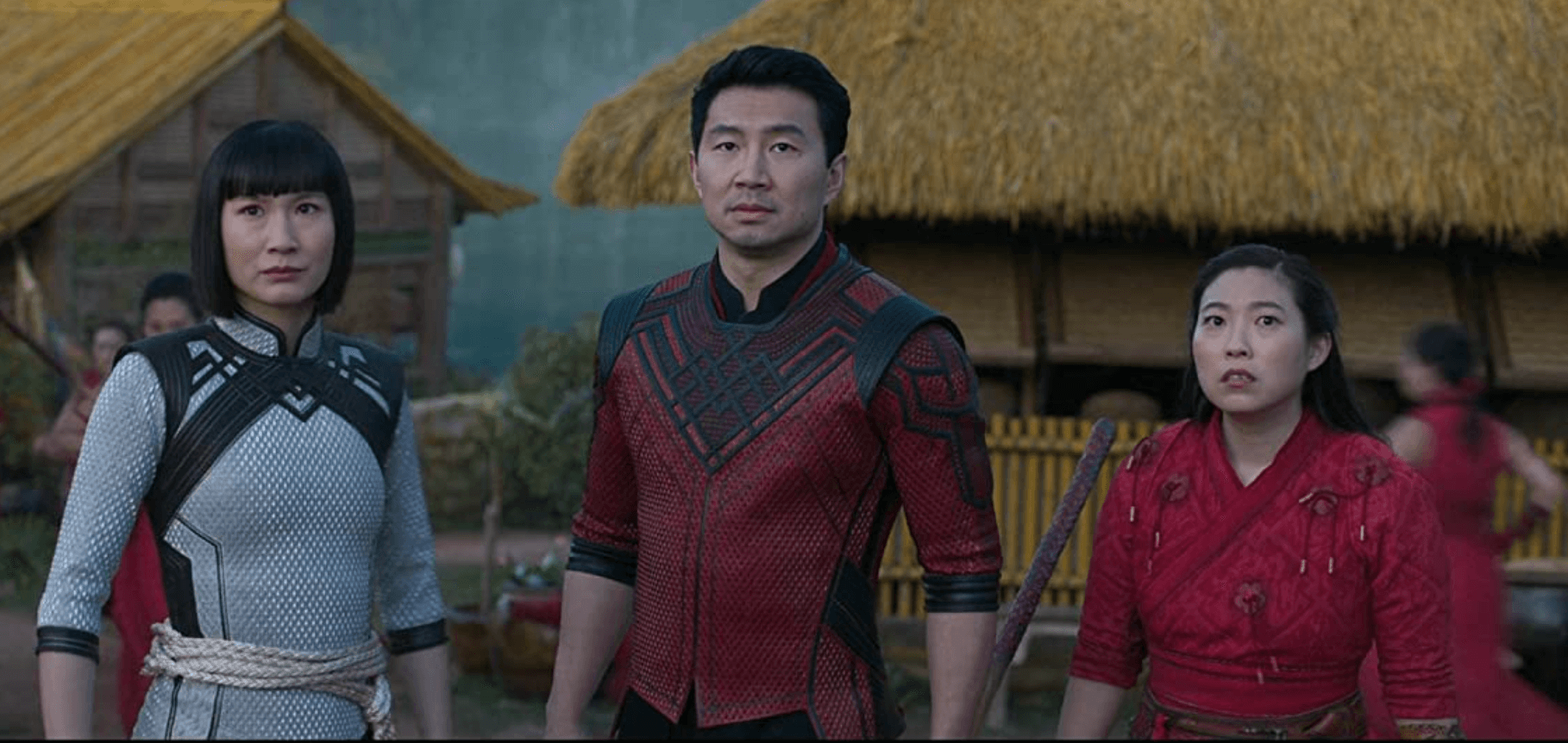
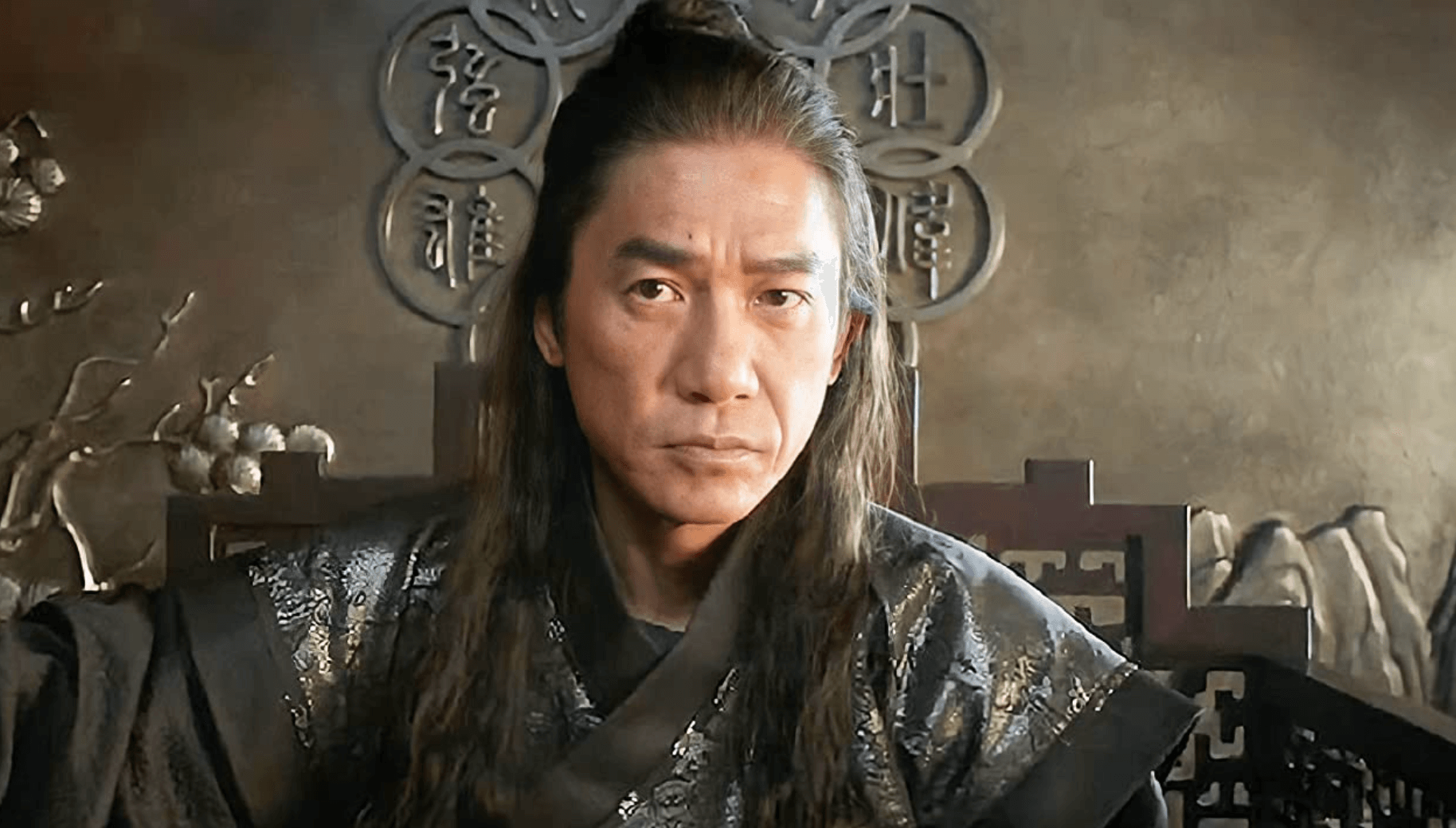
Shang-Chi and the Legend of the Ten Rings is self aware of the history and legacy of racist Asian stereotypes in film and comic books. It makes a conscious effort to recognize and navigate the MCU’s pitfalls with Asian representation. From the casting of Tilda Swinton as the Ancient One in Doctor Strange to Ben Kingsley’s role as The Mandarin/Trevor Slattery in Iron Man 3 (which we’ll get into a bit later), the film makes efforts to challenge old stereotypes, and present characters with agency and context. In other words, the film shows recognition and respect for each character’s humanity and dignity. One example of this is how Xu Wenwu was not limited to just being a villain. Tony Leung’s performance, as well as the narrative and editing, highlighted how Wenwu was also capable of being a loving father and husband. But the best example is how the film handled the representation of Asian women. As Roslyn Talusan from Refinery29 noted, “Between the infantile, submissive Lotus Blossom or the seductive, calculating Dragon Lady, Asian women have rarely been portrayed beyond these exotified, hypersexualized stereotypes.” However, the women in Shang-Chi reflect a nuanced spectrum of experiences and capabilities. As much as the movie is about Shang-Chi and his journey, the narrative would not be possible without the developed agencies and motivations of Xialing, Ying Li, and Katy. These women were not only important in his life, but they were also fully realised individuals with goals, desires, and interests of their own.
Xialing, especially, has a full narrative arc that supports her perspective and motivations, which explains the emotional tension and weight of her interactions with her family. Afterall, she stopped waiting for her brother’s return and made a life for herself. As Nancy Wang Yuen, associate professor of sociology at Biola University, notes in io9, Shang-Chi calls out sexism on screen. In particular, the scene in which Katy and Xialing are confined to her childhood bedroom highlights the normality of male privilege within the home and family. Katy expresses fear of Wenwu killing them, and Xialing replies with, “Just nod. Don’t talk. He’ll forget you’re there. That’s how I survived”. The casualness in which Xialing responds to Katy’s worries reflects not only how she coped as a child, but is also an acknowledgement of how sexism reduces Asian women to near invisibility. Later, Ying Nan welcomes Xialing into the village and encourages her to train, the opposite of her unequal treatment under her father. These subtle nods add weight to Xialing’s post-credit scene, when she continues the Ten Rings organisation with female fighters. These scenes demonstrate solidarity and support between women, and this community-minded approach to combating sexism is why I appreciated there being a cast of female characters in the movie.
Personally, I appreciated that I did not have to do the mental work of cross-identifying with the characters and narrative on screen. While I needed subtitles when the dialogue switched to Mandarin Chinese, I liked how the film used both languages in its dialogue without explanation. I also liked how characters, like Katy, had varying levels of language proficiency and ability. The recognition of the Chinese diaspora, and the wider cultural nuances of being part of the diaspora, was very heartening. Like that scene in which Jon Jon exclaims how he also speaks “ABC,” or American-Born-Chinese, was a fun touch and nod. As a fan of comics, speculative fiction and pop culture, I have to admit: I had fun watching this movie. It was a wonderful experience to share with my dad, and like a kid, I asked him questions about mythology and folklore because I had never read the original stories (because I am not literate in Chinese).
My dad was pleasantly surprised by the movie. In comparison to his lockdown viewing of Iron Fist on Netflix, which he found very silly and could not bother to watch a second season of, he did not expect Hollywood filmmakers to animate Chinese mythological creatures. He thought Tony Leung was great, and told my mom it’s worth watching just for the Hong Kong star (she stayed home out of pandemic precaution). At the end of my first and second viewing (I rewatched it when it was released on streaming), I walked away feeling as though the story was about trauma, family tragedy, and how much time it takes to heal. It got me thinking about my family’s history, the troubled choices my grandfather made, and the consequences of those decisions. Some things hit close to home.
However, Shang-Chi still struggles with genre tropes and cliches that have framed and stereotyped Asian characters, and the broad geography of Asia, in film and popular culture as exotic and Other. Despite the hype and marketing, the film’s work on representation is not so revolutionary, but at most, is an indicator of where current understanding on representation sits. As Walter Chaw notes in the Washington Post,
“If Shang-Chi breaks any ground, though, it won’t be for the quality and nuance of how it represents Asians or Asian Americans, but for the simple fact of that representation. The movie is an Orientalist fantasia that presents the same old tropes in slightly updated, somewhat self-aware, very expensive packaging.”
This clocked in for me when Shang-Chi and Katy travelled to Macau, in which the city is introduced via landscape shot of the city’s casino resorts with its bright lights and insinuation of illegal activity. It’s not the first time, nor will it likely be the last, that the MCU will code and generalise major cities across Asia as exotic and questionable based on their dense citiscapes and lights. One only needs to look at how Madripoor in Falcon and the Winter Soldier was framed. In reality, Macau is more than just its casino resorts; it too has a rich history. And it does not help that the next scene is of Shang-Chi and Katy in an elevator going to an “underground” fight circuit.
As a fantasy superhero movie, Shang-Chi asks audiences to suspend their disbelief in — or at least generously not consider — the real-world contexts with the same scrutiny as you would in a movie based on historical events. But the “elephant in the room” that Shang-Chi is asking people to ignore –the origins of Wenwu, Fu Manchu, and the insinuations of Yellow Peril–is found in its own universe and embodied by Trevor Slattery, The Mandarin, from Iron Man 3. The movie adds context to justify and situate The Mandarin/Trevor Slattery’s presence in the MCU. In one scene, Wenwu has his kids and Katy at the dinner table. He tells the story of how his identity was appropriated and misunderstood by the West via Slattery’s role as a terrorist threatening America. This particular scene demonstrates how cultural appropriation also exists within the movie’s universe. However, the film’s self-awareness and acknowledgment of cultural appropriation as inappropriate and disrespectful does not resolve the history and legacy of the Fu Manchu’s visual symbolism as an alien threat to the West.
Another scene that continues contextualizing Trevor Slattery’s presence in the MCU is when Shang-Chi, Xialing and Katy find him in the dungeon basement. Long story short, Trevor confirms the sequence of events as shared by Wenwu at the dinner table. He adds how the acting role of a terrorist is, “…facile, trite, I couldn’t agree more”, and later realized his work was an “…unflattering portrait…” of Shang-Chi’s father. However, this entire process of contextualizing and situating The Mandarin/Trevor Slattery is done through dialogue. These two scenes try to move the audience’s attention away from old Asian stereotypes, but this approach is akin to putting a band-aid on a serious injury. Using dialogue to explain and contextualize The Mandarin/Trevor Slattery is one way to address the history of racist Asian stereotypes, aka “the elephant in the room.” But this is not an effective way to confront, or even undermine, the weight and symbolism the Mandarin/Fu Manchu represents, especially in context to the history of anti-Asian racism in film and comics. It is not effective because both film and comics are visually based media, and it is that history of visuality and visual imagery that has been used to frame and stereotype Asian people and communities that’s deeply rooted in the West. While the use of dialogue may be clever, it’s not as effective or “revolutionary” in tackling the history of racist stereotyping.
At its best, Shang-Chi and the Legend of the Ten Rings is an indication of where mainstream understanding of representation and its importance currently sits in popular culture and media. At its weakest, it indicates the limits of representation on how far it can go in challenging and combating decades’ and centuries’ old roots of Othering and racism. “Representation Matters” is a commonly used chant across social media, and it’s wonderful in raising awareness, and pushing for more diverse and nuanced storytelling of marginalized and minority identities and communities. The film’s director, Destin Daniel Cretton, and screenwriter Dave Callaham, both of whom are of Asian heritage, are aware that representation needs to be more than just what’s on the screen, hence their careful and conscious efforts in storytelling. The casting of the film also indicates this self-awareness. However, Shang-Chi remains situated in a genre and franchise that draws upon imagining anything non-European as mystical, magical and exotic.
I understand why there has been hype around Shang-Chi and how it’s handled Asian representation. And this praise and celebration is worthy, but it’s not the final stop. Like I said, I enjoyed the movie (it was also fun to rewatch!). But as much as I enjoyed it, I also remain critical and conscious of the fact that the Asian diaspora is diverse in and of itself, and one film cannot represent the complexities of multiple communities and identities. The film primarily draws on Chinese culture and mythology — a limited scope. When there’s been minimal representation (certainly in context to the MCU franchise), there’s pressure for one project to deliver. But this is not fair, certainly for other Asian filmmakers and storytellers, who also deserve to have their narratives and projects viewed and shared in order to further the range of experiences and perspectives represented. Shang-Chi and the Legend of the Ten Rings is a piece to a much larger puzzle in telling the stories of the Asian diaspora and the complexities of our histories and communities.

