

AMC’s Interview with the Vampire saw its second season this year, along with news that it had been renewed for a third season. There is evidently still life in the Anne Rice books which formed the basis of the series and gave the world the vampire antiheroes, Louis and Lestat.
Rice is credited with doing more than any other author to popularise the notion of the vampire as a sympathetic protagonist, rather than a monster to be destroyed as in the works of Bram Stoker and J. Sheridan Le Fanu. A less obvious detail is that Lestat and Louis – unlike Dracula, Carmilla, and other European precursors – are distinctly American vampires, their immortality stretching into the history of the United States where the old world blurs into the new.
The novelty value possessed by Lestat and the other all-American vampires of Anne Rice raises a question: what sorts of vampires existed in the fiction of the US before Rice reshaped the genre?
American vampire literature has a history that is long, but fragmented. “The Black Vampire,” an 1819 story of questionable authorship, is fascinating for both its portrayal of race and its parodying of John Polidori’s genre-defining “The Vampyre,” yet it remains an anomaly: it never gave rise to a string of imitators the way that Polidori’s story did.
Looking through American publications of the nineteenth century, we sometimes stumble across “vampires” that are not true vampires. Vampires of New-York (sic), an 1831 pamphlet by Clement Robbins, turns out to be a screed against gambling, the vampires being purely figurative. Prentiss Ingraham’s 1882 dime novel The Ocean Vampire has an intriguing choice of name; but the “Ocean Vampire” is actually a pirate ship with a red bat rather than the traditional skull-and-crossbones upon its flag.
The corollaries to these vampires-that-are-not-vampires are supernatural stories that never use the word “vampire,” that lack certain key elements of the vampire motif, yet which bear unmistakable thematic similarities to vampire fiction as it developed in the hands of Le Fanu, Stoker, and Rice. Among these stories, we find works by such major authors of the American canon as Edgar Allan Poe, Washington Irving, and Ambrose Bierce.
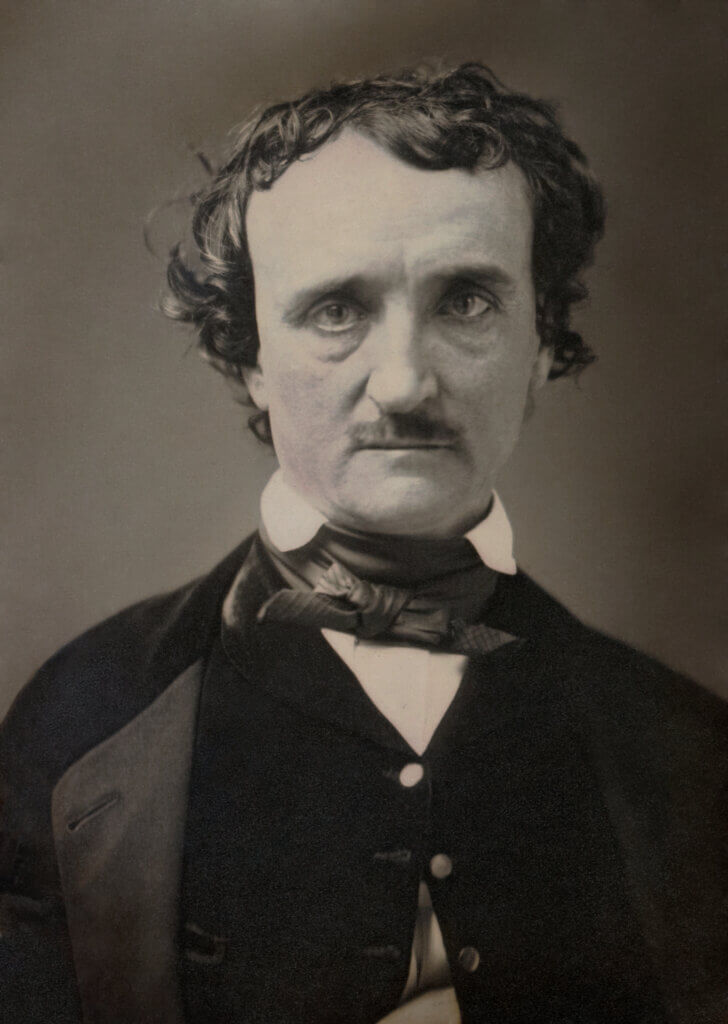
Edgar Allan Poe’s “Berenice”
The motif of the ghastly resurrection runs through many of Poe’s stories. In “The Fall of the House of Usher” (1839), the sickly heroine Madeline is wrongly declared dead and entombed while still alive, subsequently clawing her way out of her coffin to emerge into the mansion in a bloodstained, emaciated state. This may be Poe’s most famous usage of the motif, but some of his other examples are still more graphic.
The protagonist of “Morella” (1835) is married to a woman preoccupied with the concept of personal identity surviving after death. When Morella dies in childbirth, the narrator describes with horror the daughter quickly growing into an exact duplicate of the mother. “Ligeia” (1838) is a more elaborate treatment of a similar outline: the narrator is in love with the titular Ligeia, a woman whose beauty is described in terms of ivory white and ebony black, and who is, like Morella, a scholar with an interest in the transcendent. After Ligeia grows sick and dies, the protagonist marries another woman, Rowena; his new bride is subsequently plagued by eerie sights and sounds at night and eventually begins to waste away, as did Ligeia. The story’s climax has its narrator – now an opium addict – witness the seemingly dead Rowena rise again and remove her burial garments to reveal the figure of Ligeia.
Even if neither Morella, nor Ligeia, nor Madeline Usher are vampires in the strictest sense, between them, they can lay claim to developing the motif of the deathly lover that eventually culminated in Bram Stoker’s tragic character Lucy Westenra. This, alone, may have entitled Poe to inclusion in an overview of the history of vampire literature; but as it happens, he also wrote a story that comes still closer to the territory of Stoker and company: “Berenice” (1835).
The protagonist this time is Egaeus, a scion to a wealthy family who spent his sickly youth lost in books. His upbringing contrasts with that of his cousin, Berenice:
Berenice and I were cousins, and we grew up together in my paternal halls. Yet differently we grew – I ill of health, and buried in gloom – she agile, graceful, and overflowing with energy; hers the ramble on the hill-side – mine the studies of the cloister – I living within my own heart, and addicted body and soul to the most intense and painful meditation – she roaming carelessly through life with no thought of the shadows in her path, or the silent flight of the raven-winged hours. Berenice! – I call upon her name – Berenice! – and from the gray ruins of memory a thousand tumultuous recollections are startled at the sound!
Egaeus waxes poetic about the great beauty of Berenice, calling her a sylph and a Naiad, before revealing that she has since succumbed to a disease that has caused her to waste away. (There is an eerie premonition here: the following year, Poe would marry his thirteen-year-old cousin Virginia Clemm, who would succumb to tuberculosis in 1847.) We learn that Berenice’s disorder affected her mind as well as her physical health, placing her into trances and disrupting her entire personality. As the protagonist relates: “I knew her not – or knew her not as Berenice!” Compare this to Arthur Holmwood’s exclamation in Dracula, paraphrased by countless vampire stories since: “Is this really Lucy’s body, or only a demon in her shape?”
“Berenice” establishes that Egaeus has a mental illness, described as a “nervous intensity of interest” which manifests as a tendency to spend hours focused upon details such as a shadow on a tapestry or a typographical design in a book. He also becomes preoccupied with a line in Tertullian’s third-century polemic De Carne Christi, which concerns the rising of Jesus from the tomb; this is an early hint that the story will be another tale of resurrection, albeit not necessarily a resurrection of the divine variety.
In today’s parlance, Egaeus’s preoccupations might be described as hyperfixations. While his stories are awash in Gothic imagery, Poe was concerned with psychology at least as much as with the supernatural. His fiction filters the uncanny through the lens of the main characters’ personal obsessions, as when the murderer “The Tell-Tale Heart” (1843) develops an irrational hatred of an elderly man purely because of the latter’s filmy eye, or when the narrator of “The Black Cat” (also 1843) fixates upon a cat as a symbol of his guilt. In the case of Egaeus, he becomes obsessed with the teeth of his cousin-lover:
The eyes were lifeless, and lustreless, and seemingly pupil-less, and I shrank involuntarily from their glassy stare to the contemplation of the thin and shrunken lips. They parted; and in a smile of peculiar meaning, the teeth of the changed Berenice disclosed themselves slowly to my view. Would to God that I had never beheld them, or that, having done so, I had died!
Even after Berenice departs, Egaeus finds himself unable to think of anything other than her teeth, which he sees “visibly and palpably before me; long, narrow, and excessively white.” Just as the narrator of “The Tell-Tale Heart” became determined to kill the old man so that he could no longer bear to look at his eye, Egaeus decides that the mental image of Berenice’s teeth will depart him only when he possesses her actual, physical teeth.
Berenice’s condition worsens, and she is subsequently buried – although, as anyone familiar with Poe’s wider oeuvre should know, a person being buried does not necessarily mean that they are dead. Sure enough, a servant comes to Egaeus and whispers of “a violated grave – of a disfigured body enshrouded, yet still breathing – still palpitating – still alive!”
The story’s final paragraph is a rush of fragmented details as the mentally unstable narrator pieces together clues as to what has happened: garments muddy and gore-clotted; fingernail marks intended into his hand; a spade leaning against the wall; and a box on the table containing dental implements and thirty-two teeth.
While fundamentally a psychological story, “Berenice” nonetheless combines the Gothic themes of death and twisted resurrection with the motif of teeth; the result evokes vampire literature, even if no literal vampire is present in the narrative. A widespread theory holds that vampire folklore was informed by the processes that a human body goes through after death: gums retracting to create the illusion of elongated teeth and gaseous build-up escaping through the mouth to give the impression that the corpse is sighing or breathing. In “Berenice,” Poe appears to have drawn upon the same phenomena and combined it with his recurring subject of live burial to create a literary cousin to the vampire.
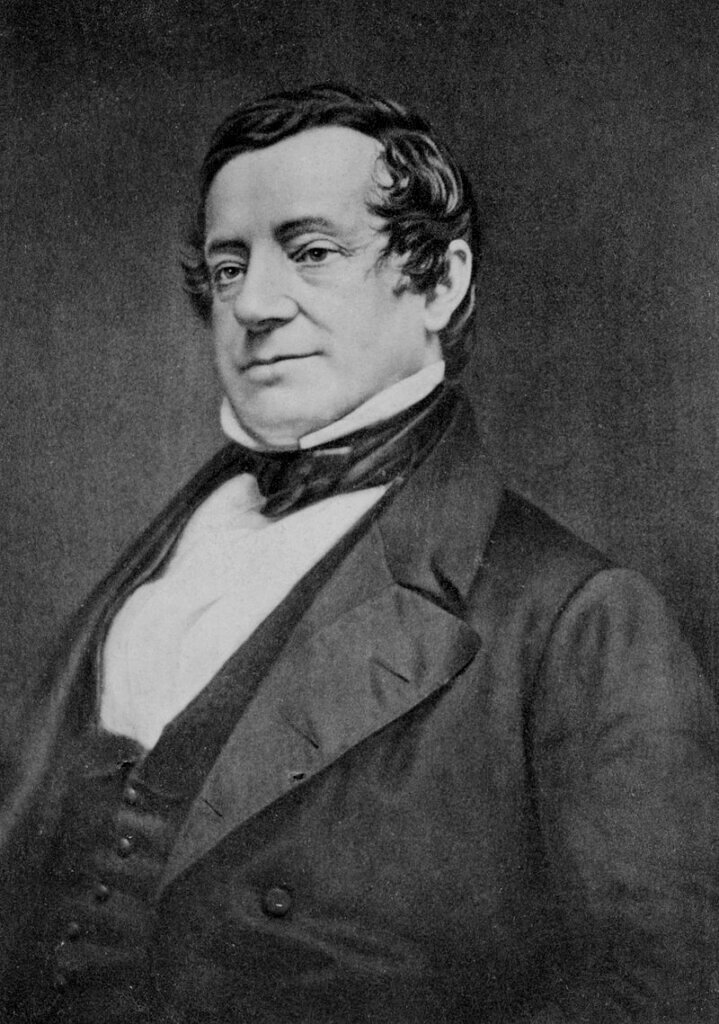
Washington Iriving’s “The Adventure of the German Student”
Washington Irving’s best-remembered contribution to horror literature is “The Legend of Sleepy Hollow” (1820) which conjured up arguably the first American spook that could stand alongside the likes of the vampire and Frankenstein’s Monster in the popular imagination: the Headless Horseman. Yet the humorous conclusion to this story implies that the Horseman is no ghost, but merely a prankster in costume. Irving would later turn to the Old World and its recent history to tell the story of a more authentic supernatural being: “The Adventure of the German Student” (1824).
The main character Gottfried Wolfgang is, like Irving’s more famous protagonist Ichabod Crane, preoccupied with the supernatural to a destructive degree. “His health was impaired; his imagination diseased,” we are told. “He had been indulging in fanciful speculations on spiritual essences, until, like Swedenborg, he had an ideal world of his own around him.”
His friends suggest that he visit Paris for a change of scene, and he does so — only to arrive just as the French Revolution breaks out. His disgust at the surrounding bloodshed merely encourages his reclusive tendencies. Then, while about the city during a stormy night, Wolfgang encounters a solitary woman beside the guillotine:
It was a female figure, dressed in black. She was seated on one of the lower steps of the scaffold, leaning forward, her face hid in her lap; and her long dishevelled tresses hanging to the ground, streaming with the rain which fell in torrents. Wolfgang paused. There was something awful in this solitary monument of woe. The female had the appearance of being above the common order. He knew the times to be full of vicissitude, and that many a fair head, which had once been pillowed on down, now wandered houseless.
This beautiful woman of pale skin and raven hair turns out to be familiar to him: before meeting her, he had seen her face in a dream. He confesses his passion for her; she accepts his love; and the two settle for the night.
The next morning, the student finds the woman dead. Moreover, a police officer confirms that she had been guillotined the previous day. Sure enough, when her diamond-studded collar is removed, her head falls off. Wolfgang then goes mad from “the frightful belief that an evil spirit had reanimated the dead body to ensnare him.”
While “The Adventure Of The German Student” is less comical than Irving’s better-known forays into the ghostly, it holds a vein of satire as the author takes jabs at philosophical fashions of recent decades (the French Revolution being well within living memory at the time the story was published). We are told that, in his homeland, Wolfgang “wandered into those wild and speculative doctrines which have so often bewildered German students.” Before becoming disillusioned by the French Revolution: “[t]he popular delirium at first caught his enthusiastic mind, and he was captivated by the political and philosophical theories of the day.” Most significantly, when Wolfgang expresses his love for the woman, the story emphasises that neither feels the need to get married:
Old prejudices and superstitions were done away; everything was under the sway of the “Goddess of Reason.” Among other rubbish of the old times, the forms and ceremonies of marriage began to be considered superfluous bonds for honorable minds. Social compact were the vogue. Wolfgang was too much of theorist not to be tainted by the liberal doctrines of the day.
Rather than a spectre from ancient folklore, Irving’s decapitated revenant is the harbinger of a new age: an era when beautiful aristocrats are guillotined and young couples live out of wedlock.
Is she a vampire? The label does not entirely fit, as she does not drink her victim’s blood, although she does drain him of his wits. Yet her status as personification of modern vice lends her a certain commonality with Bram Stoker’s vampires, who can be read as embodying fears of rising sexual licentiousness in the decadent 1890s.
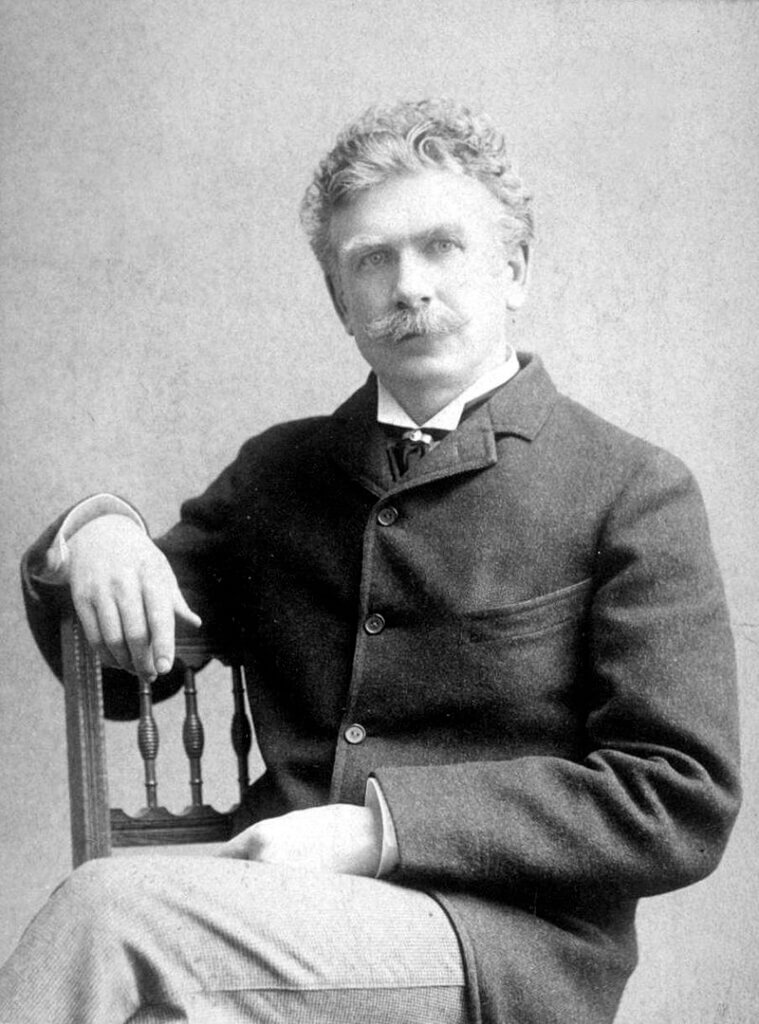
Ambrose Bierce’s “The Death of Halpin Frayser”
That licentiousness that was fashionable at the tail-end of the nineteenth century also bubbled up in Ambrose Bierce’s 1891 short story “The Death of Halpin Frayser.”
Biere’s narrative begins with its title character waking up in a forest and beginning a journey through the trees. His memories are fragmented: he recalls the name Catherine Larue, but has no idea to whom that name belongs. He feels guilt at having committed a crime, yet cannot recall what crime. As he travels through the woods, Halpin Frayser hears strange voices: “From among the trees on either side he caught broken and incoherent whispers in a strange tongue which yet he partly understood. They seemed to him fragmentary utterances of a monstrous conspiracy against his body and soul.” Later, he comes to an area where the trees and foliage are doused in a coating of blood.
The first chapter ends with Halpin, while trying to use this blood to write a message, being confronted by the risen corpse of his mother:
He wrote with terrible rapidity, the twig in his fingers rilling blood without renewal; but in the middle of a sentence his hands denied their service to his will, his arms fell to his sides, the book to the earth; and powerless to move or cry out, he found himself staring into the sharply drawn face and blank, dead eyes of his own mother, standing white and silent in the garments of the grave!
What follows is a long digression on the Frayser family history. Any preconceived notions about nineteenth-century literature being prudish in matters of sex can be abandoned at this point, as the incestuous implications of Halpin’s relationship with his mother Katy are palpable:
[T]he attachment between him and his beautiful mother – whom from early childhood he had called Katy – became yearly stronger and more tender. In these two romantic natures was manifest in a signal way that neglected phenomenon, the dominance of the sexual element in all the relations of life, strengthening, softening, and beautifying even those of consanguinity. The two were nearly inseparable, and by strangers observing their manner were not infrequently mistaken for lovers.
Entering his mother’s boudoir one day Halpin Frayser kissed her upon the forehead, toyed for a moment with a lock of her dark hair which had escaped from its confining pins…
The story establishes that Katy had a nightmare in which Halpin appeared with fingermarks on his throat, as though he had been strangled. Mother and son were later separated when Halpin took a business trip from Tennessee to California, only to run into trouble at sea that delayed any possibility of return. Back in the narrative’s present, Halpin is killed by his mother’s reverent:
But what mortal can cope with a creature of his dream? The imagination creating the enemy is already vanquished; the combat’s result is the combat’s cause. Despite his struggles – despite his strength and activity, which seemed wasted in a void, he felt the cold fingers close upon his throat. Borne backward to the earth, he saw above him the dead and drawn face within a hand’s breadth of his own, and then all was black. A sound as of the beating of distant drums – a murmur of swarming voices, a sharp, far cry signing all to silence, and Halpin Frayser dreamed that he was dead.
The story’s final sequence has Halpin’s body found by a detective and a deputy. The pair had been investigating a murder: the death of a woman named Frayser at the hands of her husband, Mr. Larue (although since this man is identified as having lived under at least one pseudonym, it is possible that Larue was not his real name). The investigators are unable to piece together the disparate clues, leaving the reader to decipher the full extent of the connections between Halpin, Katy, and Larue.
The ambiguity that enshrouds “The Death of Halpin Frayser” has given rise to a number of interpretations; and intriguingly, different interpretations place the story into different subgenres of horror as we understand it in the twenty-first century.
M. Grant Kellermeyer has examined the readings of the story that strip away any literal supernatural elements, allowing Halpin Frayser to emerge as an early prototype for Norman Bates, the killer in Robert Bloch’s Psycho. We can also find hints of what we now know as the zombie genre; although rather than the apocalyptic gut-munchers of George A. Romero’s films, Bierce follows the conception of risen corpses as supernatural entities driven by revenge, as literary ghosts often are. The story opens with an antiquated quotation on how a “lich” might return to life as a malevolent, hate-filled entity:
For by death is wrought greater change than hath been shown. Whereas in general the spirit that removed cometh back upon occasion, and is sometimes seen of those in flesh (appearing in the form of the body it bore) yet it hath happened that the veritable body without the spirit hath walked. And it is attested of those encountering who have lived to speak thereon that a lich so raised up hath no natural affection, nor remembrance thereof, but only hate. Also, it is known that some spirits which in life were benign become by death evil altogether.
This epigraph, attributed to a writer named Hali, is actually Bierce’s own invention – the author is using a trick later popularised by H. P. Lovecraft of quoting from fictitious occult texts to bolster the atmosphere and credibility of his narrative. And, indeed, Hali would subsequently be folded into the Cthulhu Mythos: Lin Carter’s 1989 Pnakonic Fragments, which uses Bierce’s quotation, established that Hali was an extraterrestrial necromancer.
So, Catherine Larue (née Katy Frayser) can be read as an ancestor to Mrs. Bates, a precursor to the zombie hordes, and even a distant auntie of Cthulhu. But does she fit into the vampire canon? “The Death of Halpin Frayser” has worked its way into more than one vampire anthology, despite the revenant slaying its victim through strangulation rather than blood-drinking. Once again, it appears that the underlying element of transgressive sexuality – particularly perverse in this case, given the hints of incest – has lent Bierce’s story a kinship to the vampire genre.
Vampires or Not Vampires?
How do these three stories – “Berenice,” “The Adventure of the German Student,” and “The Death of Halpin Frayser” – relate to vampire literature as we know it today?
Each one involves a resurrection, and even in the stories where this is not a literal return from the dead (namely “Berenice” and, according to certain interpretations, “Halpin Frayser”) the folkloric motif of bodies possessed by evil spirits is still invoked. While none of the three revenants drink blood, they do have the effect of depleting the mind of each male protagonist: Poe’s narrator becomes obsessed with his lover’s teeth; Irving’s hero goes mad; and Halpin Frayser, before being strangled, loses his memory. A process similar to vampirism is present, even if – like resurrection – it is not necessarily depicted in literal terms.
Furthermore, each of the three stories carries a degree of perverse sexuality, articulated in the terms of its respective era. Irving’s story from 1824 is wracked with anxiety that modernity, as embodied by the French Revolution of less than thirty years earlier, has replaced old standards with new immoralities. In “Berenice” from 1835, Poe offered a variation on a theme that fascinated him: the combined effect of feminine innocence, masculine passion, and the macabre iconography of the tomb, all of which comes together to create an atmosphere of necrophilia. Finally, we come to Bierce’s story from 1891; as befits a decade notorious for decadence, this tale makes its incestuous implications unmissable.
Later authors such as Anne Rice had the benefit of writing in a still more permissive era, and so were able to explore the themes of sex after death to a far greater extent. Nevertheless, reading these stories from nineteenth-century America, we can still find early seeds for the exploits of Lestat and his kindred.
