


Sloane is a high school senior in Loving, Ohio, a small town that seems perfectly normal from the outside. As someone who’s spent her entire life in Loving, however, Sloane is uncomfortably familiar with a hidden facet of the town that’s not a secret to its residents. Loving is the center of a new religious movement called the Chorus, whose members include the town’s elected officials, business owners, teachers, and police force. In Sloane’s own words, Loving is a company town for a cult.
Loving, Ohio
Matthew Erman (writer) and Sam Beck (art)
Dark Horse
August 6, 2024
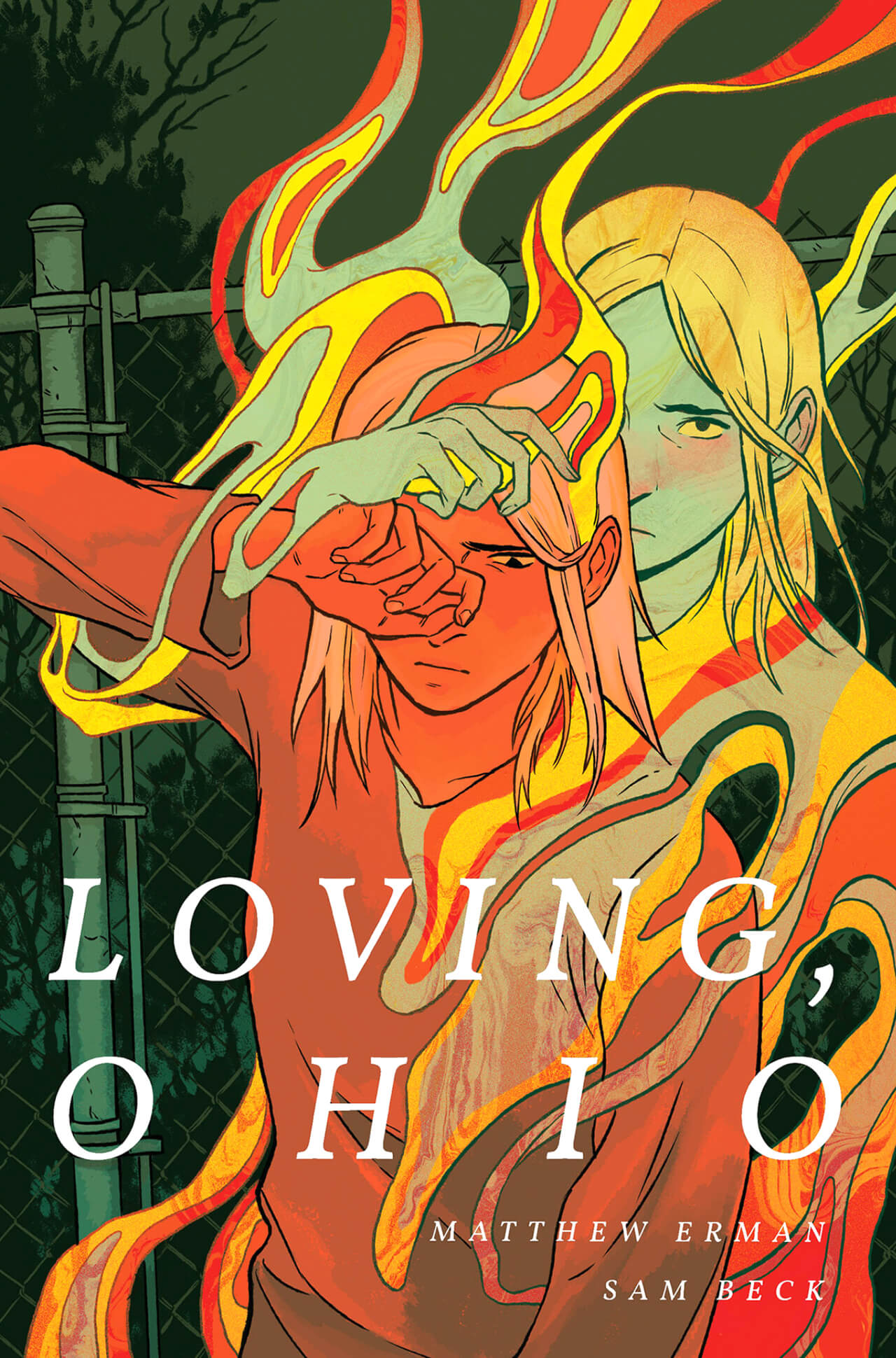
Sloane’s mother escaped the cult to live in Los Angeles, leaving Sloane behind with her father. Sloane understands that the Chorus gives her lackluster father a sense of structure and purpose, so she patiently attends religious gatherings at his request while waiting to graduate high school. Sloane’s willingness to keep her head down and tolerate the Chorus is shaken when her boyfriend makes a confession – he intends to leave Loving, but not to do missionary work as planned. He vanishes without a trace shortly thereafter.
The strange attitude of the young man’s parents compels Sloane to investigate his mysterious disappearance which happens to be the most recent in several unexplained missing persons cases in Loving. As Sloane and her friends pool their efforts to track down leads, it quickly becomes clear their suspicions are not unfounded. There’s nasty business afoot, and the Chorus is complicit.
Unfortunately, none of the teenagers in Loving, Ohio have much depth as characters. For example, we learn at the end of the story that one of Sloane’s friends has been accepted to the English program at Brown, while another has won a scholarship to attend SCAD. This is surprising, as the reader has never been shown anything to indicate that either of these characters is at all interested in writing or art. Even Sloane is something of a blank slate, and I found it challenging to puzzle out the specifics of her character from scattered hints of context.
Where the story shines is its depiction of the control the Chorus exerts over the town of Loving. The obvious question to ask about the disappearances is why no one seems to be upset, especially since more than a dozen people have gone missing in a relatively short span of time. Since everyone in town belongs to the cult, it’s all too easy for information to be suppressed, and everyone is complicit. Although Loving, Ohio has elements of the paranormal, the story makes it clear that the true monsters are human.

To me, the most interesting character is Sloane’s father. It’s hard not to feel sympathy for the man who’s doing his best to keep his life together as he raises a teenage girl on his own. For someone in such a precarious position, a close-knit religious organization offers a sense of love and belonging otherwise missing from his life.
The Chorus provides other benefits as well. Joining the religious organization that controls the town’s politics and economics is akin to joining the local Chamber of Commerce. Membership in the Chorus guarantees access to business promotion, generous loans, and community support. In addition, I have a sneaking suspicion that Sloane is only able to graduate from high school because strings were pulled on behalf of her father.
Regardless, I found it chilling to see Sloane’s father affirm his commitment to the Chorus after his own daughter forces local officials to acknowledge a string of crimes connected to the cult. One might argue that Sloane’s father signs a contract with the organization in order to prevent retaliation, but the story strongly suggests he simply doesn’t care about the shadier side of the Chorus. In one of the most powerful scenes in the book, Matthew Erman’s script makes it painfully clear that the cult is this man’s family now.

Sam Beck’s artwork fills in many of the gaps created by what none of the characters are willing to articulate, especially in terms of the horror-themed elements of the plot. The limited color palette is gorgeous and thematically effective. The unhealthy blues and pale yellows convey the desolation of an economically depressed town in the Rust Belt, while the action scenes pulse with violent orange and striking red. In addition, Beck’s remarkable visual depiction of a certain criminal element of the Chorus is deeply uncanny, especially in contrast to the cult’s blandly handsome spokesperson.
Loving, Ohio is a powerful work of contemporary horror guided by a tense mystery that unravels against the backdrop of eerily evocative scenery. What makes this story truly disturbing is its resonance with the current cultural climate, in which exploitative religious organizations have become more mainstream while conspiracy theories are taken seriously by people looking for connection on social media. Loving, Ohio tells a compelling story that’s all the more haunting because of how critically relevant it is to the hidden monsters of contemporary American society.
