
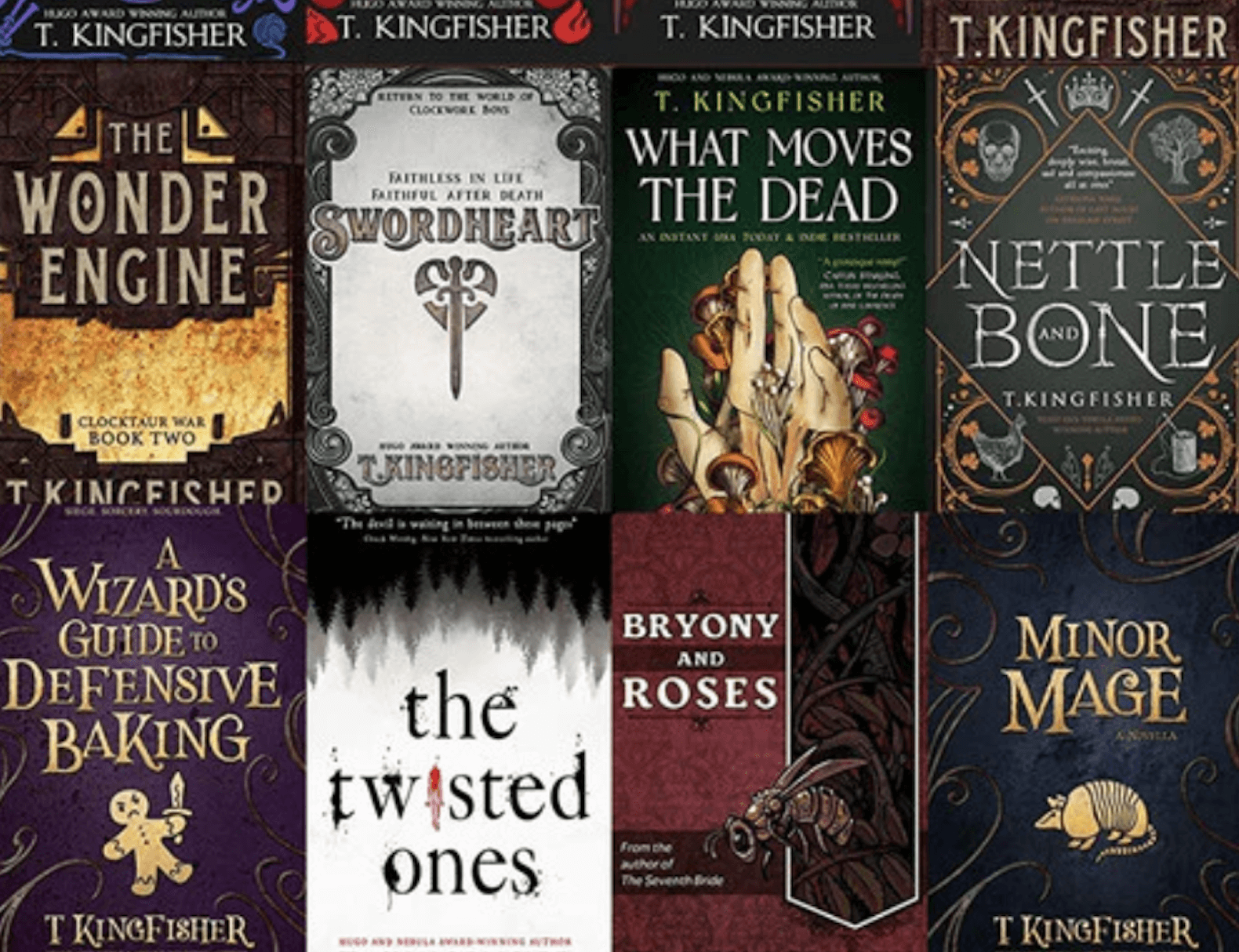
If you’re a fan of T. Kingfisher a.k.a. Ursula Vernon, you may have noticed some motifs showing up repeatedly in her work. Is there a knightly character wracked with guilt? Is there an animal made out of bones? Are you pretty sure the housepet in the horror novel will be absolutely fine? With these recurring elements in mind, I made you a present. It’s a bingo card!
It’s a good year for Kingfisher fans, since What Feasts at Night came out in February and A Sorceress Comes to Call will be coming to us August 6th, both from Tor. As I’ve mentioned before, we’re lucky she’s prolific. In honor of these two books (discussed below) I bring you T. Kingfisher Bingo: a bingo card for use with any of Ursula Vernon’s work, under either name.
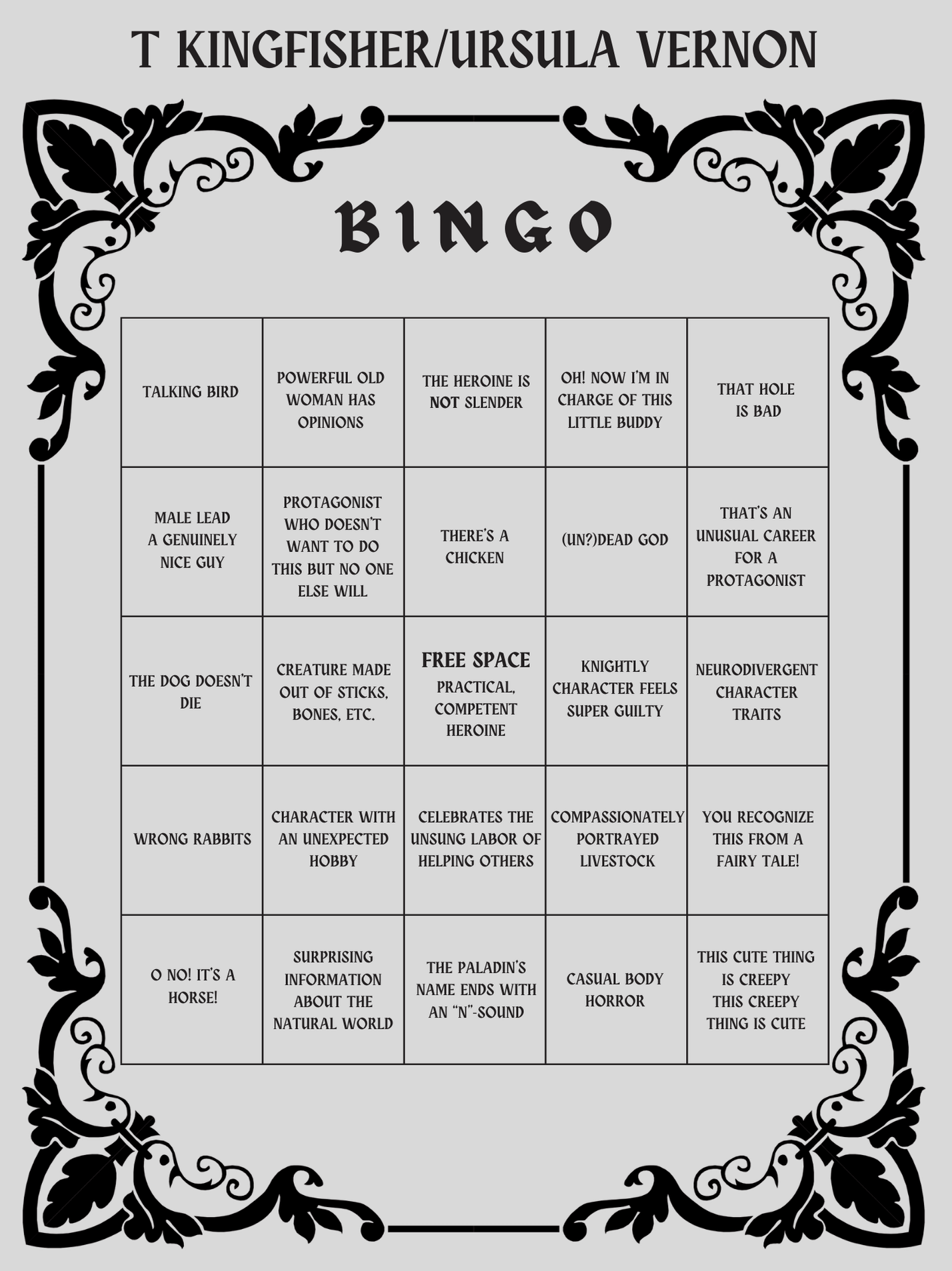
My well-read friend Larisa and I have been discussing the prospect of a T. Kingfisher Bingo for over a year, but really got going with it after reading What Feasts at Night earlier this year.
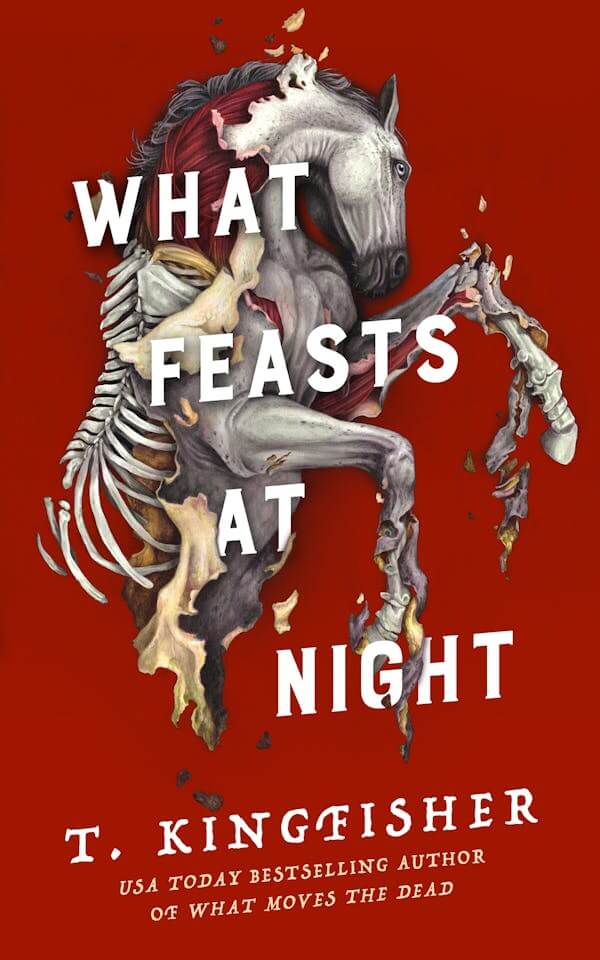
What Feasts at Night by T. Kingfisher, a sequel to What Moves the Dead, came out in February from Tor Nightfire and it is absolutely a disturbing good time. Sworn Soldier Alex Easton, already shell-shocked from a life at war, is further traumatized by the recent events at the Usher manor house. Angus was Easton’s batman during the war, now a valet, a figure who reminds me of Mervyn Bunter. He and Easton head to Easton’s family hunting lodge for some rest and relaxation. Of course, because this is one of Kingfisher’s horror novels, neither rest nor relaxation are supplied when they arrive.
Instead, the hunting lodge seems to harbor a malevolent spirit, and the local villagers, the priest, and their English mycologist friend Miss Potter all get embroiled in the creepy and dangerous events that proceed. In true Kingfisher style, the characters are competent and pragmatic, and one need never worry that the horse will suffer. I don’t think you need to read What Moves the Dead first; What Feasts at Night stands alone quite well. I do, however, recommend reading this one in a well-ventilated room with some pleasant ambient noise.
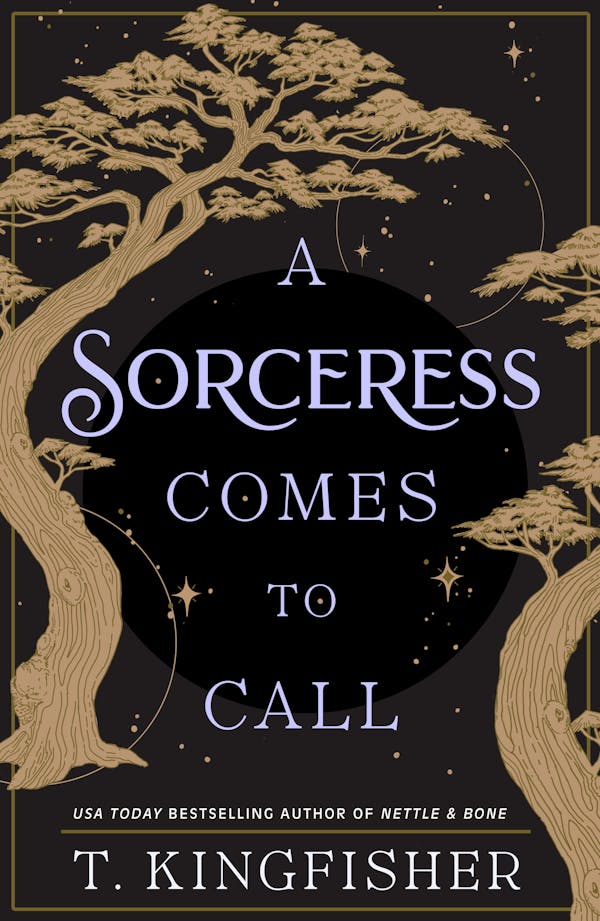
A Sorceress Comes to Call is not technically one of Kingfisher’s horror books, but I think it is probably the most frightening of her standalones I’ve read. The Sorceress of the title is a terrifyingly powerful and cruel woman, who can make people “obedient” by taking over their bodies and puppeting them. She does this regularly to her trapped and suffering daughter, and can use the power to cause others to commit violent crimes as well.
Delightfully, though we have the standard “evil woman with power vs. sweet young ingenue” dynamic that is so familiar from fairy tales, our other main character Hester is the middle-aged unmarried sister of a local squire, and she and her good, reliable female friends are all the competent ladies we could want to offset that wicked witch and sweet young thing trope.
Hester has chronic pain and trouble with stairs due to a bad knee and I love her for it. Nothing stops her from pursuing her goal of getting her brother, and the sorceress’s own daughter, out from her evil clutches.
Vernon mentions in the acknowledgements that she was influenced by regency romance in creating A Sorceress Comes to Call, and while this retelling of The Goose Girl is brutal in terms of child abuse and like, multiple homicides, it is also quite Austen-y. Not only does it take place at a country house, but Hester’s regrets about a romance that didn’t work out are reminiscent of Anne Elliot in Persuasion, and there is a teenage boy who drones on about horses and carriages in a way that reminds me of John Thorpe droning on about horses and carriages to Catherine in Northanger Abbey. That’s my jam, right there.
I’m not saying whether A Sorceress Comes to Call or What Feasts at Night will win this bingo card, specifically (we placed the squares randomly), but I do think it’s possible to play through with a number of her books. And if you do win, I would love to know which book wins and how!

