

We at WWAC have had an intense start to our winter reading, with a lot of heavy hitting books! Alenka’s immersed in books about incarceration while Christa’s reading YA speculative fiction to consider for a CYBILS award. Louis is appreciating Yellowface on audio and Kathryn’s fascinated by the short stories of Vandana Singh. Meanwhile, Masha and I are the outliers, off in our respective cozy corners, being heartwarmed by fantasy.
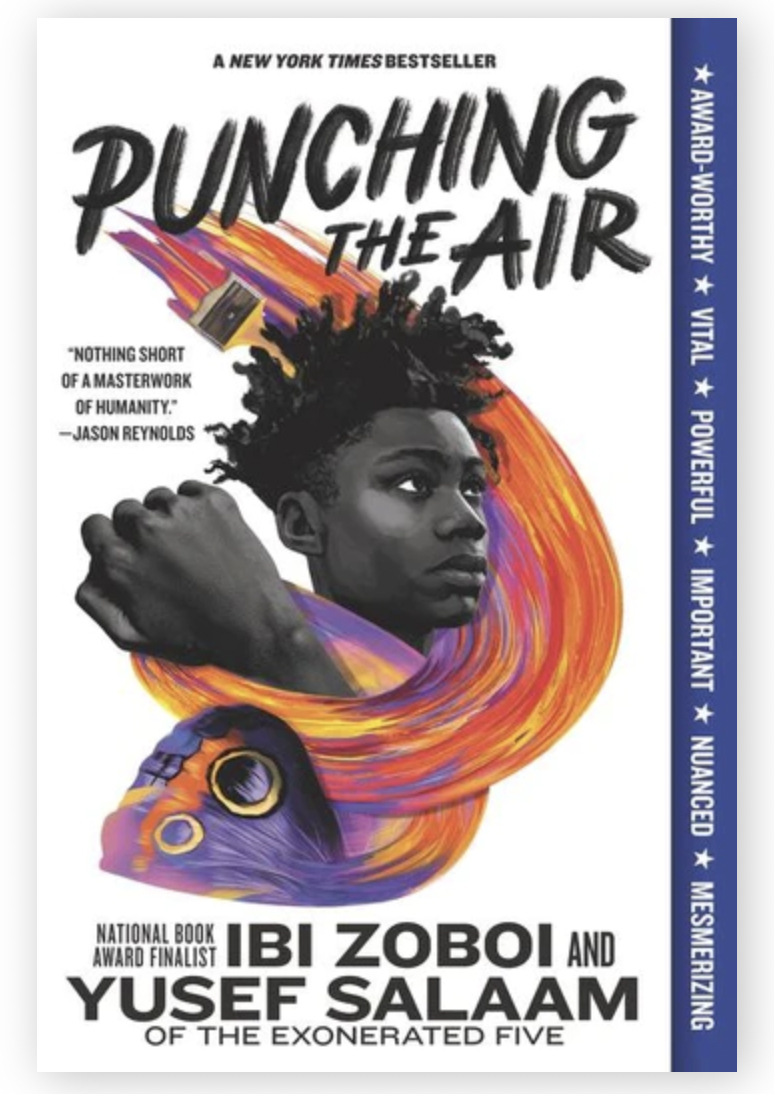
Alenka Figa: I am probably the last person to read Punching the Air by Ibi Zobi and Yusef Salaam, but my timing was uncanny because shortly after I read it Salaam was elected to public office! Now an incoming member of the New York City Council, Salaam was once part of the Central Park Five, a group of Black and latino teenagers who were falsely accused of attacking a woman running through Central Park. Salaam was fifteen when he was incarcerated and wasn’t released for seven years. All of the boys were exonerated in 2002 thanks to DNA evidence. This collaboration with Zoboi is a fictional novel in verse that draws on Salaam’s experience.
The novel’s protagonist, Amal Shahid, is falsely accused of beating a white teen until he fell into a coma. Amal is an artist and poet, and the novel includes abstract paintings along with poetry to guide the reader through his emotional spiral. Juvenile prison beats down Amal’s spirit quickly, but a poetry class provides some reprieve, and it’s only through art that he can hope to survive the horrors of incarceration. Zoboi and Salaam’s lyrical text is heart-wrenchingly beautiful, and even in the ebook version of Punching the Air the paintings add a level of emotion and expression that really elevate the story. It’s a rough read but a quick one, and it addresses the psychological and emotional tolls of prison.
Some unplanned synthesis created by the pacing of my library’s holds system: I also read Who Would Believe a Prisoner? an academic but digestible title penned by the members of Indiana Women’s Prison History Project. The writers, save for the academics who contributed the preface and afterword, are all currently or formerly incarcerated women who spent years working around layers of prison censorship to research the history of women’s prisons in the state of Indiana. (A side note: it’s a great time to donate to books to prison projects!) Writer Michelle Daniel Jones coined the term “embodied observer,” meaning “one who views the archive from the position of the captive, from inside of their experience.” This is a text full of historical insight possible only because its writers understand the horrors of incarceration as they currently or recently survived it.
Who Would Believe a Prisoner? is split into three parts: one detailing Indiana’s first prisons for women, whether they were called prisons or not; the second examining how incarceration was used to control womens’ sexuality and bodies; and the third focusing on Indiana’s House of the Good Shepherd, a Catholic laundry that served as the state’s actual first gender-segregated prison. (The institutions described in the first part were founded by Protestants/Quakers.) This is of course a heavy read, but it’s very accessible and includes the script of a play that synthesizes much of the history and concepts that make up the book. If you’ve ever thought that prisons, in their origin, must have been dedicated to actual rehabilitation, this book will disabuse you of that false notion. Prisons have always been houses of torture with a capitalist focus, and no one can better to explain how and why, than those with firsthand experience.
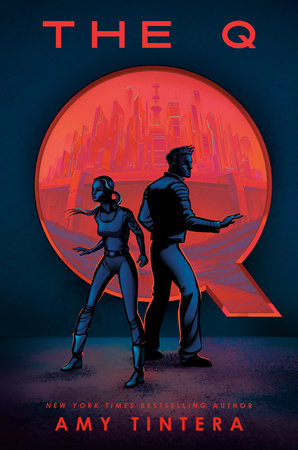
Christa Seeley: I’m a first round panelist of the Young Adult Speculative Fiction category for the CYBILS award this year so I’ve been reading A LOT of science fiction and fantasy these last few months. Two real page turners from the bunch were The Q by Amy Tintera, and The Lake House by Sarah Beth Durst. In The Q, part of the American population lives in permanent quarantine in a walled-off part of the country. No one is allowed in or out until one day the son of the future President is kidnapped and dropped over the wall. From there it’s a race against time to get him out before he’s killed by rival gangs or he misses the window granted by the CDC.
The Lake House also has a survivalist angle as it follow three girls headed to a summer camp at a secluded lake house. But after the boat drops them off they discover the house has burnt down and there are no survivors. With no cell phone service, no boat, and limited supplies they have to work together if they’re all going to make it home alive.
On a totally different note, I’ve also been on a huge memoir kick when it comes to audiobooks and my recent favourite is Uncle of the Year by Andrew Rannells. It’s a collection of personal essays and if you are also a Broadway lover then I think this is a must read as he spends a fair amount of time on his early days in theatre and what it was like working on The Book of Mormon.
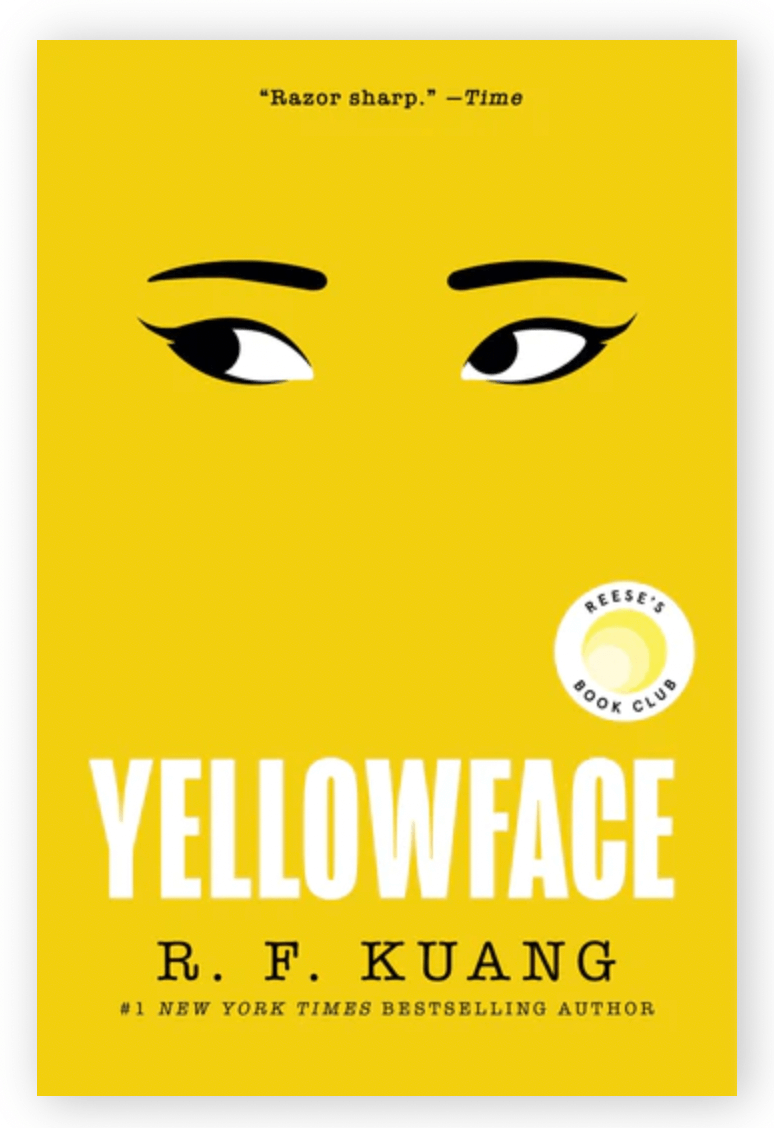
Louis Skye: I just finished listening to the audiobook of Yellowface by RF Kuang. I’d been waiting in my library queue for ages and absolutely devoured this book in a few days. It’s unputdownable. Yellowface’s protagonist is June Hayward, a writer whose first book flopped, while her nemesis Athena Liu’s star keeps rising. When Athena dies in a freak accident, June steals Athena’s last manuscript and, you guessed it, passes it off as her own. But the internet always finds out, and soon June is being trolled online and in real life. Can she hold on to her secret, or her sanity?
Yellowface was gripping from start to finish. Told completely through June’s sarcastic and sanctimonious POV, Kuang puts the listener/reader in June’s head, whether we want to be there or not. This technique intentionally confuses the reader’s connection to June–she’s done something awful, and she makes it worse, but she’s our protagonist and shouldn’t we want her to win? Yet! June is awful and blinkered, and so blind to her privilege. Her comeuppance in the book is a long time coming and well deserved. Highly recommended!
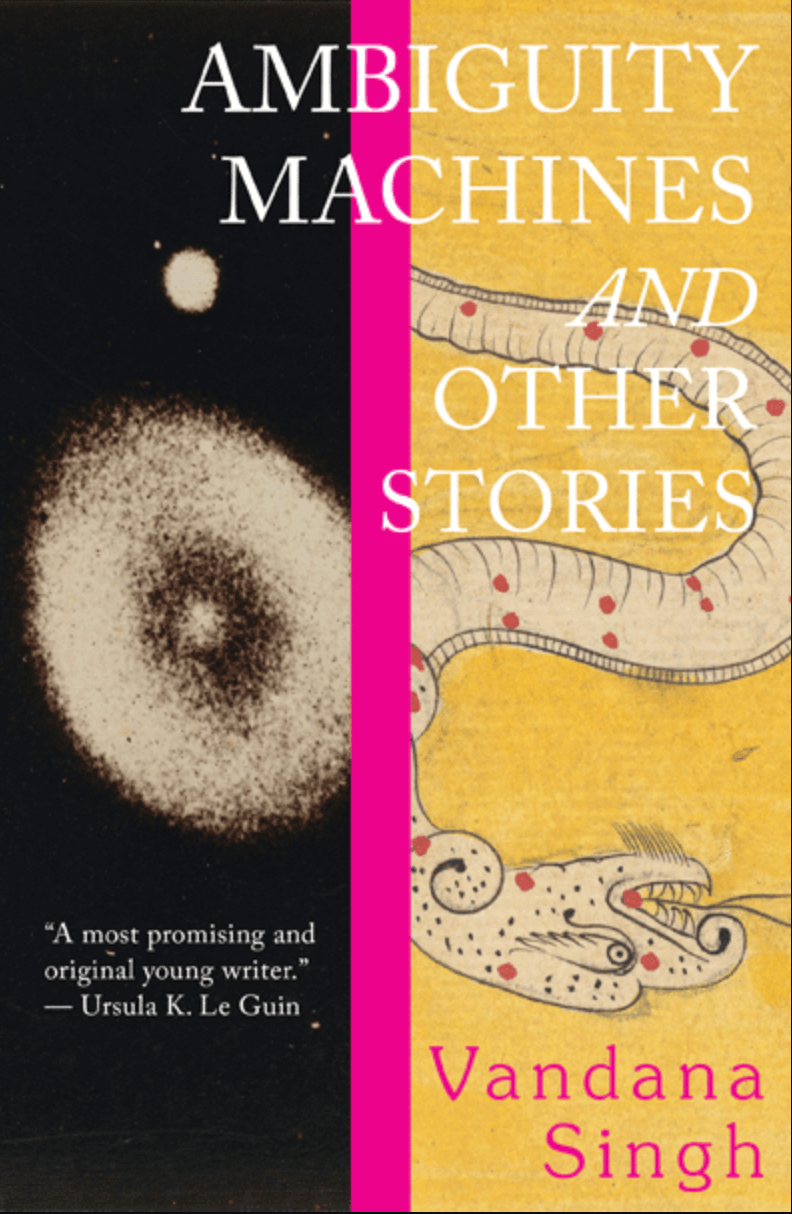
Kathryn Hemmann: While working my way through the back catalog of the speculative fiction specialty publisher Small Beer Press, I was excited to discover the 2018 short story collection Ambiguity Machines and Other Stories by Vandana Singh, whose brilliant 2008 collection The Woman Who Thought She Was a Planet has had a permanent place on my bookshelf for more than a decade. As opposed to the short narrative thought experiments of Singh’s earlier work, Ambiguity Machines is a locus of ambitious adventures through time and space.
For me, the standout story of the collection is “Are You Sannata3159?”, which is set in a vertical society in which the privileged gaze down at the earthbound lower classes through the medium of electronic screens. Jhingur, a young man from the slums, finds meaning and solace in the videos that have fallen from the skyscrapers, and he hopes to communicate the injustices of human exploitation through transmissions of his own. In the end, Jhingur’s idealistic dreams are reduced to the purely physical in a deeply upsetting ending that reflects serious concerns over whether “getting the message out” via corporate-controlled media can truly impact society.
Thankfully, the other stories in Ambiguity Machines are far more hopeful concerning humanity’s potential to live in harmony with the earth while reaching for the stars. From reimagined mythology to speculative ecofiction to creative physics parables, Ambiguity Machines presents a wealth of fascinating ideas in crystal-clear prose that reflects compelling visions of the future.
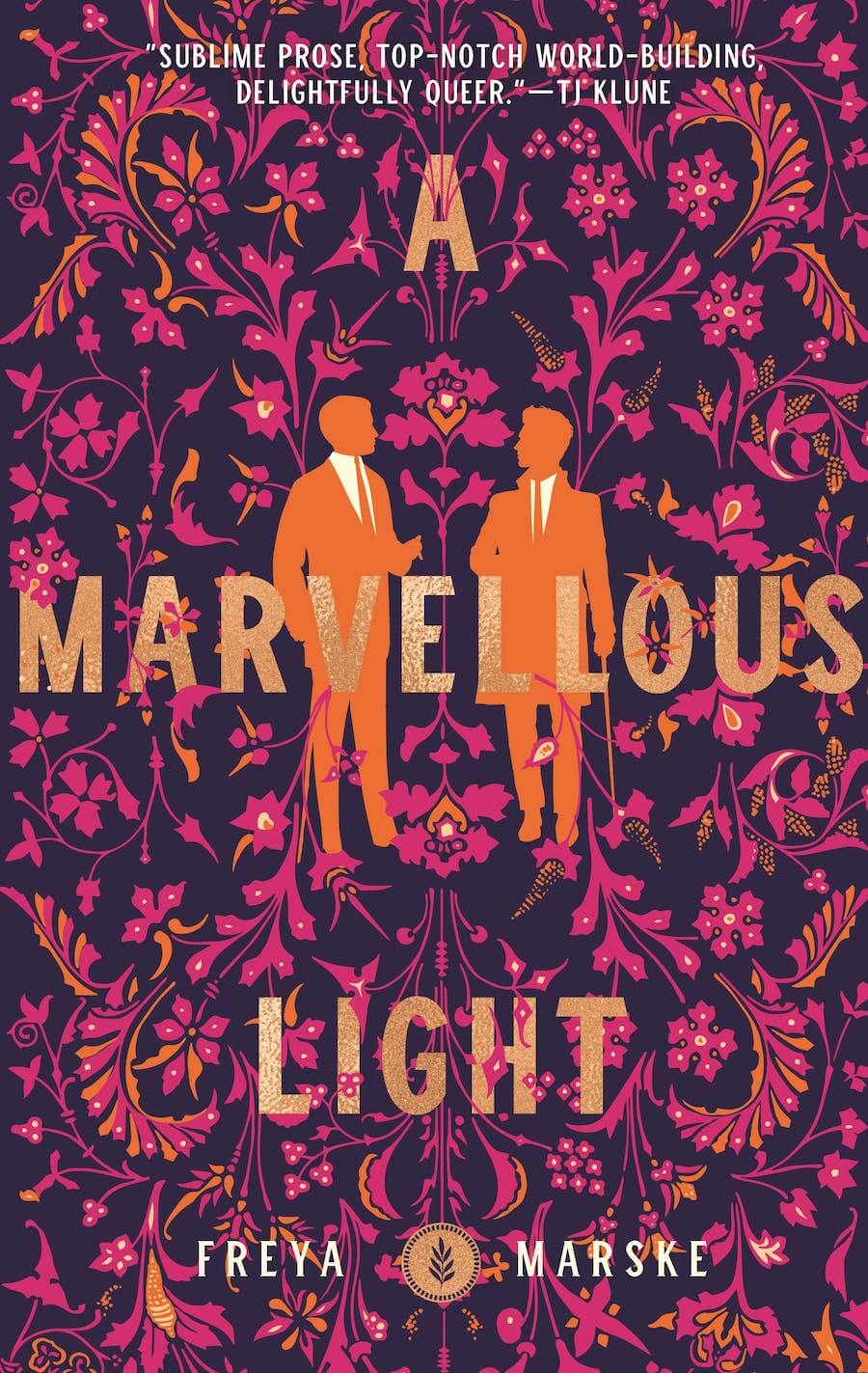
Masha Zhdanova: I just read the first two books of Freya Marske’s Last Binding trilogy, A Marvellous Light and A Restless Truth, and I loved them both! Haven’t gotten to the last book yet, but wow, I forgot how much I could enjoy fiction. I’ve been reading a lot lately that hasn’t had as much of an impact on me. An Edwardian-era gaslamp fantasy with an overarching plot to save magic in Britain and queer romance at the forefront of each individual novel, the Last Binding is a lovely, sweet and substantial story about power and who gets to wield it. It’s been a long time since I’ve read a book and not wanted to do anything else until I finished it.
The first two books focus on a pair of siblings who are decidedly not magical in any way themselves (or so they think), and how they interact with the cloistered and hierarchical world of magic they’re suddenly exposed to: a process known as “unbusheling” in the universe of the story. The lore and worldbuilding around how this magical world interfaces with the mundane, and the cultural elements specific to magicians, were really well-thought out and interesting, and the character relationships were easy to root for as well. I enjoyed these books.
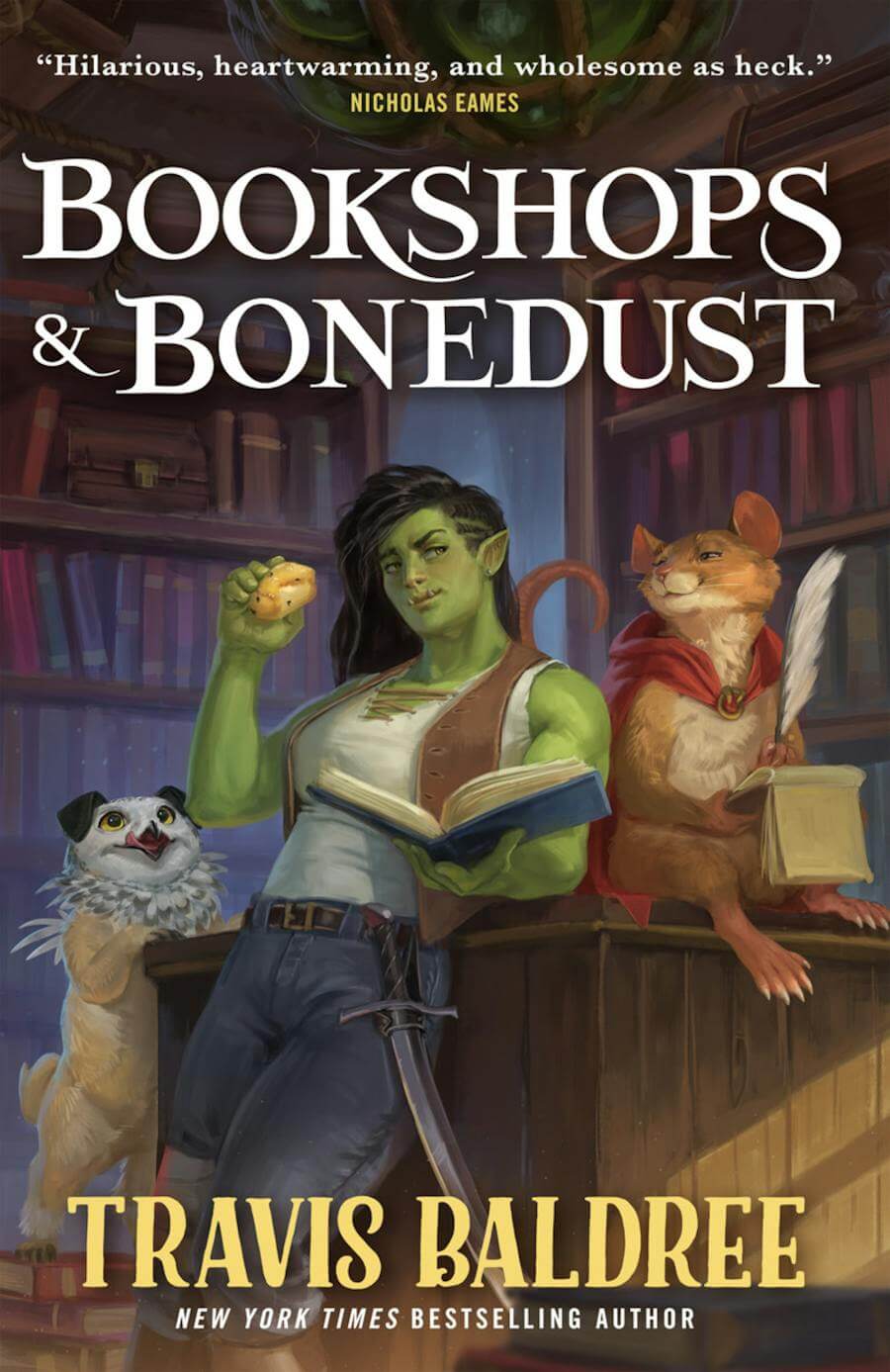
Emily Lauer: Bookshops and Bonedust came out on November 7th from Tor! It’s a prequel to Travis Baldree’s popular cozy fantasy, Legends and Lattes, in which we see Viv the Orc in her early days of adventuring. She is laid up in a boring small town recovering from a leg injury while the rest of her adventuring party goes on without her. Bored convalescing, she befriends many of the colorful inhabitants of the sleepy seaside town, including the owner of a struggling bookshop. Viv helps out with the bookstore owner’s project of revitalizing the bookstore in return for a stream of book recommendations and loans. Mostly the plot of Bookshops and Bonedust concerns the trajectory of the bookshop’s revival, as Viv cozies around town eating delicious foods and chatting about books and having picnics with an attractive and talented baker. However, meanwhile, a slightly more intense plot arc develops as a mysterious stranger arrives in town, a necromancer lurks, and a revived skeleton turns out to be a nice guy. I highly recommend this one for a cheerful palate cleanser.