

In this month’s WWAC Reads Books, we at WWAC indulge our legendary good taste in exploring other worlds, both far in the future and an invented past, in science fiction and fantasy that sucks you in.
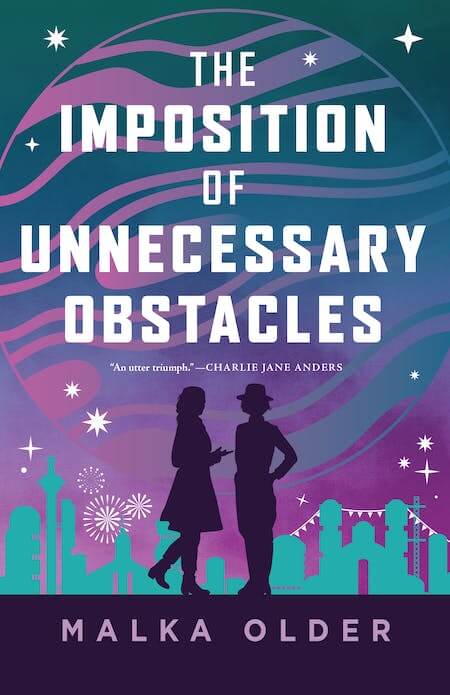
Emily: I just read the second Investigator Mossa and Scholar Pleiti book by Malka Older, which will come out from Tor in February. It’s a delight! The Imposition of Unnecessary Obstacles, the sequel to The Mimicking of Known Successes, picks up shortly after the first book left off and presents another mystery adventure for our heroes. This time, Mossa looks into a disturbing pattern of people going missing from Pleiti’s university and asks Pleiti to help her investigate. Their inquiry takes them to the moon Io and places we haven’t explored yet on their future Jupiter.
As with the first book, Older’s thoughtful world-building sets off the Holmes and Watson qualities of the narrative and makes for a cozy read. The Imposition of Unnecessary Obstacles strikes a nice balance between presenting a satisfying mystery that can stand alone and acknowledging the events of the previous book in a way that feels organic. Highly recommended for people who like Sherlock Holmes, people who like hard science fiction set on other planets, and people who like to know what flavor of scones their lesbian protagonists are enjoying.
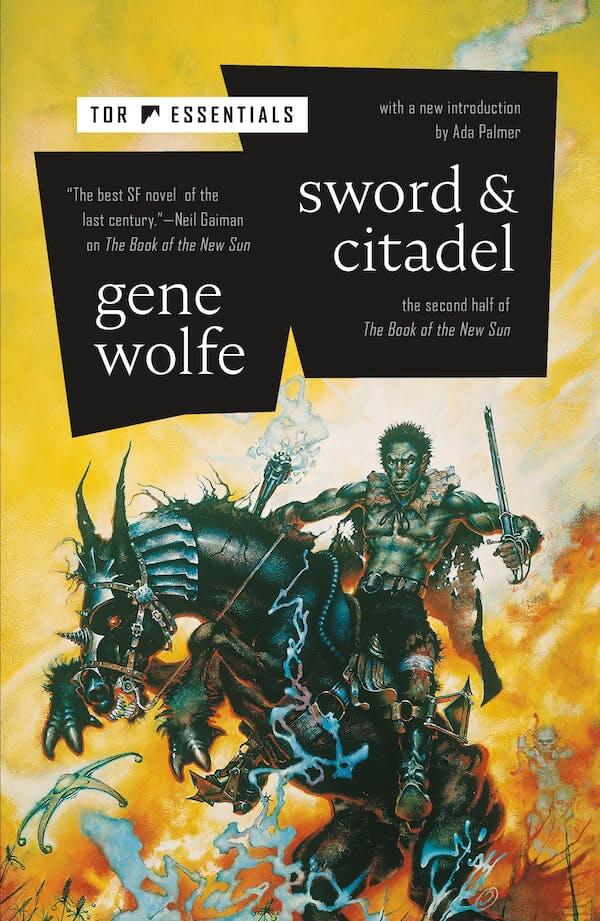
Kathryn: Based on my undying love for Tamsyn Muir’s Locked Tomb series [Many of us here share this undying love– Emily], a friend recommended Gene Wolfe’s epic tetralogy The Book of the New Sun, which is available in two volumes from the Tor Essentials line. The Book of the New Sun is set in the deep future when the planet is littered with the ruins of advanced technology. At the beginning, the reader would be forgiven for assuming this is a typical medieval fantasy, but the layers of history are gradually peeled back to reveal the wonders of prior ages.
Still, The Book of the New Sun isn’t concerned with what happened to human civilization as much as it’s interested in exploring what remains. When seemingly magical biotechnologies become so commonplace that our forms and minds have changed beyond anything we’d recognize now, what stories will we tell ourselves about what makes us human? If you like your autumn chills with a side of dystopian adventure, The Book of the New Sun is brilliantly strange and disturbing.
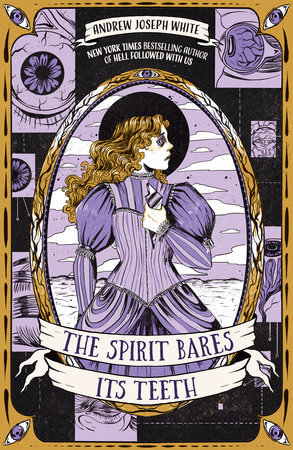
Alenka: The Spirit Bares its Teeth by Andrew Joseph White is a difficult book to write about because I feel compelled to start with content warnings, but I don’t want to warn people away from this book. It is a gothic horror novel, so maybe it’s not a huge surprise to hear that this title comes with warnings for sexual assault (discussed or mentioned frequently but never shown in a graphic or insensitive way), body horror, and gore.
The protagonist of The Spirit Bares its Teeth is Silas, a 16-year-old trans boy whose violet eyes mark him as having the ability to tear the veil between life and death. Silas, however, wants nothing to do with spirit work, and he certainly doesn’t want to become a quiet, obedient wife meant only to bear violet-eyed male children. His dream is to be a surgeon, but in the historical Victorian England that White has created, Silas’ trans-ness, assigned gender at birth, and autism all come to mark him as “sick.” When Silas is sent to a boarding school to treat these supposed ills, he swiftly realizes he’s been imprisoned by captors whose intentions are even more sinister than what they offer on the surface.
As a writer, White is interested in depicting queer and trans rage and revenge, but The Spirit Bares its Teeth accomplishes this in a very different manner from his first novel, Hell Followed with Us. Silas has been taught—or rather, coerced—his entire life to hide his trans-ness and autistic behaviors and to be as silent and obedient as possible. While his true desires have nothing to do with silence and obedience, those instincts have been curated in him to make him vulnerable to all the terrifying adult men who manipulate his life.
The Spirit Bares its Teeth builds and builds and builds until cracks start to form in these learned behaviors, and while the eventual breaking is worth reaching, getting to that point involves a lot of trauma. Still, I appreciate White’s willingness to look at trans folks in the roughest, most abhorrent situations and see them fight through it to a place of vengeance and empowerment. It’s a kind of horror that is hard to stomach and impossible to turn away from.
Kate: I, like many others, enjoyed the Red, White, and Royal Blue movie that came out on Amazon. After I reread Casey McQuiston’s lovely queer romance, I was delighted to learn that another standalone novel is available with Amazon’s Kindle Unlimited subscription. One Last Stop is an unexpected genre-blending romance/urban paranormal mystery. One of McQuiston’s strengths is writing queer characters who are authentic without having their “queerness” being their defining characteristic. And in this story, we get a cast of queer and trans people in a variety of relationship configurations and economic social strata, who nonetheless all live in the same apartment building (with the four main characters living in the same apartment, because New York).
The story about a queer found family in New York dealing with familial and community issues is enjoyable on its own, and the urban paranormal mystery is equally compelling. I’m probably not the only geriatric millennial who remembers the ghost romances of yesteryear, and this took me back to being 14: when falling in love with a ghost, or a vampire, or a siren was just another kind of romance (for an academic look at these 80s paranormal romances I recommend “Paranormal Romance: Secrets of the Female Fantastic” by Lee Tobin-McClain.) McQuisty is a skilled builder of worlds that are just different enough from our own that it’s easy to suspend disbelief to enjoy the ride and yes, believe how gay love can pierce through the veil of death and save the day.
