

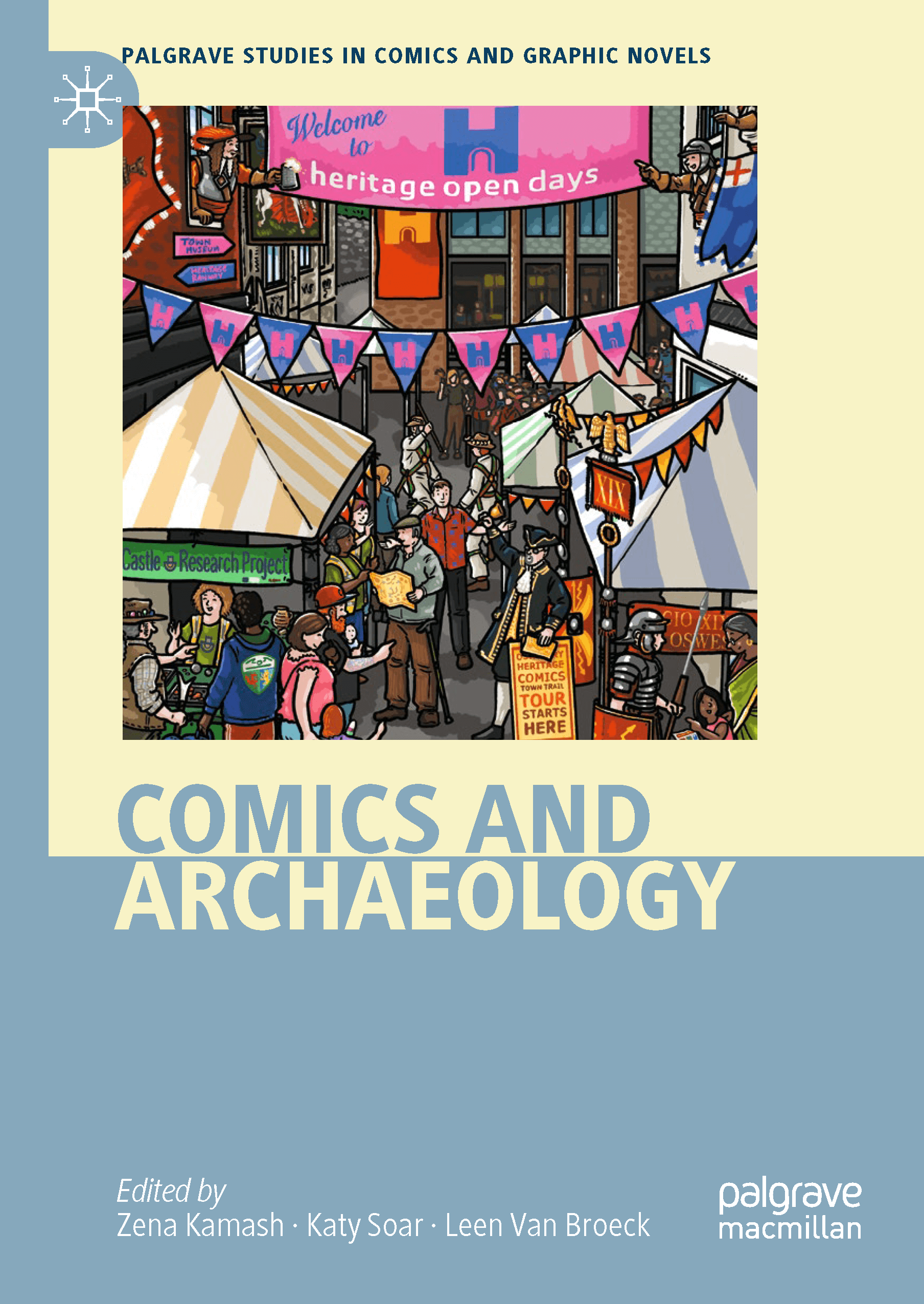
I have been watching out for Comics and Archaeology. And…you can probably guess why. And in case you can’t, it’s because I also write about archaeology and comics (as does Steph Halmhofer here at WWAC). But as someone who writes about archaeology and comics, there are a number of things missing from this volume that made me question whether or not the contributors did their reading.
Comics and Archaeology
David Anderson (writer), Kristin Donner (writer), Zofia Guertin (writer), Laura Harrison (writer), Zena Kamash (writer and editor), Eva Miller (writer), Guillaume Molle (writer), Katy Soar (writer and editor), John G. Swogger (writer and artist), Leen Van Broeck (writer)
Palgrave Macmillan
2022
In all honesty, I am salty they didn’t invite Steph Halmhofer or me to contribute to the volume. As an academic, people asking you to contribute to an edited volume is really cool and important. Though at the same time, I understand. Not everyone who studies an academic topic can, or should, contribute to everything about it. If that were the case, academic conferences would be sooooooo long.
But as an early-career scholar of color and one of only a few folks who have explored the intersection of archaeology and comics, only hearing about the publication of this book from social media felt odd. And as an “early-career scholar” who has work that I’d like to publish, I need to cite this book to demonstrate that I’ve done my reading.
Which means reviewing the work is part “want to”—so I can see what other archaeologists have to say—and part “have to” because, in the current academic climate, it’s important that I know what other scholars write about. And while I’m familiar with what our archaeologists-writing-about-comics community here on WWAC works on, I was less familiar with the scholars who contributed to Comics and Archaeology.
Unfortunately, after reading the book I got the feeling that its contributors were also unfamiliar with who, outside the volume, actually writes about archaeology and comics. Besides the chapters where folks reflect on making their own comics, the remainder don’t spend much time referencing the fact that other archaeologists write about comics.
A great example is how the book doesn’t cite any pieces from The SAA Archaeological Record. Back in 2005, that publication had a whole issue dedicated to “Cartoons in Archaeology,” which is available for free here. It’s got some interesting content and explores some of the same themes in Comics and Archaeology. So I was confused that the editors of Comics and Archaeology, who feel their book “will add to the so far relatively scant academic literature” (Kamash et al. 2022: 2), didn’t think to mention it. To me, it feels a bit lazy to state that there’s been “scant work” and then not cite much of that existing work.
It’s also borderline unethical because now Comics and Archaeology is one of the first things that comes up when one searches for those words. So, due to the nature of algorithms and the power of their publisher, this book essentially erases the work of previous scholars.
That SAA Archaeological Record special issue, admittedly written entirely by men, is not perfect, but is an important piece to reference if your new book is going to be the book on the subject. It would show you know the landscape you’re entering, and that discussing archaeology and comics has longevity. People have been doing it for almost twenty years.

But let’s circle back to citation. The first chapter “‘The Aliens from 2,000 B.C.!’: Truth, Fiction and Pseudoarchaeology in American Comic Books” by David S. Anderson mentions two comics reviewed by WWAC writer Steph Halmhofer. However, despite the fact that Anderson and Halmhofer followed each other on social media at the time and that Halmhofer’s reviews came out before the publication of the book, there’s no acknowledgement of her work.
In addition, the chapter calls on archaeologists to address pseudoarchaeology, which is exactly what Steph focuses on in many of her reviews and specifically on the one about The Osiris Path. So it feels extremely weird that Anderson makes no reference to the archaeologists doing the work to critique and analyze pseudoarchaeology in comics on public platforms. Instead, Anderson focuses, when there’s a reference, on the work of other contributors within the book.
Beyond these questionable citation practices, the other chapters occasionally miss important elements for readers. For example, the third chapter explores Bandes Dessinées (BDs) but gives no definition for them. I’m aware of TinTin and Asterix but a sentence or two about the history of BDs would have better contextualized the work in that chapter and in the book overall.
Furthermore, although the editors acknowledge that the book’s contributors “…along with the rest of the world were reminded of … the continuing need for the Black Lives Matter movement…” (Kamash et al. 2022: 3), their claim that “[t]he focus in many of the contributions is on anti-racist action” feels tacked on. The introduction acknowledges the volume’s lack of diversity, stating that Zena Kamash is the only woman of color affiliated with the project (Kamash et al. 2022: 4). But they don’t point out that she’s one of three editors and one of three collaborators to the introduction chapter.
In addition, the other chapters’ authors don’t interrogate their positionality as white people. None of the authors state their status as settlers, where applicable. Nor do they explore how, if portraying diverse communities, they may not be the most appropriate folks for the job. I’m glad that John Swogger’s comics portray diverse people, as we see in the concluding chapter of the book. Unfortunately, he is still a white male artist operating out of a Western European country that participates in colonialism. Furthermore, it is his art that currently dominates educational archaeological comics. One. White. Man. Artist.
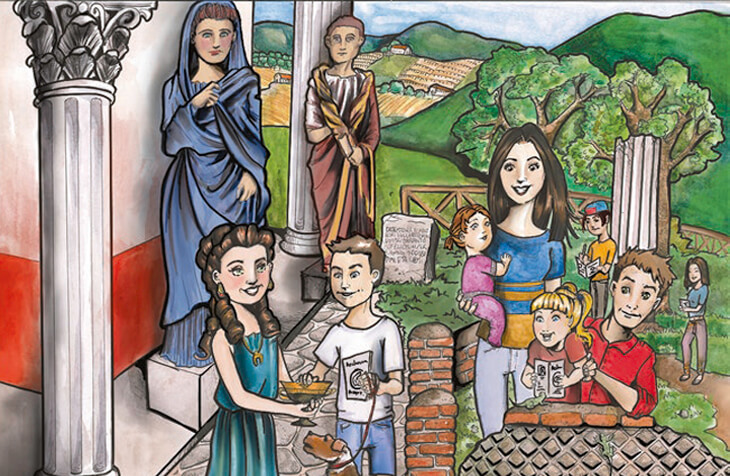
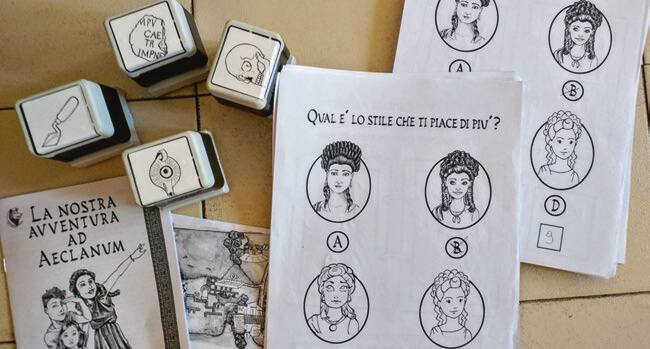
While the book includes white women chapter authors who made comics: Zofia Guertin, Kristin Donner and Laura Harrison; their comics work is about specific, individual, archaeological projects. In contrast, Swogger cites 21 things, many of which are separate projects, that he contributed to in his chapter. I’m glad there are so many science-based archaeology comics to draw from. I’m concerned that most of them are made by the same white guy.
It’s a suspicious contrast that white women comics creators who make archaeology-related comics portray a specific site, like that in Guertin’s chapter, while Swogger gets the rest of the world and the rest of time. That disproportion in projects means that scholars will cite his work much more than the white women making comics in this volume. Once again the collection is reinforcing a white-man dominated narrative despite stating that the contributions suggest “transformative action [that] can equally be applied to other minoritised groups” (Kamash et al. 2022: 4-5) and that comics can break “down the white male perspective that is so often the default of all kinds of writing” (Kamash et al. 2022: 11).
Furthermore, there are few, if any, references to other white women archaeology comics creators, such as Glynnis Fawkes. This is despite the fact that Fawkes participated in the conference that was a precursor to the book. These omissions in other chapters and self-citations within Swogger’s feel self-serving, insular, and once again like the contributors didn’t do their reading or the editors their editing. And that they weren’t focused on “transformative” or “anti-racist” action despite claiming so in the introduction.
The work says that it will demonstrate “the value and need for allies…to share the burden of work that is required to move forward in inclusive action” (Kamash et al. 2022: 4). However, they leverage few of their existing tools to do so. For example, they cite little work by people from the backgrounds that academic archaeology oppresses. Beyond that, they do not capitalize Black or Indigenous consistently throughout the book, which is an easy act of solidarity. Especially so if your mostly white academic book claims “allyship” instead of inclusion. Another act of allyship could have been to pay for and then acknowledge sensitivity readers for relevant chapters.
Lastly, comics are a mass art form. They’re for the people and some of the contributors write like folks who don’t read comics often. Or if they do, don’t acknowledge that the comics community, full of writers, artists, fans, and adult readers from diverse backgrounds, exists. It’s like archaeologists’ versions of tech bros. Or really, like early colonial archaeologists. They saw a cool thing and decided to work with it and ignore the people already there.
I get this feeling because, where appropriate, there is minimal engagement with non-archaeological comics that do the work to transform good archaeology into fun comics. There’s no mention of Webtoon, itch.io, Gumroad, Tapas or other platforms where searching archaeology brings up comics.
On top of that, they rarely, if ever, mention earlier comics works, such as those discussed in the 2005 The SAA Archaeological Record, or more recent works such as Clovis and Shattered Spear. They also omit references to more famous properties like Paper Girls, which includes prehistoric time travel and had a short-lived TV series, or Yu-Gi-Oh!, whose entire premise rests on Egyptian archaeology.
While there is clear reference to engaging with descendant communities (people who are the descendants of those who lived at or in the area of a specific archaeological site) in the work, this book does not engage with the comics community. And that is a problem. Comics and Archaeology barges in on comics like the Kool-Aid man, ignoring the archaeologists and comics creators already doing this work. It’s a specialist book before the existence of an introduction and doesn’t even point readers to a place to be introduced.
So if you’d like more academic citations or cool additions to your educational archaeological syllabus, Comics and Archaeology is a fine book for that. I’m quite excited to incorporate Zofia Guertin, Kristin Donner and Laura Harrison’s works into my syllabi. However, if you want something that introduces you to archaeology and comics as a field of study, or explores how archaeology and comics can be a pathway for allyship for oppressed communities, you might consider reading the pieces from The Archaeological Record and then supporting Steph, myself, and WWAC instead.
