

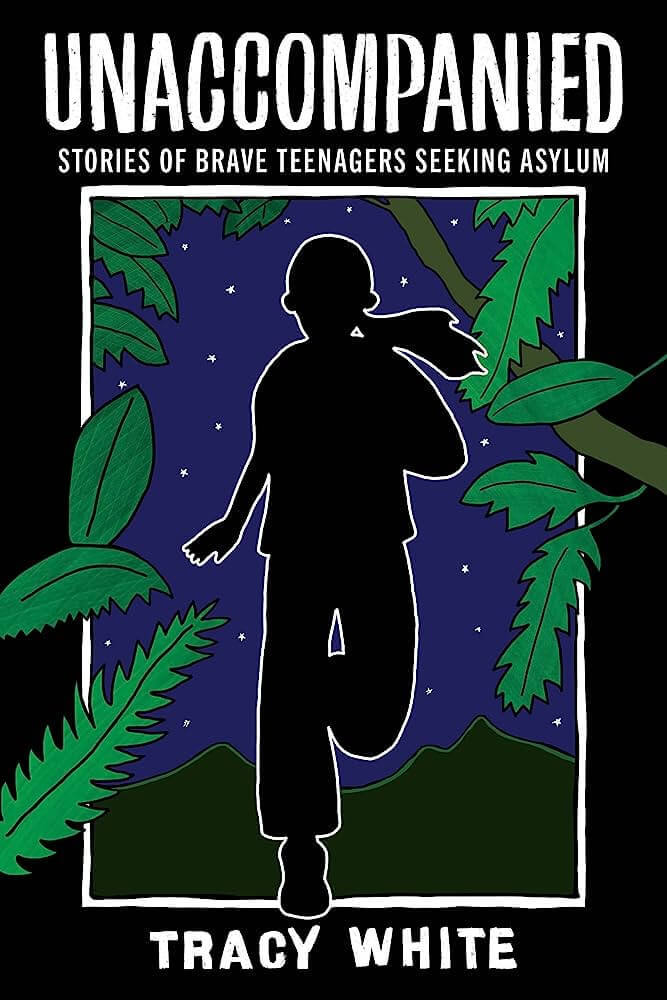
In Unaccompanied: Brave Stories of Teenagers Seeking Asylum, cartoonist Tracy White presents stories of migrant teens reaching the United States without parents, and going through the legal process of pleading their asylum cases here. Varied and harrowing, these stories illuminate the terrible situations these kids flee, and the system they need to navigate on arrival. In this interview, Tracy White answers my questions about the process of creating such a meticulously researched and gripping book.
In your Author’s Note at the end of Unaccompanied: Brave Stories of Teenagers Seeking Asylum, you describe your process to ensure accountability and authenticity in the dialogue and images for all of the stories you present. There’s a wide variety of nations depicted, from Guatemala to Guinea, and of course each story is about a different person facing a different situation. What challenges did you face conducting these interviews and performing the research to present the scenes accurately?
Protecting the children’s identities and avoiding retraumatization were the most important parts of the overall process. I was told early on that speaking with kids directly would jeopardize their cases, and I found out quickly that asking probing questions was triggering. Interviewing immigration lawyers who work specifically with Unaccompanied Refugee Minors gave me facts, but not nuance or a broader idea of daily life—for example, what stories might have been told or read to a child from Guatemala, as was the case with “Rosa” who loved books. So I widened my research lens.
I started asking anyone I knew for leads to people from each of the main countries in the book who might be willing to speak with me about their own lived experiences. I also tracked down people who had written books or articles on relevant topics and cold-emailed them. Persistence was needed. I sent LOTS of queries and eventually found folks from each country willing to be interviewed. These discussions were critical in allowing me to get a sense of family life, community life, and common phrases spoken.
Of course, comics are a visual medium, so it’s not enough to have accuracy with the written word. I used [found] Google images and Flickr streams to get initial ideas and to further ensure visual accuracy, and I again collaborated with folks who had first hand knowledge. The feedback I got from these readers, once they looked over the drawings, were essential to honoring the authenticity of each story. I redrew many things. I also partnered with a general fact checker, a DEI fact checker, and a legal fact checker—because even with all the research I couldn’t leave anything to chance.
What were you surprised by as you conducted these interviews and did this research?
That children are appearing in immigration court alone, without legal representation. Literally they are sitting across from government lawyers by themselves trying to plead their case. Asylum seekers are entitled to a trial, but not a lawyer. It’s why organizations like The Door, The Safe Passage Project, Jewish Family Services of San Diego, and Catholic Charities are so incredibly important. They all provide pro bono lawyers for this vulnerable group.
Who is your intended reader of this book?
Young adults, teachers, librarians, and anyone interested in immigration, migration, and the asylum process in the United States. I’ve included a study guide written by two teachers to be used in classrooms or book group discussions, as well as a bibliography for general reading on the history and cultures of the four countries the five teens in the book are from.
In your introduction to Unaccompanied, you say “Narrative has the power to challenge beliefs.” Can you tell us some of the stories you read when you were younger that have been formative for you?
I read a lot of fantasy and science fiction growing up. I think both of those narrative forms ask us to question the world we live in and what we are told.
The teens’ stories in your book all depict a lot of suffering, yet they also have outcomes that are fairly positive. Do you think the stories you share in Unaccompanied: Brave Stories of Teenagers Seeking Asylum are overall typical of kids seeking asylum in the U.S., or have these ones been selected because of their generally positive outcomes (and generally positive interactions with U.S. authority figures)?
The stories were selected because they are typical and because all of these kids had lawyers. Around 90% of children who didn’t have legal representation were issued orders of removal or voluntary departure between 2005-2017, which is the most recent data. While general global stats on success rates with lawyers is tricky to pin down, if you look at statistics from specific pro bono legal organizations you’ll find that unaccompanied kids with representation had over an 80% success rate, allowing them to stay in the United States.
That’s an incredible percentage! The organizations we linked above that are helping unaccompanied minors seeking asylum by providing lawyers for them are doing a lot.
If you’d like to help unaccompanied refugee minors or support the right to seek asylum in the United States, please stop by my site for some specific suggestions and buy Unaccompanied: Brave Stories of Teenagers Seeking Asylum. Every purchase goes toward supporting the amazing non-profit organizations that provide services to unaccompanied refugee minors and helped make this book possible.
—
Unaccompanied: Brave Stories of Teenagers Seeking Asylum is available June 20, from publisher Street Noise Books in Brooklyn.
Note: This interview has been edited slightly for space and coherence.
