
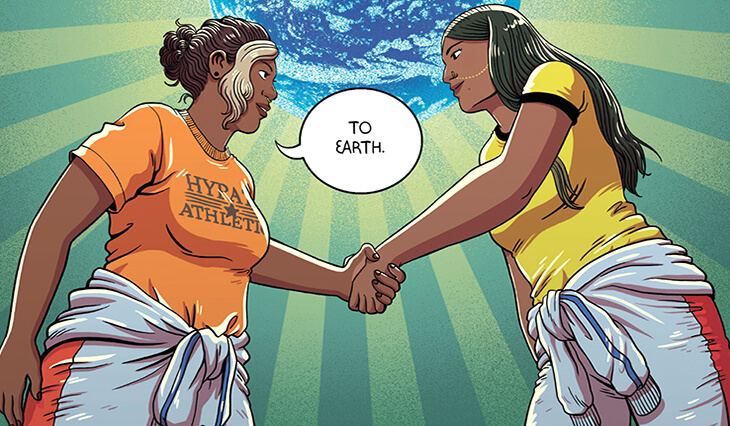
Jenn Woodall’s Space Trash is a colorful riot of individuality railing against the capitalist underpinnings of space colonization. For the students attending high school in a sealed dome in the twenty-second century, the fantasy of living on the moon is an unpleasantly gritty reality. These young women’s minor acts of rebellion against an unfair system snowball into something much bigger – an enthusiastic vow to take back the technology that confines them.
Space Trash, Vol. 1
Written and Illustrated by Jenn Woodall
Oni Press
September 20, 2022

Space Trash is set at an all-girls high school on the moon. Unfortunately, the utopia of their lunar habitat is far less glamorous than promised. There are no teachers or other adults in the school, only robots programmed to recite lectures and enforce discipline. As a result, the school and its dorms are filthy and decrepit, with trash in the halls and water stains on the ceilings.
In contrast to the windowless gray walls, the student culture is bright and colorful. Largely left to their own devices, the students express their individuality through their unique clothing, hair, and musical tastes. They’ve also divided the school into loosely bounded territories defended by close-knit friend groups. In other words, Space Trash is about punk girl gangs on the moon, and it is glorious.
Una, Yuki, and Stab are three lowkey troublemakers who share a dorm room and dye each other’s hair while watching each other’s backs. The three young women mostly play by the rules until they’re challenged by a rival girl gang, the Trash Queens. Their brawl is broken up by the school’s robotic disciplinary wardens, which causes the two gangs to realize that they share something in common: a burning desire to upend a system that doesn’t serve their best interests.
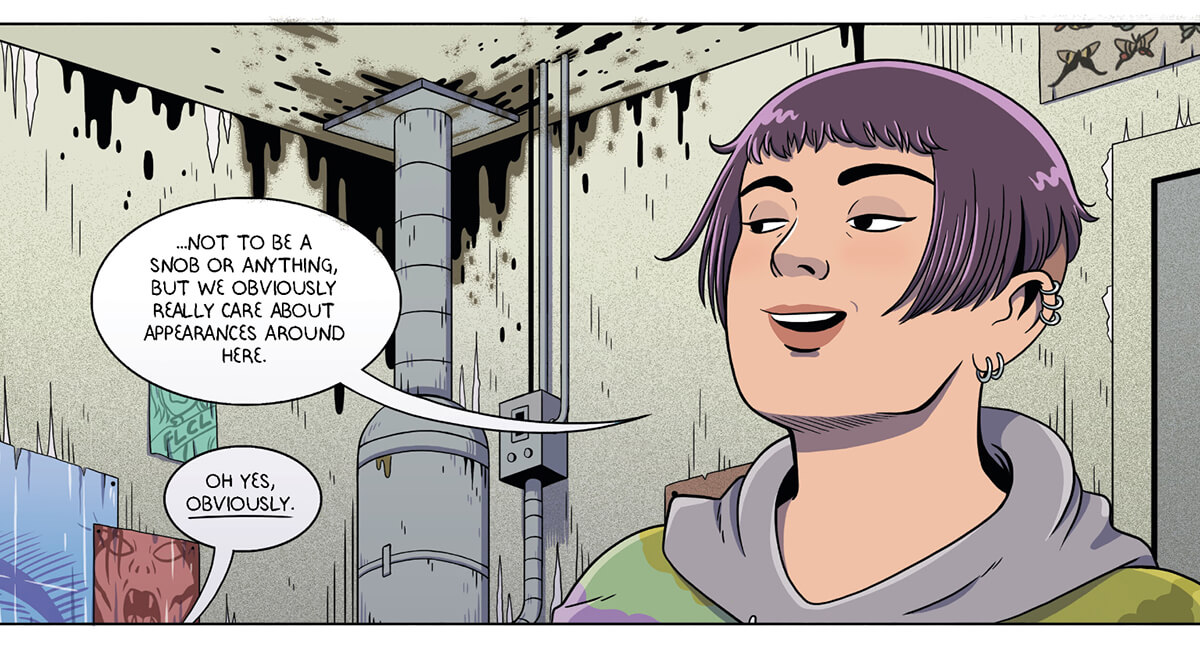
The visual aesthetic of Space Trash screams the early 2000s like a punk anthem. The bright colors work well together while almost-but-not-quite clashing, creating a thrilling sense of energy reflected in the bold actions of the teenage characters. As full of life as these characters are, their environments are equally compelling. The physical edition of Space Trash is almost a foot tall, a format which gives the reader ample opportunity to study the painstakingly drawn details of the panel backgrounds. The environment is a treasure trove of pop culture references ranging from book titles to anime stickers to the quaintly archaic error codes that appear on Una’s laptop screen as she attempts to connect to off-lunar networks.
Space Trash’s plot about edgy teenagers rebelling against an oppressive system is archetypal, but the myriad details of Jenn Woodall’s art provide a wealth of worldbuilding while inspiring a number of questions: Why are these kids on the moon? What happened to the earth? Where are the adults? The students are clearly being lied to, but why? And who benefits?
Many of these questions will hopefully be answered in subsequent installments of the series, but the open-ended story introduced in the first volume prompts reflection on the real world, which is definitely not the future we were promised back when the pop-punk aesthetic was trendy. Teenage readers will perhaps relate most intimately to the characters, but Space Trash is compelling for people well past high school. The subtle but deliberate sense of nostalgia evoked by the cultural references embedded in the art effectively asks: Do you remember what it was like to be sixteen and convinced that you could fight the system? Did you grow complacent as you grew older? Was it worth it?
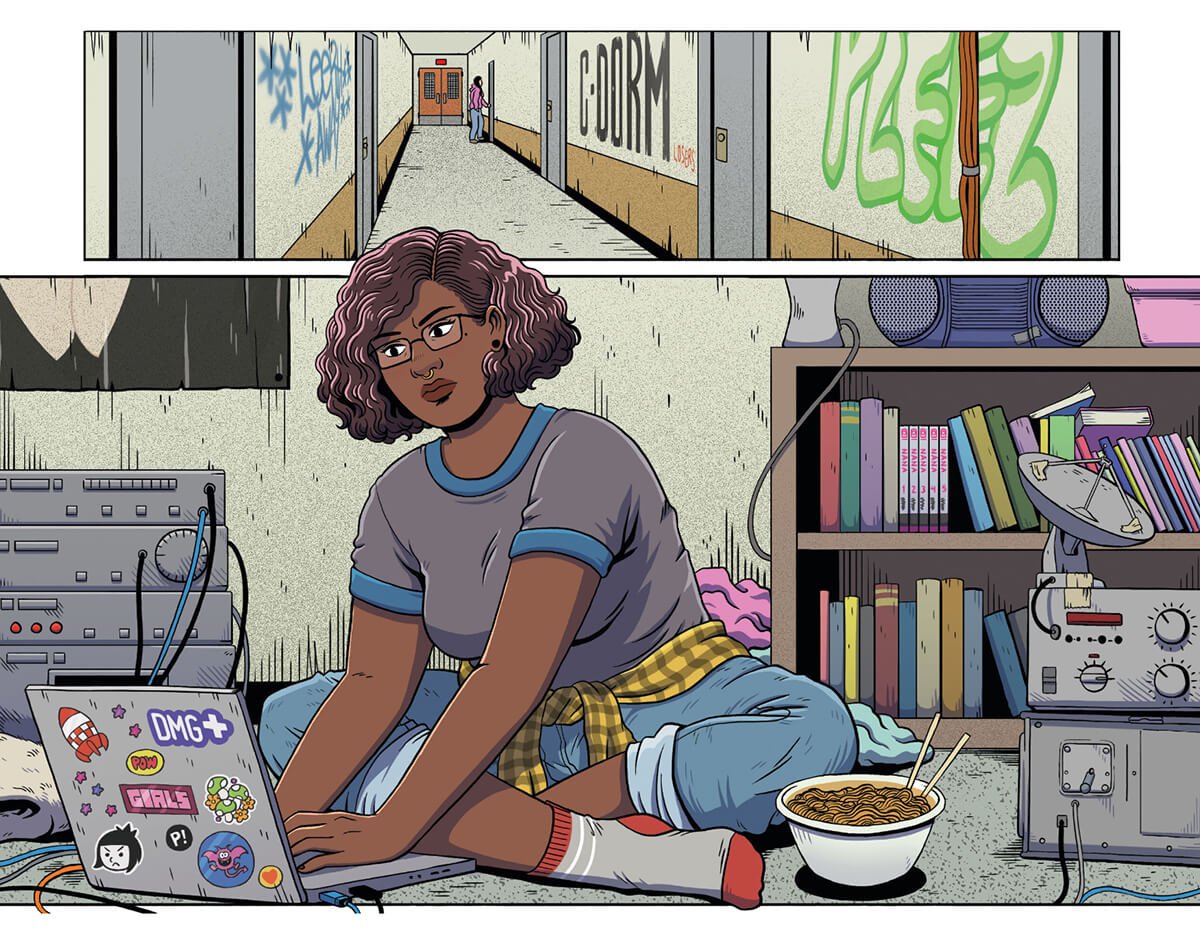
Given that the sci-fi fantasies of space colonization, asteroid mining, and commercial space flights are gradually becoming a reality, Space Trash raises vital concerns about resisting the narrative of capital by paying attention to the rust at the edges of the lunar base. Woodall makes several references to the early 2000s “girl power” of shōjo manga, borrowing from the youthful energy and cross-cultural solidarity of titles like Sailor Moon, Nana, and Crimson Hero to suggest friendship and a healthy enthusiasm for defacing corporate property might be what it takes to reclaim the fantastic technology of the future. Woodall’s intensely detailed art, beautiful full-page spreads, and relatable characters work together to elevate Space Trash as speculative fiction that envisions a future of hope in the dystopian present.
