
In December 2021, a conversation concerning the definition of the term “zine” unfolded on Twitter. This conversation arose from anxieties surrounding the rise of professionally printed and highly selective fanzines. Many comic artists lamented what they perceived as a betrayal of the DIY ethos of North American zine culture, while others expressed their frustrations regarding the intrusion of high levels of competition into countercultural fanzine spaces.
I’d like to argue that this selective fanzine culture has its roots in Japanese dōjinshi, which are typically created by early-career creative professionals and printed by specialty presses. Dōjinshi-style fanzines spread to North America during the early 2010s via anime conventions hosted in cities on the West Coast, particularly Los Angeles, Seattle, and Vancouver. While tracing this transcultural development, I want to reflect on the tension between DIY zine counterculture and big-budget fanzines.

Between 2016 and 2018, I wrote a book about transnational comics called Manga Cultures and the Female Gaze. I did a lot of research into fanzines during the process, and this research helped me to realize that there was nothing stopping me from making zines of my own. (And you can too! Check out Rosie Knight’s guide “How to Make a One-Page Zine” for an excellent place to start.) I published my first zine in November 2018, and I had so much fun that I’ve put out at least two zines a year since then. In other words, I’m looking at this conversation from the perspective of someone who has insight into both sides of the issue, both as an indie zine maker and as someone who has participated in big anthology fanzines.
Now that I’ve introduced myself, I want to get specific about where the zine discourse came from. As far as I can tell, what sparked the bulk of the debate was a vent tweet posted on November 29, 2021 by Twitter user @rogvaettr that reads, in part, “people have completely appropriated and pissed on what zines are supposed to be, which is 1000% subversive, transformative, makes-society-flinch shit.” It’s difficult to follow conversations more than a few days old on Twitter, but I believe @rogvaettr was responding to an artist whose application had been rejected from a fanzine for Fire Emblem: Three Houses, a 2019 fantasy role-playing strategy game with a large and active fanbase.
The way the zine discourse played out on Twitter mainly had to do with concerns regarding the culture of fandom anthology zines, which can be extremely competitive. Widespread frustration regarding rejected applications led to Twitter user @zhinxy_vs_media’s widely circulated tweet that reads, “It is a scandal anyone was deceived into believing a ‘zine’ is primarily a glossy art book made by some fandom clique you have to be ‘good enough’ for, and not something you throw together on your own as cheaply as possible because something’s in you and it must get out there.”
@zhinxy_vs_media’s definition of a zine as “something you throw together on your own as cheaply as possible” reflects the North American understanding of zines as countercultural ephemera created by people too young, too radical, or too far outside the circles of the educated elite to have access to traditional publishing channels. Print guides to making zines (such as cult favorite Stolen Sharpie Revolution) list and explain low-budget methods of production and distribution while strongly encouraging aspiring zine creators not to get too hung up on print quality.

In her 2009 book Girl Zines: Making Media, Doing Feminism, feminist scholar Alison Piepmeier identifies the messiness of zines as what defines the medium, as this DIY messiness emphasizes the outsider status presumably shared by a zine’s creator and its reader. Piepmeier argues that the imperfect and handmade nature of zines helps to create emotional bonds between subcultural communities, especially communities that define themselves by their separation from mainstream culture.
An earlier roundtable discussion between the contributors here at Women Write About Comics provides many examples of how this subcultural understanding of zines is embraced by the artists and writers tabling at local zine fests in Canada and the United States. Toward the end of the conversation, Small Press Editor Kat Overland contrasts this understanding of zines with the culture of Japanese dōjinshi, which they describe as “held to a higher standard than hand-stapling.”
Overland’s connection is apt, as I believe that the glossy fandom anthology zines that became the subject of the zine discourse on Twitter are directly connected to the culture of Japanese dōjinshi. Without getting too much into the literary history of the term, dōjinshi are self-published comics, generally fancomics. The term comes from dōjin, meaning “a group of like-minded people” (or “fans,” in this case) and shi, a suffix designating “printed matter.” Instead of being photocopied and stapled and handed out to friends, dōjinshi are usually professionally printed by specialty printing services and sold at fan events that attract thousands of participants before appearing on the shelves of resale stores such as Mandarake and Toranoana.
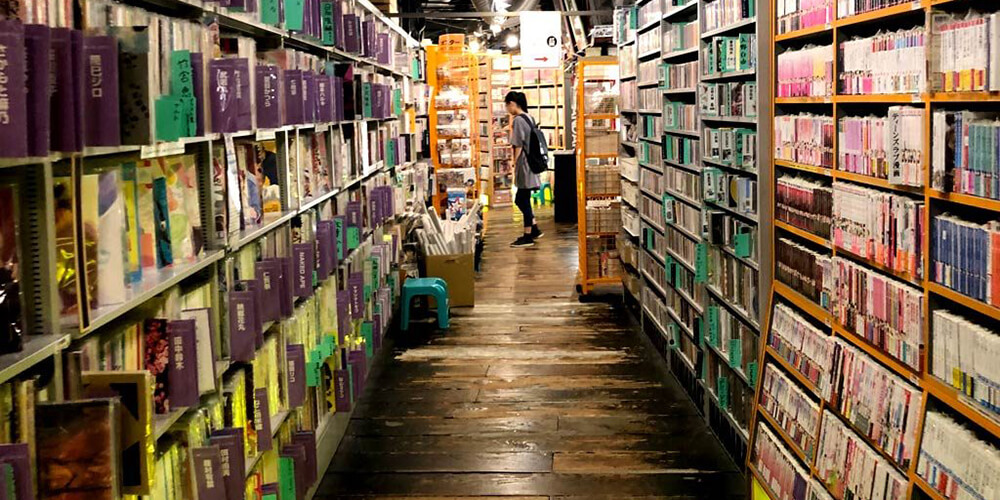
Unlike zines, dōjinshi are usually created by trained artists aspiring to work in Japan’s content industry as illustrators, character designers, manga authors, and so on. As professor and famed manga artist Moto Hagio explains in her book Lectures on Shōjo Manga, “From around the 1980s, aspiring artists whose work was rejected by editors because it didn’t fit the market would publish their stories as dōjinshi and sell them at dōjin events like Comic Market.”
Dōjinshi therefore facilitate participation in a friendly artistic subculture of fans while also serving as a portfolio for industry scouts who attend comic conventions, which is where many publishing trends used to emerge before the use of Twitter became widespread in Japan during the mid-to-late 2010s. (In addition to print dōjinshi, there is a thriving culture of webcomics in Japan, just as there is in North America. If you’re interested, Masha Zhdanova’s essay “A Brief History of Webcomics: 2010 to Now” contains a brilliant discussion of webcomics in a transcultural context.)
Many artists publish their own individual dōjinshi, but dōjin anthologies are common as well, and they generally celebrate a specific subfandom, such as the fandom for a character or a romantic pairing between characters. The same trends characterize the English-language anthology fanzines that began to appear in the early 2010s at the Artist Alley tables of West Coast anime conventions such as Anime Revolution in Vancouver, Anime Expo in Los Angeles, and Sakura-Con in Seattle.
In his 2006 book Japanamerica, journalist Roland Kelts describes the explosion of anime fan conventions in North America following the Pokémon boom of the late 1990s. By 2010, anime conventions were hosting thousands of attendees eager to buy merchandise, even if it was unofficial. The creators exhibiting their work in the artist alleys of these conventions stepped up to meet the fannish consumer demand.
While East Coast creators relied on their local print shops, West Coast creators from Asian-American families made use of their linguistic backgrounds to access low-cost services in Asia that would manufacture professional-level merchandise such as vinyl charms, washi tape, and character plushies. As they exhibited at the same conventions year after year, many artists became friendly with each other. They used Japanese and Chinese on-demand dōjinshi print services to create full-color illustration anthologies of their work. In contrast to the photocopied and stapled personal art zines of indie comics festivals, anime conventions became markets for professionally printed collections of fan art that, like Japanese dōjinshi, were created by early-career professional artists.
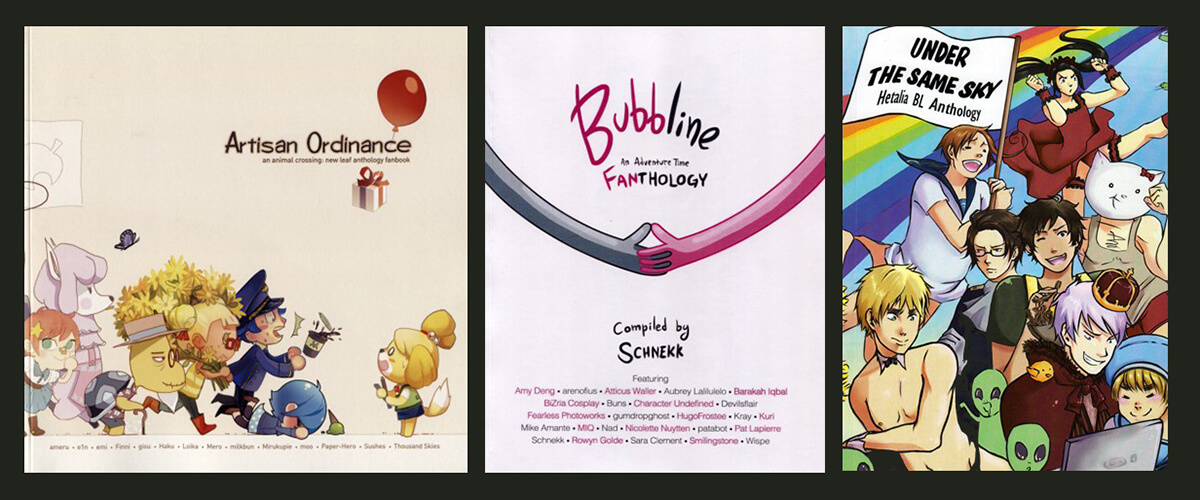
Inspired by these fanzine anthologies, younger artists without in-person networks of connections used Tumblr to post calls for contributions to their own projects, which they coordinated through the group messaging platform Discord. This continued at a manageable scale until the Tumblr pornography ban of December 2018, which resulted in many fandom artists leaving Tumblr for Twitter. This move greatly expanded the reach of fanzine project announcements, so much so that participants are now asked to submit applications. Although interest varies according to the project, the selection process is often a competition between hundreds of applicants.
This level of competition in formerly free-for-all online spaces has resulted in the widespread frustration succinctly expressed by @rogvaettr’s tweet. From the perspective of someone who simply enjoys fandom culture and indie publishing, we’re living in a golden age of comics and illustration. For many aspiring artists and writers, however, these glossy fanzine anthologies are another shot of anxiety onto a battlefield already pierced with arrows.
The tensions always implicit in any creative industry have been exacerbated by prolonged economic recession and steeply rising costs of living in urban areas, the combination of which has forced freelancers to take on more work while also maintaining an active social media presence. Webcomics don’t often translate into income, and crowdfunding is an additional source of anxiety, especially after Kickstarter announced its support of NFTs. To many people, the intrusion of professional-level competition into ostensibly amateur fandom spaces feels like a betrayal of the sense of community based on affective attachment that formerly provided a relief from professional pressures and anxieties.
The concerns about fandom anthologies brought up during the December 2021 zine discourse on Twitter all revolve around a sense of exclusion. Comic anthologies – fannish or otherwise – can be too competitive for part-time or student artists. They also tend to privilege creators who already have large followings. Because zine Discord servers are by invite only, people who aren’t accepted into a zine can have no access to core creative communities and the personal connections created within these communities. The platform of Discord itself can be very stressful, especially for people who are unable to spend a lot of time online.
The zine discourse on Twitter makes it clear that the collateral damage to creative communities is significant. Speaking as an indie creator who has followed the small-press comics industry closely for the past decade, I believe there are two key issues underlying the frustrations expressed in the zine discourse.
The first issue is the collapse of a healthy middle market for comics following the 2008 publishing crisis. Essentially, there are fewer opportunities for sharing creative work between the extreme poles of “stapling photocopied zines in your bedroom” and “working for a giant media corporation.” Even the webcomic landscape has been corporatized. What this means is that established indie creators with previously published books and tens of thousands of followers on social media are now sharing the same market as people who, to paraphrase @zhinxy_vs_media’s tweet, want to throw something together on their own as cheaply as possible.
The second issue is that the centralization of Twitter as a social media platform has similarly collapsed a number of highly local and specific creative communities into one monstrous amalgamation. While granting opportunities for greater exposure, the hegemony of Twitter has unfortunately increased creative competition while eroding the personal bonds that formerly characterized both fandom spaces and communities of zine creators.
I’d like to conclude by circling back to the culture of Japanese dōjinshi. In Japan, independent publications by early-career artists thrive not only because of access to low-cost production resources, but also because of access to venues where anyone can share their work in person. Japanese comics festivals are largely independent of major media corporations but are held in spacious venues and occur throughout the year. This means that anyone, even a total amateur who stapled their comics by hand, has an opportunity to exhibit their work without facing the anxieties and frustrations of rejection from selective anthology zines.
Independent creators and early-career artists can’t control the publishing industry, but I believe that we should learn from dōjinshi culture and attempt to create enough space for ourselves so that a diversity of talents and projects will be able to flourish with a minimum of competition. As comic art continues to expand its reach as a cultural medium, small comics presses such as Iron Circus Comics and Hiveworks Comics are successfully rebuilding a middle market using a model similar to that employed by fanzines.
It makes sense for indie creators to band together and use the professional-level printing tools at their disposal, even if this is indeed a betrayal of the DIY ethos of zine making. While it’s good to remember that anyone can – and should! – make a zine filled with 1000% subversive material, it’s also important to emphasize that anyone can organize an anthology zine, and that there’s power in community.

