
Our Patron-exclusive essay series continues. You can read all of these incredible analyses for as little as a dollar a month on our Patreon.
As a warning, this article is most certainly not safe for work. The comic discussed here includes explicit sex and violence, including a combination thereof that some readers may find uncomfortable or upsetting.
Note: This article incorporates material originally published in two posts from 2015 that have since been removed from the site.
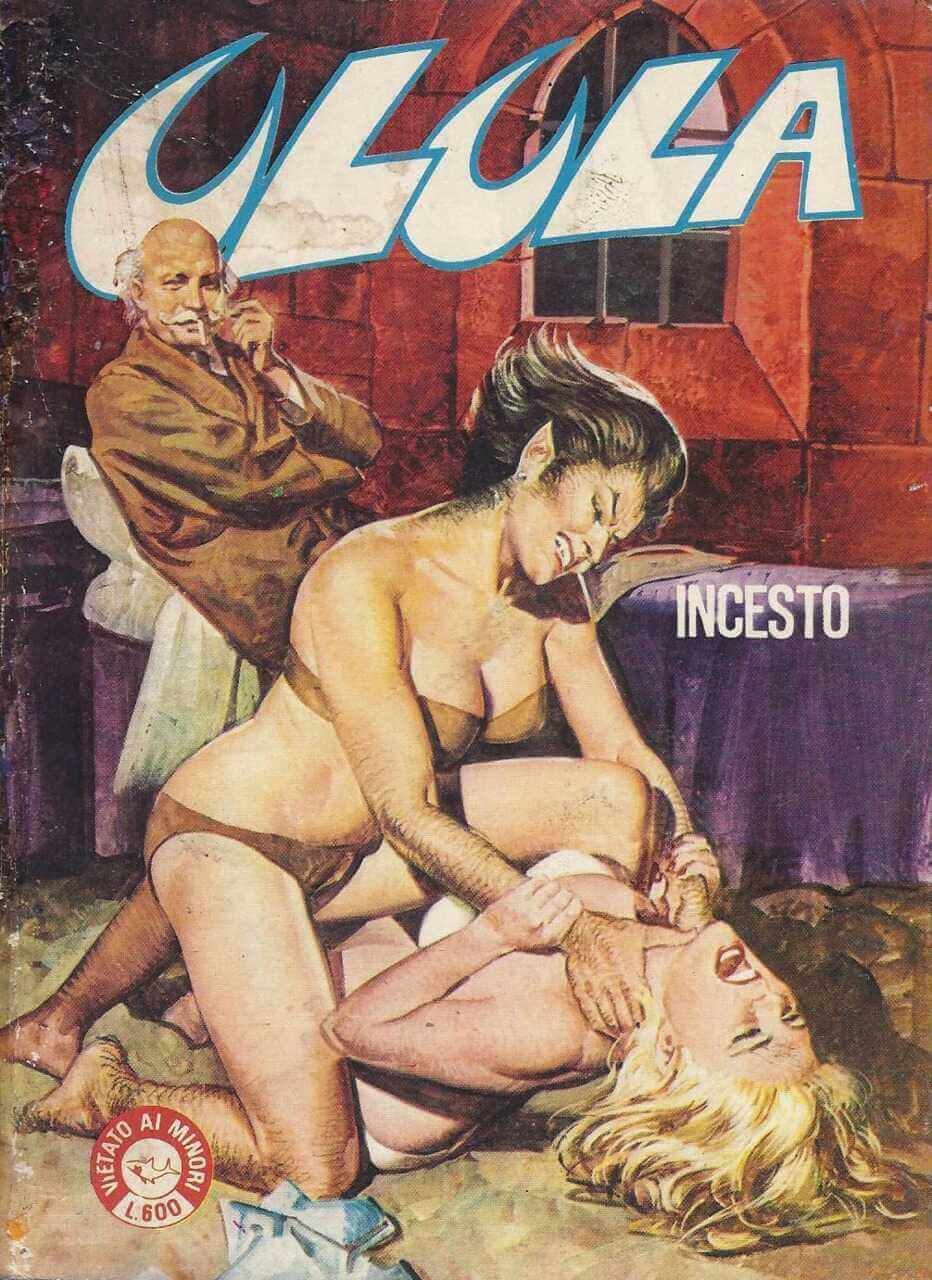
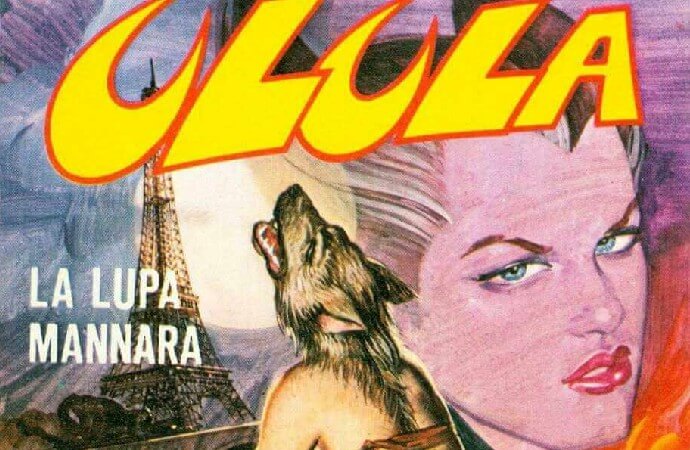
One of the most memorable anti-heroines of Italian erotic-horror comics is the lycanthropic femme fatale Ulula, whose exploits were drawn primarily by artist Giovanni Romanini (1945–2020), although the lushly-painted covers were handled by other artists. Ulula’s covers often depict the title character in a strange costume—a sort of one-piece, midriff-bearing swimsuit, sometimes with a cape attached. It seems safe to say Ulula owes a debt to the American anti-heroine Vampirella, who wears a similar skimpy red number. But Ulula—whose name means “howls”—does not sport Vampirella’s trademark bat motif. Her hair is styled to suggest a pair of wolfish ears, while her choker has two claws dangling from it. She is an example of a fairly uncommon breed: a sexy werewolf woman.
Today, we tend not to associate werewolves with femininity, let alone physically attractive femininity. Cinematic werewolves have been portrayed as grotesque creatures from the genre’s beginning in The Werewolf of London (1935) and The Wolf Man (1941); this reached a height in the 1980s, when films such as An American Werewolf in London (1981) emphasised the visceral body-horror implications of the transformation from human to wolf. More recently, the likes of True Blood and Twilight have cast werewolves as earthy, conventionally masculine counterparts to refined and effete vampires.
But things were once very different. In the literature of nineteenth-century Britain, the favoured variety of werewolf was a beautiful—even ethereal—woman who acted as a temptress. This character type owes something to the widespread folktale motif of the animal bride, variations on which include swan maidens, frog princesses, and—yes—wolf women.
Learn more about Ulula in this Patreon exclusive essay.