

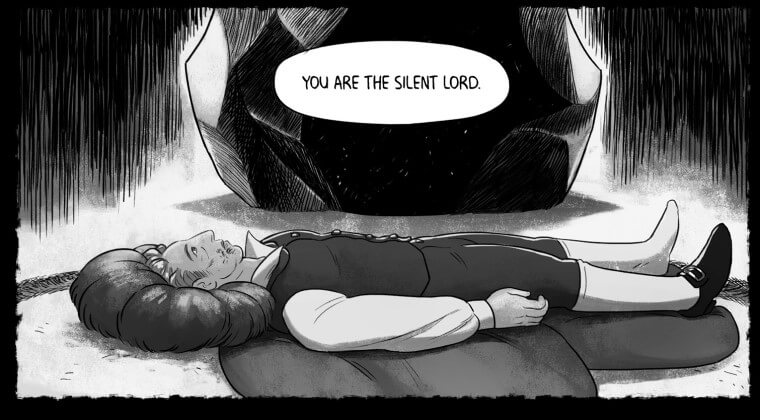
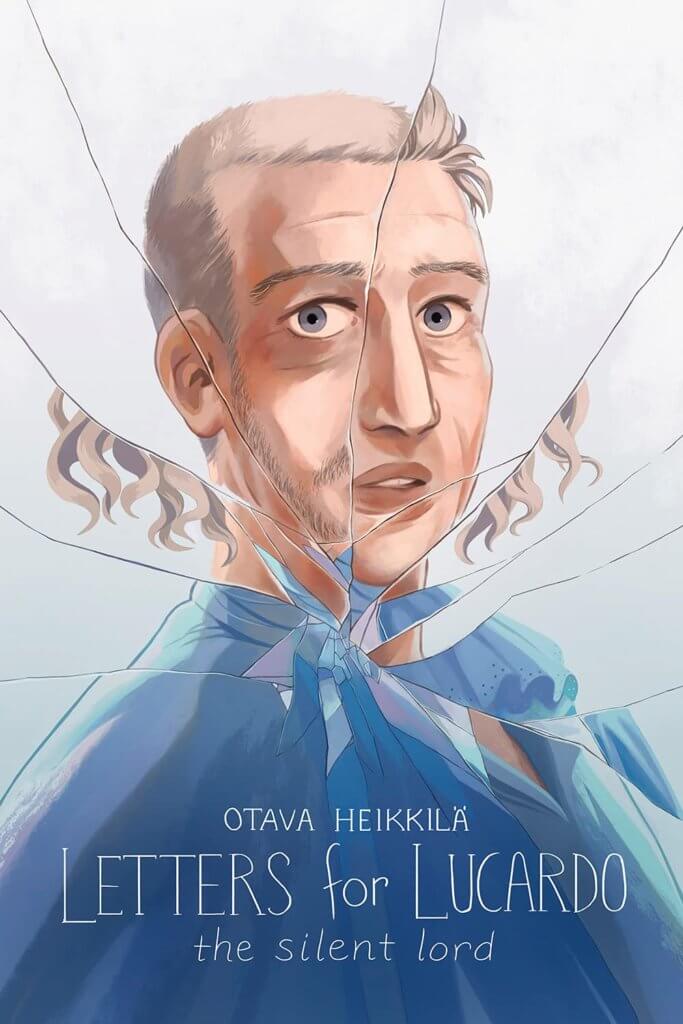
Otava Heikkilä’s Letters for Lucardo is a delightful queer erotic horror comic that’s been crowdfunding volumes since 2016. It’s a must-read for fans of vampire fiction as a whole, and especially fans of the queer subtext found in stories like Interview With The Vampire; if you liked that film, imagine a comic where the queerness is much more overt and the examination of class and status is so much more carefully considered. It doesn’t hurt that the sex scenes are incredible, too! I had the lucky opportunity to speak with Otava about the upcoming third volume, Letters for Lucardo: The Silent Lord, now crowdfunding on Iron Circus’ website.
Hi Otava! I really enjoy the way Letters for Lucardo takes elements of classic vampire stories and does new things with them. Can you tell us about what inspired you to tell this story in this particular way?
Hello and thank you! I’m a big fan of re-iterations of vampires that lean in on the theatrics, the lush decay, and the gothic horror, such as the iconic 1992 movie Bram Stoker’s Dracula, Vampire Hunter D: Bloodlust, or even the Castlevania [games] and their Netflix animated counterpart, which I’m listing just to say that I think Letters for Lucardo is decidedly not that. It’s a pretty stripped interpersonal drama about being a queer late bloomer, or about the fear of death, or about the cyclical nature of generational trauma. I think I’m always fascinated by age in my stories, and immortals juxtaposed with mortals is a great way to put that under the microscope. There’s a lot of meat on the vampire bone, so to speak, when it comes to stories about queerness and otherness.
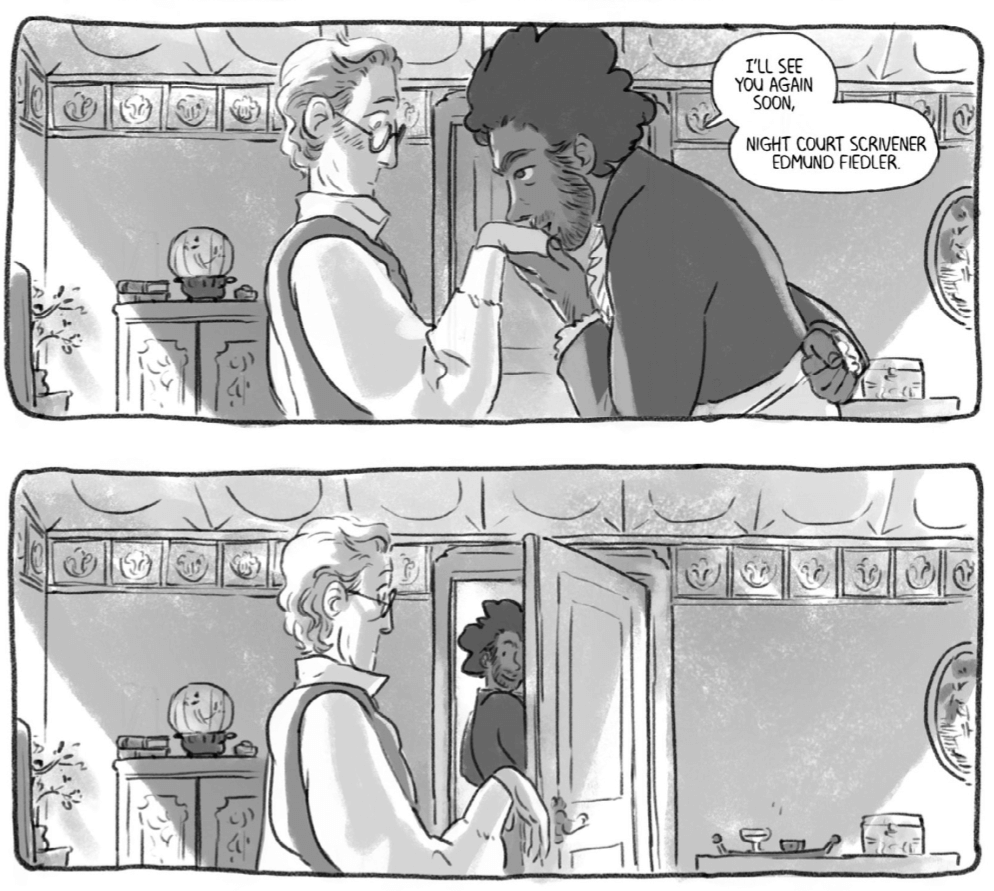
Volume Two left readers with quite the cliffhanger, as Ed collapsed in Lucardo’s arms. The circumstances of that ending raise some important questions regarding consent for what Lucardo plans to do next. How central is the discussion of consent to your story?
Good question! Lucardo is hot-headed and in the depths of despair as he takes the next steps in trying to save Ed. It’s very much a moment of “road to hell is paved with good intentions.” The topics of consent and autonomy are at the center of the events unfolding in book three and the story in general. I’ve tried to write with care about what happens to Ed, their relationship, and even how this ties into the larger chain of events concerning the ways the rest of the family is grappling with threats to their boundaries.
One thing I’ve enjoyed is that, rather than portraying the life of the vampire as a lavish temptation to Ed to abandon his cares, it’s instead Ed who tempts Lucardo, offering him a way to express himself and his emotions genuinely. Is that dynamic important to you?
Very much so. Ed is a late bloomer when it comes to exploring his queerness, but he’s led a life where being honest with himself and making the best of the few choices ahead of him has become second nature to him. Lucardo is sort of the opposite of that, he has so many lifetime’s worth of troubles hidden in his closet, but he’s got all the resources to keep running from them and never confront them. It reflects a larger dynamic in the Night Court, which I hope shows up in each character of the family in their individual ways. So whether Lucardo is aware of it or not himself, he’s drawn to that truth in Ed, and it almost makes him ready to turn around and confront the things he’s hiding from.
Ultimately this isn’t going to be a story about how joining a noble court and becoming rich and powerful is the road to your truth and happiness. I’ll let the latter half of the story speak for itself, though.
Is The Silent Lord the final volume of Letters for Lucardo, or do you still have more story to tell after this?
There’s one more volume left to go after the Silent Lord. You’ll notice at the end of this book that it technically works as an ending in itself, if one wanted to stop reading here, but to borrow the language of video games for a second, there’s a “true ending” that we’re yet to get to. Sorry, I couldn’t have put that in a more geeky way, but that’s how my brain has decided to conceptualize it. Like a great philosopher once said, there’s one more layer left to peel on this onion…
