

We’ve got a wide array of fantasy and romance for you all this time around, with an epic historical tearjerker and a thoughtful piece of progressive nonfiction to round things out!
Emily: A new edition of Wheel of the Infinite by Martha Wells came out November 19th from Tor, and it may now be my favorite of her fantasy novels. I always like it when Martha Wells’s protagonists have Had Enough of Your Shit, which is why I love the Murderbot Diaries so very much. Like City of Bones, my other favorite of her fantasy novels, Wheel of the Infinite has a protagonist with a chequered past engaging in noirish intrigue and adventure. The “wheel” in Wheel of the Infinite is a constantly shifting sand image of the world, maintained by the prestigious Voices of the Ancestors. But something has gone wrong with the wheel, which keeps being overtaken by shadow.
Maskelle, a former holy woman who is out of favor with her Ancestor, must work with a much younger and problematically handsome swordsman to save the wheel, and the world. Maskelle meets this swordsman on the road and together they travel to the richly imagined city of Duvalpore. Wells’s worldbuilding is excellent as always, and people are murdered, which I always appreciate.
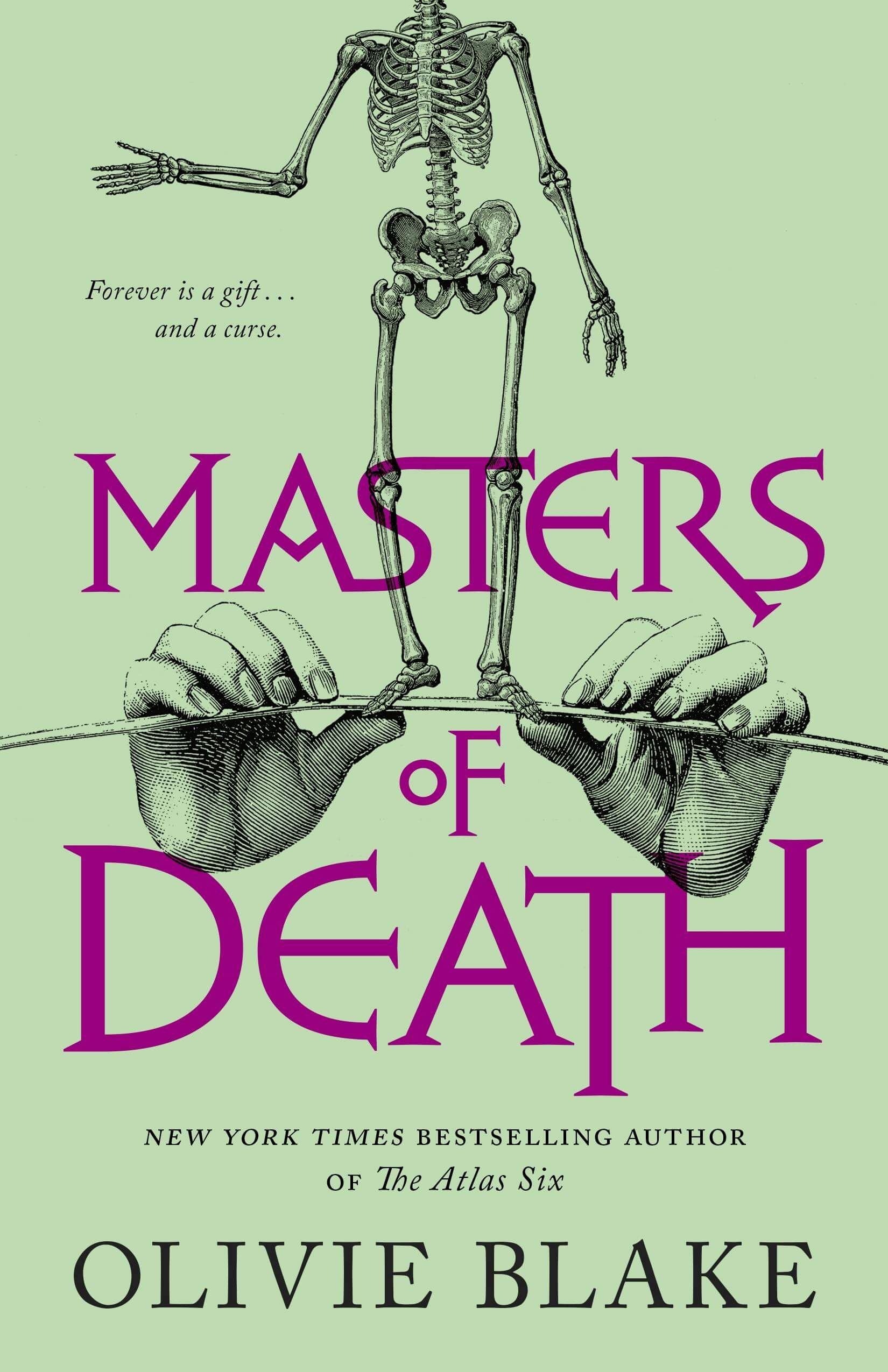
Jenna: One of my spooky reads for the month of October was Olivie Blake’s Masters of Death. This book immediately caught my attention at the bookstore with its minty green cover and purple-lined pages—because, yes, I do judge a book by its cover. Anyway, Masters of Death features a hodgepodge team of supernaturals, creatures, and immortals who must save the world from certain doom. One of these creatures is the godson of Death, another is an aswang, which is a type of vampire from Filipino folklore, and then there’s an angel, a reaper, a goddess, a demi-god, and a ghost. Plus some fairies and whatnot.
Blake finds the commonalities among various folklore and mythologies to build a complex plot that is admittedly hard to follow at times—but also that seems par for the course when we are talking about deities and millenia. To me, this complexity felt befitting and not unnecessary, and is highlighted by the way in which Blake writes with prologues, interludes, and so on. I recommend it for any mythology and folklore geek.
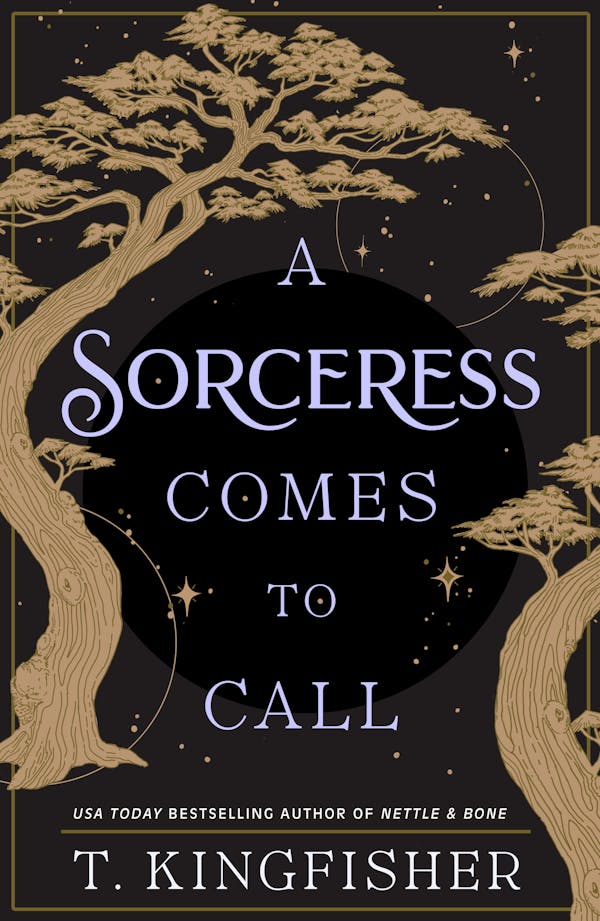
Paulina: Before I get into my blurb, Jenna’s rec sounds great! I’m always looking for more books with aswang in English!!!! Ok so, I know there’s already a blurb on WWAC about T. Kingfisher’s A Sorceress Comes to Call but it’s just so good that I wanted to rec it again. Oh, and also take this chance to be grateful that a friend called my attention to Kingfisher’s works. Although I love fantasy and reading (potentially obvious as I am writing on WWAC), Kingfisher’s books got me back into reading with my eyeballs and enjoying it for fun. As a graduate student, reading has equaled work for so long that picking up a novel to read with my eyes always reminded me that there was an academic book staring at me from my shelf that I hadn’t read yet. However, in the years since a friend gifted me Paladin’s Grace, I have read more books by Kingfisher than all the combined novels I read in the five years preceding it. On top of that, I always want to talk about them when I finish them! After Paladin’s Grace, the first in a fantasy romance series, whenever I pick up a new Kingfisher book I know I’m in for a good time. Each work renews my joy of reading and feeds an urge to stay up late to finish a good book (while simultaneously being sad when it’s over).
Whenever I pick up a new Kingfisher book I know I’m in for a good time.
Which is exactly what happened with A Sorceress Comes to Call. This latest work has all the elements of a well-crafted horror story, though as pointed out by Emily, it’s not technically horror. Insidious magic, fear of people not believing your experiences, and the realization that it’s the person—not the magic—you should be afraid of all come together into a book that I wish was a start to a series. I was so delighted by the way that Kingfisher weaved layers of lore; relaxed and realistic character; and an exploration of how the control of information (between people and in publishing) influences our understandings of possibility and reality that I want to see more of the world that Hester, Cordelia, and those geese live in. As always, Kingfisher’s works are the sort of stories that make you think writing is easy, even when you know (having read many books) that no, the hell it is not. So I encourage folks to grab A Sorceress Comes to Call or Paladin’s Grace or really any Kingfisher if they’d like something cozy, scary, fun, and joyous to read.
Emily: Hooray, more Kingfisher fans! I recently read Greenteeth, a debut by Molly O’Neill, largely because it had a blurb from T. Kingfisher on the cover. Greenteeth is about a lake monster, a Jenny Greenteeth, who teams up with a local witch and friendly goblin traveling salesman to rescue her local village (and, it turns out, all of England) from a massive threat. At first, Jenny is lonely in her pond and just pleased to make friends with Temperance, the witch thrown into her water to drown. Soon enough, however, Temperance makes Jenny understand how problematic it is that she was thrown into the pond to begin with, and together they set out to make things right. They are joined by Brackus, a goblin trader, as they embark on a classic quest, getting three objects that they believe will help them defeat the threat.
The fairy tale quest format is very familiar, of course, but one of the major things that makes this book so cozy is the strong bonds between imperfect, lovable characters. It will indeed appeal to fans of T. Kingfisher. Greenteeth will come out from Orbit on February 25th.
Alenka: I was so certain I read The Palace of Eros by Caro de Robertis because it was in a WWAC Reads but I didn’t see it, so here we are! The Palace of Eros is a queer, trans and arguably intersex reimagining of the tale of Psyche and Eros. Psyche is the youngest of three daughters, and she enjoys a carefree childhood until she’s asked to deliver refreshments to a marriage inquiry meeting for her two older sisters. At the meeting, the men ask Psyche to stay and sit, and their leering at her beauty explodes into a horrifying situation. Men travel frantically to see Psyche, and her father, initially feeling trapped by the rules of hospitality, searches for ways to facilitate the staring. When his boasts that Psyche is more beautiful than Aphrodite reach the goddess herself she dispatches her daughter, Eros, to enact justice against Psyche. Eros, however, falls immediately in love and finds a way to whisk Psyche away—away from the men, away from Aphrodite’s eyes, and away from past traumas that still plague Eros—in hopes that they can be together.
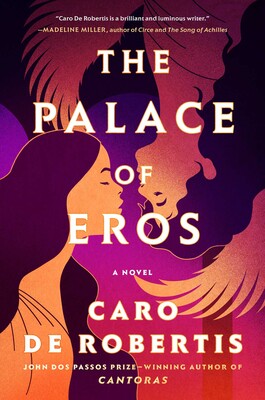
The Palace of Eros is perfect for fans of Madeline Miller, with its themes of addressing the horrendous historical treatment of women in Greek literature and examining queer love from Greek myth. de Robertis’ prose is vivid and beautiful, and the novel largely focuses on Psyche and Eros’s interiority—other gods and family members are characters, but this is a story about their personal evolutions. I have seen reviews discussing Eros as a trans character, which is a very valid read, but they are also easily read as an intersex character—or both—and it feels like a misstep to ignore that perspective. There are so few intersex characters in literature, and Eros is such a beautiful, complicated goddess. I was especially interested in her relationship with her mother, and eagerly awaited their scenes together toward the end of the novel as they had to confront Aphrodite’s bitterness and jealousy as it conflicted with Eros’s desperate need to be deeply, wholly, romantically loved.
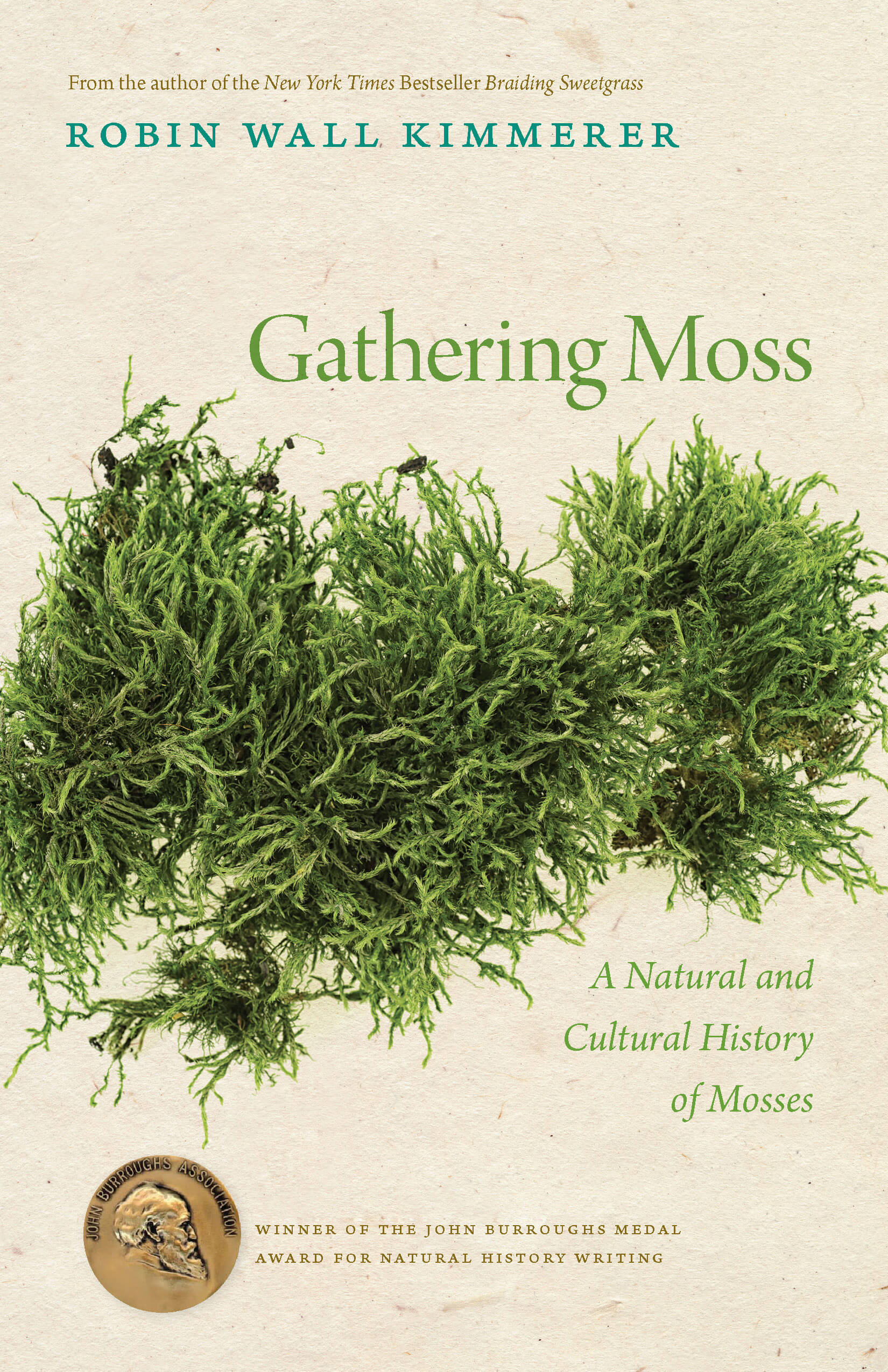
Kathryn: Gathering Moss: A Natural and Cultural History of Mosses is a slim collection of short essays by Robin Wall Kimmerer, a botanist who writes about the connections between plants and people. Originally published in 2003, Gathering Moss is the bestselling author’s first book, yet its observations on environmental resilience are still critically relevant to the 2020s. Kimmerer narrates her research trips into the woods while sharing the joys of careful observation and emphasizing the value of applying indigenous wisdom to modern science. I also appreciate the blistering salt Kimmerer scatters in the essay “The Owner,” in which she recounts her experience of being hired as a consultant by an ultrawealthy homeowner who destroyed acres of natural growth in order to create an “authentic” moss garden. If you’re searching for a respite from the tense political climate, Gathering Moss is a beautiful book that can help remind you that slow and small actions are just as important as big and flashy changes.
Emily: I love Gathering Moss, too! It was the first of Kimmerer’s books I read, back in 2020, and now she’s on my list of immediate reads, as soon as I find out there’s a new book coming from her. Wildly different from Robin Wall Kimmerer in content, Libba Bray is also on that list for me!
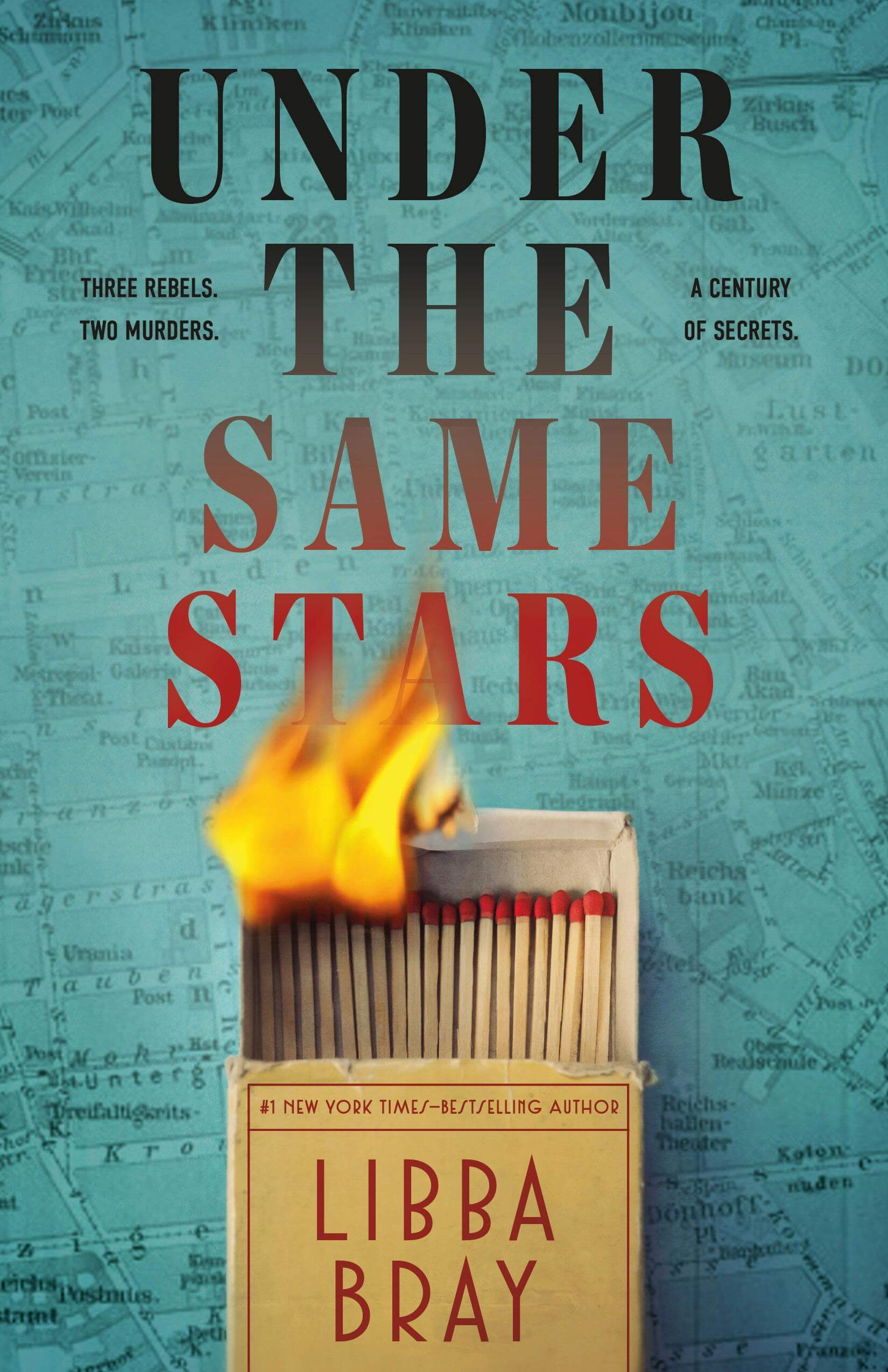
I just read Under the Same Stars by Libba Bray, and I think it is the best thing she has ever written. I am aware that this is a high bar, since she has both New York Times bestsellers and a Printz award winner to her name, but I stand by it.
In Under the Same Stars, we follow three teenagers at different points in history: Sophie, a sweet and fairly immature girl in a small town in Germany in the early 1940s, as her friends and neighbors support Hitler more and more. Jenny, an American with conservative parents in 1980s West Berlin (they’re there for her father’s job), discovering punk culture and various ways of thinking about freedom. And Miles, home alone in Brooklyn in the early days of COVID lockdown in Spring of 2020, as both his moms are stuck elsewhere.
As each of these characters and their friends and families struggle through these crisis points, the ways they discover that they are interconnected highlight how all of us are interconnected, and how all of us can resist injustice, and totalitarian regimes. I cried multiple times and left feeling fortified. Under the Same Stars will come out from Farrar, Straus and Giroux on February 4th.
Jenna: Oh, I have loved Libba Bray since Going Bovine, so I will be adding Under the Same Stars to my TBR. I have two more recommendations for the holiday romance readers out there: Deja Brew by Celestine Martin and The Nightmare Before Kissmas by Sara Raasch.
Deja Brew is as cozy as it sounds. A MF, alternative timeline—part of series, but can be read as a stand-alone (though I plan to read the rest now that I have read Deja Brew). It’s low stakes with witches and other creatures in a contemporary, small-town setting. The lead is a plus-sized black witch trying to find the next chapter in her career and life when she happens to meet a sexy magician along the way. It brought me joy.
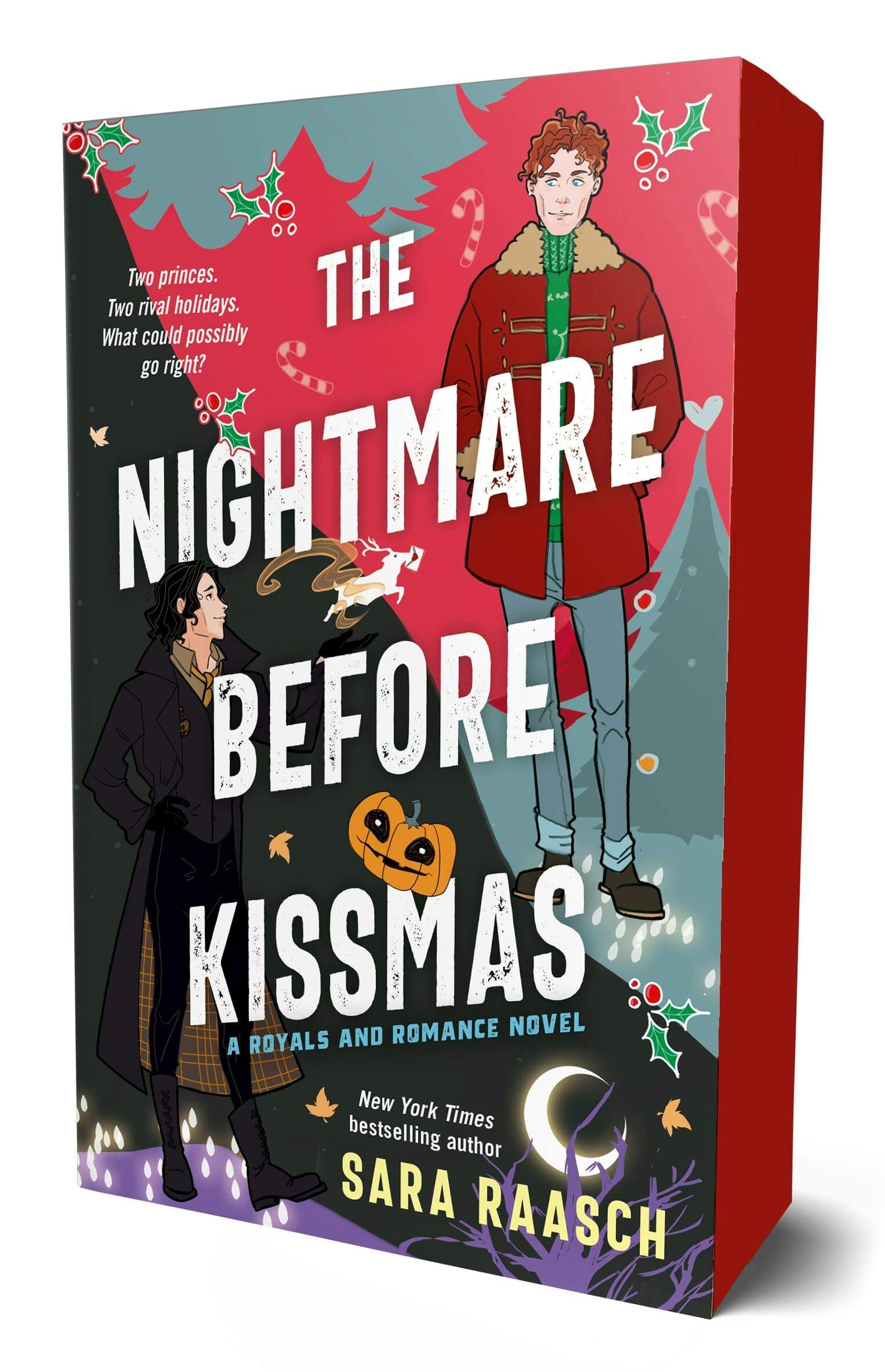
So, like Olivie Blake’s Masters of Death, The Nightmare Before Kissmas attracted me with its colored book edges—this time a festive holiday red. The not-subtext-at-all Nightmare Before Christmas concept also helped. It’s a M/M romance where the holidays have princes and courts, and lo and behold, the Prince of Christmas and the Prince of Halloween fall in love which clashes with the King of Christmas’s, AKA Santa’s, plans to take over the other holidays. It’s a delightfully silly premise that manages to raise questions about capitalism, as well as weaving in themes of grief. A highly recommended escapist romp as the author known for her high fantasy YA novels intended.
