

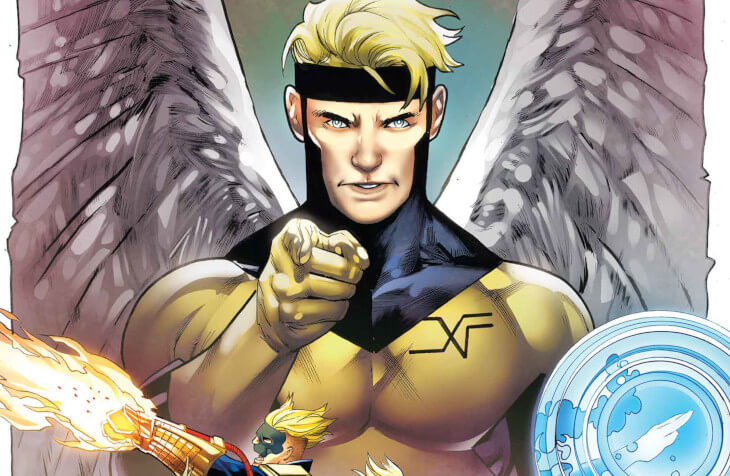
In X-Factor #1, Angel leads a new iteration of the group, this time recruited by the US government and a social media company. As mutant and human tensions continue to rise, the new team demonstrates that they’re not really up to the task of protecting pride and country. But with fame, fortune, and power up for grabs, they can hardly back down. Question is, can they put their money where their mouth is?
X-Factor #1
Mark Russell (writer), Bob Quinn (artist), Jesus Aburtov (color artist), and VC’s Joe Caramagna (letterer)
Marvel Comics
August 14, 2024
I’m getting back into the X-Men comics with the “From the Ashes… A New Beginning” series. I’m not the most consistent reader of comics, and though the House of X/Powers of X series was supposed to get me back in the saddle, I fell away too fast and then was completely unable to catch up. Now, I’m determined to hang out with my favourite superheroes. So here I am, writing about X-Factor.
In X-Factor #1, the fall of Krakoa has sent global governments scurrying to create their own mutant squads, in the hopes of defending the nations that, historically, have turned their backs on the plight of mutantkind. But these nations (or maybe just the US, that’s not clear in the book) don’t just want any mutants fighting for their country. No, they want the good-looking, famous, and marketable ones. And who’s more marketable than Warren Worthington III/Angel?
The themes of X-Factor are very relevant to our times. People are addicted to social media and are easily swayed by what and whom they see on these platforms. Every moment in our lives appears to be measured by likes, while our relationships have turned into parasocial transactions from which we hope to eke out a few extra cents. X-Factor #1 plays into this reality. The social media angle is doubly heightened by the prejudices and fears people in the book have about mutants, which is also a reflection of the constant prejudices the real world has towards anyone who differs from the “norm.”
The concept of the book is thrilling and frightening. But then the execution undermines all that hard work.
Writer Mark Russell says in the afterword of X-Factor #1 that his story is inspired by the cult of celebrity, and how it often blinds people from seeing the disparate experiences people face when they’re not the rich and famous members of their group. This is a poignant topic to explore, but why did Russell choose to write it in such a chaotic, irreverent, and comedic style? He says, in the afterword, that he was surprised at how funny it turned out. Yes, us too. The tone is incongruous with the subject matter, and frankly, makes it hard to take the book, or what it’s telling us, seriously.
The toughest topics are sometimes best couched in comedy, but here, it feels like the creative team are punching down on the characters embroiled in this charade, not necessarily the propagandists or the groupies. I don’t understand this choice. The afterword was more insightful about the themes explored than the actual book. Why mock the mutants so desperate for fame, money, and power, that they’re signing up to join a government strike force despite not having the skills to match? Isn’t that the story? These people lost their safe haven, and now they’re being dragged into a war that’s not even their own, one that’s making other mutants turn against them. That’s such a devastating indictment of how humanity treats mutants—cast them out, destroy what they have, and then welcome them back as long as they’re useful to humans again.
Even the art appears to be laughing at us—random supporting characters are perfectly drawn, but the X-Factor team all have cartoonish faces. Everyone has overly exaggerated expressions as well. I’m fine with Bob Quinn having a particular artistic style, but his style, like the tone of the story, is incongruous to what the book is about. But then again, Quinn’s art works perfectly for the book as is—an irreverent comedy. Jesus Aburtov’s colours, however, cannot be faulted. This is a vibrant book, and his colours make the suits pop off the page.
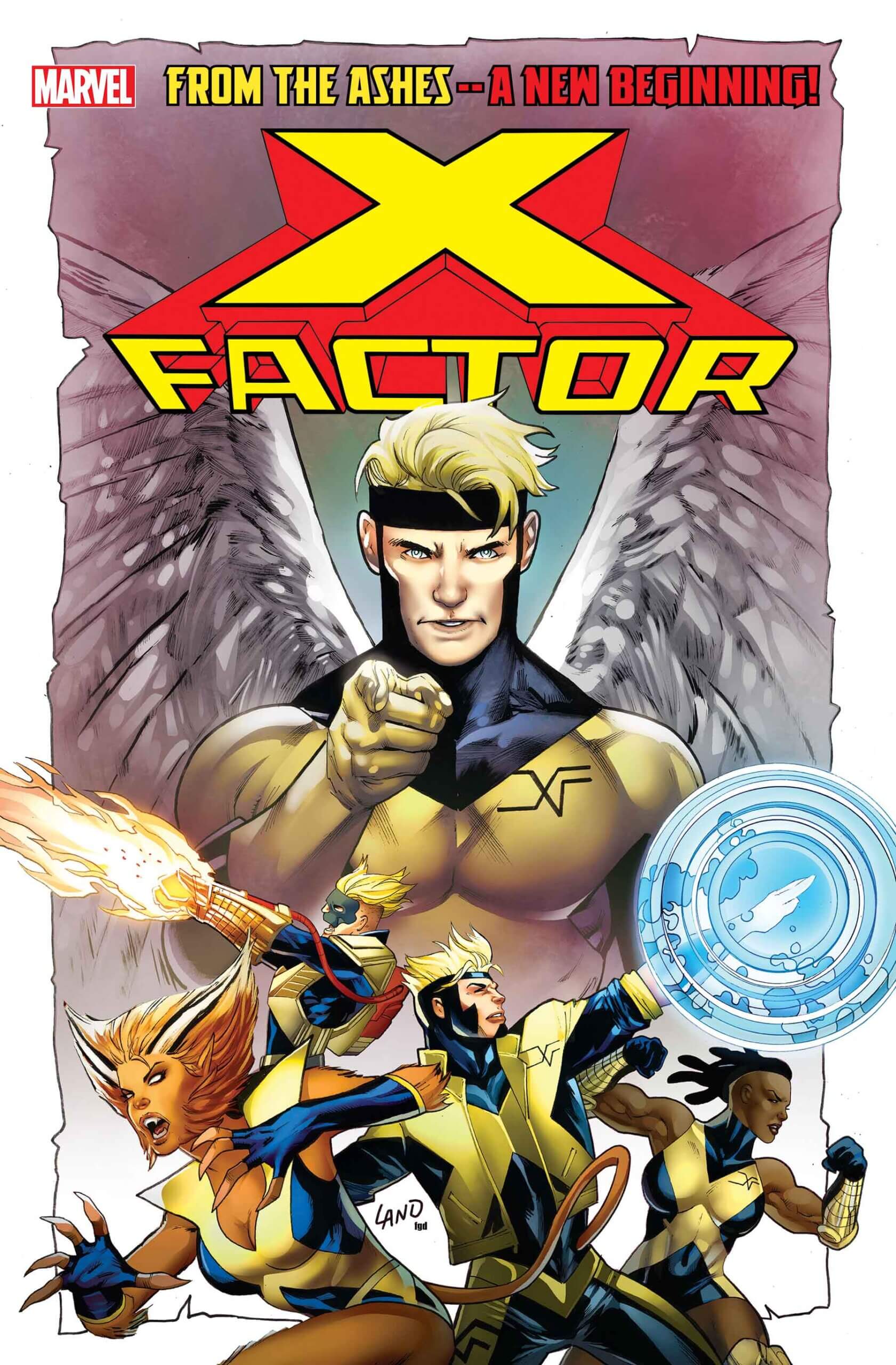
I’ll confess, I was intrigued by the title because it featured Angel prominently on the cover. Angel’s an original X-Man, and he founded X-Factor in its first iteration. I feel like he’s never quite got his due since the first class was dismantled. I mean, he’s a rich white cis dude, so it’s not like there’s any dearth of characters like him getting page-time, but I’ve always had a soft spot for Angel and wished he was a little more multi-dimensional on the page. Would X-Factor #1 set things right?
Not really. Angel is so blasé about being a sell-out; he’s drunk the Kool-Aid and knows how to work the red carpet and bandy about the publicity statements. I don’t recognize this man as the hero I once read. Yes, Angel’s always had a relatively privileged life, but he was kind and wanted to fight and do the right thing for his people. I guess this is what I get for dwelling too much on the past—perhaps this is the Angel of today, not the one of yesterday. I will say, however, there’s probably some character development in the offing for Angel, so I shouldn’t write him, and the creative team’s plan for him, off just yet.
I won’t get too much into the rest of the team as they have tiny roles, but I think making the new and sole Asian character in the book, Daniel Choi/Xyber, a walking joke, was the wrong move. You can have comic relief without poking fun at a person who’s obviously out of their depth.
The other lead character in this book is Alex Summers/Havok. I think Alex and Angel could have an interesting dynamic—assuming they do interact—because they’ve both been long standing members of different X-Factors, and they have very little in common other than looking like duplicates of one another (I’d love for someone to notice that on-page). I sense that Alex might be the grounding force of the book, or the contrarian one, but I’m not sure if Russell and the team will be able to move beyond the facetious to examine what’s troubling Alex, and by extension, mutantkind.
I’m desperate for this book to take itself seriously, which is possible even with a great deal of humour, but I think they might have written themselves into a corner. They also need to pick a lane with the storyline—as a first issue, X-Factor #1 doesn’t necessarily introduce a bunch of plots, but rather, throws them at us. I didn’t know what thread to process before something new came up. Also, a lot of the context of what this book is about is missing; the promo materials helped me piece it together, but that’s the writer’s job. So, really, X-Factor #1 doesn’t do itself many favours by trying to be everything. Can the rest of the series find the right balance?
