
China, 1345. A peasant girl from the Zhu family has, between drought and bandits, lost almost all of her relatives: only her brother Zhu Chongba remains. A fortune teller has predicted vastly different fates for the two of them, seeing greatness in the future of the brother – who is due to attend a monastery and become a monk – and simply nothing for the sister.
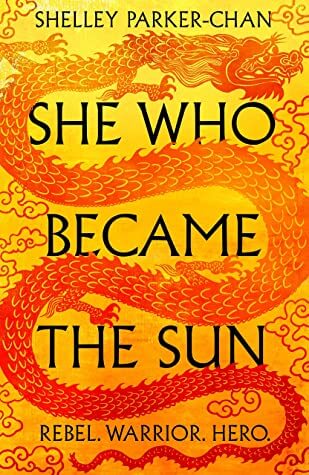
Yet, of the two orphans, it is Chongba who dies. His sister (her birth name never disclosed by the novel) adopts his identity and takes his place at the monastery, carefully hiding her sex from the other monks. From here, the story follows Zhu’s gruelling period as she adapts to monastic life, dealing with strict teachers, a surprisingly permissive, alcohol-swigging abbot, and a close friend in fellow novice Xu Da – who comes to realise, and to keep, her secret.
When the monastery is burnt down by Mongol warriors, Zhu – still accompanied by Xu Da – falls in with the Red Turbans, a rebel movement campaigning against China’s Mongol overlords. This is just the start of a journey into the corridors of power: perhaps there is greatness in store for Zhu Chongbin after all – even if this Zhu Chongbin is an assumed identity, haunted still by the possibility of being a nothing-girl.
Readers familiar with Chinese history will find the above summary ringing a few bells. The first book in a proposed duology, She Who Became the Sun is a radically revisionist take on the life of Zhu Yuanzhang, who overthrew the Mongol Yuan dynasty to establish the Ming dynasty and reign as emperor from 1368 to 1398. As well as positing that this personage was secretly a woman – or, at least, assigned female at birth, the character’s gender-journey having not yet concluded – the novel offers a vision of history touched by the supernatural. Zhu has the ability to see ghosts, and is haunted by the ever-growing ranks of her departed contemporaries:
It could have been them, alive again. Her father and brother standing in the moonlight. But as instinctively as a new-hatched bird knows a fox, she recognized the terrible presence of something that didn’t—couldn’t—belong to the ordinary human world. Her body shrank and flooded with fear, as she saw the dead.
The ghosts of her father and brother were different from how they had been when alive. Their brown skin had grown pale and powdery, as if brushed with ashes, and they wore rags of bleached-bone white. Instead of being bound in its usual topknot, her father’s hair hung tangled over his shoulders. The ghosts didn’t move; their feet didn’t quite touch the ground. Their empty eyes gazed at nothing. A wordless, incomprehensible murmur issued from between their fixed lips.
Also on the scene is a child purported to be the reincarnated Prince of Radiance, “the material incarnation of light”, who signals the beginning of a new era of peace, culminating in the arrival of the Buddha Who Is to Come. Needless to say, this is an individual poised to disrupt the already delicate balance of power.
She Who Became the Sun stands out amongst this year’s Best Novel finalists at the Hugos. The line-up shows the lingering influence of pulp, be it the derring-do of P. Djèlí Clark’s A Master of Djinn or the Campbellian hard SF of Andy Weir’s Project Hail Mary, and pulp storytelling is prone to meandering: its core structure is designed to lead the reader from one cliffhanger to the next (a similar quality can be found in another finalist, Ryka Aoki’s webcomic-style Light From Uncommon Stars).
But Shelley Parker-Chan’s novel bucks this trend entirely. Instead, she gives us a tightly-constructed novel that avoids putting a foot out of place, despite the story spanning eleven years and a cross-section of fourteenth-century Chinese society from an impoverished peasant village to the throneroom of the Great Khan.
As well as being stuffed with rich historical detail (and garnished with its supernatural qualities) the novel is able to explore gender nonconformism within a rigid patriarchy. One way it does so is through the tried-and-true technique of making its antagonist a distorted reflection of the protagonist. The Mongol general, Ouyang, is introduced – as seen from the point of view of Zhu – as a girl whose face “brought to life every description of beauty that Zhu had ever read in poetry” despite there being “no femininity in that lovely face at all.” We later learn that this character is not a woman but a eunuch, owned by a Mongol lord before rising through the military ranks.
The novel switches back and forth between Zhu and Ouyang as point-of-view characters, emphasising both their similarities and their ironic differences. While Zhu successfully hides her sex, Ouyang’s status as a eunuch is common knowledge and the source of much backbiting and contempt. When Zhu uses her magic against the Mongol forces, aftershocks run through the psyche of Ouyang. And Ouyang, like Zhu, is tormented by thoughts of what fate has laid out for him.
As intriguing as Ouyang and the power-politics that surround him may be, Zhu remains the central character, and the whole of the broad, sweeping narrative exists to forge her. The girl becomes a woman, even as she masquerades as a man; she learns to present as a masculine warrior in public, and as a bearer of the erotic feminine in private.
She also maintains a streak of cold pragmatism. As a novice monk, she escapes trouble by framing a teacher for wrongdoing; as a rebel, she holds life and death in her hands. Without giving anything away, the novel’s finale makes clear what measures she is willing to take in her struggle against the Yuan dynasty.
As the first half of a duology, She Who Became the Sun inevitably shows signs of being an incomplete narrative. Even so, the novel remains a substantial addition to the modern fantasy landscape, reworking the richness of its historical setting into a work of captivating imagination.

