

Poltergeist’s trailer promised a terrifying tale of TV static and ghostly hauntings. What it offered was something vastly different — but I loved it anyway.
The first time I heard of Steven Speilberg’s Poltergeist was when my older sister whispered down to me from the top of our bunk bed. I asked what Poltergeist was about, as she had just been given the privilege of staying up past bedtime to watch it with my parents. Her response was simple but horrifying. “It’s a scary movie about a ghost that’s going to kill you,” she said.
For years, I carried an extremely irrational fear of that film with me. I would panic when I saw static on the TV. Skimming through the family DVD collection, my eyes would race past its case before I got too spooked.
Around the sixth grade, I finally plucked up the courage to look up the Poltergeist trailer on YouTube. I was an anxious preteen, most likely due to years of torment from the top bunk. Horror movies were probably one of my worst fears, but I was determined to see if my imagination was worse than reality.
I would not end up watching Poltergeist until I was 17 years old.
The trailer for the film deserves the cliché use of the word “spine-chilling.” At the start, it instills a false sense of security, with soft theme music playing as the camera pans widely over suburban rooftops and neighbors taking out trash cans. The children laugh at the table and the mother rolls her eyes as she picks up toys from the floor. Suddenly, the music shifts. The lights flash. The terror begins.
The trailer preys on the imagination of its audience to create most of the horror. Each shot is only teased for a second or two, cut back-to-back quickly and featuring horrifically small details — like floating objects and bright lights — to create a sense of unease. It all comes to a full climax with a series of bangs and Dana (Dominique Dunne) letting out a blood curdling scream of, “What’s happening?!”
The trailer was just creepy and tantalizing enough to lure viewers to theaters. Hundreds of horror fans flocked to see the film, which was one of two Spielberg-produced films premiering in the summer of 1982. The film was a box-office success at its release, grossing over $76 million dollars.
A few Halloweens back, I turned on Poltergeist while visiting my parents and was surprised to find my mom rolling her eyes. Out of curiosity, I asked her what she thought when she saw the film in theaters. She explained that she and my father had been excited by the trailer, and went to go see the movie right when it came out.
“I just remember walking out and thinking it was so… corny,” she said.
I found that this reception was similar among lots of their friends, and that the film got a mixed response from viewers. Film critic Roger Ebert called the film “ridiculous,” while Gene Siskel wrote that “the film isn’t good enough to be truly frightening.” So what happened?

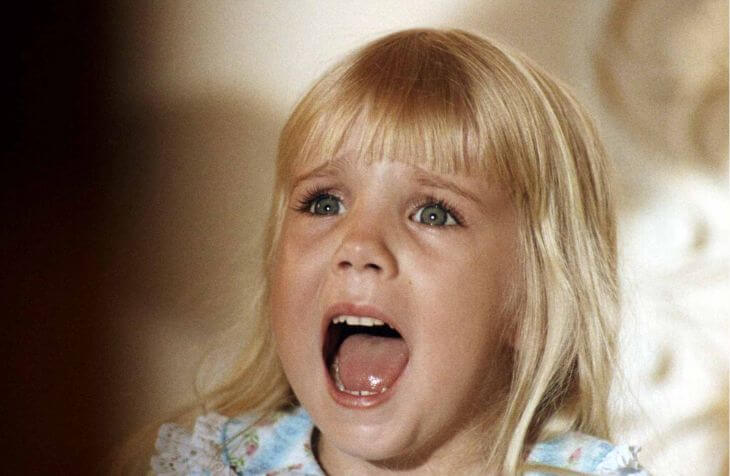
Poltergeist follows the story of the Freeling family and their chilling encounters with the afterlife. Steven (Craig T. Nelson) and Diane (JoBeth Williams) live with their three children and golden retriever in the beautiful southern California suburbia of Cuesta Verde. What starts as an exciting experience in a lovely new home quickly turns to disaster and heartbreak. Following the disappearance of their youngest daughter Carol Anne (Heather O’Rourke) into a mysterious portal, the Freelings turn to the help of parapsychologists and exorcists to restore order to their home.
Though it was advertised with plenty of jump scares, the film was actually much more than a story about a haunting. In fact, it turned out to have much more depth than a traditional ghost story. Poltergeist is the story of family bonding during a time of crisis and change, and it proves that love can win over any peril.
Each family member supports each other through fear, discomfort, and matters of life and death. Death slowly begins to infiltrate the course of the movie, peeking its head in at the beginning as Carol Anne tearfully buries their beloved family pet bird Tweety while her family watches over. Poltergeist turns its spotlight on the afterlife, a subject that we all struggle to grasp or even agree upon. The Freelings now face an opening to it in their closet, but they still live together and try to rationalize their experience as much as they can. But they’re definitely all sleeping downstairs and keeping the door locked.
At the head of this all is Diane, the matriarch of the family. From the open communication and mutual respect between herself and her children, to climbing into the portal to the afterlife to save her child from evil spirits, Diane is not only determined to keep her family safe, but to bring them closer together in the process.
Themes of growth and change are prevalent throughout the film. Middle child Robbie (Oliver Robbins) overcomes many different fears through his experiences and the wisdom from his family, and learns to rationalize a lot of the fears he carries as well. The feeling of redemption and pride is present as Robbie tearfully rips apart his evil toy clown with own two small hands, screaming, “I hate you! I hate you!” The family continuously guides each other through the unknown as invisible forces growl, bite, and taunt at them.
Running alongside the surprising family focus is the overall goofiness of Poltergeist, which throws the tone of the film in several different directions, often even undermining the scares. There’s Steven, the dorky dad who reads a Reagan biography with a joint in hand and battles the neighbor via television remotes. The children bicker and name-call at the breakfast table. Diane relaxes into her bathtub to dye her hair after being bullied by her teenage daughter, despite the fact the spirits in the home have nearly killed her daughter and herself. Maybe this is all meant to make Freelings look like a normal family, but the execution backfires and makes the film seem somewhat unbelievable.
To be sure, many moments of the film are still incredibly terrifying, like Carol Anne’s smile as she shyly responds to the questions coming from the television static, or Diane’s gasp of horror as the chairs stack themselves behind her back. While the special effects were not entirely convincing and now pale in comparison to more recent horror films like Hereditary and The Conjuring, the talented cast carried the movie. Undoubtedly, the first half of the movie, before the spectral presence begins to manifest in the physical world, is the most chilling to view.
The use of suspense and the ability to infect an imagination is reminiscent of Alfred Hitchcock’s films such as Psycho and The Birds, and a big reason why Poltergeist still carries a great amount of terror with its name. This is most definitely why I felt so much fear while watching the trailer. And even if the physical presentation of the monsters, ghosts, and skeletons were taken away from the movie, it still manifests internal horror — in other words, “the less-you-see-the-more-you-get” thrills — like no other. Spielberg’s Jaws had a similar lasting effect, purely due to the fact that they couldn’t get their shark to work properly for filming.
I also appreciate that Poltergeist stands out in comparison to the other horror films released in the same year, such as gruesome fan favorite Friday the 13th Part III and Halloween 3. The focus of those films heavily relied on the build-up of lore from past films, and they reveled in an abundance of fake blood and violence. With these two trilogies being on the calendar for releases that year, the Poltergeist trailer may have been cut to appeal to the fans of those franchises. Clearly some of those fans were then disappointed by Poltergeist. But its popularity endures regardless, and it continues to influence the horror genre all these years later.
Ultimately, while the film may not be what the trailer promised, it does offer more than a good scare. It offers the story of a warm family relationship, the uncertainty of the afterlife and many lessons in love. Despite its flaws, I still consider Poltergeist one of my favorite horror films. Now when I visit my parents and skim through the DVD cases, I feel warmth as I look at Poltergeist among their collection. I might even suggest an out of Halloween season watch.
Poltergeist is celebrating its 40th anniversary this June, and several screening events are planned to take place in September.

