

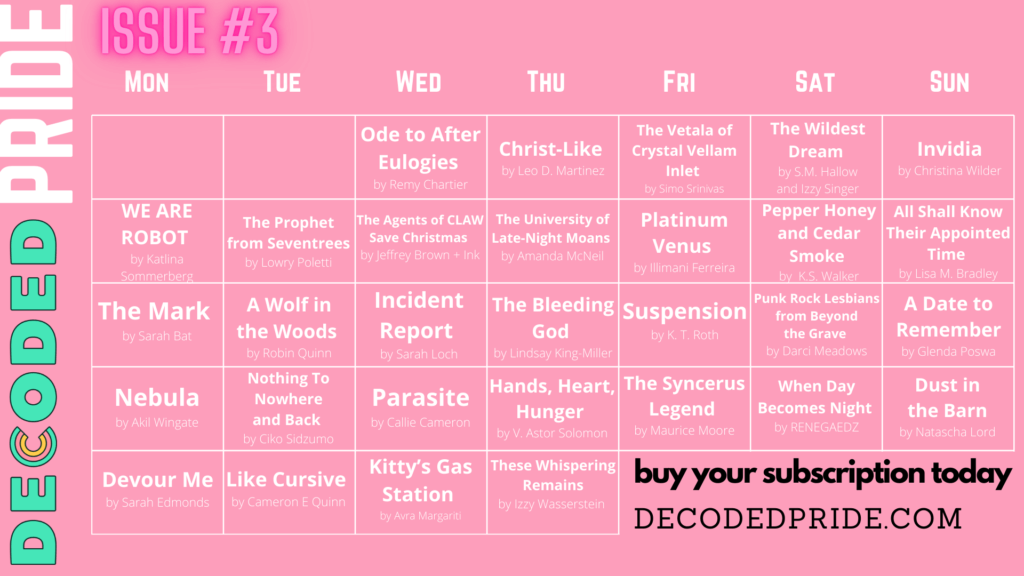
What better way to celebrate Pride than with a story-a-day anthology of queer science fiction, fantasy, and horror created entirely by queer authors? Now in its third year, Decoded Pride brings together 31 queer and trans creators sharing one short story a day through the month of June. Subscriptions cost $14.99USD, giving access to the daily dose of exploring queer and trans identities, finding truth and heartbreak, laughter, tears, and joy. Through the subscription fee — which works out to just 50 cents per story — creator compensation is prioritized and, once the series concludes at the end of June, subscribers will have access to the full PDF file.
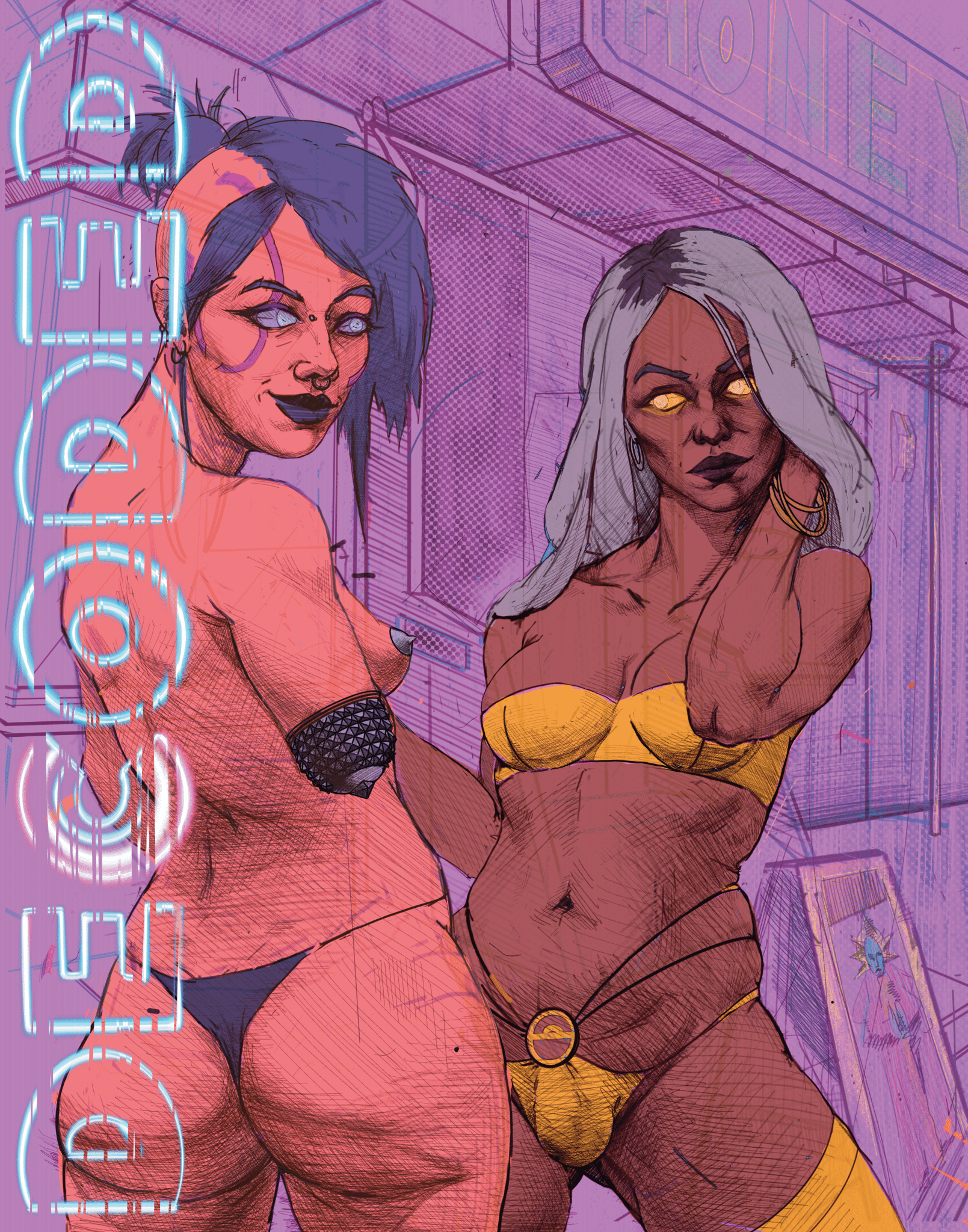
WWAC is excited to ask a few questions of the Decoded Pride editorial team — whom some may recognizable from the Bitches on Comics podcast — and to reveal “Gridlock,” this stunning cover by Sinead Murano-Kinney.
What was the inspiration for the Decoded series, and how has it evolved over the three years since its inception?
S.E. Fleenor: We started Decoded Pride because we wanted to showcase the queer and trans stories and comics that queer and trans people want to create. At the same time, we wanted to reclaim Pride, not as a corporate money grab, but as a chance to uplift, celebrate, and pay creators to create the comics and stories that might struggle to find a home elsewhere.
By and large, most editorial teams are not queer and trans–and even when they have a queer or trans person, they aren’t 100% queer and trans, but Decoded Pride is. We wanted to create this space just for us where the edits creators receive don’t denigrate, misinterpret, or diminish the ways queer and trans people talk about our varied communities. Our creators don’t have to worry about making their work palatable to a cishet audience–though we really hope allies will read these stories, too–because we aren’t editing them for that purpose. Instead, we focus on working together through a collaborative editorial process to help creators identify ways to strengthen what already appears on the page.
Sara Century: In everything we do, there’s a touch of rebellion to it. With our podcast Bitches On Comics, we have developed a space where we focus more on talking with people who we feel have interesting things to say as opposed to creators whose comics are topping the charts, though there is crossover there. Similarly, Corporate Pride is an issue, though I work as a freelancer at Adweek and many brands have grown a lot more thoughtful with their approaches. The fact is that even when I see a brand with a wild amount of money behind them supporting queer causes, as necessary as that is, they can always walk away. We can’t walk away, it’s our lives, and we aren’t fiscally backed, and that financial restriction can be difficult, but it also frees us to be honest. It will always be vital for people like us to put out collections like this because some queer people are just a little weird. Some of us didn’t get a movie version of coming out, some of us haven’t met the love of our lives, some of us are nerds, or are poor, or have more to worry about, or have been problematic, or have loved someone who was problematic, and I think there has to be space for those less marketable versions of us as well.
Why a story-a-day format?
S.E. Fleenor: Queer and trans communities are not a monolith. We are diverse, complex, and nuanced across many different axes. When an anthology claims to be queer and trans, often there are a few voices being uplifted–and no shade, that’s what that anthology is trying to do! But we wanted to publish 30 stories and comics as a way of saying: there is no one way to be queer and trans, but rather, many! Plus, we had this vision of people waking up every day of Pride month and reading a story or comic directly from an independent queer and trans creator so that pride is filled with all that we can be.
Furthermore, in one month we publish as many (if not more) stories as some literary publications do over a year. It’s our way of staking a claim on Pride month, concentrating our efforts (we do so many projects under the Queer Spec banner!), and offering to our audience a daily take on queer and trans speculative fiction and comics.
Sara Century: It might change at a certain point as 30 is a lot to account for, but the heart of it is that every single day of June, regardless of what is going on for you, because we know that just because it’s Pride doesn’t mean you get a break from life’s problems, you have this thing that can just be you and a story. A little moment of peace on the bus, or unwinding at the end of the day. That’s the kind of thing that has saved me a million times in life.
How was the creative talent enlisted?
S.E. Fleenor: For stories and comics, we have an open call that runs for about two months during which we accept submissions. (You can view our call for submissions here. Even though it’s closed, we leave it live for reference for the future.) We share the call on our website and all social media sites, and are listed in duotrope, as well.
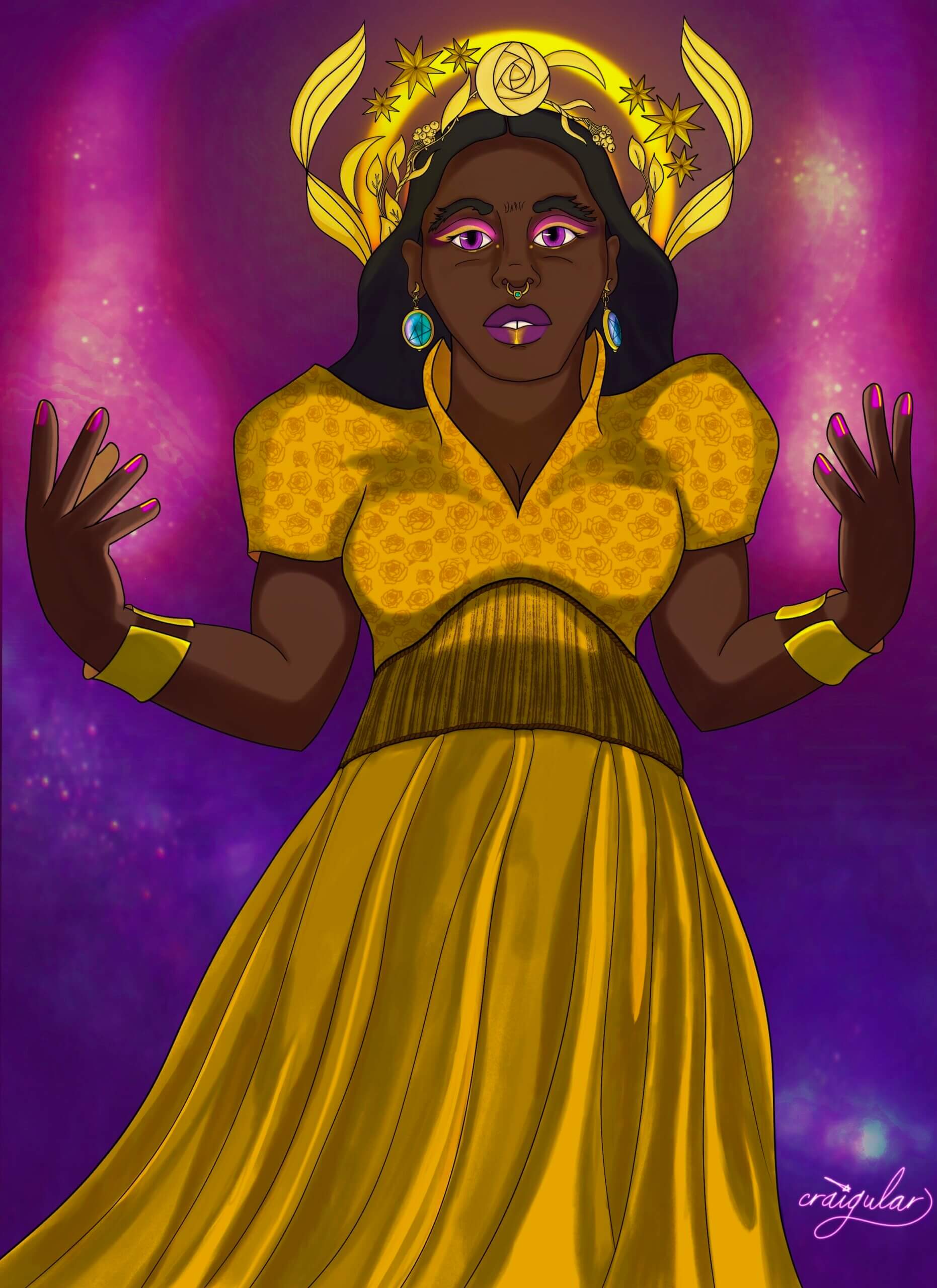
For Cover Art, we recruit queer and trans artists who are creating non-sequential art to read the submissions we’ve selected, think on queer and trans speculative fiction and queer and trans liberation, and send sketches for a few ideas they have. The editors select one idea from each cover artist and then the artist works on the cover and sends it to us for approval. We’ve never not approved of one, so it’s really just a fun WOOHOO moment!
Sara Century: We do as much as we can ourselves but we also have a lot of helpers in the mix who we absolutely could not function without, both on the page and behind the scenes. It’s important to mention because there’s the “make your own stories, publish your own books, do it yourself!” contingent and while I agree with a DIY ethos in theory, it always comes down to DIT, do it together. We do literally nothing as a single entity. We would fail if we did this in isolation.
What was the story curation process?
S.E. Fleenor: Our editorial team reads submissions and selects the submissions that speak to us. Unlike many anthologies or publications, we don’t have a specific theme for each issue, so we look for two primary qualities: making us feel something and having something to say.
If we had to identify a theme that has arisen this year, it would be thwarting tropes: queering the search for a perfect princess to marry and fighting evil, for instance, in “The Vetala of Crystal Vellam Inlet” by Simo Srinivas, turning the Chosen One narrative on its head, for instance, in “These Whispering Remains” by Izzy Wasserstein, and troubling the notion of love at first sight, for instance, in “Invidia” by Christina Wilder.
Priya Saxena: I’ve been a fan of Decoded Pride since the beginning, but this is my first year actually helping with the project. I was really impressed by the editors’ dedication to uplifting marginalized voices within the LGBTQ community such as writers of color and trans writers. It allows the anthology to showcase the true diversity of the community.
I was also pleasantly surprised by how many incredible stories featuring romance and desire between women we were able to include this year. I feel like even in LGBTQ-focused projects those stories can be kind of niche.
Sara Century: Choosing stories we want to publish is easy, but narrowing it down usually requires a 3-5 hour phone call in which we all go to bat for various entries and sadly say goodbye to the ones that can’t fit for whatever reason. That process is a lot more arbitrary than people might think, and comes down to questions like length and general subject matter rather than quality alone. I’m always amazed by the number of stories we can’t make work — we’ve had to turn down incredible work every single year, which I think for me is the best and worst part all in one. I love that there is so much remarkable queer writing out there and I hate that there are so few queer-focused publishers willing to take chances and give queer writers the space to get weird.
Subscribe to Decoded Pride #3 now to make sure you don’t miss a single day of the anthology.
