
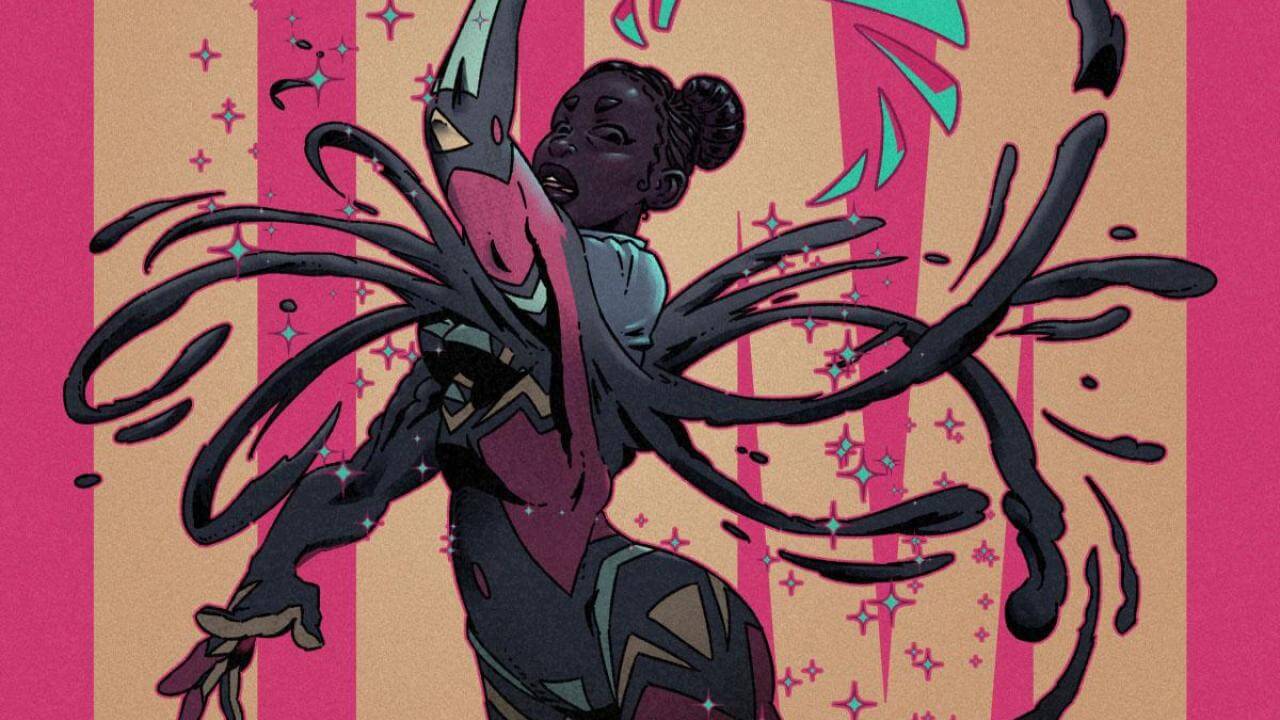
It’s rare to find a comic that literally makes you feel like your mind has been blown, that something has shifted permanently in your brain chemistry when you read it. But that was exactly how I felt when I first discovered buttercup’s stunning webcomic UM. The gorgeous, astrophysical tome is being published in print for the first time by Radiator Press and is currently looking to complete its funding goal of $10,000. The print edition comes from a storied collection of talent with both Steenz and Jamila Rowser on editing duties, translating the webcomic into an updated edition made for the print format. It’s an extensive and exciting project that represents buttercup’s first solo comic and one that should go down as the arrival of an exciting new talent who has the potential to change the way we read, make, and think about comics. To spotlight their incredible work and direct eyes to the campaign we chatted with buttercup over Zoom and Discord to dig into the origins of the comic and their experience adapting it for print.

It’s hard to put into words the experience of reading UM, but the official description from the Crowdfundr introduces you to the core concept. “UM is a magical girl comic about Eugenée, a Black, nonbinary, aspiring birth-worker who finds themself mixed up in a millennia-old conflict between the powers that be and a faction of cosmic, shamanic midwives.”
The origins of UM are just as unique as its creator. buttercup began to craft a plan to bring an epic poem to life in holographic and cinematic form while working at a website building startup called New Hive. “That abstract concept in my head really took root, and each step that I tried to take to facilitate it proved to be more and more impossible.” First it was going to be a video game, then an interactive experience, but the most important thing they wanted was to create a concrete narrative with rich themes. So they began to write a script. “I titled it “Quandary,” and it was just like a story about a bunch of weirdos living their lives, but with way more melodrama.”
When reading the expansive, beautiful, and dense pages of UM you likely don’t think of the MCU, but it was that massive Hollywood franchise that moved the project from the realm of slice of life into the superheroic tome it would become. “I had been watching the Marvel Cinematic Universe since its inception in 2008, so I had a special interest in that and the more that I wrote these characters the more bored I got. I’m not the kind of person who is really into slice of life stories, so I thought, ‘Oh, I should make this a superhero story!'”
Another early touchpoint was Sword Art Online, the Isekai anime that follows people stuck within a video game. But while buttercup doesn’t consider themselves a fan of that subgenre there was a version that could have pulled inspiration from that specific series with the characters playing through a videogame for an extended period of time while they aged in the real world. But the realization that Isekai wasn’t a space they wanted to explore led buttercup down a different path that was shaped by friends and their own passions and interests.
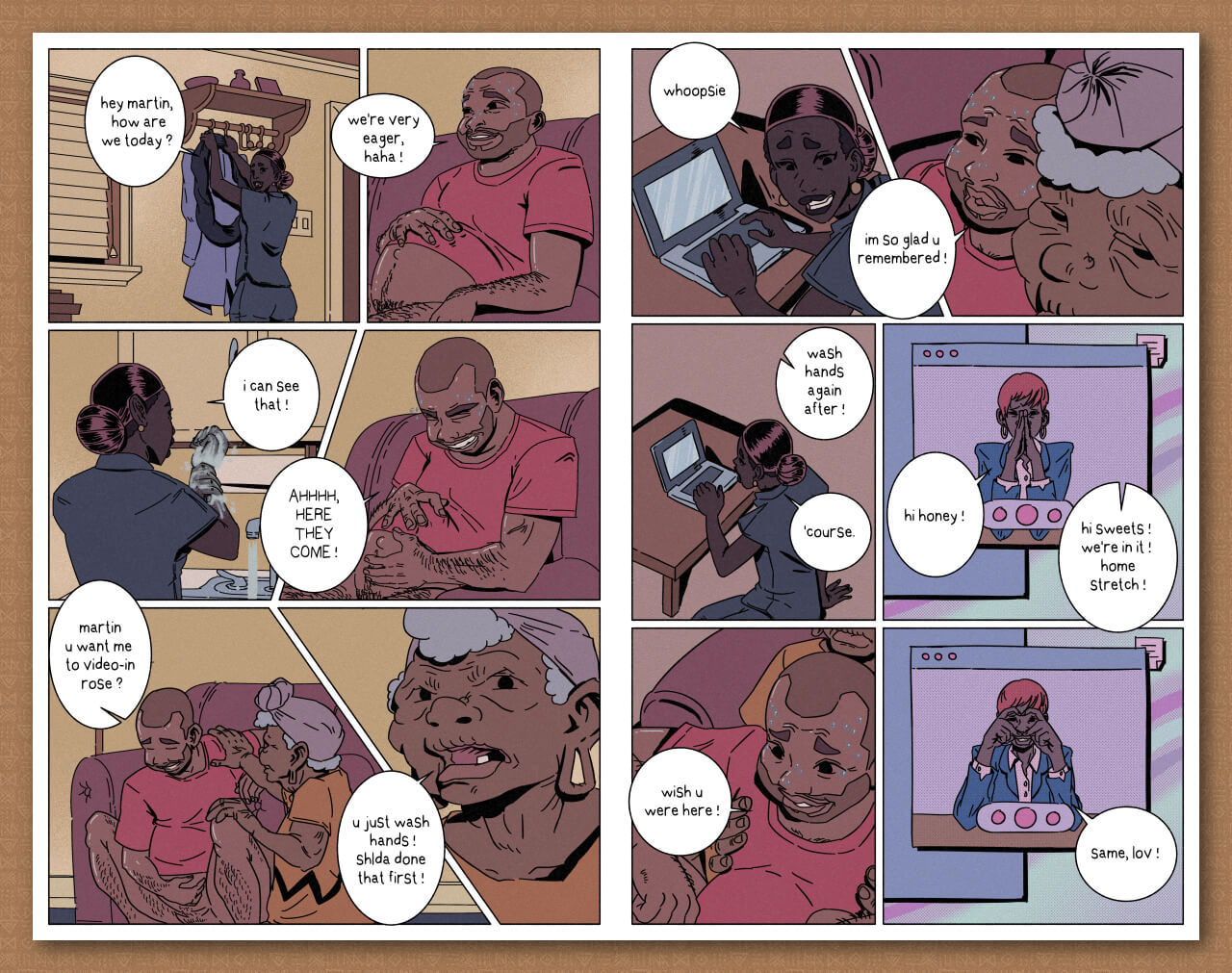
Ultimately it was a heartbreaking personal anecdote from a friend that really began to shape the world of UM. “At the time, I had a friend who was dark skinned, I think their family’s from Guyana. And they were telling me about how they went to private school as a kid and the kids at the private school literally were like, ‘Are you an alien?’ because of how dark their skin was. And I was like, ‘That’s devastating.’ And they were like, ‘Oh, yeah, tell me about it. I literally thought I was an alien till I was in my early 20s.'” It was a moment that reaffirmed something buttercup already knew. “I didn’t understand the material consequences of not having a lot of dark skinned people in media,” they explain. “But this is one of the concrete ones, right? It’s existential. This is a form of epistemic injustice, not knowing that you are part of the human race. And so I was like, ‘Okay, well, this is slightly changing the trajectory of the story.'”
At the same time buttercup discovered witchy Black circles on Facebook where conversations about herbalism and spells abounded. “I’ve not 100% bought into the mechanics of any of that stuff. But I think that the culture and ritual and the alternative forms of language and communication that are emerging out of that are foundational to the importance of maintenance of Black identity. You can see it and things like the Haitian Revolution, etc. So I got really deep in that community and realized that no one was ever talking about any type of pieces of fiction in a way that really vibed.”
The next ingredient was their love of both classical and quantum physics and, as they put it, “the mechanics of the cosmos.” Those passions inspired them to, “try to find a holistic way of combining all my thinking about how the world works and my actual understanding of physics into a magic system that can facilitate magic in a realistic world that also critiques imperialism and Abrahamic religions’ stranglehold on the Black community and addresses things that are completely invisible to the rest of society.”
As you might have grasped at this point, UM is a dense and stunning text that never underestimates its readers and works on many levels. The first is the accessible nature of a superhero story and buttercup’s stunning artwork that immediately draws the eye. But on further readings there are many things to take away that feel like we could still be discovering years down the line. “I want to reward observant readers without punishing those who are just here for the spectacle or melodrama. So there’s the surface level story and representation but layered underneath it there’s astrology, African religion, quantum physics, and more.”

One thing that is immediately clear though is the kinship that buttercup feels to their queer community and the representation that they bring to the page that we rarely get to see in any comics let alone ones that fit even slightly into the superhero framework. “My youngest sibling is trans masculine and is constantly talking with me about wanting to have kids and the potential struggles that might emerge as a result of that,” they shared. “And I was just like, ‘I want to tell this story!’ It would be really interesting to have it be about birth work, and to have their client be trans masculine, it’s something that is just part of my every day. So I just ended up stacking a bunch of different visions of the world that I experienced all the time that I realized that I didn’t see in the media, and I just kind of smashed them all together into this thing. It’s not the same thing as the idea that I had originally, but in a way it’s performing the same function.”
Translating the webcomic — which buttercup began publishing on Webtoon in 2016 — to a print book is no easy feat, which is why they brought on Steenz and Jamila Rowser as editors once the project was picked up by Radiator Comics. Their journey to meeting those iconic creators in their own right began with a zine project called Arthropod which centered on a child and its shape shifting bug friend. Heavily inspired by Naussica and the Valley of the Wind, the 350 Collective published it and took the zine to Miami Zine Fest where it found its way into the hands of Rowser, sparking an online friendship and eventual collaboration on Radiator Comics’ Spiny Orb Weaver Vol. 3. And after their hotel key broke at SPX in 2022, buttercup ran into Neil from Radiator Comics, who asked whether they had plans to publish it in print and the UM campaign began to swing into life.
buttercup’s mindful thinking led to the inclusion of Steenz after requesting two editors to enable Rowser — who lives with chronic illness — to work on the book without damaging their health. It was then that buttercup decided that Steenz would be the perfect fit. “I thought it’d be really cool to have somebody who has the experience of being a nonbinary femme in comics because so far none of us are directly connected to that experience. And there aren’t very many nonbinary femmes in indie comics at all. But when I found Steenz and their work it turned out we were already mutuals!” buttercup approached them and the team was complete but the work adapting the book to its new format had only just begun. “We updated the artwork a significant amount and I feel like that’s actually a lot more in keeping with what I guess what people would expect to see in indie comics or an indie graphic novel.”
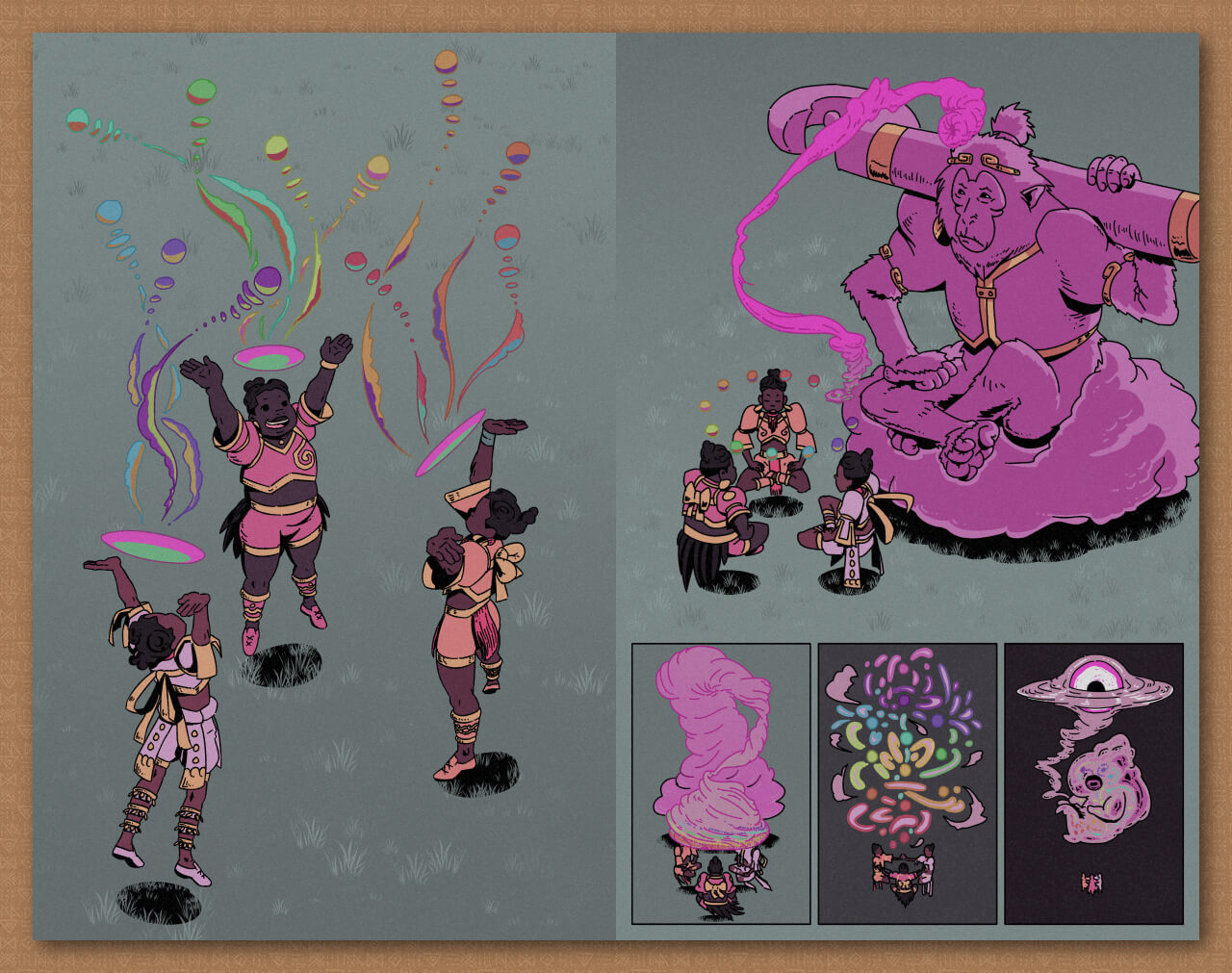
So how did it feel to get edits on a project that for eight years had been deeply personal and something buttercup had embarked on alone? “Well, at first it hurt the shit out of my feelings. But I had a lot of trust and faith in Jamila and Steenz. Even when my autistic fragility and change aversion activated, I was like, ‘No, I trust this person.'” Despite that trust it was still hard to commit to that decision. “I just kept resisting and resisting and resisting and it started making me stressed to the point of being physically ill and I just hit the depression threshold and went into the flop response and I was just like, ‘Okay, I’m just gonna fucking do whatever it is that they asked me to do instead of trying to convince myself that my ideas are better.'” But those fears were unfounded. “It was at the moment that I did that, on that very day that we had an editorial meeting, and Steenz started the meeting by being like, ‘So what do you want to do?'”
And how’s the collaboration now? “I’m so happy with the way that print edition is coming along!” So now it’s almost done, are they excited to hold the physical copy in their hands? “Okay, it’s really interesting that you asked that because for whatever reason, my brain just did not hyperfixate on comics and the physical reality of holding a book in your hand and the new book smell. I don’t have as much of a sentimental or nostalgic relationship to it. But I’m always happily surprised when something that I conceptualize exists in physical space. I’ll have a click moment where I’m like, ‘Oh, my god, this was an abstract concept in my head, you know, a decade ago and now it’s a thing that I can hold.’ So I’m not experiencing anticipatory excitement, but I know for a fact that I’ll probably cry when I actually hold it.”
You can support the print edition of UM at Crowdfundr now!
