


WWACommendations never relies on a theme, but this month we sort of have one — exploration. I inadvertently kicked this off by desperately needing to shout about my Delicious in Dungeon reread, but Masha and Carrie both followed up by recommending manga about exploring unique relationships, and finding unexpected connections. Very different from finding monsters to eat, but still on theme! Carrie also explored Civil Rights era history, while Emily’s got a rec focused on exploring nature. Kathryn wraps things up with a familiar title perfect to launch us into spooky season: Things in the Basement, which you may remember Emily recommending in a previous WWACommendations. Kathryn, however, takes a completely different perspective on this story about exploring a fantasy world hidden in a dark basement, which I love! If you were uninterested in Things in the Basement before, the new connections Kathryn draws might make you change your mind and decide to explore this story after all.
Alenka Figa: I’m emptied out, bereft, left to starve because I’ve caught up on Delicious in Dungeon!! (Was that funny? If it wasn’t, don’t tell me.) I realized I was a couple volumes behind and, since it had been a while, decided to restart the whole series. I binged it all within a couple weeks, right up through volume twelve. Delicious in Dungeon is a manga about a group of veteran adventurers who have to desperately make a new journey into the dungeon to try and save their party member, Falin, who was swallowed by a red dragon. With no time or money to load up on provisions, they resolve to survive by eating monsters, which is a focal point of what is, partially, a cooking manga!
Of course, Delicious in Dungeon is so much more than recipes featuring monster meat. The dungeon itself is a fascinating setting, with its own rules and complex history. Each party member is also an incredible character, and the story keeps you wanting to know why — why is this crew interested in or at least willing to eat monsters? Why are they working so hard to save Falin when they don’t have to — some of the original party members did walk away. Most importantly, why are they interested in the dungeon in the first place? This manga is just the perfect combination of pieces: an increasingly complex and intense plot, fun, compelling and lovable characters, and beautifully inked, detailed art perfect for a wild fantasy story. I need volume 13 ASAP!
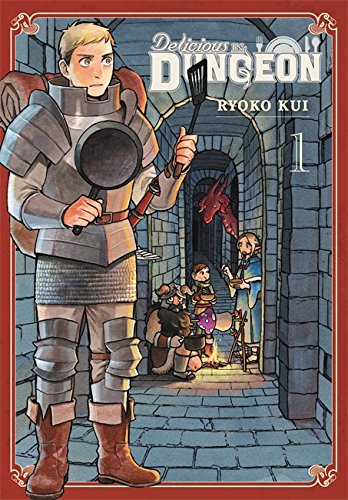
Masha Zhdanova: I’ve also been enjoying Delicious in Dungeon! There’s an anime adaptation of it coming out in January that I’m excited for. I like how every character has something different wrong with them.
I have also been reading Nodame Cantabile on the K-Manga app, and I wish I’d gotten into this sooner. It’s definitely a mid-2000s comic— some of the character archetypes are more uncomfortable today than they might’ve been back then (gay caricatures and a lecherous professor played for laughs), but other jokes still land extremely well. Shinichi Chiaki is a brilliant piano and violin player and aspiring conductor at music college who is prevented from going to study in Europe with his mentor by a crippling phobia of planes and boats. His next door neighbor Megumi “Nodame” Noda is the biggest failgirl of all time: can’t cook, can’t clean, barely even showers, can’t sight-read music— but can play a song on the piano perfectly after hearing someone else play it once. Nodame falls in love at first sight and Chiaki eventually learns to tolerate her presence, sort of. The side characters are very wacky, and the classical music premise is fresh and unusual. Really does make me appreciate conducting as a discipline. I also like how Nodame always takes the least sensible course of action possible. It’s great. I like it.
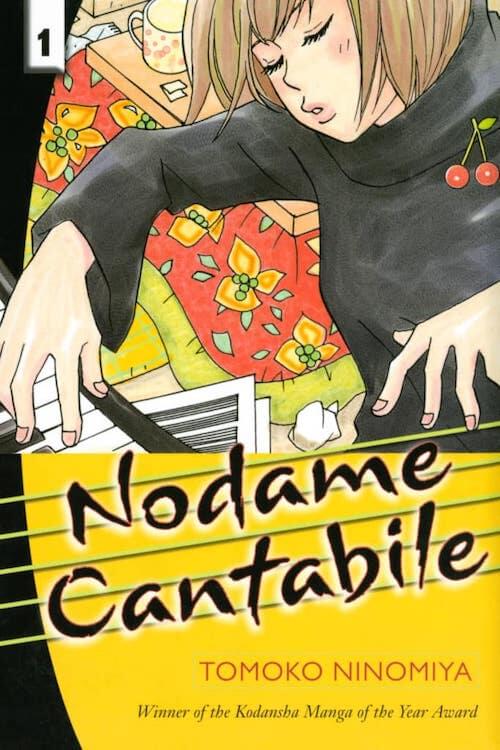
Carrie McClain: Nodame Cantabile? I love your mind, Masha! I was also 2000 and late to this series and read most of it a few years ago through tattered but readable volumes from my local library. I am so glad to see it digitally accessible for all our fellow manga readers who missed the series’ first run.
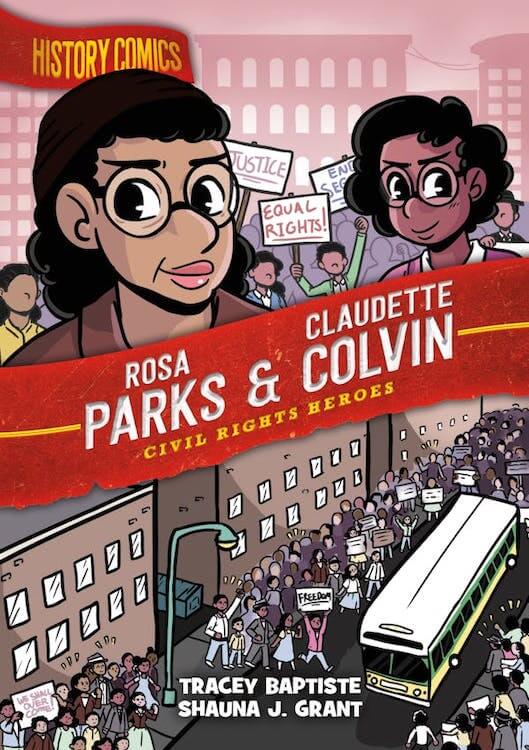
I recently finished reading History Comics: Rosa Parks & Claudette Colvin by Tracey Baptiste and illustrated by Shauna J. Grant (creator of one of my favorite Magical girl webcomics–Princess Love Pon). The History Comics graphic novel line through First Second has produced some incredible books elaborating on different historical events and the people who led them. (I read their Stonewall Riots book first.)
What I appreciate most from History Comics: Rosa Parks & Claudette Colvin are the fine details included of Claudette Colvin and Rosa Parks’ lives. I love that Rosa’s past activism, like her fierce dedication to voting rights, is covered along with mention of her involvement to address sexual violence against women (Mrs. Recy Taylor’s momentous case). I love that Claudette’s early life is covered along with all the sprinkling of women who came after her in protest that eventually led to full blown boycott and change via the Civil Rights Movement’s bigger moments. The creative team of Baptiste and Grant–two Black women–bring so much nuance and consideration linking together the lives of Claudette and Rosa especially when colorism, classism, sexism and respectability politics defined the activism of their days.
I am so grateful to read their stories together here in this book. Especially since Claudette’s efforts have historically been overshadowed by Rosa, with the older woman becoming seen as a “face” of the movement. Rosa’s activism has been watered down to being “a tired old lady who did not want to give up her seat,” when really she had decades of activism under her belt at this stage in her life and her refusing to leave her seat was meticulously planned. History Comics: Rosa Parks & Claudette Colvin is worthy of a read for seeing women practicing and living with their activism when the times were not kind to them living through the turmoil of their choices. I am humbled and honored every time I pick up this graphic novel detailing the lives of these incredible Black women who paved the way for so many of us–at a cost to themselves–for progress for all.
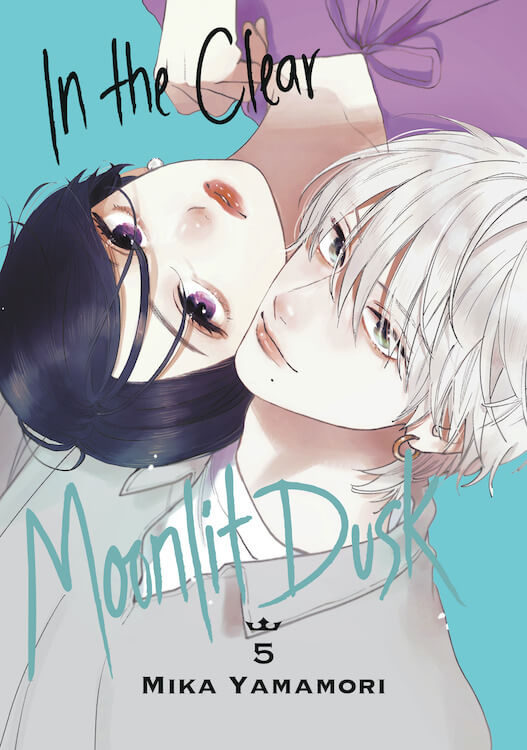
I also recently devoured the fifth volume of In The Clear Moonlit Dusk by Mika Yamamori (Daytime Shooting Star). It remains in the S-Tier of Shojosei category that includes my beloved A Sign of Affection, also published through Kodansha. Yoi Takiguchi, a tall, long legged teenage girl with boyish looks is adored by the girls at school. She is referred to as “Prince,” and her meeting with Ichimura-senpai, a male upperclassman (also adored by the girls, and referred to as dreamy like a “Prince”) leads to an instant connection. Coming across less as a “good girl meets bad boy” tropey narrative, the series has built on how we value appearances, attraction and finding people who truly see us and give us space to explore what we want in life and, of course, first loves.
This latest volume includes more of the slow burn and soft but very flirty romance that has been steadily being built, with more gorgeous artwork. This newer volume continues with a narrative that includes mentions of consent and boundaries that are thankfully respected. It is endearing to see Yoi blossom and gain courage to say the words she’s been sitting on and also see Ichimura, a character who comes across as jaded, able to be flustered and at a loss for words. I have been loving the narrative thread on gender and how damaging it can be when people pigeonhole others right out of exploration and being able to express themselves. Not every Shojo (or Shojosei for that manner) series nails healthy, budding romantic relationships but In The Clear Moonlit Dusk continues to be one that manages to capture my heart again when a new volume is released.
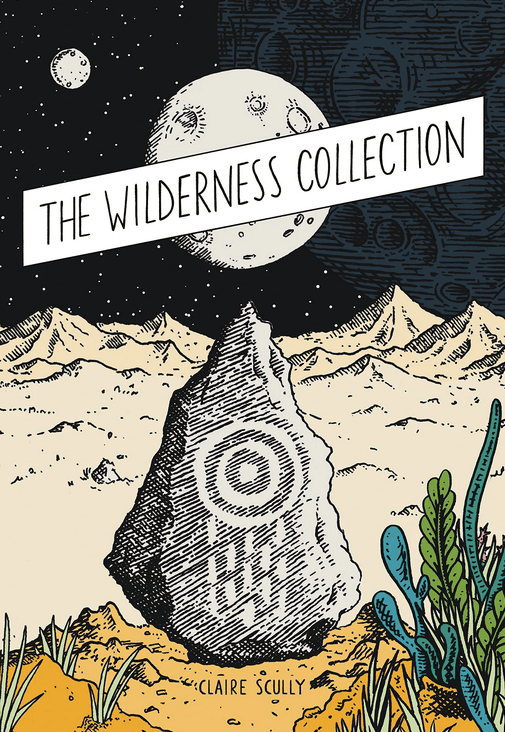
Emily Lauer: The Wilderness Collection by Claire Scully, which gathers her previous publications Internal Wilderness, Desolation Wilderness and Outer Wilderness, is forthcoming from Avery Hill. In this art book, beautiful full-page illustrations are presented in sections that get progressively more fanciful and colorful. Each section begins with a brief explanation, but besides those pages, the book is wordless. There isn’t a continuous narrative, but rather each page offers an immersive experience. While Scully’s pen and ink drawings evoke woodcuts in their style, they also remind me of J.R.R. Tolkein’s pen illustrations for The Hobbit with their evocative clean lines and inviting use of white space. I would never claim that an art book needs a ”use,” but I could definitely imagine that this book could be used as a series of writing prompts, since each image builds a world and teases at a story.
Kathryn Hemmann: I’m also a fan of Delicious in Dungeon, so I’d like to share a recommendation for something in the same neighborhood. Ben Hatke’s newest middle-grade graphic novel, Things in the Basement, was published at the end of August, and it’s a perfect companion for spooky season. Milo’s family has just moved into an old historic house, and he’s not a fan of the basement. When his mother asks him to retrieve a stray sock from the washing machine, Milo must venture into the darkness, which is much deeper than he feared. What follows is a wild adventure through an underground labyrinth of subterranean rooms filled with strange treasures.
For me, Milo’s journey captured the thrill of exploring a video game dungeon. As he navigates from one challenge to the next, Milo must solve puzzles and befriend monstrous companions, and Hatke’s intensely dynamic artwork propels the reader forward at a steady pace. In contrast to the cartoonish style of Hatke’s earlier series, Zita the Spacegirl (check out our review on WWAC), the art of Things in the Basement is lushly rendered to create a sense of atmosphere through the creative use of color and detail. The fantastic corridors and caverns under Milo’s house are stuffed with masterpieces of Western art, which adds a satisfying depth to the story’s visualization of the tunnels running through the artist’s own imagination.
Although Things in the Basement is quite wholesome, its gorgeous representations of spatial navigation through an architecturally spectacular maze reminded me of Dark Souls, so I also want to share a resource I recently found regarding fantasy architecture. An artist who goes by doshmanziari on Tumblr created a series of posts called “Brick by Brick: An Index for Putting Names to Built Things” that uses screenshots from Dark Souls series to explain various elements of European architecture. Even if your experience with video games is limited, it can still be fun to indulge in the fantasy of exploring a giant gothic castle that doubles as an art history class.

