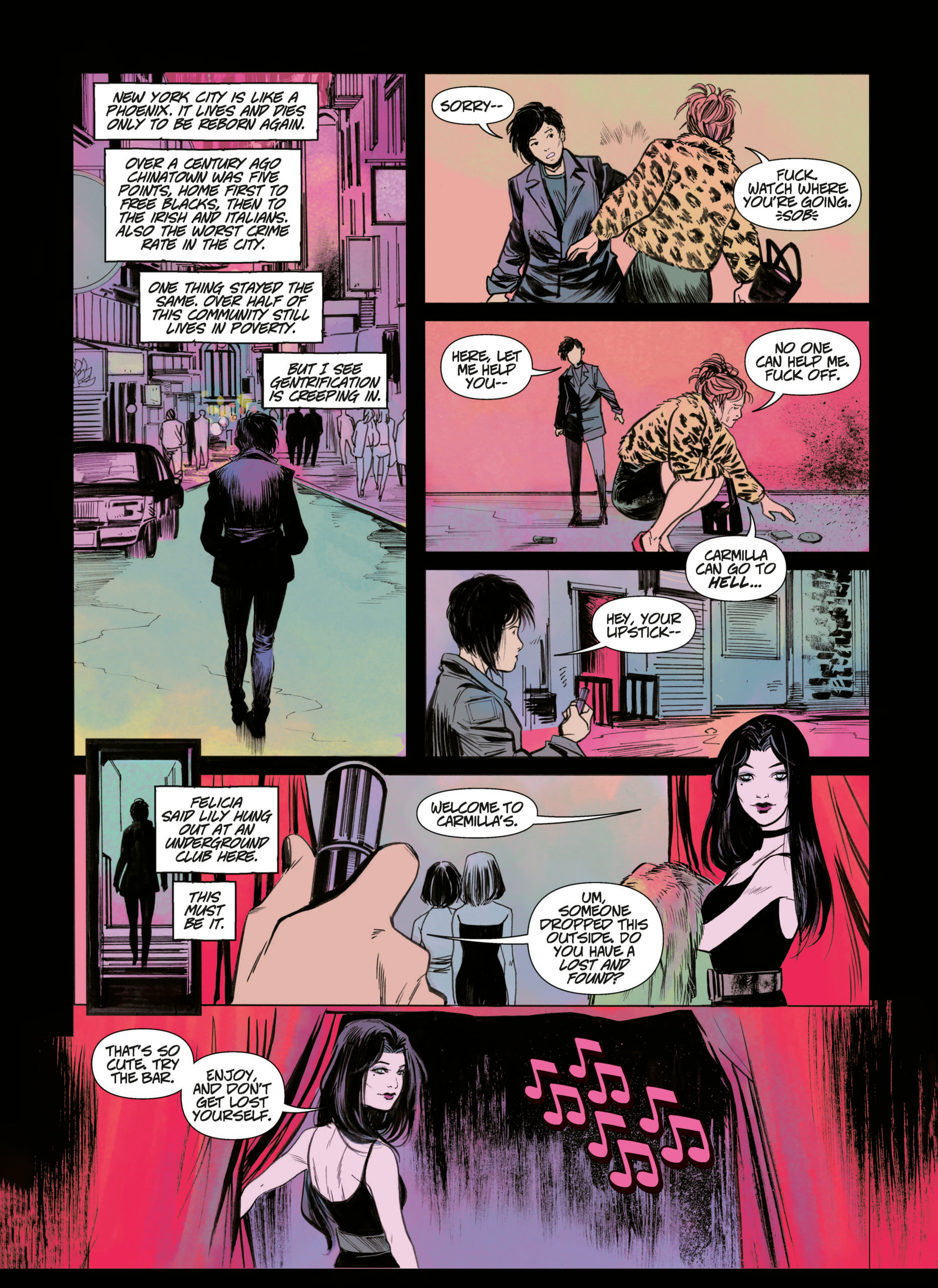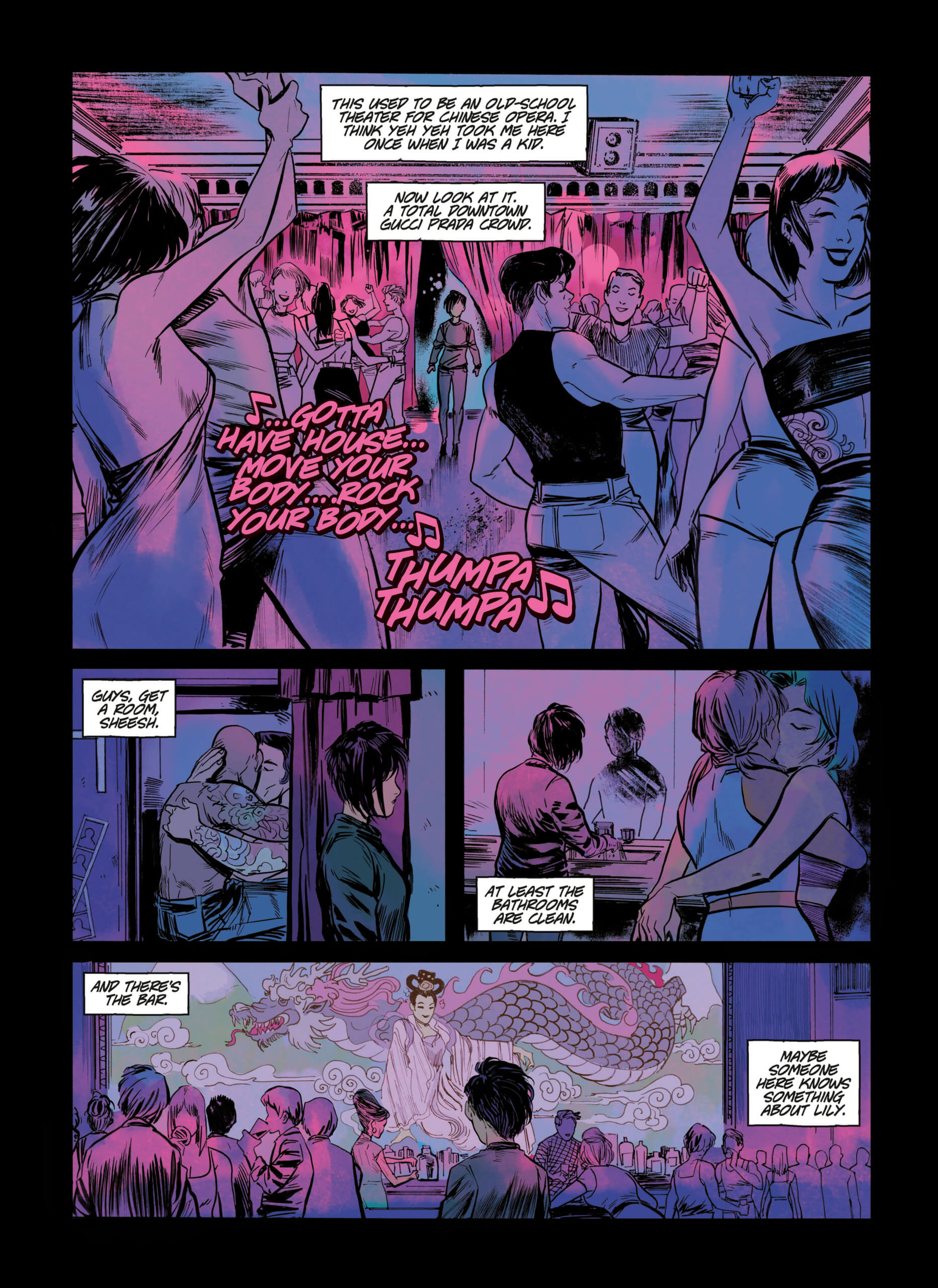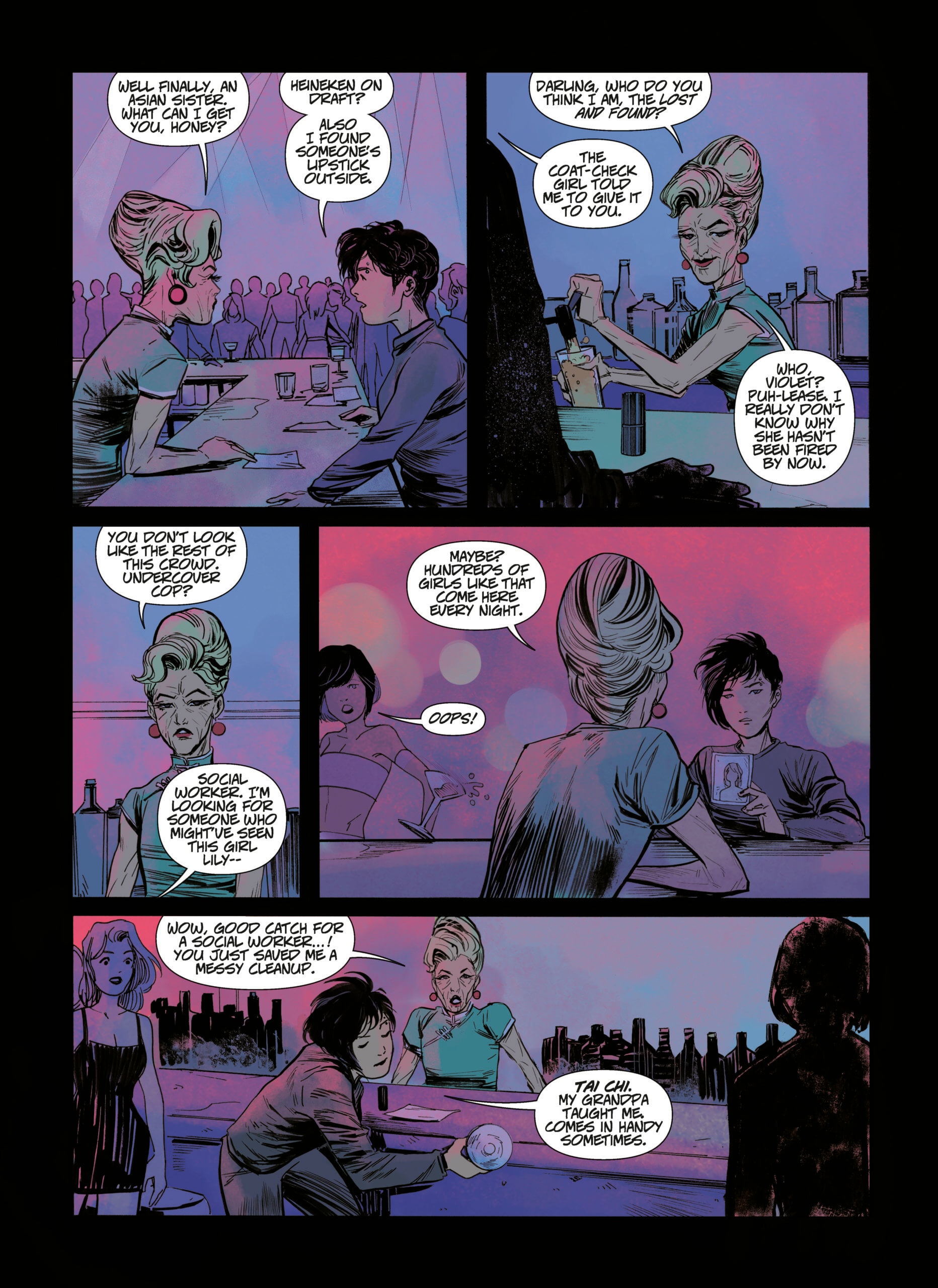

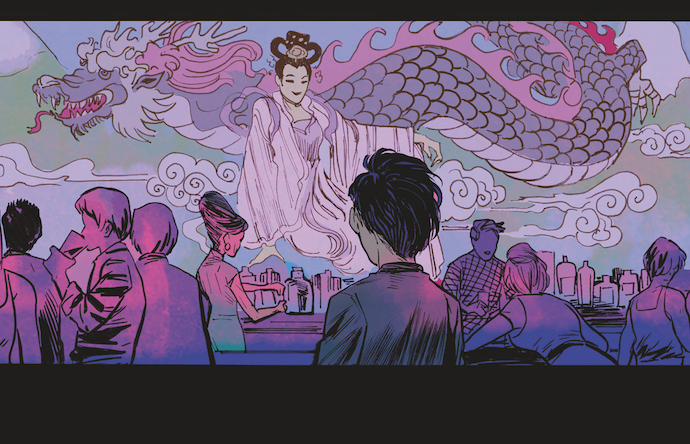
Like many great adaptations, Carmilla is faithful to the source material while also modernizing it for a contemporary audience. The original Carmilla is a novel of gothic literature, a genre thematically marked by death, decay, opulence, innocence, and the supernatural [Editor’s note: Read our Carmilla Roundtable for the 150th anniversary for some more perspectives about the story]. It can appear outdated to a modern reader’s sensibilities, filled with purple prose and propriety. It also has a level of drama (even melodrama) and queer eroticism that feels like camp. But modern audiences are so far removed from the 19th century that very few of us have experienced the authentic gothic creepiness of decaying buildings, eccentric upper classes, and suffocating social norms except through media. Modern adaptations of gothic literature can fail based on setting alone, but Chu chose New York City in the 1990s. This was a period of economic downturn, social unrest, police brutality, not to mention the AIDS epidemic, when gay marriage still wasn’t legal, and “Don’t Ask, Don’t Tell” was official military policy. It taps into the violence and social norms in a way that feels gothic but never crosses the line into camp.
The nineties permeate the story visually as well. This is a Berger Book, Karen Berger’s personal imprint for Dark Horse. Berger might be a familiar name for some as one of the founders of Vertigo, DC’s original, now-folded “mature” imprint. In the 90s, Vertigo published several series that often drew upon genres of supernatural fantasy and horror. This era saw reboots of old forgotten characters in new, darker, modern adaptations, like Sandman, and Swamp Thing. There were also fairy tales and magical jaunts with The Books of Magic and Fables. Whether the subject matter lent itself to the style, or the style to the subject matter, the Vertigo era of comics often had heavy inks and sophisticated color palettes, thanks to new advances in printing and digital coloring. In some ways, the art in Carmilla feels like a throwback, with the heavy inks and gorgeous colors, but since the story itself is also set in the nineties, it’s not just retro. It feels cinematic, like a movie set in a specific historical period.
It’s also so much fun. If you enjoyed the gothic, horror, campy vampire vibe of the AMC series, Anne Rice’s The Interview With the Vampire, like I did, this is the vampire comic for you. I couldn’t help but make comparisons about the same aesthetic values while I was reading it. The vampires here are also horrible monsters who do horrible things. Violet and Lestat share more than a few character traits. They are both sociopathic and care only about the person they are emotionally manipulating, hurting other people. They show up and they do not leave, taking over that person’s life until their victim believes they cannot live without them. So if you watched that show, and thought, yes but what if queer women? This is that story.
How did this collaboration between you two come about? Did Karen play matchmaker or did it come about some other way?
Amy Chu: I don’t know if Soo even remembers, but we had dinner after a really tiny show with a bunch of people, like five years ago or something like that. And Soo was like, “oh, we should work together.” And at this time I didn’t have anything. I mean, I was so new, right? But I did remember that.
Soo Lee: Oh my God, I totally forgot!
Amy Chu: I really did remember the whole time. But I literally, I think it was just Poison Ivy at that time. It was really at a time where I literally had like one thing and I didn’t really know Soo.
Soo Lee: I totally forgot.
Amy Chu: I think that’s when we first met, and I just remember. But it’s one of those things where this is part of the business, right? Sometimes it takes that long. It was very much also I felt strongly that it should be someone who’s Asian and also New York local because it was very much of a New York story. I felt strongly that it should be at least two of the three, but it was very, you know, Soo is all of it: Asian, female, and from New York. And also the right style too. So it’s really like the four things that you want to look for. I want to work with people that I like and I know. Life is too short not to do that.
Soo Lee: I’ve always wanted to work with Amy too. And now I finally get to work with Amy and I’m like, I made it.
The artwork does have a very nineties Vertigo vibe to it. Were you inspired by that 90s style of art with heavy inks and moody, desaturated colors found in those Vertigo-era Berger books?
Soo Lee: I wanted it to be a very muted nineties look. Even if you watch TV, it’s a little bit grainy, it’s a little bit more faded and washed out. I wanted it to vibe. It also fits my inks. I wanted it to be very movie-like, so every color is like…oh, this is a “dangerous” theme, so it’s going to be like a dark color. And then the club is going to be bright and sexy, so it’s the bisexual lighting. And then there’s like a blue scene and a red scene and a yellow scene. I wanted the colors to invoke the feeling of what story. We’re telling this thing right now, are you in the mood? Are you in the same vibe of the scene? It’s the colors that are comforting. There’s a scene with her and her grandfather in her grandfather’s apartment. And there’s a warm lighting, a warm tone so you feel like you’re at home with him. I wanted to give every scene that appropriate mood.
Amy Chu: Soo’s colors are fantastic. A lot of that mood is really evoked and that’s all Soo.
Soo Lee: You wrote it!
Amy Chu: I wrote it, but I wasn’t like, oh,”make it pink,” or whatever. It was your artistic choice that just made it all right. But it’s not an accident. I mean, I kind of did write it partly for Karen too, because it’s Karen, and this is how this story’s coming out. I’m glad you felt that because it was definitely influenced.
It’s a Karen Berger revival!
Soo Lee: And I think our book, if I may say so myself, our book is the most Vertigo-esque in the Berger Book universe.
Amy Chu: I think you’re right. I didn’t even think about it that way. I don’t want to say it was deliberate, but I think it pulled all of that out of me.
Who did the lettering? The style changes to the letters based on the scene location and time period really complements Soo’s artwork.
Soo Lee: Sal Cipriano. I’ve worked with him before on another project for lettering. Sal is super easygoing. I think he’s really great at just like, no frills. Whatever you want, he gets it done. And he just does a really good job. I’m so happy with how the book turned out.
Can we talk about this cover? It’s soo gorgeous.
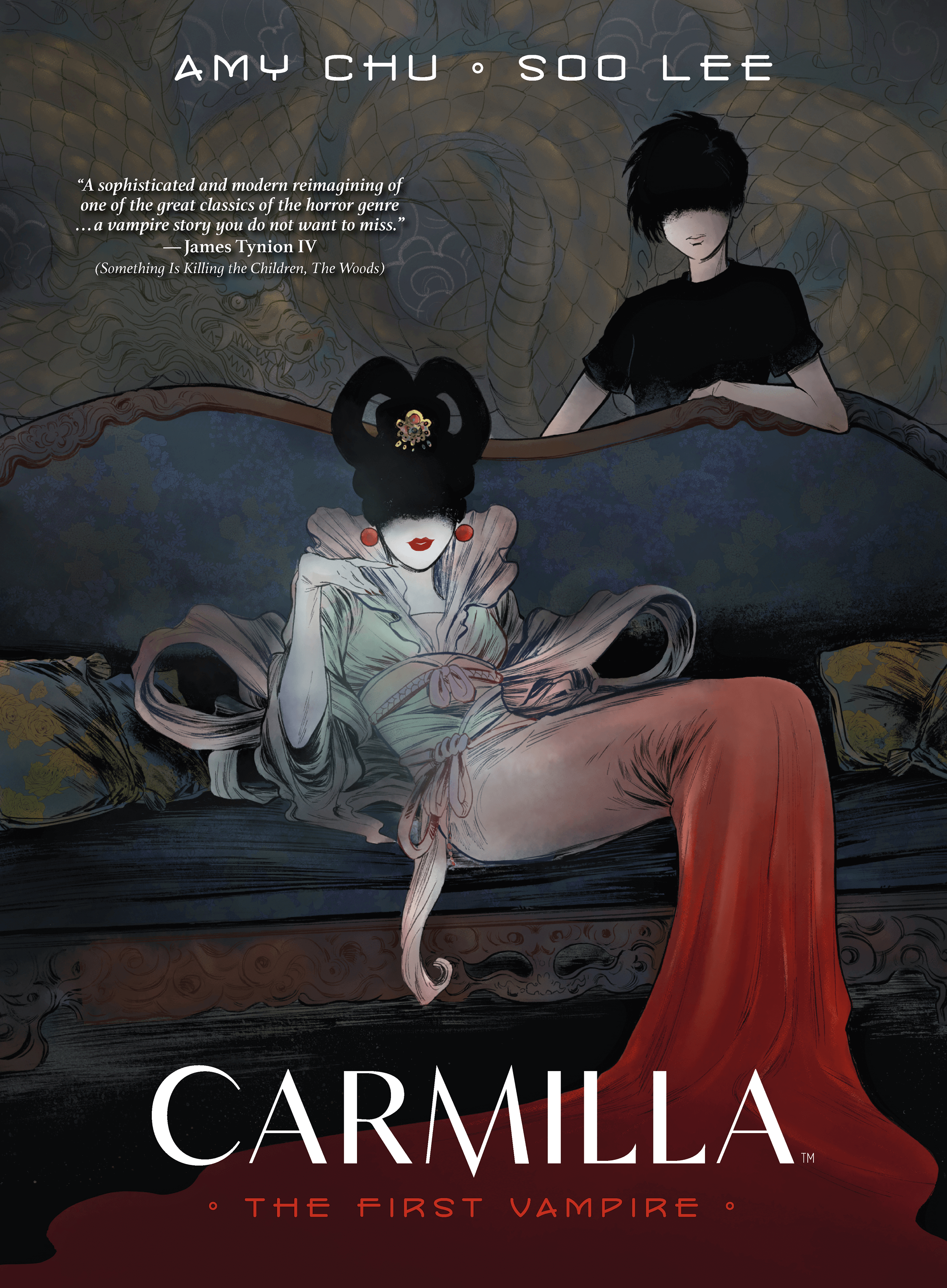
Soo Lee: So, from the cover we decided to make a Chinese vampire, but more high fantasy. The outfit that I drew on the cover of Carmilla is based on Chinese fairies. Their outfit is very important to how they get into heaven. So, I want it to be very beautiful. I want it to be very like, creepy and old. The Renaissance, old-timey, medieval version of Asian fantasy—just like the atmosphere. So I wanted it to be bright, not dark. In Asia, at funerals you wear white, you don’t wear black. Even the background art for the wall on the cover, I wanted it to be like a Chinese painting, like very washed out. I love Chinese antiques. My dad collected Chinese antiques, so I know how all the art looks. It’s a very big aesthetic thing. I want it to feel like that. And if you understand what that outfit is, you’ll know immediately. Technically it’s a fairy outfit, but I wanted it to be incorporated. It feels otherworldly when you look at it, especially in paintings. So I was like, okay, well, why not? Why not just make this her like, “vampire” outfit? I wanted it to get the feel of the antique paintings that you see, but at the same time keep it modern.
Carmilla is a gothic story, and I feel like you’ve reinterpreted what “gothic” means by making this story a kind of “dark and gritty reboot” adaptation. There’s a lot of violence, and racial violence, and gender violence. Was the choice of New York in the nineties intentional for this dark and gritty adaptation of a traditionally gothic story? For me, being a west coaster, all the dark shadowy alleyways and train stations seem very gothic.
Amy Chu: It was not intentional to make it gritty. I think it’s just intentional to make it just real, that that timeframe happens to be gritty. I did a lot of research, but it’s also literally, I lived in Hell’s Kitchen during that time where it was gritty. But I never really thought it was gothic because when you’re actually there living, it doesn’t really seem gothic.
Soo Lee: I think maybe that’s why I have a different definition of what gothic is versus what other people say. It’s not always just black. You know what I mean? It’s like a very specific state of mind, you know, setting and tone. But I used to take the trains all the time with my mom, and it looked a hundred percent different. Like, I remember when we had tokens, you know? I think I have it in a piggy bank somewhere. But it was a very specific looking train station back in the day. I can smell the nineties.
Amy Chu: We can all smell the nineties. Especially in the summertime.
The way that you approached this adaptation, it’s almost like a sequel to the original Carmilla. Because Athena finds the book at the library and some of the text of the novel is reprinted here. How is your Carmilla in conversation with the original Carmilla, but also a continuation of that story?
Amy Chu: I thought it was really important, and Karen loved the idea when I said, I want to put—because it’s public domain, we can do this—put parts of the actual book in our book. It’s very meta, and all that she loved. And so, of course, it had to make sense. Because I like the device, but it’s got to make sense, otherwise it looks kind of gratuitous. So many people have not read the original Carmilla. I hope more people read it after this. To me, it holds up really well. Some of it’s kind of dorky, but the actual story. And reading people’s interpretations of Carmilla, I’m like, this is a queer story. These girls are in love. There’s stuff going on. It’s very obvious, I thought. So I thought it was kind of hilarious that people don’t address that. So I’m like, let’s just make it about that. What the basic thing is, ultimately is like, what if Carmilla was still around? Because I would think, why wouldn’t you still be around? And what would she be doing if I were her? Basically the whole thing was like, well, if I were her.
Another way you modernize this story is by centering it around Athena, an Asian American queer woman.
Amy Chu: I really did feel very strongly about representing LGBTQIA Asian American community in a natural way. It’s just so annoying how we get a token here, or there, you know. There’s some really good literature coming out right now, but we’re not, even with our own communities, we’re not really doing this very well. It’s just got to be all trauma.
Vampires are super sexy, and vampire literature is very sexy. Carmilla is no exception. How does this story fit in the sexy vampire lit tradition?
Amy Chu: This was definitely the sexiest story I’ve done. I was a little bit worried.
Soo Lee: Same for me.
Amy Chu: Same for you? I was a little bit worried. I would think, how is Soo going to feel about drawing this? I did want it to be sexy, but I wanted it to be sexy in the queer gaze-y way.
Soo Lee: Whenever guys draw anything sexy, it’s a very guy-centric view of what it should look like, you know? And I wanted to be more like in a movie scene. Just like, random stills of things happening. I wanted to have it so it’s a little bit more mysterious, with a lot of interesting colors, bright colors to get the feel of it. It’s just the feeling you get when you look at certain images and colors, you know?
There’s one more twist at the end involving Athena and her family, which I won’t spoil, but we end up seeing her at the beginning of a journey to San Francisco. Did you write it to be a sequel?
Amy Chu: That’s always the case for almost anything. It’s just to what degree does the editor allow you to do that at the end. It was not pitched as a series, it was just pitched as one book, but I did throw it in at the end. And Karen can do whatever she wants, she’s Karen Berger.