
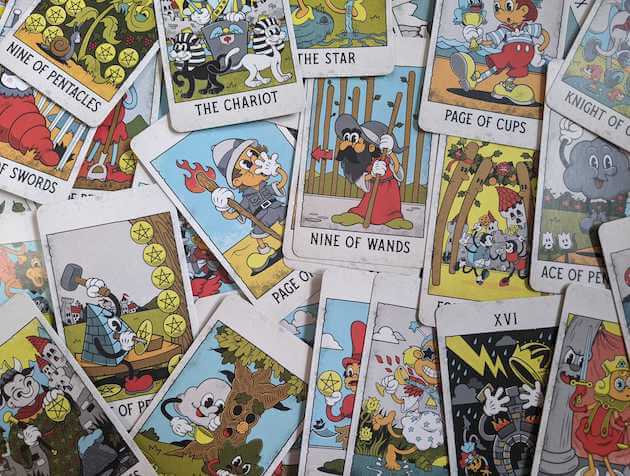
I’m always surprised by the creative ideas people theme tarot decks around. Liminal 11’s latest release, Mystical Medleys: A Vintage Cartoon Tarot is a great example of that. A playful deck meant for fans of antique cartoons like Betty Boop and Steamboat Willie, it’s a concept that’s niche enough to cater to a very specific fanbase, while still broadly interesting enough to intrigue the average tarot fan to want to pick it up and look more closely at it.
Mystical Medleys: A Vintage Cartoon Tarot
Gary Hall
Liminal 11
October 9, 2021
A tarot deck based on 1930s cartoons definitely sounded cute, but like many fun, high concept decks, I rather expected it to be more of a novelty than a usable daily deck—the kind of deck that you show off to other tarot collectors rather than do your morning readings from. But Mystical Medleys completely surprised me by being full of profoundly layered occult symbolism in a way I never expected vintage cartoons to be.
Most indie decks are based on the symbolism of the traditional Rider-Waite-Smith deck, which is pretty ubiquitous in the tarot community—if you’re picturing tarot imagery right now, it’s probably from RWS. It makes sense for artists to draw inspiration deeply from RWS because it’s deeply meaningful to most tarot enthusiasts, and that means decks that are based off it are easy for experienced readers to pick up and read from without much learning curve. That said, it has been done a lot at this point, and I like when new decks pay homage to RWS without staying too close to the original imagery. In a market that has been slowly becoming more and more saturated, it’s compelling to see something that I haven’t seen done before.
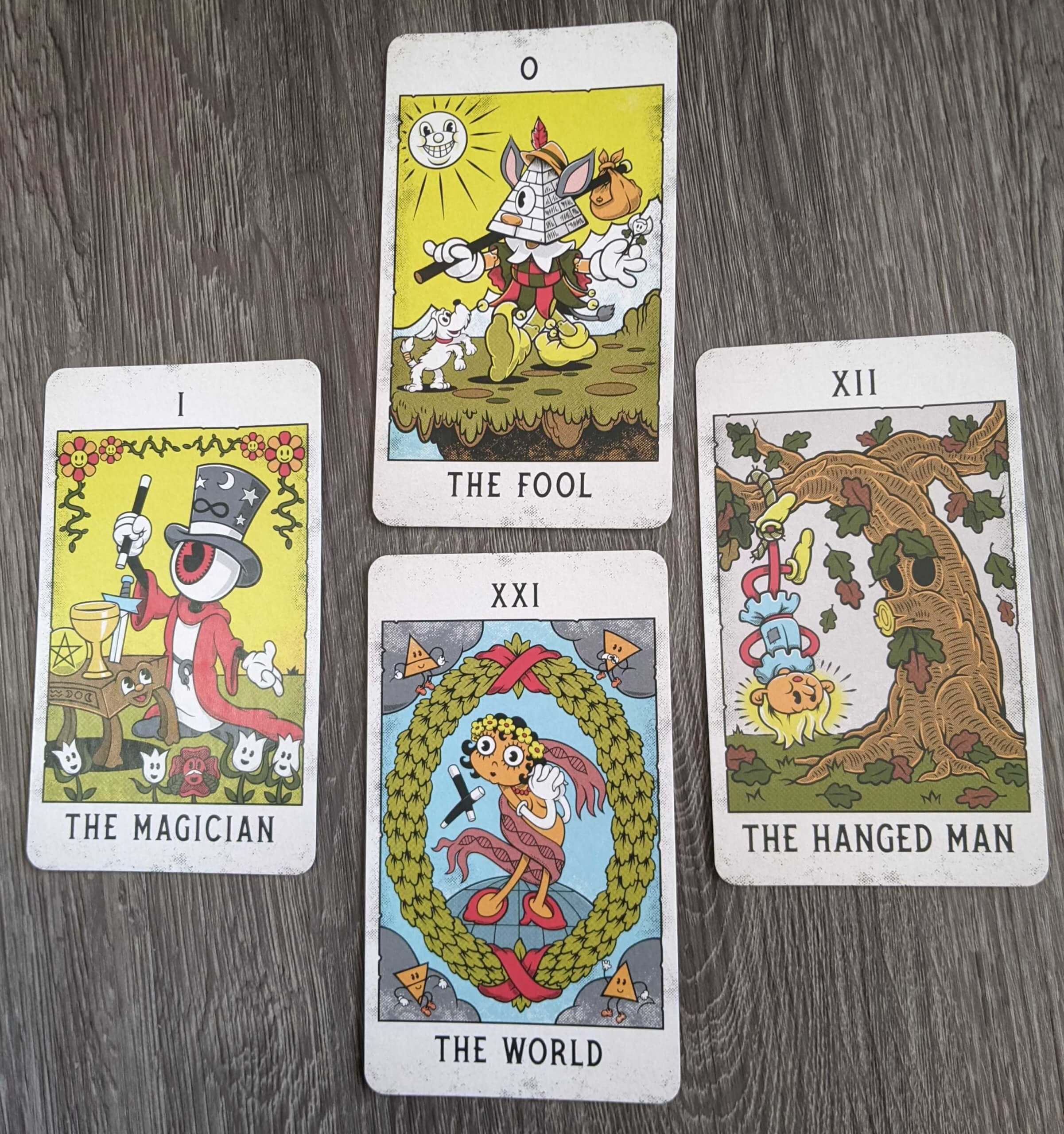
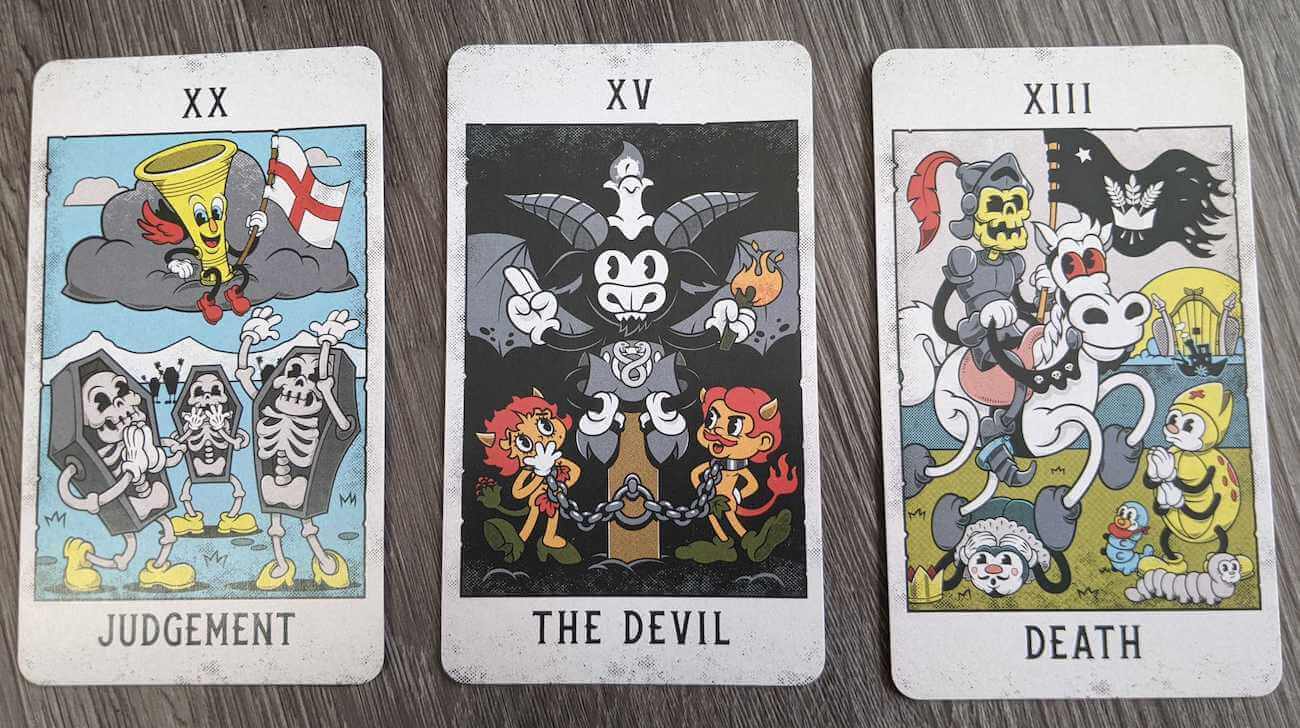
But Mystical Medleys is the exception that proves the rule: while nearly all the cards are pretty direct re-draws of the original RWS art, that’s exactly what is so compelling about this deck. Seeing the imagery that I’m so used to converted into these classic cartoon characters is extremely fun for me as a tarot enthusiast, and it creates a fascinating dichotomy between the comfortingly familiar and the curiously strange. Everything about the deck walks this line: at first glance, Gary Hall’s art is very cute, but the longer you look at it and the deeper you delve into the layers of symbology, the more creepy and unsettling the art seems to get before your eyes. And to be clear, I love this about it—it’s a great callback both to the witchiness of tarot and to classic cartoons, which absolutely have their fair share of creepiness as well! The art is more or less based on the “rubber hose” style of animation that both early Disney and Fleischer Studios were utilizing in the 1930s, so named for the lack of articulation in early cartoons. But Mystical Medleys reminds me more of Betty Boop titles like Fleischer’s 1933 masterpiece, Snow White, which famously featured a delightfully creepy rendition of St. James Infirmary by a ghostly Cab Calloway.
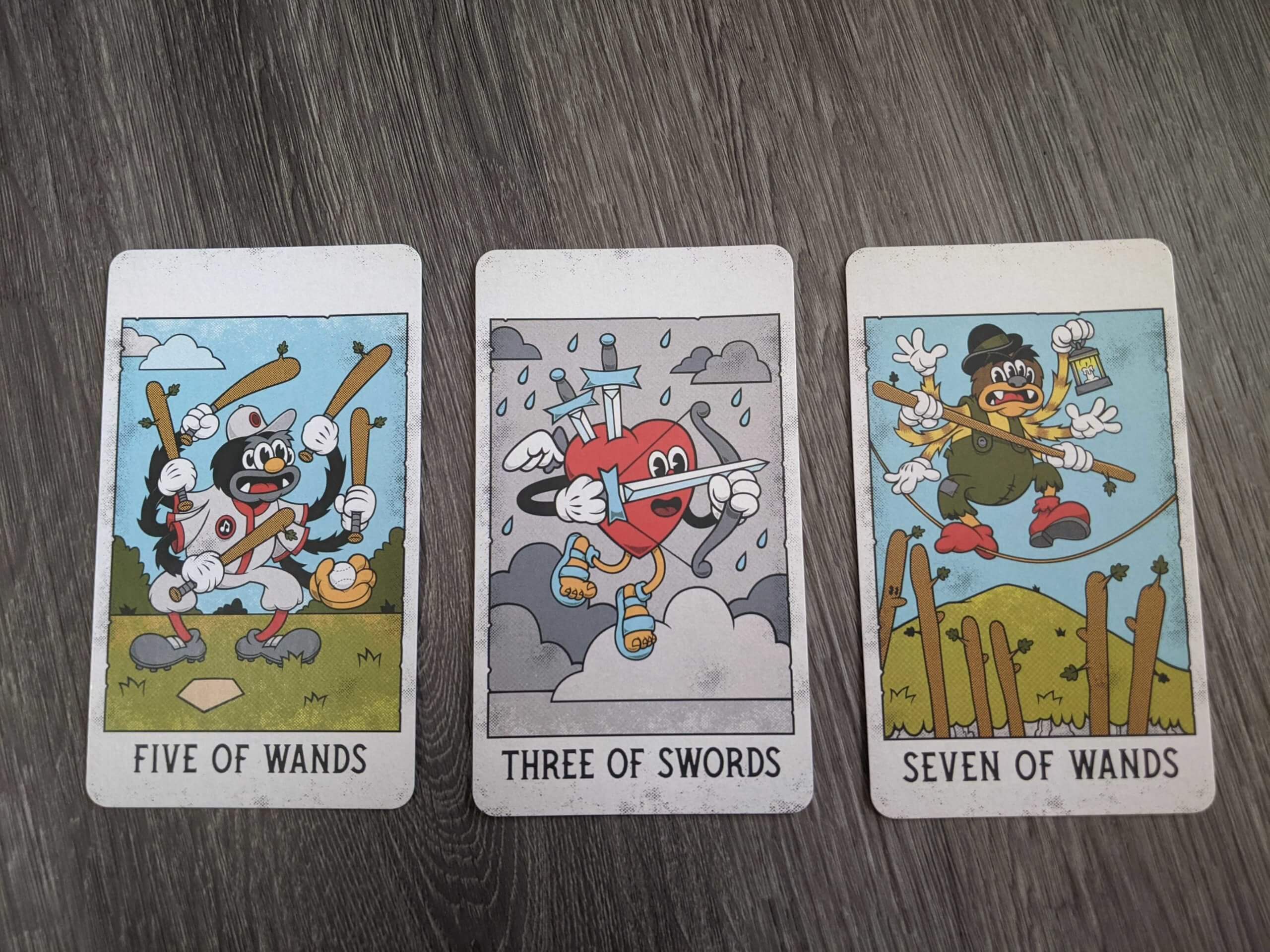
Just because it sticks close to the traditional art doesn’t mean Mystical Medleys doesn’t bring anything new to the table in terms of meaning or symbolism, either. It’s fascinating to see the way that it preserves all the original symbolism while also adding more on top. The Fool is a prime example of this: while he is absolutely Pamela Coleman Smith’s Fool who we know and love, in this cartoon the role is played by Pinocchio. His wooden arms and legs suggest naivety, while the donkey’s ears he got on Pleasure Island indicate mischievousness—and of course, the pyramid of the all-seeing eye as his head points to the arcane mysteries of the tarot and sets the scene for the rest of the deck, which is surprisingly arcane throughout. Plus, there are a few cards that stray from the original designs: the 5 of wands represents competition through sports instead of battle; the 7 of wands focuses more on precariousness than opposition with its tightrope imagery; and the 3 of swords brings new nuance to the classic pierced heart by shooting one of the swords back out into the world as an arrow. It comes with two bonus cards too, the Happy Squirrel and the Sad Squirrel, which are a reference to a tarot joke from an early episode of The Simpsons, where a fortune teller explains to Lisa that the cards are too mysterious to know if even a cute card is a good or bad omen. This joke has been done before, with the Happy Squirrel featuring as a fairly common bonus card in decks that have one, but it feels particularly appropriate here with the cartoon theme.
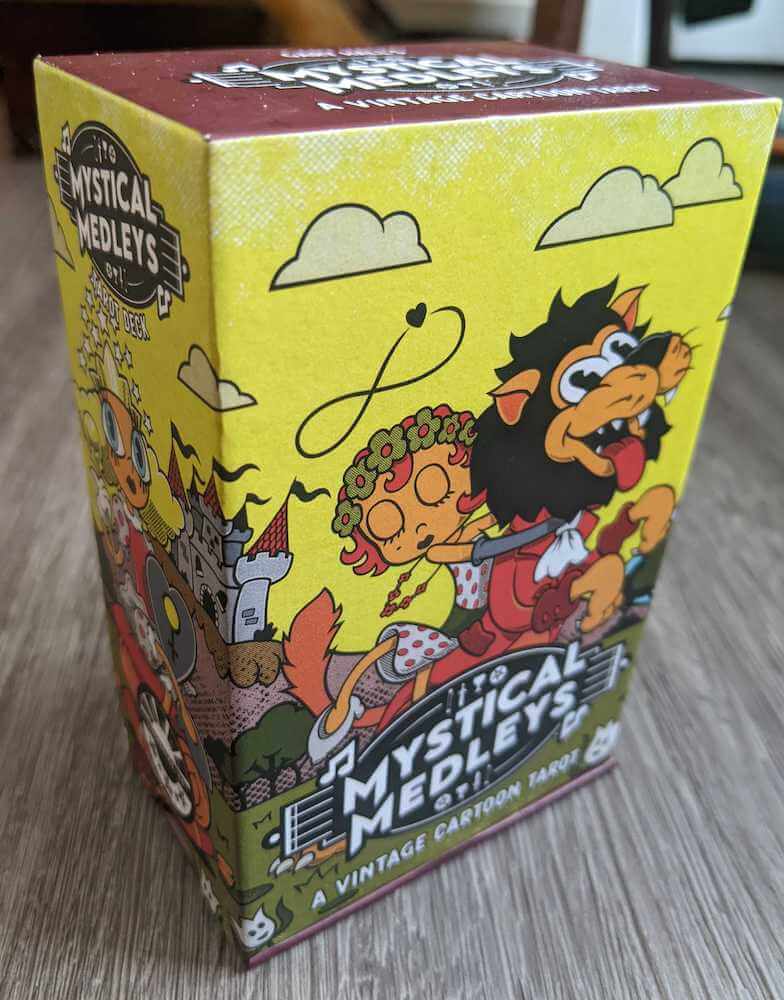
And of course, I’ve come to expect physical quality from the Liminal 11 releases, and Mystical Medleys doesn’t disappoint on that front either. The cards are sturdy and easy to shuffle, the little guidebook is cute and well put together, and the box has a bottom hinge, with charming art of the Devil that peeks out at you when you open it. This box design has become standard for Liminal 11 over their last half dozen decks or so, and I’m glad because I quite like it—though I am starting to wish that the inside was a little more thoughtfully designed. (If this is to be their standard forever, it would be nice if it didn’t need a piece of cardboard to get the cards and guidebook to fit snugly beside each other.)
Mystical Medleys was made by an animator with an interest in tarot, not a tarot artist with an interest in animation, and I think it’s really interesting that I can tell the difference. In the guidebook, creator Gary Hall talks about his passion for animation and it got me thinking about the similarities between tarot and cartoons in a way I had never considered before. “How do cartoonists convey meaning?” he wrote. “They pack it all into imagery, using visual shorthands to reference bigger themes.” This is exactly how tarot works too, of course, where the art is full of symbolic shorthand—even the suits themselves are used to suggest different spheres of life, like the coins in the suit of pentacles and how they represent material wealth and, even more generally, the concept of hard work and success. Once I thought about it, the similarities make sense, as both media are often trying to convey something meaningful and profound, even with limitations placed around what can be shown. As a big fan of vintage and modern cartoons, this new connection between them and the tarot is delightful to me.

In many ways, the point of the tarot is to get you to think differently about everyday things, and Mystical Medleys accomplishes this twofold. Not only do readings from it give me a new perspective about my life, as tarot normally does, but the fundamental concept of the deck makes me think a little differently about two of my favorite things: cartoons, and the tarot itself. With generous helpings of both cute charm and curious occultism on the side, Gary Hall successfully delivers a deck that’s as fun as it is thoughtful.
