

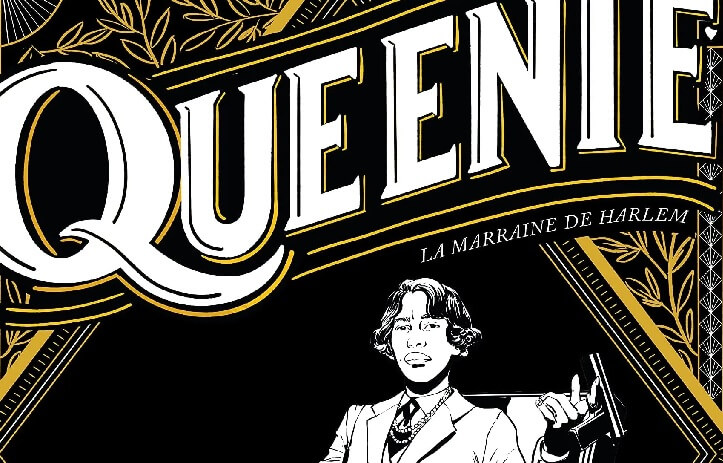
When we think of gangsters and racketeers, we usually (unfairly, I might add) think of men. But historical women racketeers? We hear about them, annoying, far less frequently. As we know from art history, the lives of these women — and their legacies — can be far more interesting, intriguing, and unfortunately overlooked than their male counterparts. Stephanie Saint-Clair is one of these women.
QUEENIE: GODMOTHER OF HARLEM
Elizabeth Colomba & Aurélie Lévy
Abrams ComicArts – Megascope
January 17, 2023
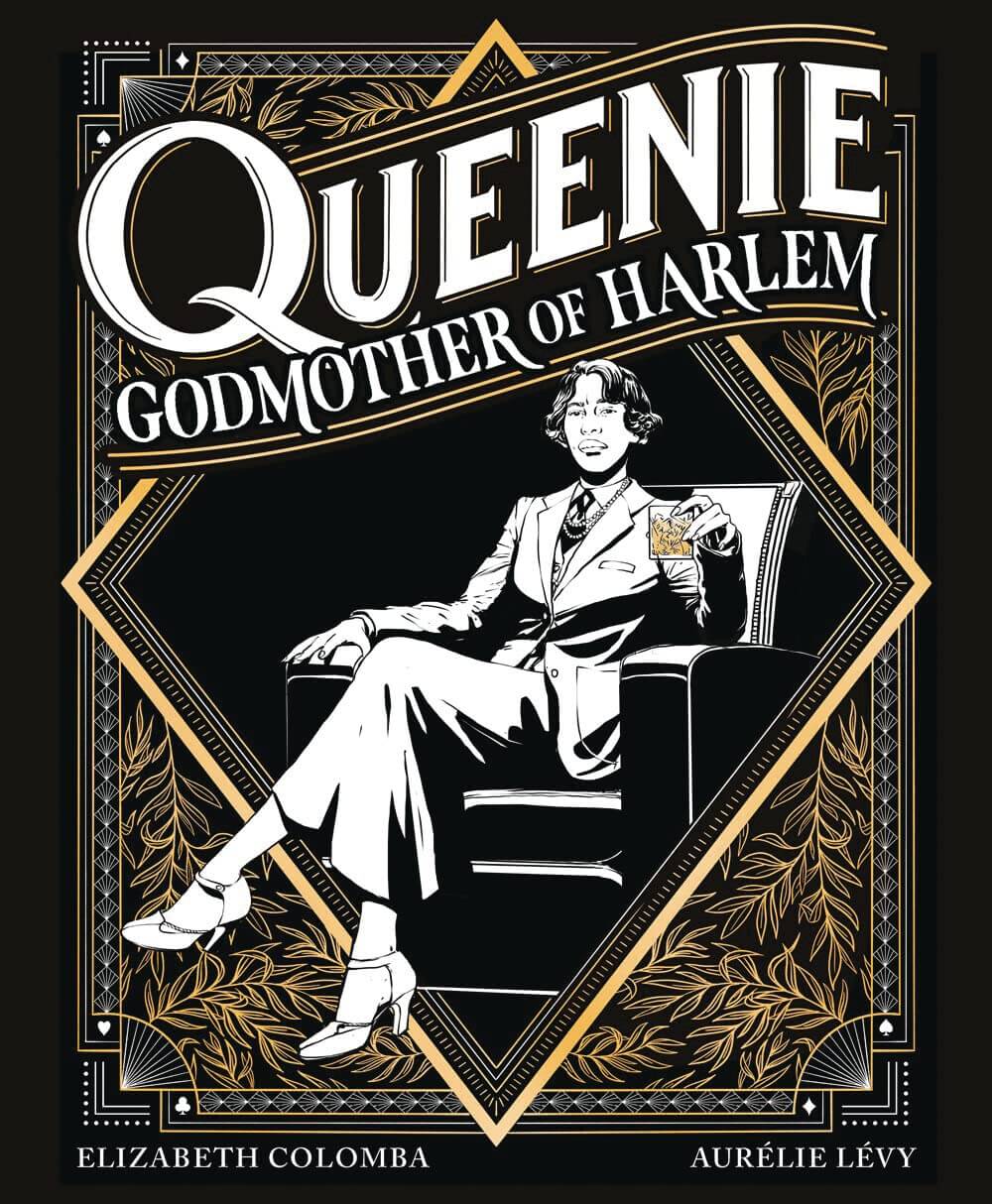
Guadalupe, West Indies-born Stephanie St.Clair (1897 – 1969) was one of New York’s most notorious racketeers. She ran a successful numbers game and numerous operations in Harlem after Prohibition ended and became a local legend for resisting Mafia control and speaking out about the crooked cops who they bought off. An activist for the Black community, St. Clair —aka “Queenie,” “Madame Queen,” “Madame St. Clair,” and “Queen of the Policy Rackets” — was fascinating. Her name was widely known in Harlem, yet there was no mention of her in any newspaper when she died. However, her life inspired various portrayals in films, television shows, and comics, including The Cotton Club (1984), where Novella Nelson played her, and Hoodlum (1997), as portrayed by Cicely Tyson. Her story is now told in the riveting graphic novel Queenie: Godmother of Harlem.
Creators Elizabeth Colomba and Aurélie Lévy bring Queenie to life in this fascinating graphic biography, crafting a vivid, tense, all-consuming story via narration and deceptively dense art. A French artist of Martinique descent who now resides in Harlem, Colomba is better known for her paintings in the fine art world with exhibitions at The Met, Museum of the African Diaspora, Los Angeles County Museum of Art just in the past few years. Her stark black and whites move the reader between the past and the present as we follow Stephanie St. Clair from her birth on a plantation in Martinique to her rise as a legend of Harlem. Rather than confuse or detract, the past and present timelines connect to enhance the story rather than subdue the narrative. Each timeline weaves seamlessly, showing how Queenie overcame extreme racism, sexism, and poverty to establish herself as a fierce defender of the Black community and her reputation.
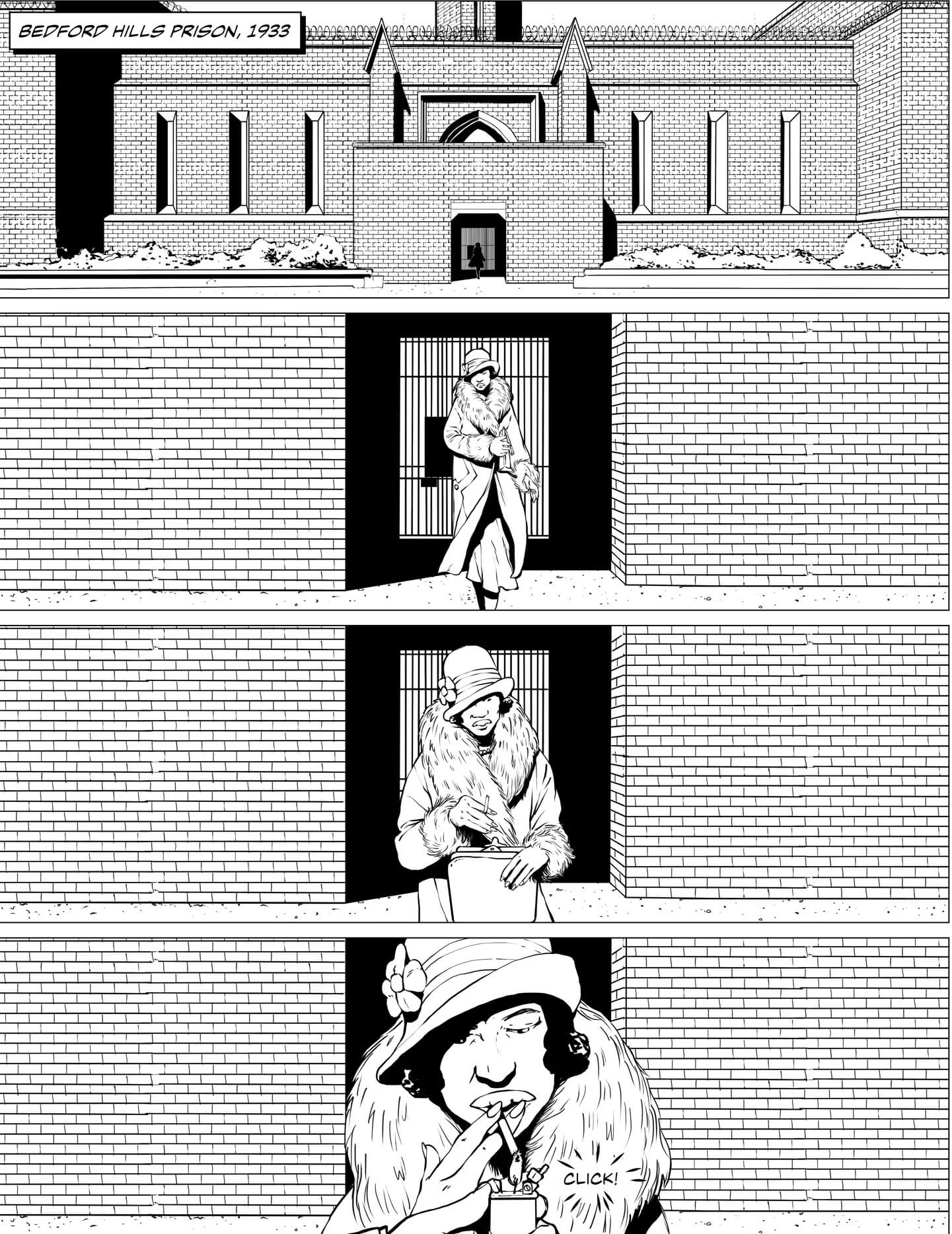
The first time we see Queenie, she exits Bedford Hills Prison. This imposing building diminishes her stature as it looms over her, but we cast our eyes down the page, and Queenie becomes more prominent and the prison more minor. It is no longer the enormous fortress, and Queenie’s power elevates. She lights a cigarette, clothed in a fur collar and coat, a hat on her head, her power and poise immediately established.
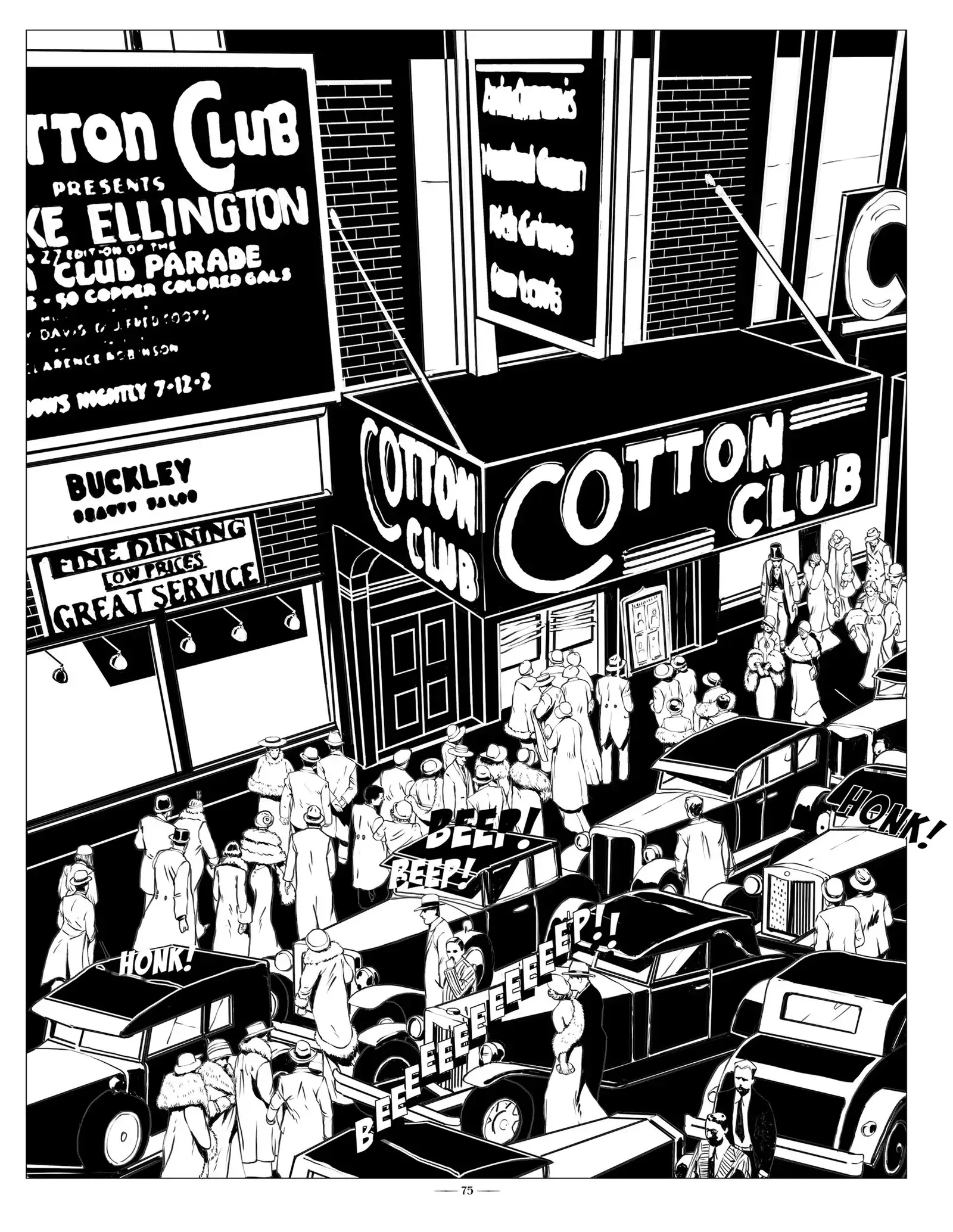
The art deco black and white pages may exude glamour, as do Harlem’s associations with Josephine Baker, the Cotton Club and Duke Ellington, but the flip side was grittier. Rather than tell the story of the American Dream and jazz-fueled nights, Queenie: Godmother of Harlem is the story of a woman who knows she is “Black, female, and poor” in society’s eyes, but is determined to prove her wealth and beat the men at their own game at all costs. Queenie knew her power, the power of her image, and the relationships she forged throughout her life. St. Clair had the clout, yet she did not rest on her laurels: she campaigned, fought her corner, and understood that the end of Prohibition would make her an easy target for others.

The art is brilliant and incredibly detailed in its starkness. While black and white, it does not diminish the graphic and bloody violence inflicted on the black community and other minorities. It’s a book that is as gripping as it is revealing, seamlessly commenting on race, society, and the societal prejudices that continue to ensue. In one scene, a KKK Klansman sits on Queenie’s neck, causing her to say, “I cannot breathe,” instantly evoking the heart-breaking last words spoken by George Floyd. It’s a reminder that while society and years have progressed, so many things remain unchanged.
Personally, I love a good biography, and I especially love stories about ‘forgotten’ women. I am fascinated by crime cinema, real crime, and the individuals who were behind some of the most notorious moments in history. As I said earlier, we usually only hear about men, especially in popular media. There are books, movies, and television shows about Lucky Luciano, Al Capone, and Arnold Rothstein — hell, even Enoch ‘Nucky’ Thompson in HBO’s Boardwalk Empire was loosely based on Atlantic City boss Enoch ‘Nucky’ Johnson. I admit I have left a few cents on Bugsy Siegel’s mausoleum at Hollywood Forever Cemetary so I win the next time I gamble. But Queenie? Where is her multi-season Martin Scorsese produced HBO show, let alone feature film and full-length biography of her life detailing her evenings at the Cotton Club with Dizzee Gillespie and her activism for those who needed her to fight in her corner? We need more stories about women and we need to hear more real-life stories of fascinating forgotten historical black women. And thanks to Colomba and Lévy’s book, it can only be a matter of time before more people learn about Queenie’s life.
This is the story of a woman who had the odds stacked against her: because of her race, because of men, and because she refused to be bought by the law. It’s a brilliant depiction of a woman whose name is not as widely known as the male racketeers we can rattle off the tongue, but Queenie should place her back on there as a woman who lived a life more fascinating than most men.
