


When DC announced their Pride line-up this year, I was once again disappointed by the trans representation. There were a few transfem superheroes in the DC Pride 2022 one-shot, but none in any of the new comics advertised. Kid Quick, the only nonbinary character spotlighted, is from an AU. For the second year in a row, there was not a single transmasculine character in any DC Pride story. There was one announcement that I saw as a bright spot, however. I was very excited for the new book from DC’s YA graphic novel line. Galaxy: The Prettiest Star by Jadzia Axelrod and Jess Taylor seemed to be a trans story by a trans creative team. Harley Quinn: Breaking Glass, You Brought Me the Ocean, Poison Ivy: Thorns, and I Am Not Starfire are all great books with queer main characters, so I trusted DC’s track record with these novels. However when I finally had a chance to read Galaxy: The Prettiest Star, my experience was extremely confusing.
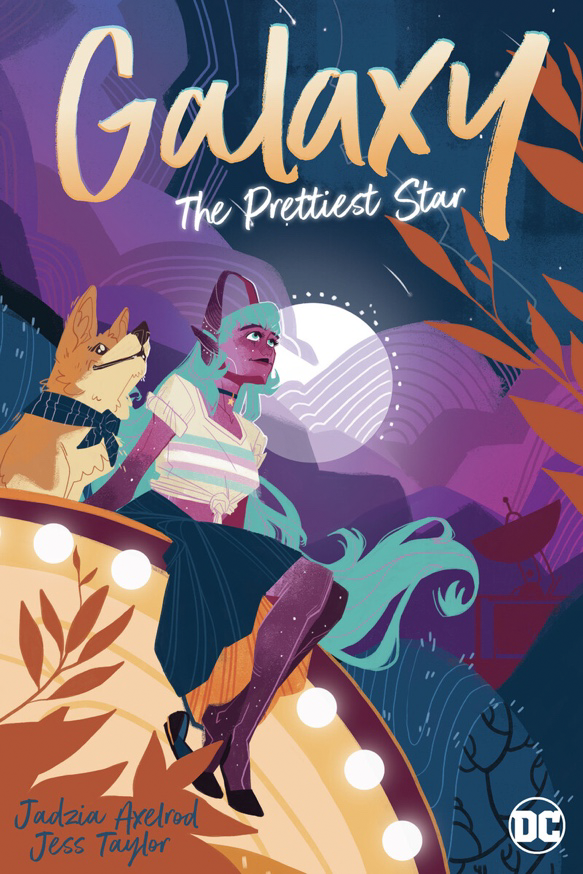
When I first saw the cover and promotional images I assumed the main character was a trans alien. This is not unprecedented, Sera from Marvel comics (who debuted in 2014) is a fantastical character who is also trans. More recently, the character Gray Tal (played by Ian Alexander), who started appearing on Star Trek: Discovery in Season 3, is both a Trill and transgender. However, when I read the FCBD preview for Galaxy it became clear that the book was dealing more with metaphors than literal transness. The fundamental premise of this book is that the main character Taelyr is an apparently cisgender alien girl who has been forced to present as a boy for the last six years on Earth to protect her from another race of aliens who would harm her. There are many problems with this metaphor that become clear over the course of the book. It seems designed to allow the narrative to be relatable to cis readers while neglecting to tell an explicitly trans story and even falling into some uncomfortable stereotypes about transition and dysphoria. It portrays a very narrow view of transgender identity.
First a brief summary of the premise: Taelyr is a princess from the planet Cyandii. When she was younger her home planet was attacked by an alien species called the Vane. A member of the royal guard, General Phii (called Phil on Earth), took her and two other young Cyandiians, Carl and Sally, to Earth to hide them from the Vane. There he used a piece of Cyandiian technology called the Eshar to make him and the three children appear to be a “normal” human family. He also made the decision that Taelyr needed to present as a boy to better hide from these aliens, which causes her to feel gender dysphoria. They lived in hiding like this for six years in a city called Ozma Gap. Shortly after her sixteenth birthday Taelyr realizes she can use the Eshar to reveal her true form, which she starts doing in secret to date Kat Silverberg, a girl who just moved to Ozma Gap from Metropolis. When Taelyr accidentally breaks the Eshar, she has no way to turn back into a human and is forcibly outed. The rest of the book deals with the ramifications of that, leading up to the end of the novel where she and Kat are refused entry to prom, but dance alone together, content.
One of the biggest issues with the metaphor that is built into the premise is how Taelyr’s experience with dysphoria differs from that of most trans people. Taelyr’s dysphoria is something imposed on her externally by the plot and other people. She used to be comfortable presenting one way, and now for her own “protection”, she needs to present another way that makes her dysphoric. Flashbacks to her childhood show her living happily as a girl with her parents. This seems designed to make her emotions relatable to cis people. Perhaps a cis reader would have difficulty understanding feeling discomfort in the body you were born with, but they would understand being forced by someone abusive to do something you don’t want (this is, by the way, the same reason so many cis people are obsessed with detransition narratives). The reason that Phil needs her to present as a boy is unclear. He says it’s to make it more difficult for the Vale to find them, but to me, it seems unnecessarily cruel. Phil also wants the family to project a sense of normalcy like the Wheeler family from Stranger Things or the Cooper family from Newcomers. As Taelyr points out, “those are all white characters on television shows.” Why blending in as a white suburban family would help hide them from the Vane is unclear, as is why it is necessary for Taelyr to pretend to be a boy.
There is also the implication in this book that Taelyr always knew she was supposed to be a girl, as she retained her memories of living with her parents as a child. There are some trans people who know from a very early age that they are transgender, but in my experience, that is actually much less common than stereotypes would imply. I know that for me personally, the stereotype that trans people always knew they were trans led to me denying my own feelings for a very long time. I believed that people were only trans if they knew from infancy and so my desire to transition couldn’t actually be “real.” It took me reading other trans people’s experiences to know that was a stereotype and not a requirement. There is obviously nothing wrong with writing a trans character who always knew, but the fact that the narrative does not present an alternative is extremely disappointing to me. This is another example of a way in which this book was written to make the trans experience understandable to cis readers, and for me, it is perhaps the most disappointing because of how much anxiety this stereotype caused me as a teenager.
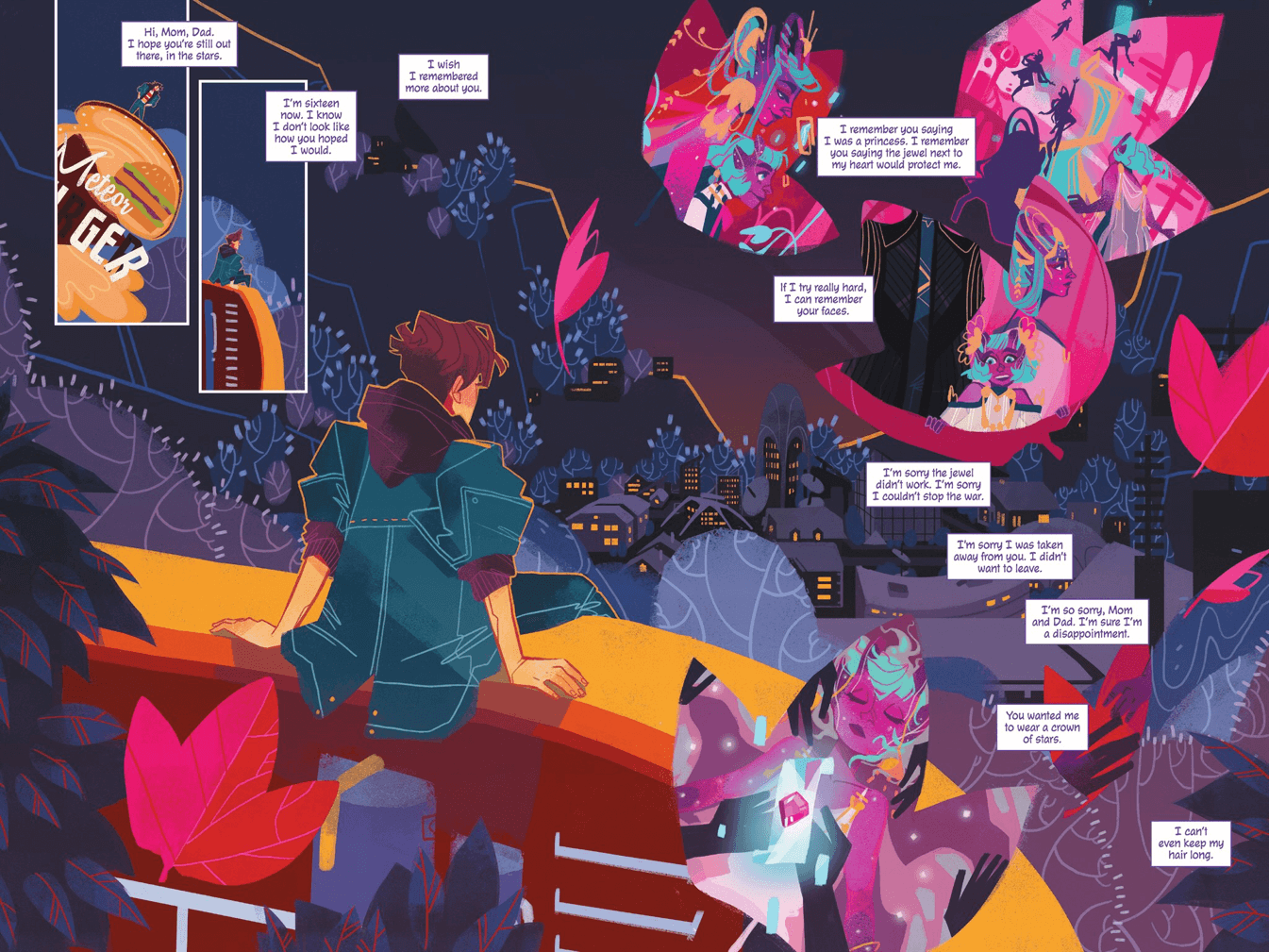
The book awkwardly includes flashbacks and references to Taelyr’s life with her parents. When she discusses her birth parents she says “I know I don’t look how you hoped I would,” “I remember you saying I was a princess,” and “You wanted me to wear a crown of stars. I can’t even keep my hair long.” These lines are odd for numerous reasons. Obviously, some trans people have parents who are supportive of their gender presentation, but the added complication of Taelyr being raised by Phil makes it hard to understand how to interpret this. Taelyr’s “found family” is not affirming, but oppressive. Phil and Carl both misgender her when she starts presenting as a girl on Earth (which again, feels unnecessarily cruel when it was Phil who forced her to change her gender presentation in the first place!). It is her biological parents who affirmed her gender. Additionally, the lines about her not looking the way they want her to or not having long hair do not seem supportive, even though Taelyr remembers them that way. It implies that her parents had a very narrow gender presentation that they wanted her to fit into. As someone who grew up being forced to dress and act within a narrow feminine presentation by my parents, these lines ring very true to me. But in this book, they are framed as affirming, when for me they were deeply upsetting and caused me to feel a lot of shame about not wanting to look or act the way my parents and society wanted. While I’m sure that was not the author’s intention, these pages are very uncomfortable for me to read, and were alienating to me as a trans man.
This also has the unfortunate consequence of making the story feel almost like a detransition metaphor. Taelyr grew up as a girl with loving and supportive parents, was forced to present as masculine by another adult, and then as an older teenager realized she preferred to present in a way that aligned with her gender assigned at birth. This is literally a TERF fantasy, and I’m sure I don’t have to explain why this is an upsetting implication. So much transphobic rhetoric about transmasculine people is focused on the idea of an outside force influencing us to present as masc and “ruin” our bodies, and it is extremely unfortunate that the metaphor in this book reminded me of all that.
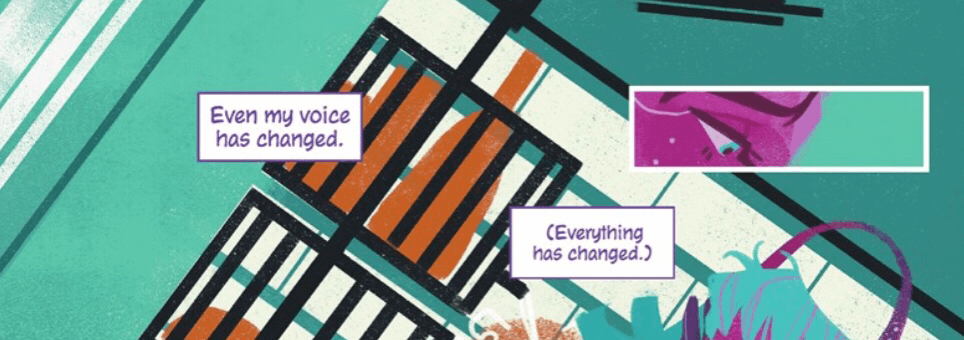
This may be a controversial statement, but in my opinion, transgender stories that cut out the process of transition are extremely odd. This book dealt a lot with the implications of social transition, in a way that I would argue was ultimately unsatisfying, but the effort is there. Conversely, the way this novel handled physical transition was extremely lacking, and at some points very offensive. Not all trans people need to medically transition to affirm their gender, but that is essentially what Taelyr does, even though she does not transition the way real-life trans people do. Taelyr transitions by touching the Eshar, which instantly makes her a gorgeous alien princess. She even says that she has horns that she did not have as a child because they are the result of Cyndiian puberty. There was no process, she just instantly had a perfect, gorgeous, feminine body. For me, physical transition was a beautiful process that led to me feeling much more present and connected to my body after nearly a decade of dissociation and depression, so a story that does not attempt to grapple with this in any way is disappointing. Additionally, there are some odd comments made that Taelyr’s voice has changed and that she has shrunk in height. These are not common changes that happen when transfeminine people take HRT and they certainly don’t happen immediately, so to me, they came off as oddly insulting. Not only can Taelyr transition instantly and magically, her transition also works better than methods available to real-life trans people. This instant gender transformation is also a common and dated trope in superhero comics. Walter Langkowski, Sasquatch, was transformed into a woman and went by Wanda Langkowski for over twenty issues of Alpha Flight. Courier from Gambit Vol. 3 transformed into a gorgeous woman and then was stuck in that form. More recent and explicitly trans characters like Charlene McGowan at Marvel and Heather After at DC have been shown to take HRT. Taelyr instantly transforming into a gorgeous girl feels like a callback to those earlier stories, and it doesn’t land in a time when trans readers expect trans characters to be more realistic.
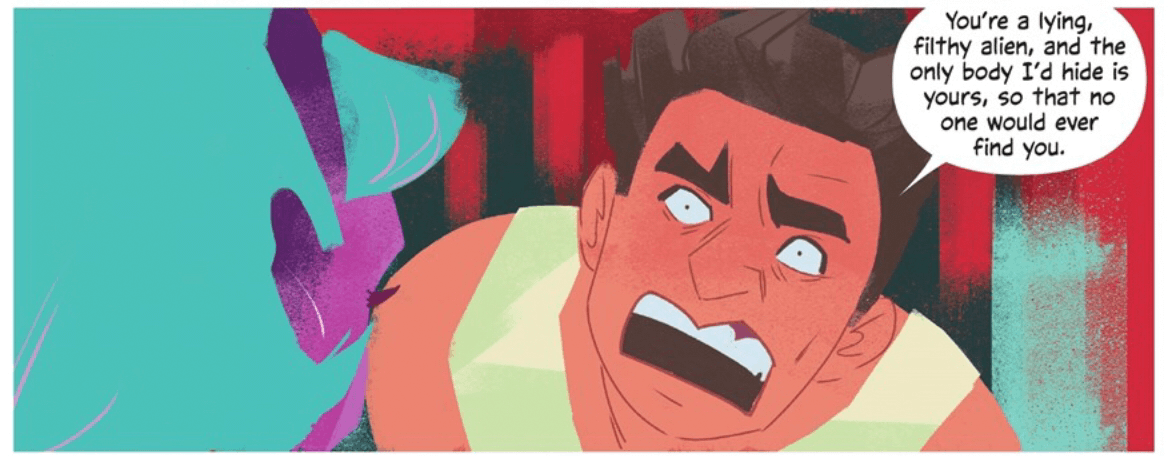
Perhaps the worst part of the metaphor for me is the way it escalates in the second half of the book in a way it did not earn. After Taelyr is outed, she is forced to confront a series of transphobic scenarios at her school. She is threatened by the principal with being kicked out of school, verbally assaulted by girls in the bathroom, and barred from attending prom with her girlfriend. There is one particularly egregious comment made by her former best friend Buck about wanting to assault her. Early in the book Buck says that he would “hide the bodies” for Taelyr because he is so loyal to her. When Taelyr reminds him of this comment after she transitioned, Buck reacts angrily saying “You’re a lying, filthy alien, and the only body I’d hide is yours, so that no one would ever find you.” This comment was extremely jarring to me. On one hand, I think it is great for a young adult book to tackle transphobia like this in a very direct way, rather than sanitize the transgender experience. However, in this book, it does not feel earned. All of these transphobic attacks are accompanied by comments implying that the transphobia is happening because she is an alien, which leads to the metaphor being extremely confused. Is this meant to be about transphobia or racism, or the intersection between transphobia and racism? If the latter, it is definitely not earned by the narrative. I don’t think that Axelrod meant to evoke racism with these scenes, but it shows the consequences of not being careful and deliberate with your metaphor. This also raises a lot of questions about xenophobia and racism directed at aliens in the DC Universe that the book is not interested in answering. Rather than relating to these scenes, I found them confusing.
It’s not that metaphors for the trans experience can’t work. Witch Boy by Molly Knox Ostertag and Cosmar’s storyline in New Mutants by Vita Ayala and Rod Reis are both very interesting when viewed with a trans lens. In Witch Boy, the titular boy finds he is better at a form of magic that is associated with the women in his family. He is not explicitly trans, but the book tackles gender roles and stereotypes in intriguing ways that evoke trans experiences. In New Mutants, Cosmar’s appearance was altered by her mutant power in a way that makes her dysphoric. At first, the adults around her do not understand why she feels this way, but by the end of the storyline, they help her find a way to alter her body to be more in line with the body she was comfortable with. I would argue that these both capture aspects of the trans experience very well. However, neither of these stories were marketed as trans stories, so they don’t have to be a 1:1 metaphor. In the case of Galaxy, I believe there would have been merit to writing a book about metaphorical transition that uses cis people’s preoccupation with detransition to evoke empathy for the trans experience. However, I don’t think that’s what the creators of this book intended to do, and it’s complicated by the marketing of Galaxy as a trans character. By trying to be both metaphorical and literal, Galaxy failed at both.
Jadzia Axelrod has since clarified on Twitter that Taelyr is literally trans, but I’m not sure what she means by that. If she means that Taelyr transitioned as a child on Cyandii with affirming parents, and then was forcibly detransitioned on Earth, that is not communicated in the text and would add another uncomfortable layer to her interactions with Phil. If she means that the story as presented is a trans story, I simply disagree. This metaphor does not resemble the experiences of trans people. In fact, despite the colors of the trans flag appearing on seemingly every page, the words trans or transgender do not appear at all in the story. The only place in the book I found the word “trans” was in the resources section in the back listing the number for Trans Lifeline. Before picking up this book I couldn’t imagine that DC would put out something that treated “trans” like a dirty word this year. Jadzia Axelrod’s story about Alysia Yeoh in DC Pride 2022 was by far my favorite story in the issue, and I don’t want to imply that she can’t write a trans story. However, there were some extremely unfortunate decisions made during the process of producing this book that make it unpalatable to me as a trans reader. Obviously, it is impossible to write a trans story that every trans person can relate to because our experiences can be so unique and individual, but a lot of the missteps I mention in this essay could have been easily avoided. Ultimately, this felt very regressive to me and was very disappointing as DC’s first young adult trans graphic novel. I want to see more and more diverse trans stories from major comics publishers, so it doesn’t feel like so much is riding on a single novel.
DC recently announced Dreamer, a graphic novel by Nicole Maines and Rye Hickman about the trans character of the same, which seems to be a good sign to me that DC is taking queer and trans rep seriously and making a commitment to producing more of it. It is disappointing to me that there are still no DC Pride stories announced with transmasculine characters, but the decision to make Cullen Row trans in the upcoming TV show Gotham Knights is a good sign that transmasc representation will eventually be present in the comics as well. Hopefully, next year’s stories will approach transness directly, rather than through a distorting metaphor. If we have more trans stories by more trans creators, we can have both stories that are literal and stories that are metaphorical, without relying on a single story to confusingly attempt to be both.

