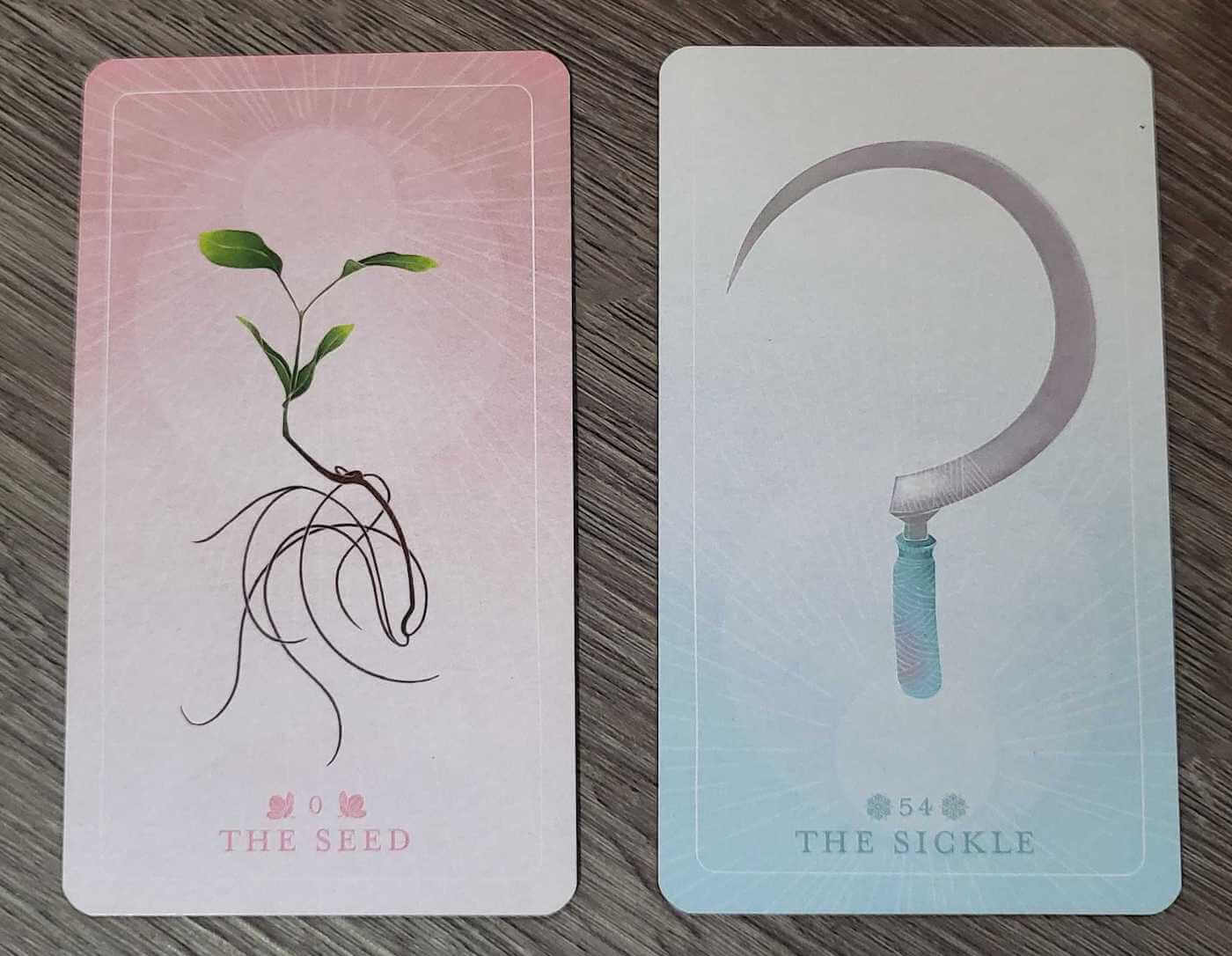

Fez Inkwright, in addition to being Liminal 11’s head designer, was already my favorite author from the Liminal 11 catalog—her twin books Folk Magic and Healing and Botanical Curses and Poisons were both favorites of mine, showcasing both her exquisite botanical drawings and her deep knowledge of plant folklore. So naturally I was anxiously anticipating her newest project, The Seed and Sickle Oracle, an oracle deck meant to represent the cycles of sowing and harvest and absolutely packed with the gorgeous botanical imagery I’ve come to expect from Inkwright. Herbal folklore, botanical art and divinatory cards? It’s all my favorite things combined into one beautiful deck, so what’s not to love?
The Seed and Sickle Oracle
Fez Inkwright
Liminal 11
November 9, 2021
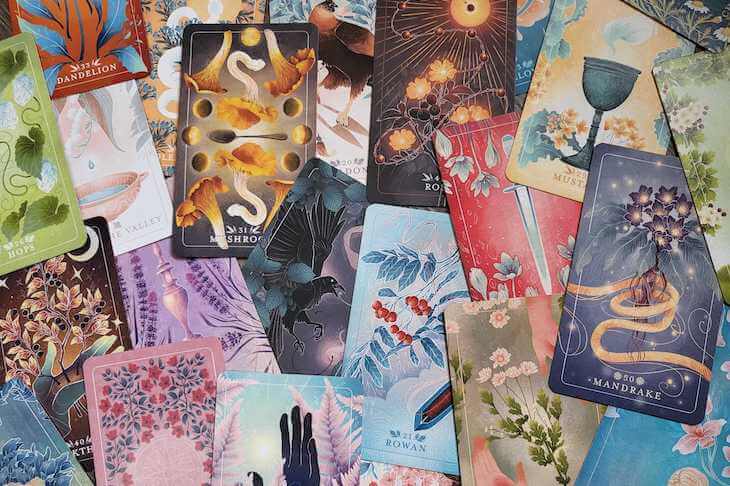
Inkwright’s art for this deck is absolutely stunning, blowing even my already high expectations out of the water. The drawings in her books are charming with their impeccable black and white linework, but the format of this oracle deck gives her so much more space to really shine. The cards are in gorgeous color and they’re rich with symbolism tying them back to the folkloric stories that feature them. Here we see Inkwright’s deep knowledge of folklore from cultures all over the world. The skull on the Poppy card represents its connection with Demeter, Persephone, and the underworld in Greek mythology, while the red string on the Citrus card references an Indian practice of hanging up citrus fruit in doorways to ward off misfortune. And the crossed swords on the Mistletoe card tell a story of the Scandinavian superstition that if you see mistletoe on your way to a duel, you must lay down your weapons and postpone the duel to the next day. The stories are fascinating and it’s truly a joy to look at a piece of symbolism, like the key on the Moonwort card, and be able to open up the guidebook and learn about how one of moonwort’s traditional magical properties is that it can destroy any lock.

Even the premise of the deck itself is interesting and unique. Oracle decks aren’t like tarot decks, which all have the same 78 cards and a comfortably familiar structure. Oracle decks are all completely different, which makes them feel unfamiliar at first and it often takes more time to learn how to work with them. But not being beholden to that structure also means oracle decks have more space to try creative things with the divinatory format, which Seed and Sickle makes full use of. To represent the sowing and the harvest—the idea that there are times in our lives that are meant for productivity and there are times that are meant for rest—the 54 card deck comes with two separate guidebooks which include different interpretations for the same cards. Depending on what kind of advice you’re looking for out of any given reading, you can choose which guide to use, with the Dawn booklet focusing on starting new projects and working towards goals and the Dusk booklet concentrating on reflection and self-care.
When I first started doing daily draws with Seed and Sickle, I would draw a card and then read the entry in both books to see which one resonated more with me. I’ve never used a deck with this kind of interesting premise before, and it seemed like I’d get the most insight by taking in all the information available about the card I drew—but I found I wasn’t getting very insightful readings that way. Deciding beforehand which guidebook I would consult actually gave me much more interesting readings, and in retrospect that makes total sense to me, because divination, as well as most types of magic, is completely based on intention. This deck really responds to intention, and selecting which guidebook to use is basically telling it what kind of insight you’re trying to get out of your reading. This is really cool, because having your cards read isn’t a passive activity. It’s something that you have to engage with, and Seed and Sickle puts that engagement with the querent at the very heart of the process. Overall, I found readings from this deck to be straightforward and helpful as long as I had an idea of what I was asking beforehand, and a little opaque and meandering if I didn’t come to the reading with a question in mind.
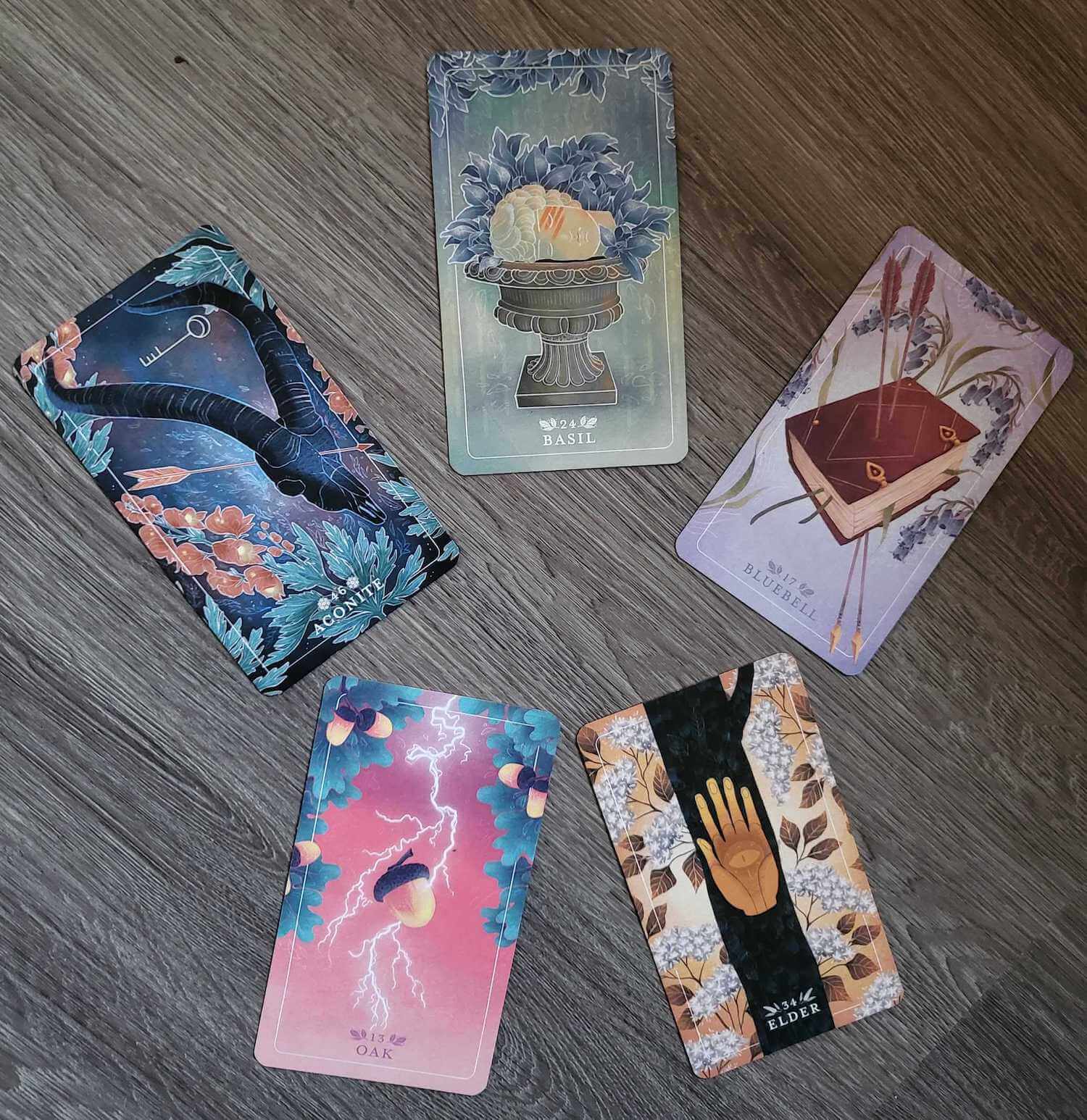
The dual guidebooks have another effect that I didn’t anticipate: removing the pressure to memorize interpretations of the cards. As an experienced tarot reader, I like to be able to do readings without consulting a book, and many decks can be read intuitively based on the evocative imagery even if you don’t have a tarot guidebook memorized in your head. But there are various reasons Seed and Sickle isn’t like that—it’s an oracle deck which doesn’t follow the tarot structure, its botanical imagery is rich with symbolism but doesn’t tell enough of a story to lend itself to intuitive readings, and with each card having two distinct meanings, it would be very difficult to hold all of that in your head. But by making the guidebooks an integral part of the process, it frees me from that urge to move past needing them.
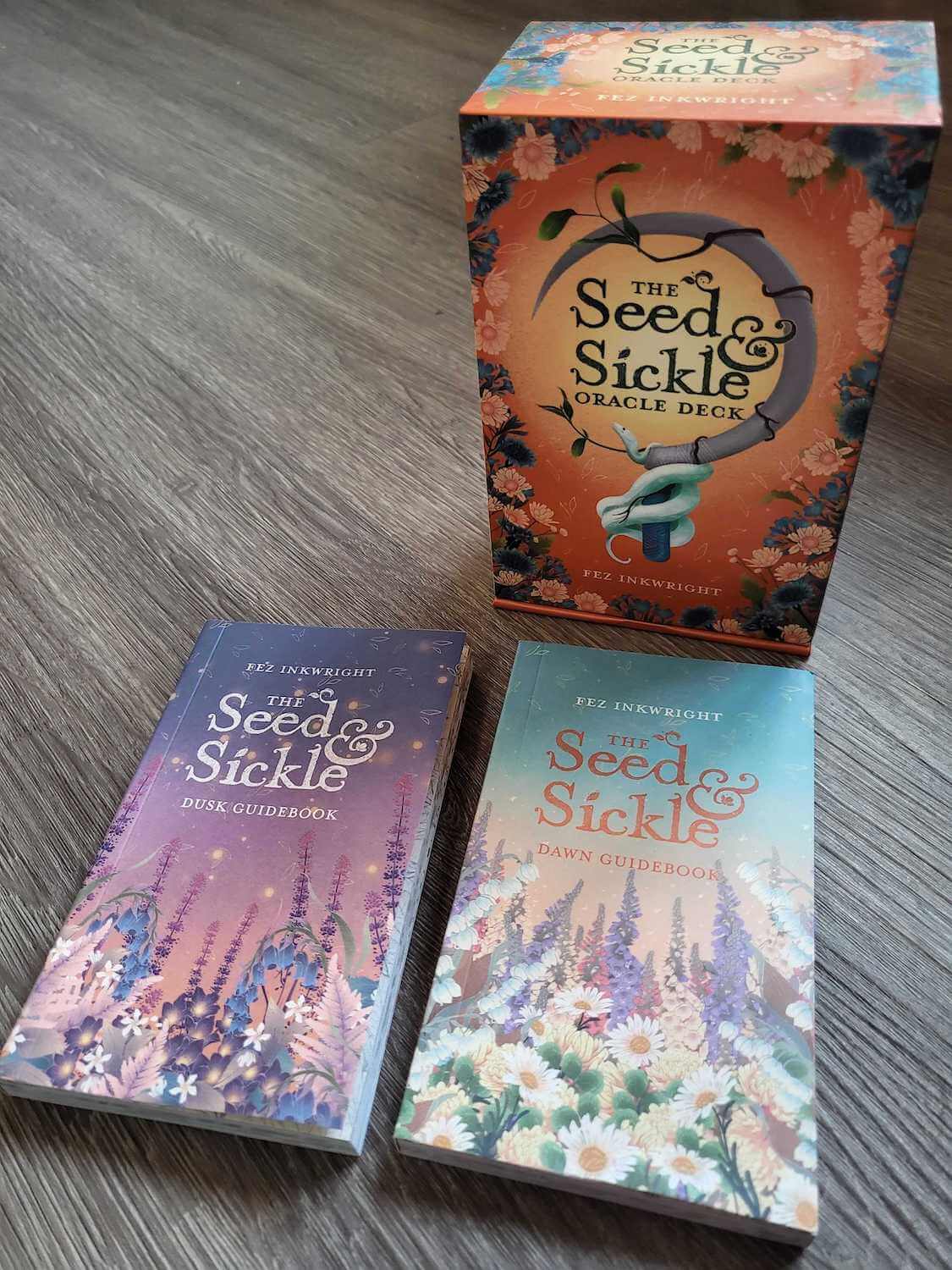
Physically, the quality is what I’ve come to expect from Liminal 11 releases. The cards are extremely well printed, thick and sturdy. (So thick and sturdy, in fact, that it made them a little unwieldy to shuffle at first, although they’ve been breaking in since I’ve been using the deck.) The fact that there are fewer cards but more detailed guidebooks evens out, and the deck still fits nice and snugly into the fun bottom-hinged box that Liminal 11 is so fond of. There is, of course, a special limited edition version of the deck as well. It’s a little more sparse than some of their other special editions in terms of what it includes—it comes with a velvet bag, a small sketchbook, and an additional oracle deck called Citadel, all packed in a beautiful tin box—but Inkwright’s designs make it all feel quite delightful and it’s completely worth it just for the exclusive Citadel oracle deck.
I’ve never seen anything quite like it, with its charming hexagonal cards, stored in a cute hexagonal box that magnets shut. (Even the little guidebook is hexagonal and fits snugly in the box!) The premise of Citadel is about the different roles one might take on in a city, with cards such as the Sailor, the Scholar, the Weaver, and the Poet, and the art is beautiful and simple, with clean linework in black and red, accented with gold foil. A short, 33-card oracle like this is often traditionally used to supplement an existing reading with a single card at the beginning or the end of a tarot reading to provide either environmental context or clarification—and Citadel is good for that, giving me extra insight into my Seed and Sickle readings, as well as readings from other decks! But it also works well on its own, giving me some surprisingly insightful three card readings and earning Citadel a standalone place in my oracle collection.

Overall, the Seed and Sickle Oracle is an extremely worthwhile addition to my collection, even for someone like me who normally prefers the structure of traditional tarot decks over the endless possibilities of oracle decks. As someone who has a rather large collection of divinatory cards, I love a deck with a clearly stated purpose like Seed and Sickle’s helpful sowing and harvesting metaphor, as it helps me know which deck I should reach for when I have a specific type of question. But honestly, even if I never read from it, I would be happy to add Seed and Sickle to my collection just to be able to peruse the gorgeous art and read about the little magical history lessons that inspired it. When an oracle deck can teach you something about folklore and history, while also teaching you something about yourself, that’s when you know you have something special on your hands, and the Seed and Sickle Oracle is something special.