

“Not to date myself — but I’m old!” says Saturday AM founder, writer, and president, Frederick L. Jones, about the name of his digital comics brand which harkens back to his childhood, growing up in the ’70s and ’80s watching classic Saturday morning cartoons. “Before the MCU or Star Wars movies, Saturday morning cartoons were really where your wildest ideas could be brought to life in glorious color. So many big series became indelible in the minds of most kids of that era. It often gave many of us our first glimpse of anime, fantasy, superheroes, comedy, and even funny animals!” He fondly recalls begging his parents to pick up the fall TV Guide, poring over the info for new shows, and watching all the special Friday night preview shows. “I pity the actors who had to host those things; even then I could tell they were like, ‘It’s in the contract?? Ugh!'”
That era was special to Jones because there was so much diversity in the content. “From station to station, hour to hour, and year upon year felt like a really fun anthology issue from DC or Marvel or Shonen Jump.” All of this media stayed with Jones over the decades as he found himself trying his own hand at anthologies, “first as a kid, then later at a creative learning camp at a private school where I taught during the summers to help pay for college.” The anthology concept and all of that diversity are strongly reflected now in the work produced by Saturday AM. “In my career, product development only ever started moving successfully when the concept had a strong name. So when I had the idea for a diverse manga magazine-style anthology, I knew it was looking promising with the quality of talent we had, the format, and our overall mission. But I never felt strongly about it until I thought of the name, because I wanted something that would really resonate with the idea that we could inspire the next generation of artists the way that Saturday mornings had inspired me.”
Offering diverse action manga-style webcomics by independent creators from around the world, Saturday AM, working alongside Quarto Group Books, is launching their inaugural collection of graphic novels.
The company and its manga-style works are grounded in diversity in its characters, creators, and its stories. Why is this important to you?
Our creators are from various parts of the world, and one of the joys I have are the conversations we have in small groups where I get to learn more about their lives and their cultures. I’m a naturally curious person, and while I’ve been privileged to travel around the world a bit, I never tire of learning more about this beautiful world and the people who inhabit it. People who love to rail against diversity always try to suggest that story matters more than diversity, and my argument is that diversity creates stories.
After all, what is Spiderman if not Batman if he were young and broke? Stan Lee has said in several past interviews that Marvel Comics was superheroes (à la DC Comics) but instead with heroes who were flawed “like us.” Some of my favorite manga go off the beaten path, like Vinland Saga by Makoto Yumimura, a manga about the Viking era (and a surprising ode to pacifism, as opposed to the warmongering of the era).
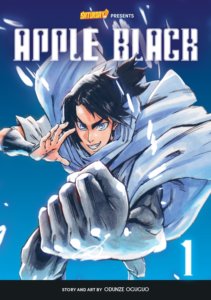
I’ve told this story before, but one of my artists, Whyt Manga, is becoming one of the most popular indie manga creators in the world, and he’s much younger than me. When I first met him, I was amazed at how flawless this kid’s manga art style was! He got every nuance of the manga look right and also had expert skills in character design, backgrounds, crosshatching, and so forth, that many artists struggle with for years. I mean, to this day when I show his work to someone new, or even a comic book professional like Sanford Greene, they marvel at how young he is, and/or they can’t believe he isn’t Japanese. On the other hand, I was surprised that as a POC there were hardly any characters of color in his work, Apple Black. I kept thinking that someone with this level of skill could have a massive impact on representation and inspiration for all young artists, but especially young artists of color who still may not know how many of us are actually regular contributors to comics. Anyway, when I asked him why he didn’t have more black people in his work, he replied that he “didn’t want it to seem forced.”
That was a real wake-up call for me! This guy is smart, talented, and educated, and yet the result of what he was seeing made him question whether something different could even exist. To be clear, he is not the only artist I’ve seen who had this mentality, nor is it just a black and brown thing. The significance of manga and anime’s impact on young people in general, and especially on young people of color, really started to weigh on me. Black and brown fans are some of the largest growth metrics of anime and manga, yet their aesthetic isn’t featured in Japanese or even Asian comics 99% of the time, and to see us as heroes, love interests, or complex, interesting characters seemed unlikely, undesirable, or forced.
I cannot accept that thinking, whether it’s Hollywood, video games, or anime and manga.
Likewise, the narrative that diversity is being “forced” and isn’t really wanted by consumers was surprisingly pervasive when we started. However, many people may not know that Saturday AM predates the Black Panther movie and was teased or launched around the times of Miles Morales and Ms. Marvel (Khamala Khan’s first comic book appearances), and thus we were quite aware of the desire that existed for more multicultural characters. I remember the media reporting on the “outrage” that a black Captain America, a female Thor, and so on, was causing. Yet, years later, Disney+ is spending hundreds of millions on those very characters. Clearly, they have a similar opinion and data as we do regarding the profitability of diverse heroes and series.
So, as for why it’s important to me: I think showcasing diversity in all forms of entertainment is the right thing to do—ethically, morally, and financially.
What were you looking for in the talent that has come to be a part of Saturday AM? What makes these particular creators and their stories really stand out?
When we started the Saturday AM magazine in 2013, we were just excited to see that people wanted to be a part of what we were building at all. While the interest was quite strong, we realized very quickly that unique talent wasn’t always easy to find, as many webcomic creators of that era were creating their own takes on popular Japanese titles of the moment, à la Dragonball Z, Naruto, and then Attack on Titan.

We ultimately began to get serious about three things we look for when it comes to finding new creators: concept, talent, professionalism. Like most publishers, Saturday AM’s number one goal is to publish strong content that we personally would be intrigued by. As we strongly believe in the power of diversity, then we very much look for creators who are from different backgrounds and have concepts that draw upon a multicultural character or setting.
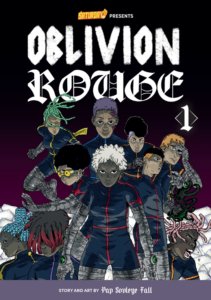
So when creators like Pap Souleye Fall from Senegal pitches us a concept that’s an Afrofuturism take on class warfare (à la Battle Royale), then we greenlight the title called Oblivion Rouge. Same thing with Yellow Stringer by Goeffrey Jean-Louis, where we get into the idea of fake news but the actual conspiracies involve monsters and supernatural crimes. Furthermore, the fact that many of our biggest titles like Clock Striker, Underground, and Gunhild have appeared regularly in our various manga magazine issues means that we can count on fans growing for each series because they trust that these titles are usually going to be in every issue. That would never be the case if many of our creators didn’t have great organizational skills.
When you look at our line of heroes, their diversity applies to everything, from skin tone to character designs, and we believe it’s why Saturday AM heroes stand out among our global fanbase.
What prompted the move to graphic novels for these stories?
Saturday AM was always designed to be a multicultural version of shonen manga magazines like Weekly Shonen Jump or Shonen Sunday. Likewise, our spinoff magazines Saturday PM and Saturday BRUNCH are inspired by seinen magazines like Ultra Jump and Cocohana, respectively. Therefore, we’ve always desired to see our serialized titles within the magazines as collected graphic novels (or tankobans in Japan). Since we started as a digital-first brand, our only way to do collections in print was to do POD [print on demand]. We had great success with Apple Black, but the drawback to this strategy was that we were limited in how ambitious we could be with our book designs. Furthermore, every creator and fan ultimately want to see our books sold in brick-and-mortar stores and available to check out in local libraries. Despite the interest, however, we began as a bootstrapped company and simply did not have the resources or people to efficiently help us grow a print/retail effort. That’s why we’ve been super-excited to work with The Quarto Group and their Rockport Publishers imprint!
Quarto’s experience in publishing is simply awesome, and it allows us to focus on creative projects and marketing via social media. Another important aspect is that they allowed us to be experimental, as Saturday AM is a growing brand. We kept our Western left-to-right orientation, improved our paper quality, and added a post-credit scene that’s completely different from traditional Japanese manga. Finally, their patience has been refreshing, as with so many new young creators and/or semi-professional ones, I was desperate that they have space to grow as professionals and creators. For example, making digital comics and having to prep the material like the speech bubbles into a print-ready format was far more complicated than we had anticipated. Simply put, our artists have enough pressure from our magazine schedule and our culture, so I didn’t want to add to that.
Diversity thrives when it’s given time to express itself.
Quarto has been instrumental in assisting us and guiding us on navigating the library market, traditional retail, and even international sales of our titles. They designed an incredible Sales Kit and have assisted us in getting more press than we’ve ever gotten. This is impressive when you consider that we’re launching nine graphic novels in our first year, plus our first yearly anthology of graphic short stories, and a how-to-draw book, Saturday AM Presents How to Draw Diverse Manga.
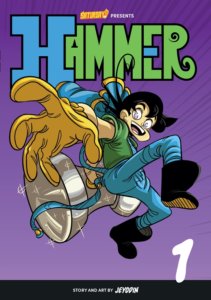
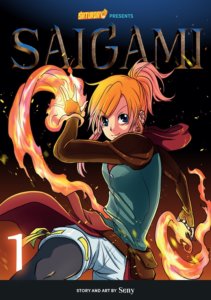
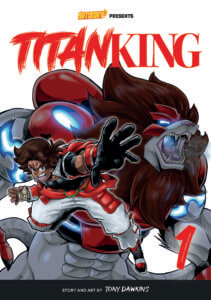
Our books will hail from creators in Ghana, the U.K., Nigeria, U.S.A., Greece, New Zealand, Hungary, and more! Likewise, the genres are wildly diverse, [including] fantasy stories like Apple Black and Hammer, isekai tales like Saigami, battle manga like Titan King, thrillers like Oblivion Rouge and Massively Multiplayer World of Ghosts (MMWOG), and anthology books, à la our Saturday AM Annual 2023.
This is a packed year, as many digital companies are bringing their comics to print for the first time in a concerted way. That said, we believe that our works will appeal to lovers of manga who may want a fresh voice and perspective.
Saturday AM graphic novels are available now for pre-orders, which will include exclusive trading cards.